Explosive Inquiry: Senators Demand Answers From Google Over AI in Classrooms
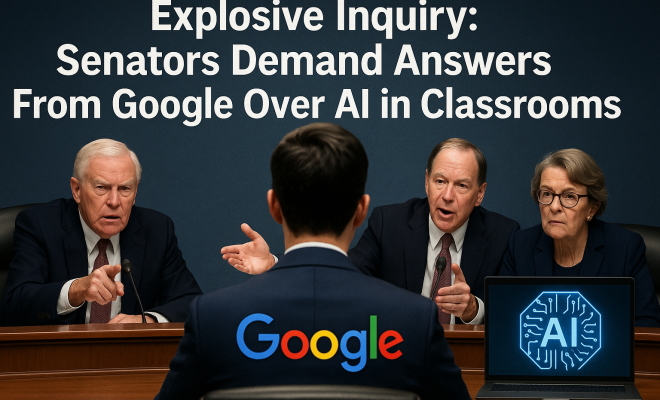
It’s no secret that artificial intelligence has infiltrated nearly every corner of our lives, and education is certainly no exception. But as generative AI tools like Google’s offerings become increasingly ubiquitous, a bipartisan pair of U.S. Senators is sounding a loud alarm. On October 21, 2026, Senators Josh Hawley (R-Mo.) and Richard Blumenthal (D-Conn.) didn’t mince words in a letter sent directly to Google CEO Sundar Pichai. Their message? They harbor “grave concern” over what they perceive as Google’s aggressive push of AI products into schools, a move they argue could seriously jeopardize both academic success and the overall well-being of students.
This isn’t just a polite inquiry; it’s a direct challenge with a firm deadline. The senators demanded comprehensive answers by November 2, 2026, a move that significantly ratchets up the political and regulatory pressure on the use of AI in classrooms. This isn’t happening in a vacuum, either. Their intervention aligns with a much broader, growing trend of institutions and states taking a far stricter stance on AI policies within educational settings. It signals a critical juncture, forcing us to ask: are we ready for the profound impact of AI in our children’s learning environments, or are we rushing headlong into uncharted territory?
The Senators’ Stance: A Bipartisan Call for Accountability
When Senators Hawley and Blumenthal, from opposite sides of the political aisle, unite on an issue, it genuinely underscores the severity of their concerns. Their letter to Sundar Pichai wasn’t simply a request for information; it was a pointed accusation that Google is “aggressively” promoting AI solutions within educational institutions. This isn’t just about selling software; it’s about shaping the very fabric of learning for an entire generation. They’re essentially asking Google to justify its role as a technology provider in such a sensitive domain, especially when the long-term effects of AI on young minds are still largely unknown.
The senators’ concerns aren’t vague. They specifically cite potential threats to academic success and student well-being. What does this mean in practical terms? It could range from worries about students over-relying on AI for assignments, thereby circumventing genuine learning, to deeper psychological impacts from constant interaction with algorithms. The bipartisan nature of this inquiry lends it considerable weight, demonstrating that anxieties about AI in classrooms transcend typical partisan divides. This isn’t a Republican or Democrat issue; it’s an issue for anyone concerned about the future of education and the development of our youth.
The November 2 Deadline: What Google Has to Answer For
That November 2, 2026, deadline isn’t just a formality; it’s a clear indication that Senators Hawley and Blumenthal expect detailed, substantive responses. This isn’t a fishing expedition; they have nine specific questions they want Google to address. While the precise wording of those questions hasn’t been fully disclosed in public reports, we can infer their likely focus based on the broader context of concerns surrounding AI in classrooms. They are almost certainly going to touch upon data privacy, the potential for algorithmic bias, the impact on critical thinking skills, and Google’s strategies for ensuring equitable access and preventing misuse.
Imagine the kind of information they’re looking for. They’ll likely want to know about Google’s internal research on the pedagogical efficacy of their AI tools, data security protocols for student information, and how Google plans to mitigate the risks of cheating or over-reliance. They might even inquire about Google’s revenue models for these educational AI products and how those models might influence their aggressive promotion. This looming deadline creates a moment of reckoning for Google, compelling them to articulate their vision and safeguards for AI in education under intense public and political scrutiny. It’s a critical test of transparency and corporate responsibility.
A Broader Trend: Stricter AI Policies Emerge Nationwide
The Hawley-Blumenthal inquiry isn’t an isolated incident; it’s a prominent example of a much larger, increasingly assertive movement to regulate and define the role of AI in classrooms. Across the United States, educational institutions and state governments are beginning to roll out their own, often more restrictive, policies. This reflects a growing understanding that while AI offers exciting possibilities, its integration must be thoughtful, ethical, and carefully managed.
Consider some concrete examples of this emerging trend. National History Day, a prominent academic competition, has taken a definitive stance, outright banning generative AI for student projects. Their reasoning is clear: the spirit of historical research and original analysis is undermined if students can simply prompt an AI to generate their content. Florida has introduced parental opt-out rules for AI tools, granting families more control over their children’s exposure to these technologies. This acknowledges the legitimate concern that parents might have about the tools their children are using. And New York City, a massive school district, has gone even further, blocking student-facing generative AI for younger grades. This tiered approach suggests a recognition that the developmental stages of students might influence how and when AI tools are appropriate. These examples illustrate a palpable shift from an initial open embrace to a more cautious, regulated approach to AI in education.
Undermining Critical Thinking: A Core Concern
One of the most frequently articulated concerns about AI in classrooms is its potential to undermine critical thinking. This isn’t just a vague fear; it’s a worry rooted in how students learn and develop essential cognitive skills. If an AI can generate essays, solve complex math problems, or summarize texts instantly, what incentive do students have to engage in the arduous, but ultimately rewarding, process of independent thought, analysis, and problem-solving? Related reading: AI in modern education.
A 2026 University of Minnesota report highlighted this very issue, delving into the ways AI might inadvertently short-circuit the learning process. And it’s not just academics who are worried. A RAND survey indicated that a staggering 67% of teens themselves believe AI harms critical thinking. Think about that: two-thirds of the young people directly experiencing these tools feel they are detrimental to their ability to think deeply. This isn’t just about getting the right answer; it’s about the journey of arriving at that answer, the mental effort that builds cognitive resilience. If AI removes the need for that effort, what kind of thinkers are we cultivating?
The Cheating Conundrum: Academic Integrity at Stake
Beyond critical thinking, the specter of cheating looms large over the integration of AI in classrooms. Generative AI tools are incredibly adept at producing human-like text, making it incredibly difficult for educators to distinguish between student-generated work and AI-generated content. This poses a significant challenge to the very foundation of academic integrity. (See: Impact of technology on youth.)
When students can use AI to write essays, complete coding assignments, or even answer open-ended questions, the authenticity of their learning becomes questionable. It’s not just about catching students in the act; it’s about creating an environment where the temptation to bypass genuine effort is constantly present and easily accessible. Schools are scrambling to adapt, investing in AI detection software and redesigning assignments to be more AI-proof, but it’s an ongoing arms race. The fundamental question remains: how do we foster a culture of honest learning when powerful tools can so easily facilitate academic dishonesty?
Student Privacy Risks: A Digital Minefield
Another major pillar of concern, and one likely central to the senators’ inquiry, revolves around student privacy. Educational technology, or EdTech, already handles vast amounts of sensitive student data, from academic performance to behavioral patterns. Introducing sophisticated AI tools into this ecosystem significantly amplifies the potential for privacy breaches and misuse of information. For more context, see Why Millions Are Finally Using AI to Master High-Demand Skills.
AI models require data to function, and often that data is personal. Who owns this data? How is it stored? Who has access to it? What are the chances of a data breach, and what are the implications if student information, perhaps even biometric data or learning styles, falls into the wrong hands? The senators are undoubtedly scrutinizing Google’s data handling policies, encryption standards, and compliance with privacy regulations like FERPA. The worry isn’t just about direct malicious intent, but also about the unintended consequences of data aggregation and the potential for AI systems to profile students in ways that could have long-term implications for their academic and personal lives. Securing this data isn’t just a technical challenge; it’s an ethical imperative.
Navigating the Future: AI Literacy and Ethical Use
So, where do we go from here? Banning AI entirely from classrooms might be impractical and short-sighted, given its pervasive presence in society. The more realistic and productive path involves cultivating AI literacy and promoting ethical use. This means equipping students, teachers, and administrators with the knowledge and skills to understand how AI works, its capabilities, its limitations, and its inherent biases.
For students, AI literacy isn’t just about using the tools; it’s about becoming discerning consumers of AI-generated content and understanding their role in shaping future AI. For educators, it means rethinking pedagogy, designing assignments that leverage AI for enhanced learning rather than simply replacing human effort, and teaching students how to cite AI sources responsibly. Developing robust curricula around AI ethics, digital citizenship, and critical evaluation of information will be paramount. This isn’t just about technology; it’s about empowering the next generation to interact with intelligent systems thoughtfully and responsibly.
Monetization Potential: Solutions in a Shifting Landscape
While the concerns surrounding AI in classrooms are significant, this evolving landscape also presents substantial opportunities for innovation and monetization, particularly for businesses that can provide solutions to these challenges. This isn’t about capitalizing on fear, but about meeting a genuine, growing need within the education sector.
Consider the immediate demand for effective AI detection software. As cheating concerns mount, schools are actively seeking reliable tools to identify AI-generated content. Then there’s the burgeoning market for online courses focused on AI literacy and ethical AI use. Both students and educators require training on how to responsibly integrate these powerful tools. Cybersecurity solutions tailored for EdTech platforms are also becoming indispensable, given the heightened privacy risks. Schools are desperate for robust defenses against data breaches. Furthermore, there’s a significant need for resources and consulting services that help educational institutions develop comprehensive AI policies. This involves everything from drafting acceptable use guidelines to creating frameworks for AI integration. Businesses operating in these high-CPC (Cost Per Click) niches – software, cybersecurity, and online education – stand to benefit significantly from addressing these critical needs as the educational world grapples with the transformative power of AI. There’s a fuller look at future of AI in education.
The Promise of Personalized Learning with AI
Despite the valid concerns, it’s also important to acknowledge the immense potential of AI in classrooms to truly revolutionize personalized learning. Imagine a classroom where every student receives instruction tailored precisely to their individual pace, learning style, and areas of struggle. AI can make this a reality.
Adaptive learning platforms, powered by AI, can analyze student performance in real-time, identify knowledge gaps, and then recommend specific resources or exercises to address those weaknesses. This is far beyond what a single teacher can realistically achieve with a class of 30 or more students. AI tutors, while not replacing human educators, can provide immediate feedback and support, especially for subjects like math or foreign languages, allowing students to practice and refine skills without waiting for a teacher’s availability. For students with learning disabilities, AI tools can offer accommodations like text-to-speech, speech-to-text, or visual aids, making education more accessible. A 2023 study by UNESCO highlighted that AI could significantly improve educational outcomes for disadvantaged students by providing equitable access to high-quality, personalized instruction. The goal here isn’t to replace human interaction, but to augment it, freeing up teachers to focus on higher-order thinking, emotional development, and creative projects, while AI handles the more repetitive, data-driven aspects of instruction.
Algorithmic Bias: A Hidden Danger
One critical ethical concern that often gets overlooked in the rush to integrate AI is algorithmic bias. AI systems are only as good as the data they’re trained on, and if that data reflects existing societal biases, the AI will perpetuate and even amplify those biases.
In the context of AI in classrooms, this could have serious implications. For instance, if an AI-powered assessment tool is trained predominantly on data from a specific demographic, it might inadvertently disadvantage students from other backgrounds. This could manifest as biased grading, unfair recommendations for learning paths, or even discriminatory identification of learning disabilities. A report from the AI Now Institute in 2021 specifically warned about the risks of deploying biased AI in sensitive sectors like education, where the stakes for individual students are incredibly high. The consequence could be a widening of achievement gaps rather than a narrowing. Addressing algorithmic bias requires diverse training data, rigorous testing, and ongoing auditing of AI systems, as well as involving educators and ethicists in the design and deployment process. It’s a complex challenge, but one that must be confronted head-on to ensure AI in classrooms promotes equity, not inequality.
The Teacher’s Evolving Role: From Instructor to Facilitator
The integration of AI in classrooms isn’t just changing how students learn; it’s fundamentally reshaping the role of the teacher. Far from rendering educators obsolete, AI tools are actually demanding a new, perhaps more sophisticated, set of skills and responsibilities from them. (See: Google's role in education technology.)
Teachers will increasingly transition from being the primary disseminators of information to facilitators of learning, curators of resources, and mentors for critical thinking. With AI handling personalized drills and basic content delivery, teachers can dedicate more time to fostering creativity, problem-solving, collaborative projects, and socio-emotional development. They’ll need to become adept at interpreting AI-generated data on student performance, using it to inform their instructional decisions and identify students who might need extra human support. Furthermore, teachers will be crucial in guiding students on ethical AI use, teaching them how to critically evaluate AI outputs, and understanding the limitations of these tools. This shift requires ongoing professional development, equipping educators not just with technical skills, but also with pedagogical strategies for a hybrid human-AI learning environment. It’s an exciting, yet challenging, evolution for the teaching profession.
Expert Perspectives: Diverse Voices on AI in Education
The debate around AI in classrooms isn’t monolithic; it involves a spectrum of opinions from leading experts in education, technology, and ethics. Understanding these diverse perspectives helps us paint a more complete picture of the challenges and opportunities. For more context, see The Gold Rush: Why AI Governance Careers Will Eclipse Traditional Compliance. (early childhood education and AI)
Dr. Sal Khan, founder of Khan Academy, often champions AI as a powerful tool for individualized instruction, envisioning a future where every student has access to a personalized AI tutor. He believes AI can free up teachers for more impactful, human-centric work. On the other hand, Dr. Cathy O’Neil, a mathematician and author of “Weapons of Math Destruction,” expresses deep skepticism, particularly regarding the use of AI for high-stakes decisions like student assessment or school funding, citing the potential for embedded biases to perpetuate systemic inequalities. Dr. Ethan Mollick, a professor at the Wharton School and an expert on AI’s impact on business and education, advocates for a “learn by doing” approach, encouraging educators and students to experiment with AI tools to understand their capabilities and limitations firsthand, rather than shying away from them. He argues that ignoring AI won’t make it go away. Meanwhile, organizations like the European Commission have published extensive guidelines on ethical AI in education, emphasizing transparency, human oversight, and accountability. These varied viewpoints highlight that there’s no single right answer, but rather a need for ongoing dialogue, research, and careful implementation strategies that balance innovation with ethical responsibility.
The Economic Impact: Bridging the Digital Divide
The economic impact of AI in classrooms extends beyond just the monetization potential for tech companies; it also touches on issues of equity and the digital divide. While AI promises personalized learning, the cost of implementing sophisticated AI systems and providing necessary infrastructure could exacerbate existing inequalities between well-funded and under-resourced schools.
Access to high-speed internet, modern devices, and adequate technical support are prerequisites for effective AI integration. Schools in affluent areas might readily adopt cutting-edge AI tools, while those in rural or low-income districts could lag behind, creating a new form of educational disparity. This gap could lead to students in less privileged environments being less prepared for an AI-driven workforce. Governments and educational policymakers face the challenge of ensuring equitable access and investment, perhaps through subsidies, grants, or open-source AI initiatives. Furthermore, the development of AI literacy itself becomes an economic imperative. Students who understand, use, and even create AI will be better positioned for future careers, emphasizing the need for universal access to AI education. Ignoring the economic disparities in AI adoption risks creating a two-tiered education system, widening the very gaps we aim to close.
Frequently Asked Questions (FAQ) about AI in Classrooms
Q1: What exactly is “AI in classrooms”?
AI in classrooms refers to the use of artificial intelligence technologies to support teaching and learning. This can include AI-powered personalized learning platforms, intelligent tutoring systems, automated grading tools, content generation tools (like ChatGPT), educational robots, and data analytics systems that help teachers understand student progress.
Q2: Why are some people concerned about AI in classrooms?
Concerns primarily revolve around several key areas: the potential for AI to undermine critical thinking skills if students over-rely on it for answers; issues of academic integrity due to AI’s ability to generate human-like text; student privacy risks associated with collecting and analyzing large amounts of student data; and the possibility of algorithmic bias leading to unfair or discriminatory educational outcomes.
Q3: What are the potential benefits of using AI in classrooms?
AI offers significant benefits, such as personalized learning experiences tailored to each student’s pace and style, immediate feedback, adaptive learning paths, and increased accessibility for students with disabilities. It can also free up teachers from administrative tasks, allowing them to focus more on higher-level instruction and student engagement.
Q4: How does AI impact student privacy?
AI systems often require access to student data to personalize learning. This raises concerns about who owns this data, how it’s stored and secured, and what safeguards are in place to prevent breaches or misuse. There’s also worry about AI systems profiling students in ways that could have unintended long-term consequences.
Q5: Can AI help with cheating? How are schools addressing this?
Yes, generative AI tools can easily produce essays, code, or answers, making it challenging to detect plagiarism. Schools are responding by redesigning assignments to be more AI-proof (e.g., focusing on critical analysis of AI output, requiring oral presentations), investing in AI detection software, and educating students on academic integrity and ethical AI use. For more context, see Why Finelo's Approach to Gen Z Financial Literacy Is Completely Changing the Game. (See: Research on AI in education.)
Q6: What is “AI literacy” and why is it important for students?
AI literacy means understanding how AI works, its capabilities, its limitations, and its ethical implications. It’s crucial for students to become discerning consumers of AI-generated content, understand how to use AI tools responsibly, and recognize the biases that might be present in AI systems. This prepares them for a future workforce and society increasingly shaped by AI.
Q7: Will AI replace teachers?
Most experts agree that AI will not replace teachers but will significantly change their role. AI can handle repetitive tasks and provide personalized drills, allowing teachers to focus on fostering critical thinking, creativity, socio-emotional skills, and complex problem-solving. Teachers will become facilitators, mentors, and curators of learning experiences in an AI-augmented environment.
Q8: What is algorithmic bias in AI for education?
Algorithmic bias occurs when an AI system produces unfair or discriminatory outcomes because of biases present in the data it was trained on. In education, this could mean an AI assessment tool unfairly grading students from certain backgrounds, or making biased recommendations for learning paths, potentially widening existing educational inequalities. For more on this, see impact of AI on higher education.
Q9: How are governments and policymakers responding to AI in classrooms?
Governments and policymakers are increasingly developing stricter guidelines and regulations. This includes parental opt-out rules, banning generative AI for certain age groups or competitions, and demanding transparency from tech companies about data privacy and the pedagogical efficacy of their AI tools. The goal is to ensure responsible and ethical integration of AI in education.
Q10: What’s the future outlook for AI in classrooms?
The future will likely see continued AI development, but with a more balanced and regulated approach. The focus will shift towards ethical design, robust privacy protections, and comprehensive AI literacy programs for students and educators. The aim is to leverage AI’s potential to enhance learning while mitigating its risks, preparing students for an increasingly AI-driven world.
The Road Ahead for AI in Classrooms
The inquiry from Senators Hawley and Blumenthal marks a pivotal moment in the ongoing conversation about AI in classrooms. It forces us to move beyond the initial hype and confront the very real challenges and ethical dilemmas that arise when powerful artificial intelligence tools are placed in the hands of developing minds. Google, as a leading provider of these technologies, now faces a direct demand for transparency and accountability.
The coming years will undoubtedly see an accelerated development of AI tools, but also a more nuanced and regulated approach to their deployment in education. This will require a concerted effort from tech companies to design ethically, from policymakers to regulate thoughtfully, from educators to adapt creatively, and from parents to engage actively. The goal isn’t to demonize technology, but to ensure that its integration serves the ultimate purpose of education: fostering well-rounded, critical-thinking individuals ready to navigate an increasingly complex world. The future of learning, and indeed the future of our society, hinges on how wisely we manage this powerful technological shift.
Trending Now
Frequently Asked Questions
What concerns do senators have about AI in classrooms?
Senators Josh Hawley and Richard Blumenthal have expressed grave concerns over Google's aggressive promotion of AI products in educational settings. They fear that this could jeopardize academic success and the overall well-being of students, highlighting the need for accountability in how AI is integrated into learning environments.
What did Senators Hawley and Blumenthal demand from Google?
The senators demanded comprehensive answers from Google CEO Sundar Pichai by November 2, 2026. Their inquiry is a direct challenge regarding the implications of AI in classrooms, underscoring the urgency for transparency and accountability in the use of such technologies in education.
How is AI impacting education according to recent discussions?
AI is increasingly infiltrating educational settings, with tools like Google’s offerings becoming ubiquitous. This trend has raised alarms among lawmakers, who worry about the potential negative effects on students' learning experiences and the overall educational landscape.
Why is there bipartisan concern over AI in schools?
The bipartisan concern stems from the collaboration between Senators Hawley and Blumenthal, who represent different political ideologies yet share a common worry about the implications of AI in classrooms. Their unified stance highlights the seriousness of potential risks to students' academic and emotional well-being.
What is the broader trend regarding AI policies in education?
There is a growing trend among institutions and states to adopt stricter AI policies within educational settings. This reflects a critical juncture in how AI technologies are viewed, particularly in terms of their impact on children's learning and development.
Have you experienced this yourself? We'd love to hear your story in the comments.