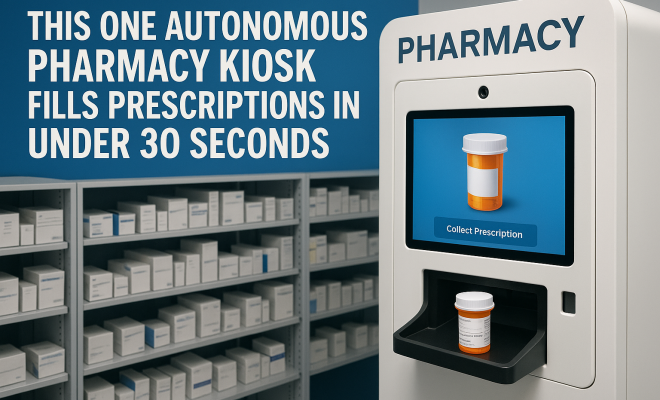
This One Autonomous Pharmacy Kiosk Fills Prescriptions in Under 30 Seconds
“`html
Imagine walking into your local pharmacy, scanning a code, and walking out with your prescription in less time than it takes to order a coffee. No waiting in line, no awkward conversations, just seamless, rapid service. For years, this vision felt like something out of a futuristic movie, but it’s quickly becoming a tangible reality thanks to innovations like the autonomous pharmacy kiosk. Queue, a company making waves in pharmaceutical technology, recently announced a system designed to do just that, promising to revolutionize how we access our medications.
The concept is simple yet profound: an autonomous pharmacy kiosk that handles the entire prescription fulfillment process, from receiving an electronic prescription to verifying the medication, labeling the vial, managing insurance and payment, and finally, allowing patients to collect their order with a simple pickup code. The bold claim? Prescriptions can be completed in under 30 seconds. That’s a staggering figure when you consider the typical wait times many of us endure at traditional pharmacy counters. This isn’t just about speed; it’s about fundamentally rethinking convenience, safety, and accessibility in healthcare.
The Dawn of the Autonomous Pharmacy Kiosk: What Queue is Bringing to the Table
Queue’s new autonomous pharmacy kiosk isn’t just another vending machine for pills; it’s a sophisticated piece of healthcare technology designed to integrate seamlessly into existing pharmacy workflows. The company envisions these kiosks deployed in a variety of settings: community pharmacies, retail pharmacy chains, urgent-care facilities, and even outpatient clinics. The goal is to offload the repetitive, time-consuming tasks associated with prescription fulfillment, freeing up human pharmacists to focus on more complex clinical services and patient consultations.
Think about the current process: a doctor sends a prescription, a pharmacy technician or pharmacist manually pulls the medication, counts the pills, labels the bottle, and then a pharmacist performs a final verification before it’s ready for pickup. Each step is prone to human error and adds to the overall wait time. Queue’s autonomous pharmacy kiosk aims to automate these physical steps with robotic precision. By receiving prescriptions electronically, the system minimizes transcription errors and speeds up the initial intake, setting the stage for that impressive sub-30-second fulfillment.
How Does an Autonomous Pharmacy Kiosk Achieve Sub-30-Second Fulfillment?
That 30-second claim is truly remarkable and likely the most shareable aspect of Queue’s announcement. To understand how an autonomous pharmacy kiosk could achieve such speed, we need to break down the automated workflow. It starts with the electronic prescription. When a doctor sends an Rx directly to the kiosk’s system, there’s no paper to process, no manual data entry. This digital hand-off is instantaneous.
Once the prescription is in the system, the internal robotics spring into action. Picture an intricate network of robotic arms and dispensing mechanisms. These aren’t just simple dispensers; they’re designed for precision. They identify the correct medication, count the exact dose, and fill the vial. Simultaneously, a label printer produces the patient-specific instructions. The software then manages the insurance claim and payment processing. The entire sequence is orchestrated and optimized for speed, eliminating the pauses and human interventions that slow down traditional pharmacies. It’s a finely tuned machine, where every second is accounted for and optimized.
Beyond Speed: The Potential for Enhanced Safety and Accuracy
While speed is a significant selling point, the implications for patient safety and accuracy are arguably even more critical. Human error is an unavoidable part of any manual process, and in pharmacy, those errors can have serious consequences. Miscounted pills, incorrect labels, or dispensing the wrong medication can all lead to adverse patient outcomes.
An autonomous pharmacy kiosk, by its very nature, introduces a layer of robotic precision that can significantly reduce these risks. The system is programmed to identify medications by barcode, count doses accurately, and apply labels with unwavering consistency. Verification steps are built into the software, comparing the dispensed medication against the electronic prescription data before it’s even presented to the patient. This automated, systematic approach minimizes the potential for human fatigue, distraction, or oversight, potentially making automated dispensing safer than conventional, human-led service for routine prescription fills. It’s a compelling argument for automation in a field where precision truly matters.
Insurance Integration and Payment: A Seamless Experience
One of the more frustrating aspects of picking up a prescription often involves navigating insurance complexities and payment. The autonomous pharmacy kiosk aims to streamline this by integrating insurance and payment processing directly into its software. This means that when a patient uses their pickup code, the system has already handled the backend administrative tasks.
Patients would likely verify their identity and confirm payment through a secure interface on the kiosk itself, similar to how you might interact with a self-checkout at a grocery store, but with robust security protocols for sensitive health information. This level of integration removes the need for a human intermediary to process cards or explain co-pays, further contributing to the speed and efficiency of the overall transaction. For consumers, this could mean fewer surprises at the counter and a more predictable, transparent payment process.
The Broader Impact: Reshaping Community and Retail Pharmacies
The introduction of an autonomous pharmacy kiosk like Queue’s could fundamentally alter the landscape of community and retail pharmacies. For pharmacy owners, the appeal is clear: increased efficiency, reduced labor costs for routine tasks, and the potential to process a higher volume of prescriptions. This could allow smaller pharmacies to compete more effectively with larger chains or enable existing pharmacies to expand their services without necessarily increasing their staffing significantly. (See: CDC on pharmacy services.)
However, the impact isn’t just operational. It could redefine the role of the pharmacist. Instead of spending hours counting pills and managing transactions, pharmacists could dedicate more time to patient counseling, medication therapy management, vaccinations, and other clinical services that require human expertise and empathy. This shift could elevate the professional standing of pharmacists, moving them from dispensers to integral members of the patient care team, focusing on optimizing health outcomes rather than just fulfilling orders. It’s a move towards a more patient-centric model, ironically facilitated by automation.
Addressing Concerns: Jobs, Security, and Patient Trust
Of course, any discussion about automation, especially in healthcare, brings up valid concerns. The most common immediate worry often centers on jobs. Will autonomous pharmacy kiosks displace pharmacy technicians and even pharmacists? While some roles focused purely on dispensing might evolve, the broader consensus among healthcare technology experts is that automation tends to shift job responsibilities rather than eliminate them entirely. As mentioned, pharmacists could take on more clinical roles. Pharmacy technicians might transition to managing and maintaining these sophisticated machines, or assisting patients with using the kiosks. For more context, see innovations in technology and financial literacy.
Security is another paramount concern. Handling sensitive patient data and controlled substances requires the highest levels of cybersecurity and physical security. These kiosks must be robustly built to prevent tampering and ensure data privacy. Patient trust is also crucial. Will people feel comfortable entrusting their medication needs to a robot? Initial skepticism is natural, but as consumers become more accustomed to automation in other aspects of their lives, and as the benefits of speed and accuracy become apparent, trust is likely to grow, especially with clear communication about the safety protocols in place.
The Cost Factor: Pharmacy Automation Costs and ROI
Implementing an autonomous pharmacy kiosk isn’t a small investment. Pharmacy automation costs can be substantial, ranging from tens of thousands to hundreds of thousands of dollars, depending on the system’s complexity and capacity. For a system capable of sub-30-second fulfillment and comprehensive insurance integration, the price tag will likely be on the higher end.
However, the return on investment (ROI) can be significant. Pharmacies stand to save on labor costs, reduce medication errors (which can be costly in terms of liability and patient care), and improve operational efficiency. The ability to handle higher prescription volumes without increasing staff can directly impact profitability. Furthermore, the enhanced patient experience – shorter wait times and increased convenience – can lead to greater customer loyalty and attract new patients, providing another avenue for ROI. It’s a strategic investment that forward-thinking pharmacies will certainly be evaluating.
The Future is Now: Autonomous Kiosks in Urgent Care and Outpatient Clinics
One of the most exciting deployment possibilities for an autonomous pharmacy kiosk is within urgent-care facilities and outpatient clinics. Imagine visiting a doctor, getting a diagnosis, and having your prescription filled on-site before you even leave the building. This eliminates an extra stop, saving patients time and reducing the potential for delay in starting crucial medications.
In urgent care, where immediate treatment is often key, having an on-site dispensing kiosk could dramatically improve patient adherence and outcomes. For conditions requiring immediate antibiotics or pain relief, getting the medication instantly can make a real difference. This integration moves healthcare closer to a truly one-stop-shop model, enhancing patient convenience and potentially improving public health by ensuring prescriptions are filled and taken promptly. It’s a powerful vision of integrated care, making the health journey smoother and more efficient for everyone involved.
Comparing Automated Dispensing to Conventional Service: A Shift in Paradigm
When we compare automated dispensing via an autonomous pharmacy kiosk to conventional pharmacy service, we’re really looking at a paradigm shift. Conventional service relies heavily on human interaction, which can be a double-edged sword. It offers personalized advice and a human touch, but it also comes with variability in wait times, potential for human error, and the inherent limitations of manual processing.
Automated dispensing, on the other hand, prioritizes efficiency, precision, and consistency. While it might lack the immediate human interaction for every routine fill, it frees up pharmacists to engage in more meaningful clinical interactions for patients who truly need it. It’s not about replacing humans entirely, but rather optimizing where human expertise is best applied. For a quick, straightforward refill, the kiosk wins on speed and accuracy. For complex medication counseling or a new diagnosis, the human pharmacist remains irreplaceable. The future likely involves a hybrid model, where both automated and conventional services coexist, each serving different patient needs and maximizing the strengths of both technology and human care.
The Evolution of Pharmacy Automation: A Historical Context
To fully appreciate the impact of an autonomous pharmacy kiosk, it helps to look at the history of automation in pharmacies. It’s not a sudden leap but a gradual progression. Early automation involved simple pill counters, which helped pharmacists accurately count medications much faster than by hand. Then came robotic dispensing systems, often large, centralized units in hospital pharmacies or large retail hubs, that could store and dispense hundreds of different medications. These systems significantly improved efficiency and reduced errors in high-volume settings.
The autonomous pharmacy kiosk represents the next significant step in this evolution. It takes the core functionalities of those large robotic systems – precise dispensing, labeling, and inventory management – and miniaturizes them, making them accessible at the point of patient interaction. This shift from back-end, centralized automation to patient-facing, decentralized automation is what makes systems like Queue’s so revolutionary. It’s about bringing the benefits of advanced robotics directly to the consumer, drastically reducing the “last mile” problem in prescription fulfillment. This isn’t just about faster filling; it’s about making the entire process more intelligent and accessible.
Regulatory Landscape and Compliance for Autonomous Pharmacy Kiosks
Any technology dealing with prescription medications operates under strict regulatory oversight. For an autonomous pharmacy kiosk, this means navigating complex regulations from bodies like the FDA (Food and Drug Administration) in the U.S., state boards of pharmacy, and potentially other healthcare agencies depending on the country. These regulations cover everything from the manufacturing and dispensing of drugs to patient privacy (HIPAA in the U.S.) and the security of health information. (See: NIH funds research on pharmacy technologies.)
For a system like Queue’s, gaining regulatory approval involves demonstrating robust safety protocols, verifiable accuracy in dispensing, secure data handling, and reliable performance under various conditions. It also requires careful consideration of how the kiosk integrates with existing pharmacy practice laws, which often mandate pharmacist oversight. Developers need to ensure that the autonomous kiosk functions as an extension of the pharmacist’s capabilities, not a replacement for their legal and ethical responsibilities. This often means pharmacists retain remote oversight, able to intervene or review specific cases as needed. Compliance isn’t just a hurdle; it’s a foundation for building trust and ensuring public safety in automated healthcare.
Data Analytics and Predictive Inventory Management
Beyond dispensing, an autonomous pharmacy kiosk generates a wealth of data that can be incredibly valuable. Every transaction, every dispensed medication, and every stock level update contributes to a comprehensive data stream. This data can be analyzed to optimize inventory management, predict demand for certain medications, and even identify trends in patient adherence. For more context, see AI and its impact on various industries.
Imagine a kiosk that learns which medications are frequently picked up together or at specific times of the month. It can then automatically adjust its internal stock levels, reducing waste from expired medications and ensuring popular drugs are always available. This kind of predictive analytics can lead to significant cost savings for pharmacies and improve overall efficiency. It also offers insights into community health trends, helping local health providers better understand and respond to the needs of their patient population. The kiosk isn’t just a dispenser; it’s a smart data collection and analysis hub that can drive smarter pharmacy operations.
Psychological Impact on Patients: Building Trust in Automation
While the technical benefits of an autonomous pharmacy kiosk are clear, the psychological aspect for patients is equally important. Many people are accustomed to the personal interaction with their pharmacist, especially when they have questions or concerns about their medications. Shifting to an automated system requires a degree of trust and comfort with technology.
Pharmacies rolling out these kiosks will need to implement strategies to build this trust. This could involve clear, user-friendly interfaces, readily available support staff (even if remote), and transparent explanations of the safety and accuracy features. For instance, displaying real-time information on the screen about the verification steps being performed by the robot could reassure patients. Over time, as people experience the speed, accuracy, and convenience, the initial apprehension is likely to diminish. It’s a journey from novelty to normalcy, much like ATMs or self-checkout lanes became widely accepted despite initial skepticism.
Future Enhancements: Beyond Basic Dispensing
The current generation of autonomous pharmacy kiosks, while impressive, likely represents just the beginning. Future enhancements could push the boundaries even further. We might see kiosks that offer personalized medication adherence reminders, integrated telepharmacy consultations (where a pharmacist appears on screen for a video chat), or even advanced biometric verification methods for pickup.
Imagine a kiosk that, after dispensing your medication, offers a quick, personalized video explaining how to take it, potential side effects, and answers common FAQs, all tailored to your specific prescription. Kiosks could also be integrated with wearable health devices, providing real-time feedback on medication effectiveness or prompting refills based on consumption patterns. The potential for these systems to evolve into comprehensive, interactive health hubs is enormous, moving beyond simple dispensing to become truly intelligent health partners.
FAQ: Understanding the Autonomous Pharmacy Kiosk
What exactly is an autonomous pharmacy kiosk?
An autonomous pharmacy kiosk is a self-service machine that automates the entire prescription fulfillment process. This includes receiving electronic prescriptions, verifying medication, accurately counting and labeling doses, processing insurance and payment, and securely dispensing the medication to the patient, often in under a minute.
How does an autonomous pharmacy kiosk ensure accuracy and safety?
These kiosks use robotic precision, barcode scanning for medication identification, and multiple digital verification steps. The system cross-references the dispensed medication against the electronic prescription data, minimizing human error, miscounts, and incorrect labeling. Robust internal security measures also protect the medications and patient data.
Can an autonomous pharmacy kiosk handle all types of prescriptions, including controlled substances?
Many advanced autonomous pharmacy kiosks are designed to handle a wide range of medications. However, handling controlled substances requires additional stringent security and tracking protocols to comply with regulations. The specific capabilities will depend on the kiosk’s design and regulatory approvals in its jurisdiction. For more context, see workplace learning trends and technology. (See: ScienceDirect on pharmacy automation.)
What about patient privacy and data security?
Data security and patient privacy are paramount. Autonomous pharmacy kiosks are built with advanced cybersecurity measures to protect sensitive health information (like HIPAA in the U.S.). Patient verification often involves secure methods like unique pickup codes, biometrics, or ID scanning, ensuring only the authorized person can access their medication.
Will these kiosks replace pharmacists?
The general consensus is that autonomous pharmacy kiosks will not replace pharmacists but will change their roles. By automating routine dispensing tasks, kiosks free up pharmacists to focus on higher-value clinical services, such as medication therapy management, patient counseling, vaccinations, and complex case reviews, enhancing their professional impact.
How do patients interact with an autonomous pharmacy kiosk?
Patients typically interact with the kiosk via a secure touchscreen interface. They might input a unique pickup code, scan a QR code from their phone, or use another form of secure identification. The kiosk then guides them through the payment process and dispenses their prescription.
Are autonomous pharmacy kiosks expensive for pharmacies to implement?
Yes, the initial investment for an autonomous pharmacy kiosk can be substantial, often ranging from tens to hundreds of thousands of dollars. However, pharmacies often see a significant return on investment (ROI) through reduced labor costs, increased efficiency, higher prescription volume capacity, and enhanced patient satisfaction.
Where are these kiosks typically deployed?
Autonomous pharmacy kiosks are being deployed in various settings, including traditional community pharmacies, large retail pharmacy chains, hospital outpatient pharmacies, urgent care centers, and even employer campuses. The goal is to provide convenient medication access where it’s most needed.
What are the benefits for patients?
For patients, the benefits include significantly reduced wait times (often under 30 seconds), increased convenience (no lines, potentially 24/7 access), enhanced accuracy and safety in dispensing, and a more streamlined, predictable pickup experience.
What happens if a patient has questions about their medication when using a kiosk?
While the kiosk automates dispensing, human support for questions is still crucial. Pharmacies deploying kiosks often have pharmacists available for consultation, either in person (for in-pharmacy kiosks) or via telepharmacy (video chat) for remote kiosks. Kiosks might also provide on-screen information or direct patients to resources.
The introduction of Queue’s autonomous pharmacy kiosk, with its audacious promise of sub-30-second prescription fulfillment, marks a significant milestone in healthcare technology. It’s a glimpse into a future where accessing medication is faster, more accurate, and seamlessly integrated into our daily lives. As these systems become more prevalent, they won’t just change how we pick up prescriptions; they’ll redefine the entire pharmacy experience, making it more efficient for providers and more convenient for patients.
“`
Trending Now
Frequently Asked Questions
How does an autonomous pharmacy kiosk work?
An autonomous pharmacy kiosk operates by receiving electronic prescriptions, verifying medications, labeling vials, and managing insurance and payments. Patients can simply scan a code to collect their prescriptions, with the entire process designed to be completed in under 30 seconds.
What are the benefits of using an autonomous pharmacy kiosk?
The main benefits of an autonomous pharmacy kiosk include significantly reduced wait times, enhanced convenience, and improved accessibility to medications. This technology allows pharmacists to focus on clinical services while streamlining the prescription fulfillment process.
Where can autonomous pharmacy kiosks be found?
Autonomous pharmacy kiosks can be deployed in various settings such as community pharmacies, retail pharmacy chains, urgent-care facilities, and outpatient clinics. This versatility is aimed at improving medication access in diverse healthcare environments.
What company is behind the autonomous pharmacy kiosk?
Queue is the company pioneering the development of the autonomous pharmacy kiosk. They are focused on transforming the pharmaceutical industry through innovative technologies that enhance the prescription fulfillment experience.
How fast can prescriptions be filled at these kiosks?
The autonomous pharmacy kiosks are designed to fill prescriptions in under 30 seconds, offering a dramatic improvement over traditional pharmacy wait times, which can often be much longer.
Agree or disagree? Drop a comment and tell us what you think.