Don’t Miss This: Why the August 2026 Eclipse Is Far More Than Just a Celestial Show
Alright, sky-gazers and cosmic curious, listen up. While the headline for this piece mentions the August solar eclipse 2023, it’s actually August 2026 that’s shaping up to be an absolute blockbuster month for anyone with even a passing interest in what’s happening above our heads. We’re talking about a celestial trifecta, an astronomical alignment so rich in phenomena that it practically demands your attention. Forget your usual summer doldrums; August 2026 is poised to deliver a spectacle that combines rare beauty, scientific intrigue, and, rather remarkably, a viral internet hoax that somehow manages to make the real events even more compelling. It’s a month where the moon, the sun, and even meteoroids are going to put on a show, and you won’t want to miss a single moment.
But let’s be clear from the outset: while the internet is buzzing with talk about a mysterious August solar eclipse 2023, the truly significant event we’re focusing on here, the one that will grace the skies across parts of Europe, Greenland, and Iceland, is actually slated for August 12, 2026. This isn’t just another eclipse; it’s a total solar eclipse, a moment when the moon perfectly aligns to obscure the sun, casting a fleeting shadow that plunges parts of Earth into a surreal twilight. This rare alignment, coupled with other spectacular events, creates a unique opportunity for both seasoned astronomers and casual observers to witness the universe in action. And yes, there’s a fascinating, if completely unfounded, internet rumor swirling around this date that adds another layer of intrigue, which we’ll definitely get into.
The Main Event: The August 12, 2026 Total Solar Eclipse
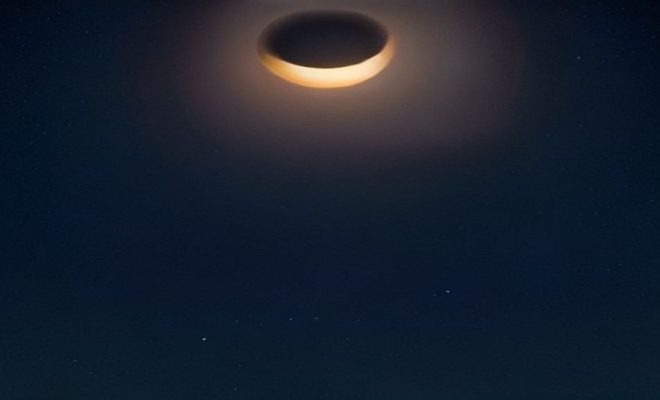
Let’s talk specifics about the star of the show: the total solar eclipse on August 12, 2026. This isn’t just a partial dimming of the sun; it’s the full, awe-inspiring experience where the moon completely covers our star, revealing the ethereal solar corona – a sight many describe as life-changing. The path of totality for this particular eclipse is quite dramatic, sweeping across some of the most stunning landscapes on Earth. Imagine standing under the midnight sun, only for it to be momentarily swallowed by the moon, plunging the arctic landscape into a sudden, brief darkness. That’s the kind of experience we’re talking about.
The path of totality begins in Greenland, where observers will witness this incredible phenomenon against a backdrop of glaciers and icy fjords. From there, the moon’s shadow races southeast, crossing the remote and rugged beauty of Iceland. For those in Iceland, particularly in areas like the Reykjanes Peninsula or even near Reykjavik, this will be an unforgettable event, drawing thousands of eclipse chasers. Finally, the shadow will traverse parts of northern Spain, including cities like Valencia, Zaragoza, and Palma de Mallorca, offering a Mediterranean flavor to the celestial spectacle. While a total solar eclipse is indeed a rare event, its visibility from such diverse and accessible locations makes this particular one exceptionally appealing. Even those in the northern United States will catch a partial view, though it won’t compare to the full immersion of totality.
Beyond the Shadow: A Celestial Trifecta in August 2026
What makes August 2026 truly exceptional isn’t just the total solar eclipse, but its remarkable timing alongside other major astronomical events. It’s like the universe decided to throw a month-long party for us. Just a day after the total solar eclipse, on August 13, the renowned Perseid meteor shower reaches its peak. This annual shower, famous for its bright, fast meteors, is already a favorite among sky-watchers. The timing couldn’t be better: imagine experiencing the profound silence and darkness of a total eclipse, only to follow it up with a barrage of shooting stars streaking across the night sky. It’s a one-two punch of cosmic wonder.
But wait, there’s more! Towards the end of the month, specifically on August 27th and 28th, we’ll be treated to a partial lunar eclipse. While not as dramatic as a total solar eclipse, a lunar eclipse still offers a beautiful display as the Earth’s shadow creeps across the face of the moon. This means that within a single month, we’ll have witnessed the sun, the moon, and numerous meteors all putting on a show. For anyone with an interest in astronomy, or even just a casual appreciation for the night sky, August 2026 is shaping up to be an absolutely unforgettable period. It’s a genuinely rare convergence that underscores the dynamic and ever-changing nature of our solar system.
The Viral Hoax: Earth Losing Gravity on August 12, 2026?
Now, let’s address the elephant in the room, or rather, the complete fabrication that has taken the internet by storm. There’s a widely circulated, completely debunked hoax claiming that Earth will lose gravity for a full seven seconds on August 12, 2026. Yes, you read that right. Seven seconds of weightlessness. This utterly baseless claim has, predictably, gone viral, driving massive search interest and engagement around that specific date. It’s a prime example of how misinformation can spread like wildfire, especially when it taps into our innate human fascination with the extraordinary and the slightly terrifying.
Of course, the idea of Earth losing gravity, even momentarily, is scientifically absurd. Gravity is a fundamental force, intricately tied to the mass of our planet. It doesn’t just switch off like a light bulb. Yet, the sheer volume of searches for this specific claim highlights a peculiar human tendency: our willingness to believe, or at least entertain, even the most outlandish theories, especially when they’re connected to a real, significant event like a solar eclipse. This hoax, while frustrating for scientists and educators, ironically serves to amplify the genuine celestial events of August 2026, drawing more eyes to the sky, even if some initially come for the wrong reasons. It’s a strange blend of fact and fiction, where the fiction inadvertently boosts interest in the fact.
Why This August Solar Eclipse 2023 (or rather, 2026) is Generating Such Buzz
The combination of rare astronomical phenomena and this sensational (and false) claim creates a potent cocktail for viral content. People are naturally drawn to events that are perceived as unique, once-in-a-lifetime experiences. A total solar eclipse certainly fits that bill. Add to that the spectacle of a major meteor shower and a lunar eclipse, and you have a recipe for sustained public interest. But then, you throw in a completely wild, gravity-defying hoax, and suddenly, you’ve got a narrative that’s not just shareable but emotionally charged. (See: understanding solar eclipses.)
The hoax, despite being false, creates a sense of urgency and wonder. Even if people quickly realize it’s untrue, the initial spark of curiosity it ignites often leads them to search for more information about August 12, 2026. And what do they find? The real, incredible story of a total solar eclipse. This accidental synergy means that the August solar eclipse 2023 (for those mistakenly searching for it) and the actual 2026 event are getting far more attention than they might have otherwise. It’s a fascinating case study in how the digital age amplifies both truth and fiction, sometimes with unexpected benefits for the truth. For more context, see Best GoPro app features 2026.
Planning Your Eclipse Expedition: Where to Go for the Best View
If you’re serious about experiencing the 2026 total solar eclipse, planning is absolutely crucial. As mentioned, the path of totality offers some truly incredible vantage points. Greenland is an adventurous choice, offering a remote and breathtaking setting for the eclipse. However, logistics can be challenging, and weather is always a factor in the Arctic. For many, Iceland presents a more accessible yet equally stunning option. The entire country will experience totality, making it an ideal destination. Cities like Reykjavik will be bustling with visitors, but even venturing into more rural areas could offer a unique perspective, perhaps against the backdrop of volcanic landscapes or geothermal springs.
Southern Europe, particularly Spain, provides a different flavor entirely. Imagine watching the sun disappear over the Mediterranean Sea, or from a historic Spanish city. Valencia, Zaragoza, and Palma de Mallorca are all within the path, offering a blend of cultural experiences and celestial wonder. No matter your choice, it’s vital to book accommodations and travel well in advance. Eclipse chasers are a dedicated bunch, and prime viewing locations will fill up rapidly. Consider joining specialized eclipse tours, which often handle all the intricate logistics, allowing you to focus solely on the astronomical spectacle.
Essential Gear for Eclipse and Meteor Shower Viewing
Whether you’re traveling to the path of totality or planning to observe from your backyard, having the right equipment is non-negotiable, especially for solar viewing. First and foremost, you absolutely need certified solar eclipse glasses. Regular sunglasses are NOT safe for direct solar viewing and can cause permanent eye damage. Look for glasses that meet the ISO 12312-2 international safety standard. These are designed to block out nearly all harmful ultraviolet, visible, and infrared light.
For photographers, a solar filter for your camera lens is essential. Again, direct imaging of the sun without proper filtration will damage your camera sensor. A tripod is also highly recommended for both eclipse photography and capturing meteors during the Perseid shower, as it allows for longer exposures and sharper images. While not strictly necessary, a small telescope or binoculars equipped with solar filters can enhance the experience, allowing you to observe sunspots or the sun’s fiery prominences (during totality, *only* during totality, and only with appropriate filtration for pre/post totality). For the Perseids, simply finding a dark sky location, a comfortable chair, and letting your eyes adjust is often the best approach, though a red-light flashlight can be useful for navigating without ruining your night vision. Remember, safety first, especially when dealing with direct sunlight. For more on this, see Iceland and Spain for the eclipse.
The Economic Impact: Tourism, Gear, and Education Surrounding the August Solar Eclipse 2023 (and 2026)
The sheer scale of interest in events like the August 2026 eclipse, even fueled by a hoax, creates significant economic opportunities. For the travel industry, particularly in Iceland and Spain, this means a massive influx of tourists. Hotels, airlines, tour operators, and local businesses will see a substantial boost. Luxury travel companies are already designing bespoke eclipse-chasing tours, catering to those who want a premium experience. This isn’t just about booking a flight and a hotel; it’s about curated experiences, exclusive viewing parties, and expert-led expeditions.
Beyond travel, there’s a thriving market for astronomy equipment. Retailers selling telescopes, binoculars, solar eclipse glasses, and specialized camera gear will undoubtedly see a spike in sales. Affiliate marketing opportunities abound here, linking interested buyers to reputable brands. Furthermore, online education platforms are perfectly positioned to offer courses on astronomy, skywatching, and eclipse photography. This caters to comparison and buyer intent for related products and services, providing valuable information while also creating revenue streams. The buzz around the August solar eclipse 2023 (the misdated search term) and the actual 2026 event clearly demonstrates the power of celestial phenomena to ignite both scientific curiosity and significant economic activity.
Understanding Solar Eclipses: A Brief Scientific Primer
So, what exactly *is* a total solar eclipse, scientifically speaking? It’s a breathtaking cosmic coincidence. The moon is about 400 times smaller than the sun, but it’s also about 400 times closer to Earth. This creates a remarkable alignment where, during a total solar eclipse, the moon appears almost precisely the same size as the sun in our sky. When the three celestial bodies—the sun, moon, and Earth—align in a straight or nearly straight line, with the moon in the middle, the moon casts a shadow on Earth, causing an eclipse.
There are a few types of solar eclipses: partial, annular, and total. During a partial eclipse, the moon only partially covers the sun. An annular eclipse occurs when the moon is farther away from Earth in its elliptical orbit, appearing smaller and leaving a ‘ring of fire’ around its edges. But a total solar eclipse, like the one in August 2026, is the showstopper. During totality, the sky darkens, temperatures can drop, and animals may behave strangely. The most incredible sight is the sun’s corona, its outer atmosphere, which is usually hidden by the sun’s bright face. It’s a reminder of the dynamic, fiery processes constantly at play in our star, normally invisible to our naked eye.
The Enduring Fascination with Celestial Events
Why do we remain so utterly captivated by events like the August solar eclipse 2023 (or, once again, the 2026 event) and other celestial phenomena? Perhaps it’s a primal connection to the cosmos, a vestige of our ancestors who relied on the sky for navigation, timekeeping, and myth-making. There’s something profoundly humbling and awe-inspiring about witnessing the universe in action, a reminder of our place within a much grander scheme. In an increasingly digital and often insular world, these shared cosmic experiences offer a rare opportunity for collective wonder. (See: NASA's insights on the 2026 eclipse.)
From ancient civilizations interpreting eclipses as omens to modern scientists studying the sun’s corona, the allure remains constant. It transcends cultural boundaries and scientific understanding, tapping into a universal sense of curiosity and beauty. These events remind us that despite all our technological advancements, there are still vast, spectacular mysteries playing out above our heads, waiting to be observed and appreciated. And even a bizarre internet hoax can’t diminish the genuine wonder of these natural spectacles; if anything, it shows just how eager people are to connect with something truly extraordinary. For more context, see Canva iOS vs Mojo app comparison.
Expert Perspectives: What Scientists Hope to Learn from the 2026 Eclipse
While the visual spectacle is undoubtedly the main draw for many, total solar eclipses are goldmines for scientific research. For astronomers and solar physicists, the brief moments of totality offer a unique window into the sun’s outermost atmosphere, the corona. This shimmering, pearly white halo, visible only during a total eclipse, is far hotter than the sun’s surface – a mystery scientists are still trying to unravel. Researchers will deploy specialized instruments, both ground-based and airborne, to capture data that’s impossible to get at any other time.
They’ll be looking at the corona’s temperature, density, and magnetic field lines, which play a crucial role in phenomena like solar flares and coronal mass ejections that can impact Earth. Observing the corona during an eclipse helps us understand space weather, which can disrupt satellites, power grids, and communication systems. The 2026 eclipse path, crossing diverse environments from the Arctic to the Mediterranean, provides different atmospheric conditions for observation, offering varied data points. It’s a chance to test theories, refine models, and deepen our understanding of our star, which is, after all, the ultimate source of life on Earth.
Historical Context: Eclipses Through the Ages
Eclipses have fascinated humanity for millennia, often inspiring fear, wonder, and scientific inquiry. Ancient cultures frequently interpreted solar eclipses as omens, divine messages, or battles between celestial beings. The Chinese, for instance, believed a celestial dragon was devouring the sun and would bang pots and drums to scare it away. The Babylonians kept meticulous records, sometimes predicting eclipses with surprising accuracy, using them for astrological prophecies.
In more modern history, eclipses have been pivotal for scientific breakthroughs. In 1919, Arthur Eddington famously used a total solar eclipse to confirm Einstein’s theory of general relativity. By observing stars whose light passed near the eclipsed sun, he measured how the sun’s gravity bent their light, precisely as Einstein had predicted. This monumental experiment cemented Einstein’s fame and reshaped our understanding of the universe. So, while the 2026 eclipse is a beautiful event, it also carries a rich legacy of human curiosity and discovery.
The Role of Citizen Science in Eclipse Observation
You don’t need to be a professional astronomer to contribute to science during an eclipse. Citizen science projects are increasingly important, allowing enthusiasts to participate in real research. For the 2026 eclipse, there will likely be opportunities to contribute observations. This could involve recording atmospheric changes like temperature drops, noting animal behavior, or even capturing specific visual phenomena like “Bailey’s Beads” (the last beads of sunlight peeking through lunar valleys) or the diamond ring effect.
These crowd-sourced observations, when collected and analyzed, can provide a wealth of data that a small team of professional scientists couldn’t possibly gather alone across such a wide path of totality. It’s a fantastic way for the public to engage directly with scientific discovery, fostering a deeper appreciation for astronomy and the scientific method. Keep an eye out for announcements from astronomical organizations and universities in the lead-up to 2026 for ways you can get involved.
Frequently Asked Questions About the August Solar Eclipse 2026
Q: Is there really an August solar eclipse 2023?
A: No, there is no total solar eclipse in August 2023. This is a common misconception, often fueled by internet searches for the 2026 event. The last total solar eclipse in North America was in April 2024, and the next major one for parts of Europe will be August 12, 2026. (See: safety tips for viewing eclipses.)
Q: What’s the difference between a total solar eclipse and a partial one?
A: A total solar eclipse happens when the Moon completely blocks the Sun, turning day into a brief twilight and revealing the Sun’s beautiful corona. A partial solar eclipse is when the Moon only covers a portion of the Sun, and the sky doesn’t get fully dark. You need special eye protection for both, but the full dramatic effect is only seen during totality.
Q: Is it safe to look at the sun during the eclipse?
A: NEVER look directly at the uneclipsed or partially eclipsed sun without certified solar eclipse glasses or viewers. Doing so can cause permanent eye damage. The only time it’s safe to look at the sun without protection is during the brief period of totality in a total solar eclipse, and only if you are within the narrow path of totality. Once totality ends, put your glasses back on immediately.
Q: How long will the totality last on August 12, 2026?
A: The duration of totality varies depending on your location within the path. For the August 2026 eclipse, the maximum duration will be around 2 minutes and 18 seconds, occurring over the Atlantic Ocean. Locations on land, like in Spain and Iceland, will experience totality for shorter periods, typically between 1 and 2 minutes.
Q: Will the “gravity hoax” actually happen?
A: Absolutely not. The claim that Earth will lose gravity for seven seconds on August 12, 2026, is a viral hoax with no scientific basis whatsoever. Gravity is a fundamental force tied to the Earth’s mass and cannot simply “turn off.” It’s important to rely on credible scientific sources for information about astronomical events.
Q: What other celestial events are happening in August 2026?
A: August 2026 is a truly special month! In addition to the total solar eclipse on August 12, the peak of the Perseid meteor shower occurs around August 13. Towards the end of the month, on August 27th and 28th, there will also be a partial lunar eclipse. It’s a rare celestial trifecta! (Catch the 2026 meteor shower)
So, mark your calendars for August 2026. While you might stumble upon some wild claims about gravity, remember the real story is far more incredible: a total solar eclipse, a meteor shower at its peak, and a lunar eclipse, all within a single month. It’s a testament to the dynamic beauty of our solar system and a truly unique opportunity to look up and be amazed.
Trending Now
Frequently Asked Questions
What is special about the August 2026 solar eclipse?
The August 12, 2026 total solar eclipse is a rare astronomical event where the moon completely obscures the sun, allowing observers to witness the stunning solar corona. This eclipse will be visible in parts of Europe, Greenland, and Iceland, making it a must-see for both casual viewers and seasoned astronomers.
Where can I see the August 2026 eclipse?
The total solar eclipse on August 12, 2026, will be visible in specific regions including parts of Europe, Greenland, and Iceland. Those in these areas will have the best opportunity to experience this breathtaking celestial event.
What other astronomical events are happening in August 2026?
In addition to the total solar eclipse, August 2026 will feature a rare alignment of celestial phenomena, including meteoroid showers. This combination of events makes it an exciting month for sky-gazers and astronomy enthusiasts alike.
Is there an internet hoax related to the August 2026 eclipse?
Yes, there is a viral internet rumor surrounding the August 2026 eclipse. While the rumor is unfounded, it adds an intriguing layer to the discussions about this significant celestial event, drawing more attention to the actual occurrences.
When is the total solar eclipse in August 2026?
The total solar eclipse will occur on August 12, 2026. This event is particularly noteworthy as it offers a full eclipse experience, where the moon's alignment will completely cover the sun, creating a surreal twilight effect on Earth.
Have you experienced this yourself? We'd love to hear your story in the comments.