China’s Bold Move: Automakers, Not Drivers, Now Liable for Autonomous Cars
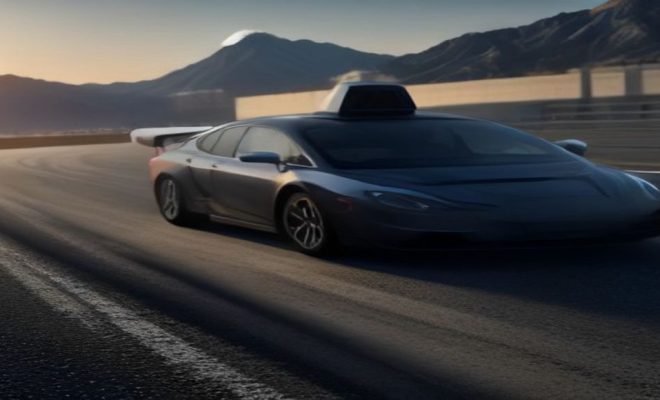
The automotive world is buzzing, and it’s not just about new electric vehicles or faster sports cars. Instead, the conversation has shifted dramatically towards the intricate, often perplexing, realm of autonomous driving liability. We’re talking about who shoulders the blame when a self-driving car makes a mistake. This isn’t just a theoretical debate anymore; it’s becoming a very real, very urgent question with significant legal and financial ramifications for manufacturers, consumers, and even entire national economies. Two recent developments, one from China and another from the United States, are throwing gasoline on this already fiery discussion, forcing us to confront the uncomfortable truths about our march towards a driverless future.
On one side, we have China, a global leader in technological adoption and innovation, preparing to implement a truly groundbreaking traffic law. This isn’t just a tweak to existing regulations; it’s a fundamental overhaul. The proposed legislation, reported on August 27, 2026, explicitly states that autonomous vehicle manufacturers or importers will be held liable for traffic violations committed by their self-driving cars. Think about that for a moment. This isn’t about a human driver making a bad call; it’s about the vehicle itself, and by extension, its creator, being held accountable. This move marks a significant departure from centuries of human-centric traffic laws and signals a profound shift in how we might view ownership and responsibility in an autonomous world. It’s a bold, some might say audacious, step that places the onus squarely on the shoulders of the companies building these complex machines.
Meanwhile, across the Pacific, a different kind of storm is brewing. A class-action lawsuit, Waller v. Tesla Inc., filed in June 2026, alleges that Tesla has engaged in deceptive marketing practices regarding its much-touted ‘Full Self-Driving’ (FSD) capabilities. The plaintiffs claim that older Tesla vehicles simply lack the hardware necessary to achieve true autonomy, and, perhaps more disturbingly, that the FSD systems perform dangerously on public roads. This isn’t just a legal spat; it’s a direct challenge to the very promises that have fueled the autonomous vehicle revolution. Both stories, though distinct, converge on a central theme: the urgent need to define autonomous driving liability. They are generating massive social media engagement, sparking heated debates, and forcing us all to reconsider our assumptions about safety, consumer trust, and the legal frameworks that will govern our future commutes. We covered revolutionizing self-driving safety in more detail.
China’s Unprecedented Stance on Autonomous Driving Liability
China’s draft traffic law represents a seismic shift in legal philosophy. For decades, virtually every traffic regulation around the globe has been built on the premise of a human driver in control, making decisions, and ultimately, bearing responsibility. From minor parking infractions to catastrophic accidents, the person behind the wheel has always been the primary point of accountability. This new Chinese law shatters that paradigm, explicitly transferring autonomous driving liability from the ghost in the machine (the AI) and the nominal ‘driver’ (who might just be a passenger) to the corporate entity that designed, manufactured, or imported the vehicle. It’s a move that recognizes the fundamental difference between a car operated by a person and one operated by algorithms and sensors.
Why this radical departure? One could argue it’s a pragmatic response to a technological reality. If a car is truly self-driving, if it’s making decisions about acceleration, braking, and steering without direct human input, then it stands to reason that the entity responsible for those decisions should be held accountable when things go awry. This approach could also be seen as a powerful incentive for manufacturers to prioritize safety and rigorous testing above all else. If you know your company will be on the hook for every fender-bender or worse, you’re likely to invest far more in robust engineering, fail-safe systems, and exhaustive validation processes. It essentially forces a higher standard of care onto the industry, potentially accelerating the development of truly safe autonomous systems.
However, this legislative framework isn’t without its complexities. Defining what constitutes a ‘traffic violation’ when no human is actively driving will require careful interpretation. What if a system is operating within its design parameters but still causes an incident due to an unforeseen edge case? What if a manufacturer’s system is deemed safe, but a third-party software update or modification leads to an issue? These are not trivial questions, and the precise wording and subsequent judicial interpretations of this law will be crucial in shaping China’s autonomous vehicle landscape. It also raises questions about international consistency – will other nations follow suit, or will we see a patchwork of differing autonomous driving liability laws across borders?
The Waller v. Tesla Inc. Lawsuit: A Crisis of Trust?
While China is looking forward, the Waller v. Tesla Inc. lawsuit is forcing a hard look at the present, and potentially, the past. The class-action suit, filed in June 2026, isn’t about a single accident; it’s about the very promise of ‘Full Self-Driving’ technology. The plaintiffs allege that Tesla has been misleading consumers, claiming capabilities that simply aren’t present, particularly in older vehicles. The core accusation is that hardware installed in these earlier models is inherently incapable of achieving true autonomy, making the ‘Full Self-Driving’ moniker a misnomer, or worse, a deceptive marketing tactic.
This lawsuit cuts to the heart of consumer trust in the autonomous vehicle space. If a company as prominent and influential as Tesla is accused of overstating its capabilities, what does that mean for the public’s perception of the entire industry? The plaintiffs’ claim that the FSD systems perform dangerously on public roads is particularly damning. It suggests not just a failure to deliver on a promise, but a potential risk to public safety. Imagine purchasing a feature that you believe will make your driving safer and easier, only to find that it may, in fact, introduce new hazards.
The outcome of this lawsuit could have far-reaching implications. Beyond the financial penalties for Tesla, a ruling in favor of the plaintiffs could significantly impact how autonomous driving features are marketed and regulated globally. It could lead to stricter guidelines on terminology, forcing manufacturers to be far more precise about what their systems can and cannot do. It might also encourage a more cautious approach from consumers, who may become more skeptical of grand claims until the technology is truly proven. This case isn’t just about Tesla; it’s a bellwether for the entire industry’s credibility.
The High Stakes of Deceptive Marketing in Autonomous Tech
The allegations in Waller v. Tesla Inc. highlight a persistent tension in the tech world: the balance between aspirational marketing and factual accuracy. When a company sells a product with the promise of a revolutionary future, it’s easy to get swept up in the hype. But when that hype doesn’t align with reality, especially in a safety-critical domain like automotive technology, the consequences can be severe. Deceptive marketing isn’t just bad business; it can erode public confidence and potentially endanger lives.
The phrase ‘Full Self-Driving’ itself has been a point of contention for years. Critics argue that it implies a level of autonomy that no currently available system possesses. Even Tesla itself has often included disclaimers, advising drivers to remain attentive and ready to take control. But do consumers truly internalize these disclaimers when the primary branding suggests otherwise? The lawsuit suggests that many consumers felt misled, believing they were purchasing a product that would allow their vehicle to navigate without intervention, rather than a sophisticated driver-assist system. (See: autonomous car liability.)
If the court finds that Tesla deliberately misled consumers about the capabilities of its FSD system, it could set a powerful precedent. It would send a clear message to all autonomous vehicle developers: honesty and transparency are paramount. This isn’t just about avoiding lawsuits; it’s about fostering an environment of trust that is essential for the widespread adoption of autonomous technology. Without that trust, even the safest, most advanced systems will struggle to gain acceptance from a skeptical public.
Redefining ‘Driver’ in the Age of Autonomy
Both the Chinese draft law and the Tesla lawsuit force us to confront a fundamental question: what does it mean to be a ‘driver’ when the car is driving itself? In the traditional sense, a driver is an active participant, making decisions, reacting to conditions, and ultimately, bearing the responsibility for the vehicle’s movement. But in a Level 3, 4, or 5 autonomous vehicle, that definition becomes incredibly murky.
If a car is truly driving itself, is the human occupant merely a passenger? If so, why should they be held accountable for the car’s actions? This is precisely the logic behind China’s new law. It recognizes that the locus of control has shifted from the human to the machine, and therefore, autonomous driving liability must shift to the entity responsible for that machine’s behavior – the manufacturer.
This redefinition has profound implications for everything from traffic enforcement to insurance policies. If a self-driving car speeds, who gets the ticket? If it causes an accident, whose insurance pays? The traditional framework simply isn’t equipped to handle these scenarios. We are entering an era where the concept of ‘driver’ needs to be unbundled, separating the act of operating a vehicle from the act of occupying it. This will require not just new laws, but potentially new societal norms and expectations about our relationship with vehicles.
The Global Race for Autonomous Regulation and Autonomous Driving Liability
China’s proactive move highlights a broader global competition: the race to establish a clear regulatory framework for autonomous vehicles. Different nations are approaching this challenge from various angles, creating a complex and sometimes contradictory international landscape. Some countries, like Germany, have focused on specific use cases and geo-fenced operations, while others are taking a more open-ended approach.
The lack of harmonized regulations could become a significant impediment to the global deployment of autonomous technology. Imagine a manufacturer developing a self-driving car that meets the standards in one country but is illegal in another due to differing autonomous driving liability rules or operational requirements. This fragmentation could stifle innovation, increase costs, and slow down the widespread adoption of technology that promises to improve safety and efficiency.
However, this diversity also presents an opportunity for different regulatory models to be tested and refined. China’s bold stance on manufacturer liability could serve as a powerful experiment. If it proves effective in promoting safety and clarity, other nations might adopt similar approaches. Conversely, if it creates unforeseen challenges or stifles innovation, it could serve as a cautionary tale. The next few years will be critical in observing how these diverse regulatory experiments play out on the global stage.
The Monetization Angle: New Niches for Legal and Insurance Industries
Beyond the philosophical and legal debates, there’s a significant economic ripple effect from these developments. The shifting landscape of autonomous driving liability is creating entirely new niches for industries that thrive on risk and resolution: legal services and insurance. This isn’t just about existing players adapting; it’s about a fundamental restructuring of how these sectors will operate in an autonomous future. The monetization angle here is genuinely strong, aligning with high-CPC niches that are always looking for new avenues of growth.
Legal Services: A Boom for Specialized Attorneys
For legal professionals, particularly those specializing in accident claims and consumer fraud, the implications are enormous. The traditional model of car accident litigation, focused on human negligence, will need to evolve. Instead, attorneys will increasingly need expertise in product liability law, software defects, sensor failures, and artificial intelligence ethics. We’re already seeing the emergence of specialized firms and individual practitioners who are positioning themselves as experts in autonomous vehicle law. Cases like Waller v. Tesla Inc. are just the beginning, signaling a wave of litigation centered on alleged technological failures, deceptive marketing, and the complex question of who is truly at fault when an algorithm errs. This represents a significant growth area for legal practices willing to invest in the necessary technical and legal acumen. See also this new AI model explained.
Insurance Products: Innovating for a Driverless World
The insurance industry, built on assessing and pricing risk, is facing an existential challenge and an unprecedented opportunity. If human drivers are no longer the primary source of risk, then traditional personal auto insurance models become obsolete. Instead, we’ll need new insurance products designed specifically for autonomous vehicle liability. This could mean policies sold directly to manufacturers, covering the entire fleet of their autonomous vehicles. It might also involve new types of commercial insurance for businesses operating self-driving delivery fleets or robo-taxis. We might even see hybrid policies that cover both the manufacturer’s liability and any residual human oversight risk. Actuaries will need to develop entirely new statistical models to assess the risks associated with software bugs, hardware malfunctions, and cybersecurity threats, rather than human error. This transformation promises to be a multi-billion dollar shift, as insurers race to define and dominate this nascent market.
Ethical Dilemmas and the AI’s “Trolley Problem”
While legal frameworks and market forces are crucial, autonomous driving liability also forces us to confront deep ethical questions. We’ve all heard of the “trolley problem” – a classic thought experiment where you must choose between two undesirable outcomes. In the context of self-driving cars, this translates to programming decisions: if an unavoidable accident is imminent, should the car prioritize the lives of its occupants, pedestrians, or minimize property damage? Who gets to make these life-and-death decisions, and how will those choices impact liability?
For example, imagine an autonomous vehicle detects an unavoidable collision. It can either swerve left, potentially hitting a group of schoolchildren, or swerve right, hitting a single elderly person, or continue straight, endangering its passengers. The car’s programming will have to make a choice. If the manufacturer programmed the car to minimize overall casualties, even at the expense of its own passengers, who is liable if passengers are injured or killed? If it’s programmed to protect its occupants, is that an acceptable societal trade-off? These aren’t just abstract philosophical debates; they’re real scenarios that autonomous vehicle developers are grappling with, and the answers will directly influence how autonomous driving liability is assigned. (See: New York Times on autonomous vehicles.)
Some countries are beginning to address this. Germany, for instance, has proposed ethical guidelines stating that autonomous systems must not discriminate based on personal characteristics (age, gender, physical or mental condition). This suggests a push towards a utilitarian approach, aiming to minimize harm without valuing one human life over another. However, the practical implementation of such principles in real-time, split-second decisions by an AI is incredibly challenging, and the legal implications for manufacturers will be profound if their algorithms make ethically controversial choices. Related reading: Elon Musk's robotaxi strategy.
Cybersecurity: A New Frontier for Autonomous Driving Liability
As vehicles become increasingly connected and reliant on software, cybersecurity emerges as a critical, and often overlooked, aspect of autonomous driving liability. A self-driving car is essentially a computer on wheels, making it vulnerable to hacking, ransomware, or even malicious interference. If a car’s autonomous system is compromised, leading to an accident, who is responsible?
Is it the manufacturer, for not adequately securing the software? Is it the owner, if they failed to install necessary updates or used unauthorized modifications? What about third-party software providers or network operators? The attack surface for an autonomous vehicle is vast, encompassing everything from the vehicle’s internal systems to external communication networks and cloud infrastructure. A remote exploit could potentially turn a fleet of self-driving cars into weapons, or at least cause widespread chaos.
This adds another layer of complexity to autonomous driving liability. Manufacturers will need to demonstrate rigorous cybersecurity protocols and implement continuous monitoring and patching systems. Regulators might impose new standards for vehicle software security, similar to those in critical infrastructure sectors. The legal and financial consequences of a cyberattack leading to an accident could be catastrophic for manufacturers, pushing them to invest heavily in resilient and secure autonomous platforms.
The Role of Data and Black Boxes in Autonomous Driving Liability
In the event of an autonomous vehicle incident, data will be paramount in determining autonomous driving liability. Self-driving cars generate vast amounts of data – from sensor readings (lidar, radar, cameras), GPS location, vehicle speed, steering inputs (even if automated), and system status. This data will serve as the “black box” of the autonomous era, providing crucial insights into what happened in the moments leading up to an accident.
Who owns this data? Who has access to it? How will it be stored and analyzed? These questions are central to resolving liability disputes. Manufacturers will likely want to control access to proprietary data, while accident investigators, legal teams, and insurance companies will demand transparency. The integrity and authenticity of this data will also be critical; ensuring it hasn’t been tampered with will be a major challenge.
Standardization in data recording and reporting across the industry would greatly assist in accident reconstruction and liability assessment. Without it, each incident could become a protracted battle over data interpretation. The ability to forensically analyze an autonomous vehicle’s actions and decisions will be key to establishing fault, whether it lies with a software bug, a hardware malfunction, an environmental factor, or even a human override that went wrong. This data-driven approach will fundamentally change how accidents are investigated and litigated.
FAQ: Understanding Autonomous Driving Liability
Q1: What is autonomous driving liability?
Autonomous driving liability refers to the legal responsibility assigned when an autonomous vehicle is involved in an accident or commits a traffic violation. Unlike traditional accidents where a human driver is usually at fault, with self-driving cars, the question shifts to who or what entity bears responsibility: the vehicle manufacturer, the software developer, the owner, or even the infrastructure provider.
Q2: How does China’s new draft law change autonomous driving liability?
China’s proposed law is groundbreaking because it explicitly states that autonomous vehicle manufacturers or importers will be held liable for traffic violations committed by their self-driving cars. This is a significant departure from human-centric traffic laws and places the onus squarely on the companies creating the technology, rather than a human occupant.
Q3: What is the significance of the Waller v. Tesla Inc. lawsuit?
This class-action lawsuit alleges that Tesla engaged in deceptive marketing regarding its ‘Full Self-Driving’ (FSD) capabilities, claiming that older vehicles lack the necessary hardware and that FSD systems perform dangerously. It’s significant because it challenges consumer trust in autonomous technology and could set a precedent for how autonomous features are marketed and regulated globally, potentially leading to stricter guidelines on terminology. (See: NHTSA on autonomous vehicles.)
Q4: Will autonomous driving eliminate human liability entirely?
Not necessarily, at least not in the near future. For lower levels of autonomy (Level 2 or 3, where a human driver is still expected to monitor and intervene), some human liability will likely remain. However, as vehicles achieve higher levels of autonomy (Level 4 or 5, truly driverless), the primary liability will increasingly shift from the human operator to the vehicle manufacturer or software provider.
Q5: How will autonomous driving liability impact car insurance?
Autonomous driving will fundamentally transform the insurance industry. Traditional personal auto insurance models, based on human risk, will need to evolve. We’ll likely see new insurance products focused on product liability for manufacturers, commercial policies for autonomous fleets, and potentially hybrid policies covering both technological failures and any residual human oversight risk. Actuaries will develop new models to assess software and hardware risks.
Q6: What ethical considerations are involved in autonomous driving liability?
Autonomous driving raises complex ethical dilemmas, such as the “trolley problem” – how an AI should be programmed to act in unavoidable accident scenarios. Decisions about prioritizing the lives of occupants versus pedestrians, or minimizing overall harm, are ethically challenging and will directly influence liability assignments. Some countries are developing ethical guidelines to address these programming choices.
Q7: What role does cybersecurity play in autonomous driving liability?
Cybersecurity is a major concern. If an autonomous vehicle’s system is hacked or compromised, leading to an accident, determining liability becomes incredibly complex. It could fall on the manufacturer for inadequate security, the owner for neglecting updates, or even third-party software providers. Robust cybersecurity measures and clear liability frameworks for cyber incidents will be essential.
Q8: How will data from autonomous vehicles be used in liability cases?
Autonomous vehicles generate vast amounts of data (sensor readings, GPS, speed, system status) that will serve as “black boxes” in accident investigations. This data will be crucial for determining fault. Questions around data ownership, access, storage, and integrity will be critical in resolving liability disputes and will likely lead to industry standards for data recording and analysis. (whistleblower allegations on FSD tests)
Consumer Trust and the Path to Mass Adoption
Ultimately, the success or failure of autonomous vehicles hinges on one critical factor: consumer trust. No matter how advanced the technology, if people don’t feel safe and confident using it, widespread adoption will remain a distant dream. The recent developments, particularly the Tesla lawsuit, highlight the fragility of this trust. If consumers feel misled or endangered, the backlash could significantly slow down the entire industry.
Building and maintaining trust requires transparency, accountability, and demonstrable safety. Companies need to be upfront about the limitations of their systems, avoid hyperbolic marketing, and provide clear explanations of how their vehicles operate. Furthermore, robust regulatory frameworks, like the one China is proposing, can play a crucial role in fostering trust by providing clear lines of responsibility and recourse when things go wrong. When consumers know who to hold accountable, they are more likely to embrace new technologies.
The journey to mass adoption won’t be linear. There will be setbacks, accidents, and legal battles. But by addressing the thorny questions of autonomous driving liability head-on, by prioritizing safety over speed of deployment, and by building a foundation of genuine consumer confidence, we can pave the way for a future where autonomous vehicles truly deliver on their promise of safer, more efficient transportation. The stakes are incredibly high, not just for the automotive industry, but for society as a whole, as we navigate this complex and exciting transition.
Trending Now
Frequently Asked Questions
Who is liable for accidents involving autonomous vehicles?
In China, the new legislation states that manufacturers or importers of autonomous vehicles will be held liable for traffic violations committed by their self-driving cars, shifting the responsibility from drivers to automakers.
What recent changes are being made to autonomous vehicle laws in China?
China is implementing a groundbreaking traffic law that holds autonomous vehicle manufacturers accountable for traffic violations, marking a significant shift in liability from human drivers to the companies that produce these vehicles.
How does the liability shift affect the future of autonomous driving?
The shift in liability to manufacturers could lead to increased accountability and safety standards in autonomous driving, as companies will need to ensure their vehicles are compliant with traffic laws to avoid legal repercussions.
What is the Waller v. Tesla lawsuit about?
The Waller v. Tesla Inc. class-action lawsuit alleges that Tesla engaged in deceptive marketing practices regarding its 'Full Self-Driving' capabilities, raising concerns about the transparency of autonomous vehicle technologies.
How might this change in liability impact consumers?
With manufacturers held liable for their autonomous vehicles, consumers might benefit from improved safety and reliability in self-driving technology, but they may also face higher costs as companies adjust to potential legal risks.
What did we miss? Let us know in the comments and join the conversation.