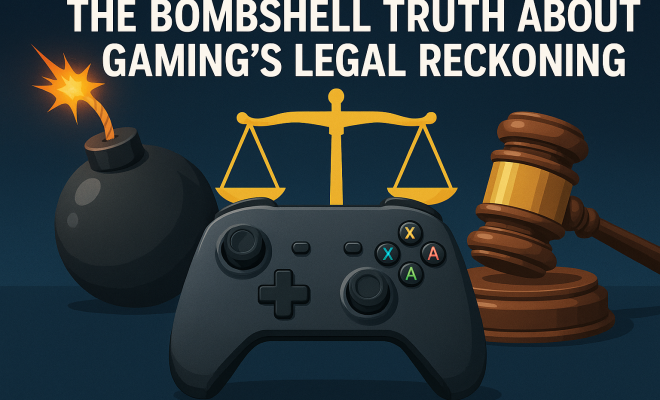
The Bombshell Truth About Gaming’s Legal Reckoning
You might think the biggest battles in gaming happen on screen, with epic bosses and nail-biting multiplayer showdowns. But lately, some of the most intense conflicts are playing out in courtrooms and regulatory offices worldwide. We’re talking about a massive, coordinated wave of consumer class-action lawsuits and regulatory investigations that are shaking the very foundations of the video game industry. It’s a legal reckoning, and it’s centered squarely on issues like deceptive monetization practices, the controversial mechanics of loot boxes, and, perhaps most concerningly, the safety of minor users.
Picture this: an industry that generates billions, suddenly finding itself under intense scrutiny. A report from as recently as October 9, 2026, painted a stark picture, revealing 178 active cases already on the docket. That’s not a typo – 178. And if that wasn’t enough, there are also 295 ongoing investigations. These aren’t minor squabbles; they’re comprehensive probes into practices that many argue exploit the most vulnerable players and their families. This isn’t just a trend; it’s an industry-wide confrontation with ethical questions that have been simmering for years, now boiling over into full-blown video game industry litigation.
The Rising Tide of Consumer Class Actions
For a long time, the video game industry enjoyed a relatively free hand in how it monetized its products. Digital storefronts, in-game purchases, and downloadable content (DLC) became standard practice. But as these methods evolved, particularly with the introduction of randomized rewards systems like loot boxes, a line was crossed for many consumers and legal experts. These aren’t just complaints; they are organized legal actions, often involving thousands of individuals who feel they’ve been wronged.
Class-action lawsuits are powerful tools. They allow a large group of people with similar grievances to collectively sue a company. In the context of video games, these suits often allege that companies have engaged in unfair or deceptive trade practices. This could be anything from misrepresenting the odds of getting a rare item in a loot box to creating systems designed to encourage excessive spending. The sheer volume of these cases – 178 active ones, remember – indicates a widespread sentiment among consumers that enough is enough. They’re seeking not just compensation, but also a fundamental shift in how games are designed and monetized.
Loot Boxes: Gambling or Just Good Fun?
One of the biggest flashpoints in this wave of video game industry litigation is undoubtedly the loot box. For those unfamiliar, a loot box is a purchasable virtual item that provides players with a randomized selection of other virtual items, such as character skins, weapons, or power-ups. The problem? You don’t know what you’re going to get until you open it. This element of chance, combined with the fact that these boxes often cost real money, has led many to argue that they are, in essence, a form of unlicensed gambling.
Regulators and legal bodies in various countries have been grappling with this definition for years. Some jurisdictions, like Belgium and the Netherlands, have outright banned or severely restricted loot boxes, classifying them as gambling. Other regions are still debating the issue, but the pressure is mounting. These lawsuits often hinge on whether loot boxes meet the legal definition of gambling, which typically involves consideration (paying money), chance (random outcome), and prize (a valuable in-game item). If courts rule that they are, the implications for the industry could be staggering, forcing a complete overhaul of monetization strategies in countless games.
Child Addiction Claims: Roblox, Discord, and Beyond
Perhaps the most emotionally charged aspect of the current legal storm involves child safety and addiction. Platforms like Roblox and Discord, which are immensely popular with younger audiences, are finding themselves at the center of claims alleging that their design and monetization practices contribute to child addiction. This isn’t just about spending too much money; it’s about the potential for psychological harm, social isolation, and neglect of real-world responsibilities. Related reading: court ruling impact.
These cases argue that the engaging, often endless nature of these platforms, combined with psychological hooks designed to keep users engaged and spending, can be particularly detrimental to developing minds. Children, with their still-forming impulse control and understanding of money, are seen as especially vulnerable targets. The legal arguments here often draw parallels to traditional addiction litigation, focusing on whether companies have a duty of care to protect minors, and whether their design choices actively exploit developmental vulnerabilities. The sheer scale of Roblox and Discord’s user bases, particularly among children, means these cases carry enormous weight and could set precedents for online platforms catering to youth worldwide.
The Problem with Misleading Microtransactions
Beyond loot boxes, the broader category of microtransactions is also under the microscope. This includes everything from buying cosmetic items to purchasing in-game currency. The core of many lawsuits here revolves around allegations of misleading practices. Have you ever felt pressured to buy something in a game? Or perhaps you bought an item only to find it wasn’t quite what you expected, or that its value was inflated?
Plaintiffs argue that companies sometimes employ dark patterns – user interface tricks designed to nudge users into making purchases they might not otherwise make. This could be timers on “limited-time offers,” confusing currency conversions, or systems that make it difficult to play without spending. The legal challenge is to prove that these practices are not just aggressive marketing, but actively deceptive and exploitative, violating consumer protection laws. It’s a fine line, but one that regulators and consumer advocates are increasingly willing to challenge in court as part of the broader video game industry litigation landscape. (See: CDC Youth Risk Behavior Survey.)
Regulatory Investigations: A Global Scrutiny
The 295 ongoing investigations mentioned in the report are just as significant as the class-action lawsuits. These aren’t private citizens suing; these are government bodies, consumer protection agencies, and other regulatory authorities examining the practices of gaming companies. This often involves deep dives into company financials, marketing materials, game design documents, and internal communications.
A regulatory investigation can lead to hefty fines, mandates for changes in business practices, and even criminal charges in extreme cases. Unlike a class action, which primarily aims to compensate affected individuals, regulatory actions are about enforcing laws and protecting the public interest on a systemic level. The global nature of the gaming industry means that a ruling or investigation in one country can quickly set a precedent or spark similar actions in others, creating a domino effect that companies simply can’t ignore. This collective scrutiny represents a paradigm shift for an industry accustomed to rapid innovation with less oversight. For more context, see shift in gaming VC.
Why This Trend is Going Viral: Emotion and Money
So, why is this particular wave of video game industry litigation gaining so much traction? Why is it “highly viral,” as the report suggests? It boils down to a potent combination of powerful emotions and significant financial implications. Exploiting vulnerable users, especially children, is a narrative that resonates deeply with the public. Parents, educators, and even casual gamers can relate to the concern that games are no longer just entertainment but potentially harmful environments designed to extract maximum profit.
The financial stakes are also enormous. For consumers, the cumulative cost of microtransactions and loot boxes can run into hundreds or even thousands of dollars. For major gaming companies, the potential liabilities from these lawsuits, not to mention the cost of redesigning their monetization systems, could be in the billions. When you combine the emotional outrage over perceived exploitation with the eye-watering sums of money involved, you have a story that demands attention, fuels public debate, and drives further legal action.
The Industry’s Response and Future Outlook
How are gaming companies responding to this pressure? It’s a mixed bag. Some have proactively made changes, such as adjusting loot box probabilities, offering more transparent disclosures, or even removing certain monetization features from games. Others have dug in their heels, arguing that their practices are fair, legal, and essential for funding the development of modern games. They often point to the voluntary nature of purchases and the entertainment value provided.
However, the sheer volume of legal actions means that ignoring the issue is no longer an option. Companies are having to invest heavily in legal defense, compliance officers, and public relations efforts to manage the fallout. Looking ahead, we can expect to see increased regulation, potentially standardized disclosures for in-game purchases, and a shift towards more ethical monetization models that prioritize player well-being. The days of unchecked monetization might be drawing to a close, forcing the video game industry to adapt to a new era of accountability.
Opportunities in the Legal and Support Ecosystem
This surge in video game industry litigation isn’t just a headache for game developers and publishers; it’s also creating significant opportunities across various sectors. For legal professionals, particularly those specializing in consumer protection, class-action lawsuits, and intellectual property, this is a boom time. High-CPC (cost-per-click) niches like legal services for consumer protection are seeing increased demand as individuals and groups seek representation.
Beyond the legal field, there’s a growing need for services that help mitigate the negative impacts of excessive gaming and spending. Personal finance advice tailored to managing in-game spending, budgeting for digital entertainment, and even recovering from financial losses due to predatory practices is becoming crucial. Similarly, health services for gaming addiction recovery, including therapy, counseling, and support groups, are seeing a rise in demand. Furthermore, affiliate opportunities are emerging for companies offering parental control software, legal consultation platforms, and educational resources on digital literacy and responsible gaming. This entire ecosystem is evolving rapidly to meet the challenges presented by this complex legal and ethical landscape.
The Global Ripple Effect: Case Studies and Precedents
It’s worth highlighting a few specific examples to understand the global impact of this video game industry litigation. Take the case of the Belgian Gaming Commission, which, as mentioned, classified loot boxes in certain games as illegal gambling back in 2018. This wasn’t just a slap on the wrist; it led to publishers like Electronic Arts (EA) removing FIFA Points from sale in Belgium, effectively changing their monetization model for that region. This demonstrates that regulatory bodies can and will enforce their interpretations of gambling laws, directly impacting how games are sold and played.
In the United States, we’ve seen a different approach. While federal legislation on loot boxes hasn’t materialized yet, individual states have considered bills. Moreover, several class-action lawsuits have targeted major publishers. For instance, there have been settlements where companies agreed to pay out millions to players and modify their in-game purchase mechanics to be more transparent. These settlements, even if they don’t result in an outright ban, serve as a clear signal that the industry is under pressure and that players are willing to take legal action when they feel misled. Each successful case, whether it’s a ban, a fine, or a settlement, adds another layer of precedent, making it harder for companies to argue their practices are universally acceptable.
Another notable example comes from China, where regulations already require game publishers to disclose the drop rates of items obtained from loot boxes. While not a ban, this transparency measure empowers consumers with information, allowing them to make more informed decisions about spending. This kind of legislative action, driven by public and regulatory pressure, points to a future where more countries might adopt similar transparency requirements, effectively standardizing disclosure across the industry. (See: New York Times article on gaming lawsuits.) We covered loot box legislation update in more detail.
The Role of Game Design Ethics
Beyond the legal specifics, this entire movement of video game industry litigation is forcing a re-evaluation of game design ethics. For years, the focus for many developers was on “engagement metrics” – how long players spent in a game, and how much they spent. Game designers employed various psychological principles to achieve these goals, sometimes unintentionally creating addictive loops. Now, the conversation is shifting towards “responsible engagement” and “player well-being.”
This means considering the potential negative impacts of certain design choices, especially when it comes to monetization. Are timers on special offers creating undue pressure? Are reward schedules designed to keep players hooked like a slot machine? Are virtual currencies intentionally confusing to mask real-world costs? These are the kinds of questions that ethical game design frameworks are starting to address. Some studios are even hiring “player advocates” or “ethics officers” to scrutinize design decisions from a player-first perspective, trying to anticipate legal and ethical challenges before they escalate. It’s about moving from a purely profit-driven model to one that balances commercial success with player health and fairness. For more context, see privacy backlash in tech.
Understanding the Economic Impact of Litigation
The economic ramifications of this wave of litigation extend far beyond just legal fees and potential settlements. For smaller studios, even the threat of a lawsuit can be crippling, potentially impacting investment and future development. For larger companies, the costs can run into the tens or hundreds of millions, affecting quarterly earnings and stock prices. We’ve seen instances where companies have had to set aside significant reserves to cover potential legal liabilities.
Furthermore, changes mandated by courts or regulators can force costly re-designs of game systems. If a company has to remove loot boxes or overhaul its microtransaction system in a flagship title, that’s not just a quick patch; it can require significant development resources, testing, and re-certification. This can delay game releases, increase development budgets, and potentially reduce revenue from established games. The long-term economic impact could also include a shift in investment patterns, with venture capitalists and publishers becoming more cautious about funding games that rely heavily on aggressive monetization models, favoring those with more transparent and consumer-friendly approaches.
The Future of Monetization: Towards Transparency and Player Choice
So, what does the future of monetization look like in the face of all this video game industry litigation? It’s likely to be a landscape marked by greater transparency and a stronger emphasis on player choice. We might see more games adopt “battle pass” systems, where players know exactly what rewards they’ll get for their money and effort, rather than relying on randomized loot boxes. Direct purchase storefronts for cosmetic items, where prices are clear and outcomes are guaranteed, are also likely to become even more prevalent.
There’s also a growing movement towards “ethical microtransactions” – purchases that genuinely enhance the player experience without feeling exploitative. This could involve expansions that offer substantial new content, cosmetic items that are purely optional and clearly priced, or subscription models that provide value without coercive tactics. The goal will be to create monetization strategies that feel fair, respect player agency, and don’t rely on psychological manipulation or the exploitation of vulnerable populations. Companies that embrace these principles early will likely gain a competitive advantage and build stronger, more trusting relationships with their player base, potentially avoiding future legal entanglements.
FAQ: Navigating Video Game Industry Litigation
What exactly is “video game industry litigation”?
It refers to legal actions, including consumer class-action lawsuits and regulatory investigations, brought against video game companies. These cases typically focus on issues like deceptive monetization, loot boxes, child addiction, and misleading microtransactions.
What are loot boxes, and why are they controversial?
Loot boxes are purchasable in-game items that give players a randomized selection of virtual rewards. They’re controversial because the element of chance, combined with real-money cost, leads many to argue they constitute a form of unlicensed gambling, especially for minors.
How do class-action lawsuits impact gaming companies?
Class-action lawsuits allow many individuals with similar complaints to sue a company collectively. For gaming companies, these can result in substantial financial settlements, mandates to change game design or monetization practices, and significant reputational damage. For more context, see cybersecurity threats in gaming. (See: Study on video games and youth.)
What are “dark patterns” in game monetization?
Dark patterns are user interface or design tricks intended to subtly push players into making purchases they might not otherwise want. Examples include confusing currency conversions, misleading “limited-time offers” that create urgency, or making it difficult to play without spending.
Are there laws specifically addressing video game addiction in children?
While specific laws solely for video game addiction are rare, existing consumer protection laws, gambling regulations, and even child protection statutes are being applied to claims of child addiction related to gaming. Courts are grappling with whether companies have a duty of care to protect minors from potentially addictive design elements.
How do regulatory investigations differ from class-action lawsuits?
Regulatory investigations are conducted by government bodies or consumer protection agencies, aiming to enforce laws and protect public interest. They can result in fines, business practice changes, or even criminal charges. Class-action lawsuits are initiated by private citizens seeking compensation for alleged harm.
Which countries have taken action against loot boxes?
Belgium and the Netherlands have notably classified loot boxes as illegal gambling and restricted or banned their sale. Other countries, like China, require transparent disclosure of loot box drop rates. Many other jurisdictions are actively debating or investigating the issue.
What can players do if they feel exploited by a game’s monetization?
Players can report concerns to consumer protection agencies, join existing class-action lawsuits if eligible, or seek legal counsel. Many legal firms are now specializing in video game industry litigation and offer consultations. Spreading awareness and advocating for stronger regulations are also important. This builds on Papaya Gaming lawsuit details.
How might this litigation change the future of game design?
It’s likely to push game design towards greater transparency, ethical monetization models, and a stronger focus on player well-being. We might see fewer randomized monetization mechanics, clearer pricing, and design choices that prioritize fun and fairness over aggressive revenue extraction.
The current legal and regulatory challenges facing the video game industry represent a pivotal moment. It’s a clash between innovation and ethics, profit and player protection. The outcomes of these 178 active cases and 295 investigations won’t just impact individual companies; they will likely redefine the very rules of engagement for digital entertainment for years to come. For players, this could mean a safer, more transparent gaming experience. For the industry, it’s a call to evolve, or face the increasing wrath of courts and consumers.
Trending Now
Frequently Asked Questions
What are the main legal issues facing the gaming industry?
The gaming industry is currently facing significant legal issues, including consumer class-action lawsuits regarding deceptive monetization practices, the controversial use of loot boxes, and concerns over the safety of minor users. These issues have led to increased scrutiny and regulatory investigations worldwide.
How many lawsuits are currently active in the gaming industry?
As of October 2026, there are 178 active lawsuits against various gaming companies. These cases reflect a growing concern over industry practices that many consumers believe exploit vulnerable players.
What are class-action lawsuits in the context of video games?
Class-action lawsuits in the gaming industry allow groups of individuals with similar grievances, such as unfair monetization practices, to collectively sue a company. This legal approach amplifies the voices of consumers who feel wronged by gaming companies.
Why are loot boxes controversial in video games?
Loot boxes are controversial because they often involve randomized rewards that some consumers view as a form of gambling. This concern is heightened when minors are involved, leading to legal actions aimed at regulating such practices.
What impact do regulatory investigations have on the gaming industry?
Regulatory investigations can significantly impact the gaming industry by enforcing compliance with laws and regulations. They can lead to changes in business practices, increased transparency, and potentially hefty fines for companies found to be exploiting consumers.
What did we miss? Let us know in the comments and join the conversation.