The Tech Edvocate

Top Menu

  • Advertisement
  • Apps
  • Home Page
  • Home Page Five (No Sidebar)
  • Home Page Four
  • Home Page Three
  • Home Page Two
  • Home Tech2
  • Icons [No Sidebar]
  • Left Sidbear Page
  • Lynch Educational Consulting
  • My Account
  • My Speaking Page
  • Newsletter Sign Up Confirmation
  • Newsletter Unsubscription
  • Our Brands
  • Page Example
  • Privacy Policy
  • Protected Content
  • Register
  • Request a Product Review
  • Shop
  • Shortcodes Examples
  • Signup
  • Start Here
    • Governance
    • Careers
    • Contact Us
  • Terms and Conditions
  • The Edvocate
  • The Tech Edvocate Product Guide
  • Topics
  • Write For Us
  • Advertise

Main Menu

  • Start Here
    • Our Brands
    • Governance
      • Lynch Educational Consulting, LLC.
      • Dr. Lynch’s Personal Website
      • Careers
    • Write For Us
    • The Tech Edvocate Product Guide
    • Contact Us
    • Books
    • Edupedia
    • Post a Job
    • The Edvocate Podcast
    • Terms and Conditions
    • Privacy Policy
  • Topics
    • Assistive Technology
    • Child Development Tech
    • Early Childhood & K-12 EdTech
    • EdTech Futures
    • EdTech News
    • EdTech Policy & Reform
    • EdTech Startups & Businesses
    • Higher Education EdTech
    • Online Learning & eLearning
    • Parent & Family Tech
    • Personalized Learning
    • Product Reviews
  • Advertise
  • Tech Edvocate Awards
  • The Edvocate
  • Pedagogue
  • School Ratings

logo

The Tech Edvocate

  • Start Here
    • Our Brands
    • Governance
      • Lynch Educational Consulting, LLC.
      • Dr. Lynch’s Personal Website
        • My Speaking Page
      • Careers
    • Write For Us
    • The Tech Edvocate Product Guide
    • Contact Us
    • Books
    • Edupedia
    • Post a Job
    • The Edvocate Podcast
    • Terms and Conditions
    • Privacy Policy
  • Topics
    • Assistive Technology
    • Child Development Tech
    • Early Childhood & K-12 EdTech
    • EdTech Futures
    • EdTech News
    • EdTech Policy & Reform
    • EdTech Startups & Businesses
    • Higher Education EdTech
    • Online Learning & eLearning
    • Parent & Family Tech
    • Personalized Learning
    • Product Reviews
  • Advertise
  • Tech Edvocate Awards
  • The Edvocate
  • Pedagogue
  • School Ratings
  • Your Home Insurance Bill Just Exploded: 5 Reasons Why — And What Comes Next

  • Your Home Insurance Premiums Are Skyrocketing: Is Your State On This List?

  • The Brutal Truth: Why 30-Year vs. 15-Year Fixed Mortgage Rates in 2026 Could CRUSH Your Homeownership Dreams

  • 7 Things First-Time Homebuyers MUST Know About the New 6.89% Mortgage Rates

  • Your Dream Home Just Got Pricier: Why Mortgage Rates 2026 Are Soaring Toward 7%

  • Unbelievable: The True Cost of CRISPR Anti-Aging Will Absolutely Shock You

  • Your Genes Hold The Key: How CRISPR Could Restore Youthful Function

  • The Mind-Blowing Way CRISPR Could End Aging As We Know It

  • Why Millions Are Rushing to Install Home Battery Storage Now

  • Google’s €13 Billion Bet: The Unseen Renewable Energy Funds Quietly Reshaping Your Portfolio

Digital & Mobile Technology
Home›Digital & Mobile Technology›CAMM vs. SODIMM: What Is It and What’s the Difference?

CAMM vs. SODIMM: What Is It and What’s the Difference?
By Matthew Lynch
June 6, 2023
0
Spread the love

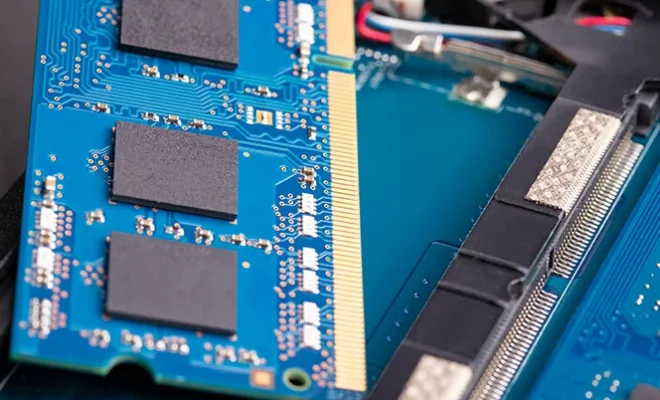
CAMM (Chip-Attached Memory Module) and SODIMM (Small Outline Dual In-Line Memory Module) are two types of memory modules used in computers. While both CAMM and SODIMM serve the same purpose of enhancing the performance and storage capacity of a computer system, there are some differences in their functionality and design.

CAMM vs. SODIMM: What Is It?

CAMM, as its name suggests, is a memory module that is directly affixed to the main processor or chipset on the motherboard. CAMMs were developed to overcome the limitations of traditional memory modules, such as DIMMs (Dual In-line Memory Modules). They are smaller, more power-efficient, and are easily integrated into compact computer systems.

On the other hand, SODIMM is an alternative to the larger DIMMs, that are commonly found in laptops and other portable devices. SODIMMs are smaller in size and limit the physical space they occupy on a motherboard, making them a good choice for space-constrained devices.

CAMM vs. SODIMM: What’s the Difference?

Size and Form factor

The most significant difference between CAMM and SODIMM is their size and form factor. CAMMs are attached directly to the motherboard, making them even smaller than SODIMMs. Conversely, SODIMMs fit into a socket on the motherboard, but they are considerably larger than CAMMs.

Memory Capacity

CAMMs have a limited memory capacity as they are intended primarily for ultra-compact devices where space is a premium. But SODIMMs come in various memory capacities and can support up to 32 GB of memory, making them the ideal choice for most systems.

Power Consumption

CAMMs consume much less power than SODIMMs, primarily because they are attached directly to the motherboard. They are designed to be more energy-efficient than traditional memory modules. However, SODIMMs consume more power because they have a voltage rating of 1.35V.

Performance

In terms of performance, both CAMMs and SODIMMs perform similarly. But SODIMMs usually have higher clock speeds than CAMMs, making them the preferred choice for high-performance computing applications.

Conclusion

Both CAMM and SODIMM are useful memory modules that can enhance the performance and storage capacity of a computer system. While CAMMs are typically smaller and more power-efficient, SODIMMs offer a more comprehensive range of memory capacities that support high-performance computing applications. Ultimately, the choice between CAMM and SODIMM depends on the user’s requirements, the available space on the motherboard, and the intended application.    

Previous Article

What Is Apple CarPlay? How Does It ...

Next Article

How to Download Full-Resolution Photos From iCloud

Matthew Lynch

Related articles More from author

  • Digital & Mobile Technology

    What Is an XVO File?

    June 1, 2023
    By Matthew Lynch
  • Digital & Mobile Technology

    How to Find and Save iPad Downloads

    June 2, 2023
    By Matthew Lynch
  • Digital & Mobile Technology

    Make an Apple Store Appointment Using the Apple Store App

    June 6, 2023
    By Matthew Lynch
  • Digital & Mobile Technology

    How to Trace Text Messages With Metro PCS

    May 29, 2023
    By Matthew Lynch
  • Digital & Mobile Technology

    Best Key Finders of 2023

    June 1, 2023
    By Matthew Lynch
  • Digital & Mobile Technology

    How to Add Accents in Google Docs

    July 6, 2023
    By Matthew Lynch

Search

Login & Registration

  • Log in
  • Entries feed
  • Comments feed
  • WordPress.org

Newsletter

Signup for The Tech Edvocate Newsletter and have the latest in EdTech news and opinion delivered to your email address!

About Us

Since technology is not going anywhere and does more good than harm, adapting is the best course of action. That is where The Tech Edvocate comes in. We plan to cover the PreK-12 and Higher Education EdTech sectors and provide our readers with the latest news and opinion on the subject. From time to time, I will invite other voices to weigh in on important issues in EdTech. We hope to provide a well-rounded, multi-faceted look at the past, present, the future of EdTech in the US and internationally.

We started this journey back in June 2016, and we plan to continue it for many more years to come. I hope that you will join us in this discussion of the past, present and future of EdTech and lend your own insight to the issues that are discussed.

Newsletter

Signup for The Tech Edvocate Newsletter and have the latest in EdTech news and opinion delivered to your email address!

Contact Us

The Tech Edvocate
910 Goddin Street
Richmond, VA 23231
(601) 630-5238
[email protected]

Copyright © 2026 Matthew Lynch. All rights reserved.