Bizarre Twist: Robot Teachers Halted After Shocking Backlash — What It Means For Your Kids
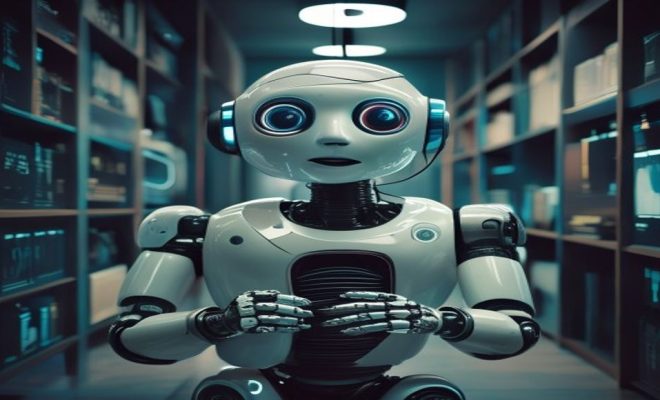
Remember all that talk about robot teachers making their way into our classrooms? Well, hold onto your hats, because a recent development out of Western New York has thrown a major wrench into those plans. The Salamanca City Central School District, which was piloting a humanoid robot teacher program with tech company Realbotix, has actually hit the pause button. This stunning reversal, coming after a report by New York Focus and a torrent of backlash from parents and even the State Education Department, isn’t just a local story; it’s a global flashpoint in the growing debate around robot teachers vs human educators ethical implications.
It seems the future of education, at least with metallic instructors, isn’t quite as clear-cut as some tech enthusiasts might have hoped. This incident has ignited fierce discussions across social media and educational forums about everything from student data privacy to the very essence of what makes a good teacher. Is it just about delivering information, or is there an irreplaceable human element at play? Let’s dive into the ten most pressing ethical implications that this saga has brought to the forefront, because whether you’re a parent, an educator, or just someone interested in where technology is taking us, these questions affect us all.
1. The Unsettling Question of Student Data Privacy: What Are These Robots Collecting?
Perhaps the most immediate and visceral concern that led to Salamanca’s program being paused was the issue of student data privacy. Think about it: a robot in a classroom, equipped with advanced sensors, microphones, and cameras, interacting with children all day long. What kind of data is it collecting? Is it just academic performance, or is it observing emotional responses, behavioral patterns, even conversations? The Realbotix model, like many AI systems, likely relies on continuous data input to learn and adapt, but when that data comes from minors, the stakes skyrocket.
Parents rightly asked: who owns this data? How is it stored? Is it anonymized, or can it be linked back to individual students? And perhaps most chillingly, could this highly sensitive information ever fall into the wrong hands? The potential for a data breach involving children’s personal and academic lives is a nightmare scenario, and the existing legal frameworks, especially for cutting-edge AI, often lag far behind technological capabilities. This isn’t just about grades; it’s about the intimate details of a child’s development being recorded and potentially analyzed by an algorithm.
2. Erosion of Human Connection and Empathy: Can a Robot Truly Understand?
Education isn’t just about imparting facts; it’s about fostering growth, building relationships, and nurturing empathy. A human teacher can read the subtle cues of a struggling student – a downcast gaze, a hesitant answer, a quiet withdrawal. They can offer a comforting word, a gentle push, or a moment of shared understanding. Can a robot, however sophisticated its AI, truly replicate this nuanced human connection?
Critics of robot teachers argue that replacing human educators with machines risks stripping the classroom of its heart. Children learn not just from what is taught, but from how it’s taught, from the passion, patience, and personal investment of a dedicated teacher. The absence of genuine human empathy and the inability of a robot to share in a child’s joys and struggles could have profound long-term developmental impacts, particularly for younger children who are still learning social and emotional intelligence.
3. The ‘Black Box’ Problem and Algorithmic Bias: Whose Values Are We Teaching?
Artificial intelligence, for all its marvels, often operates as a ‘black box.’ We can see its inputs and outputs, but the precise reasoning behind its decisions can be opaque, even to its creators. When a robot teacher is making decisions about a student’s learning path, grading, or even disciplinary actions, how can we be sure those decisions are fair and unbiased? AI systems are trained on vast datasets, and if those datasets reflect existing societal biases – racial, gender, socioeconomic – then the AI will inevitably perpetuate and even amplify those biases.
This means a robot teacher, however unintentionally, could favor certain learning styles, overlook specific cultural backgrounds, or even inadvertently discriminate against particular groups of students. The ethical implications of robot teachers vs human educators become particularly stark here: a human teacher, ideally, is trained to recognize and counteract their own biases, and can be held accountable for their actions. An algorithm’s bias, however, is far harder to detect, diagnose, and rectify, especially when its internal workings are not fully transparent.
4. Impact on Teacher Employment and Professional Development: Are Human Jobs at Risk?
Let’s be blunt: the introduction of robot teachers raises serious questions about the future of human educators. Proponents often frame robots as supplementary tools, assisting teachers rather than replacing them. But the economic realities can be harsh. If a robot can perform many of the functions of a human teacher – delivering lessons, grading papers, even providing personalized instruction – then school districts, especially those facing budget constraints, might see an incentive to reduce their human faculty.
This isn’t just about job losses; it’s about the de-professionalization of teaching. If the core tasks of education can be automated, what does that say about the value society places on human educators? It could also shift the focus of professional development away from pedagogical innovation and toward managing and maintaining AI systems, fundamentally altering the career path for future teachers. The Salamanca incident highlights the deep-seated fear among educators that AI isn’t just a helper, but a potential competitor. (See: student data privacy concerns.)
5. The Nature of Learning and Critical Thinking: Passive Reception vs. Active Engagement
What kind of learning experience do we want for our children? Is it one where information is efficiently delivered and absorbed, or one where students are encouraged to question, debate, and think critically? While AI can personalize learning paths and adapt to individual student paces, there’s a concern that an over-reliance on robot teachers could foster a more passive mode of learning.
Human teachers, through their presence and interaction, often provoke deeper thought, encourage lively discussion, and challenge students to think beyond the textbook. They can respond to unexpected questions with nuanced answers, draw connections across disciplines, and inspire curiosity in ways that a programmed algorithm might struggle to replicate. The danger here is that while students might achieve higher scores on standardized tests, they could lose out on the development of crucial critical thinking, problem-solving, and creative skills. For more context, see using technology in education.
6. Equity and Access: The Digital Divide in AI Education: Who Gets the Robots?
The Salamanca City Central School District isn’t exactly a wealthy district. The fact that a district with potentially limited resources was piloting such advanced technology raises another significant ethical question: who benefits from these innovations, and who gets left behind? If robot teachers are indeed the ‘future’ of education, will they only be available to well-funded schools in affluent areas, or will they be deployed in underserved communities as a cheaper alternative to qualified human teachers?
This could exacerbate existing educational inequalities. Wealthier districts might use AI to enhance an already rich curriculum, while poorer districts might be forced to rely on less sophisticated, or even compromised, AI systems as a cost-cutting measure, further widening the achievement gap. The promise of AI in education is universal access, but the reality often falls short, creating new forms of digital and educational divides.
7. Accountability and Responsibility for Educational Outcomes: Who’s to Blame When Things Go Wrong?
When a student struggles or an educational program fails, there’s a clear chain of accountability in a traditional school system: the teacher, the principal, the school board. But what happens when a robot teacher is at the helm? If an AI system makes an error that negatively impacts a student’s learning or even their well-being, who is responsible? Is it the school district that deployed the robot? The tech company that designed it? The programmer who wrote the code?
This ambiguity around accountability is a major ethical hurdle. It’s difficult to hold an algorithm morally responsible, and assigning blame to a faceless corporation or a distant developer doesn’t provide the same sense of justice or resolution as holding a human educator accountable. This lack of clear responsibility could undermine trust in the educational system and leave parents and students feeling powerless when issues arise with robot teachers vs human educators ethical implications.
8. The Potential for Misinformation and Manipulation: What If the Robot Teaches the Wrong Thing?
AI systems, particularly those that learn from vast amounts of internet data, are susceptible to absorbing and even generating misinformation. While tech companies strive for accuracy, the risk remains. What if a robot teacher inadvertently presents incorrect facts, biased historical narratives, or even harmful ideologies? The impressionability of young minds makes this a particularly troubling prospect.
Furthermore, the potential for manipulation exists. Could these robots be programmed, overtly or subtly, to promote certain viewpoints, products, or political agendas? While this might sound like science fiction, the history of technology shows that such capabilities are often exploited. Ensuring that educational AI remains neutral, factual, and free from undue influence is a monumental ethical challenge, one that human teachers, with their critical judgment and ethical training, are far better equipped to navigate.
9. Long-Term Psychological and Developmental Effects on Children: Are We Experimenting with Our Kids?
This is perhaps the biggest unknown. We simply don’t have enough long-term data to understand the psychological and developmental effects of children being primarily educated by robots. Will it impact their social skills? Their ability to form deep emotional bonds? Their understanding of what it means to be human?
Some argue that children might become overly reliant on immediate, personalized feedback from a robot, potentially hindering their ability to persevere through challenges or seek help from others. There’s also the question of whether interacting with a non-human entity for significant portions of their day could alter their perception of reality or their capacity for complex emotional expression. These are not trivial concerns; they touch upon the very foundations of human development and underscore the need for extreme caution when considering the widespread adoption of robot teachers vs human educators ethical implications.
10. The Unforeseen Consequences of Rapid Technological Adoption: The Pace of Change vs. Ethical Review
The Salamanca incident serves as a stark reminder of the breakneck pace at which technology is advancing, often far outstripping our ability to fully understand and ethically evaluate its implications. Companies like Realbotix are eager to deploy their innovations, and school districts, perhaps hoping to be at the forefront of educational trends, can sometimes jump in without sufficient foresight or public consultation.
This rapid adoption, without robust ethical frameworks, thorough testing, and widespread public debate, is a recipe for unforeseen problems. The backlash against Salamanca’s program wasn’t just about robots; it was about the feeling that a significant change was being imposed without adequate discussion or consideration of the profound ethical implications. Moving forward, a more deliberate, inclusive, and ethically grounded approach is absolutely essential if we are to truly harness the benefits of AI in education without sacrificing the core values of human learning and development. (See: debate on robot teachers.)
11. The Role of Human Teachers in an AI-Enhanced Future: Beyond Information Delivery
If robots take over some of the more routine aspects of teaching, what does that leave for human educators? This isn’t a question of replacement, but rather redefinition. Human teachers would likely shift their focus to higher-order tasks that AI can’t replicate. Imagine a teacher whose primary role is to foster creativity, facilitate complex discussions, mentor students through emotional challenges, and cultivate critical thinking skills. They could become master facilitators of learning, curating personalized experiences that blend AI tools with real-world projects and collaborative problem-solving.
This shift could empower teachers to spend less time on grading or delivering standardized lectures and more time on truly impactful, personalized engagement. It means professional development would need to adapt, focusing on skills like AI literacy, emotional intelligence coaching, and interdisciplinary project design. The goal isn’t to diminish human teachers but to elevate their role, allowing them to focus on the unique human contributions to education that machines simply can’t replicate. It’s about leveraging AI to free up human potential, not to suppress it. For more context, see designing educational spaces with SketchUp.
12. Data Security and Cyber Threats: A New Frontier for School Vulnerabilities
Beyond privacy, the sheer volume and sensitivity of data collected by robot teachers introduce massive cybersecurity risks. School districts, traditionally not primary targets for sophisticated cyberattacks, could become highly attractive to malicious actors. Imagine the value of a database containing academic performance, behavioral patterns, emotional responses, and even biometric data of thousands of children. This information could be exploited for identity theft, targeted advertising, or even more sinister purposes.
The Salamanca incident, while not involving a breach, highlights the lack of preparedness. Many school IT departments are already stretched thin protecting basic infrastructure. Managing the security of advanced AI systems that are constantly collecting and transmitting data from within classrooms requires a level of expertise and resources that most districts simply don’t possess. This necessitates not just robust technical safeguards but also comprehensive incident response plans, regular security audits, and continuous vigilance, all of which come at a significant cost and represent a new layer of vulnerability in our educational systems.
13. Standardization vs. Personalization: Balancing Efficiency and Individual Needs
One of the biggest promises of robot teachers is hyper-personalization: tailoring lessons to each student’s pace, learning style, and knowledge gaps. While this sounds ideal, there’s a subtle danger. Education also involves a degree of standardization – ensuring all students grasp foundational concepts and develop a common understanding of the world. An over-reliance on highly individualized AI instruction could inadvertently create silos, where students learn vastly different things without a shared baseline, potentially impacting their ability to collaborate or engage in broader societal conversations.
The challenge is to find the right balance. How do we leverage AI for personalized support without sacrificing the communal aspects of learning, like group projects, class discussions, or shared cultural references? Human educators are skilled at navigating this balance, adapting their teaching to individual needs while maintaining a cohesive classroom environment. An AI system, if not carefully designed and overseen, might prioritize individual efficiency at the expense of broader educational goals, leading to a generation of students who are proficient in their niche but lack a common intellectual ground.
14. The Legal and Regulatory Vacuum: Catching Up to Innovation
The Salamanca case vividly illustrates a critical point: the legal and regulatory landscape for AI in education is largely undeveloped. Who sets the standards for data privacy, algorithmic transparency, and accountability for robot teachers? What are the requirements for pilot programs? How do we ensure these technologies comply with existing educational laws, many of which were written long before AI was even a concept?
Currently, there’s a patchwork of state and federal regulations, but none specifically address the unique challenges of AI educators. This regulatory vacuum creates a Wild West scenario where tech companies can deploy products with minimal oversight, and school districts operate in a grey area, often without clear guidelines or legal protections. Establishing comprehensive regulatory frameworks, including independent ethical review boards, clear consent protocols, and robust compliance mechanisms, is essential to prevent future incidents and ensure that technology serves educational goals responsibly.
15. The Ethical Imperative of Transparency and Public Engagement: No More Surprises
A significant part of the backlash in Salamanca stemmed from a feeling that the program was introduced without adequate transparency or public consultation. Parents felt blindsided, and the State Education Department was reportedly unaware of the full scope of the pilot. This lack of engagement erodes trust and fuels suspicion, regardless of the technology’s potential benefits.
Moving forward, any integration of advanced AI, especially in sensitive areas like K-12 education, must involve extensive and meaningful public engagement. This means open discussions with parents, educators, community leaders, and even students themselves, long before deployment. It requires transparent communication about the technology’s capabilities, limitations, data practices, and the ethical safeguards in place. Building consensus and trust is not a mere formality; it’s an ethical imperative. Without it, even the most promising technological innovations are likely to face resistance and ultimately fail. (See: Harvard's research on education technology.)
Frequently Asked Questions About Robot Teachers vs Human Educators Ethical Implications
Q1: Are robot teachers designed to completely replace human educators?
While some proponents of AI in education envision a future with fewer human teachers, most current discussions and pilot programs, including the one in Salamanca, frame robot teachers as supplementary tools. The idea is often to automate repetitive tasks like grading or delivering basic information, freeing human educators to focus on more complex roles like fostering critical thinking, emotional support, and social development. The ethical debate revolves around whether this ‘supplementary’ role inevitably leads to replacement, especially in budget-constrained environments.
Q2: How do robot teachers handle sensitive topics or emotional situations in the classroom?
This is a major concern. Current AI, while capable of processing vast amounts of data and even mimicking emotional responses, lacks genuine empathy, intuition, and the nuanced understanding of human social dynamics. A human teacher can sensitively navigate a student’s personal struggles, classroom conflicts, or complex social issues. Robot teachers, even advanced ones, are programmed and operate based on algorithms, which can’t truly replicate the warmth, understanding, or improvisational judgment of a human in delicate situations. This limitation is central to the ethical implications regarding human connection.
Q3: What legal protections are in place for student data collected by robot teachers?
The legal landscape is still evolving. In the U.S., laws like FERPA (Family Educational Rights and Privacy Act) protect student educational records, and COPPA (Children’s Online Privacy Protection Act) governs online data collection from children under 13. However, these laws were not specifically designed for advanced AI systems like robot teachers. There’s a significant gap in specific regulations that address the unique forms of data collected by AI (e.g., behavioral patterns, emotional responses), how that data is processed, and who has ultimate control and accountability. This regulatory gap is why data privacy is such a pressing ethical concern.
Q4: Could robot teachers exacerbate the digital divide among students?
Absolutely. If advanced robot teachers or AI-driven learning platforms become a benchmark for quality education, well-funded school districts will likely be the first to adopt and benefit from them. Poorer districts, facing budget constraints, might either be unable to afford these technologies or might adopt cheaper, less effective, or even ethically compromised versions. This could create a two-tiered educational system, widening the existing achievement gap and further disadvantaging students in underserved communities, thereby deepening the digital divide.
Q5: How can parents and communities ensure ethical deployment of AI in schools?
Active engagement and advocacy are key. Parents and communities should demand transparency from school districts and tech companies about any AI initiatives, including detailed information on data collection, privacy policies, algorithms used, and ethical safeguards. They should insist on public forums for discussion, participate in school board meetings, and push for the establishment of independent ethical review committees before any pilot programs are launched. Supporting legislation that creates robust regulatory frameworks for AI in education is also crucial. The Salamanca incident shows that collective public outcry can indeed pause or reverse decisions.
Q6: What are the potential benefits of integrating AI into education, despite the ethical concerns?
When deployed thoughtfully and ethically, AI offers several potential benefits. It can provide highly personalized learning paths, adapting to individual student needs and paces, which is difficult for a single human teacher to manage for an entire class. AI can automate administrative tasks, freeing up teachers’ time. It can offer immediate feedback, identify learning gaps efficiently, and provide access to educational resources that might otherwise be unavailable. The challenge is to harness these benefits without compromising fundamental ethical principles and the irreplaceable human element of education.
The pause in Salamanca’s robot teacher pilot program isn’t just a setback for a specific tech company or school district. It’s a crucial moment for reflection, forcing us all to confront the complex ethical landscape of robot teachers vs human educators. It reminds us that while technology offers incredible potential, it must always be wielded with profound care, especially when the hearts and minds of our children are at stake. The conversation isn’t over; in fact, it’s just beginning, and we all have a role to play in shaping this future.
Trending Now
Frequently Asked Questions
What happened to the robot teacher program in Salamanca?
The Salamanca City Central School District has paused its pilot program for humanoid robot teachers due to backlash from parents and the State Education Department. This decision highlights the growing concerns over the use of robotic educators in classrooms.
Why are parents concerned about robot teachers?
Parents are particularly concerned about issues such as student data privacy, as robot teachers equipped with sensors and cameras could collect sensitive information about children. The ethical implications of using robots instead of human educators are also a major topic of discussion.
What are the ethical implications of using robot teachers?
The ethical implications include concerns about data privacy, the effectiveness of robots in providing emotional support, and the overall impact on the teacher-student relationship. This controversy has sparked widespread debate about the role of technology in education.
How do robot teachers collect student data?
Robot teachers can collect a variety of data through sensors, microphones, and cameras. This may include academic performance, emotional responses, and behavioral patterns, raising significant concerns about privacy and consent, especially when it involves minors.
What does the backlash against robot teachers mean for the future of education?
The backlash against robot teachers signals a need for careful consideration of technology's role in education. It raises questions about the irreplaceable human elements of teaching and the ethical responsibilities of using AI in classrooms.
What did we miss? Let us know in the comments and join the conversation.