Robot Teacher Halted in NY Amid Backlash (2026)
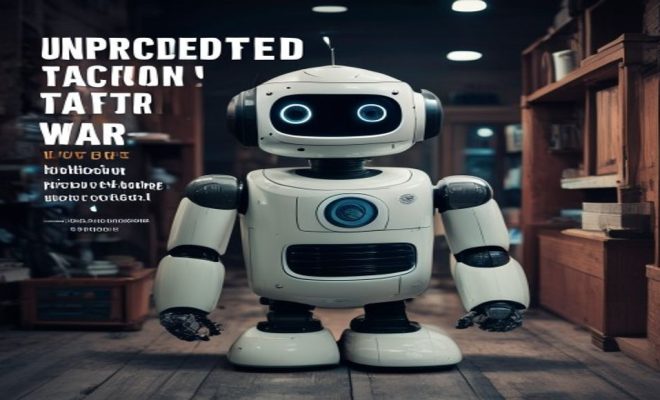
The future of education, it seems, has just hit a rather significant speed bump, right here in our own backyard. In a move that has sent ripples far beyond the immediate community, the Salamanca City Central School District in Western New York recently announced it was hitting the brakes on its much-hyped pilot program involving a humanoid robot teacher western new york. This wasn’t some quiet internal decision; it was a direct response to a torrent of public scrutiny, fueled by a New York Focus report and a subsequent outcry from parents and even the formidable State Education Department. The date was July 24, 2026, and the story instantly went viral, sparking passionate debates across social media and beyond about the very essence of teaching in the age of artificial intelligence.
It’s fascinating, isn’t it? One moment, we’re talking about groundbreaking innovation, and the next, we’re witnessing a swift retreat. The Salamanca district, in partnership with a tech company called Realbotix, had envisioned a classroom where advanced AI could potentially revolutionize learning. But the reality proved far more complex, touching on deeply held concerns about ethics, student privacy, and the irreplaceable role of human connection in education. This whole saga throws a stark spotlight on the promises and perils of integrating cutting-edge technology into our schools, forcing us to ask: where do we draw the line? And are we truly ready for a future where algorithms might stand at the front of the classroom?
The Ambitious Vision: Salamanca’s Leap into AI Education
Salamanca City Central School District, nestled in the heart of Western New York, isn’t exactly a tech hub often associated with pioneering educational robotics. Yet, they were the ones who dared to dream big, embarking on a pilot program with Realbotix, a company at the forefront of humanoid AI development. Their vision was bold: to introduce a robot teacher western new york into classrooms, not as a gimmick, but as a genuine pedagogical tool. Proponents within the district and Realbotix argued that these AI educators could offer personalized learning experiences, tirelessly adapt to individual student needs, and even help prepare students for a job market increasingly dominated by advanced technology.
Imagine a classroom where an AI assistant could drill down on complex math problems with one student, while simultaneously providing language support to another, and even leading a virtual field trip for a third. That was the promise. The idea was that these robots could handle the more repetitive aspects of teaching, freeing up human educators to focus on critical thinking, emotional development, and truly personalized mentorship. Realbotix, from what we understand, had developed a sophisticated AI capable of not just delivering content, but also analyzing student engagement, identifying learning gaps, and even offering rudimentary emotional responses – all designed to create a more dynamic and efficient learning environment. It sounded, on paper, like something out of a futuristic novel, a genuine step forward for education in a region that perhaps isn’t always at the cutting edge of global tech trends.
The Spark of Controversy: A New York Focus Report Ignites Debate
But as with any grand vision, the devil, as they say, is in the details – and often, in the public’s perception. The initial excitement around Salamanca’s program began to curdle after a scathing report from New York Focus. This journalistic deep dive didn’t just question the efficacy of the robot teacher western new york initiative; it shone a harsh light on a multitude of ethical quandaries and practical concerns that had perhaps been overlooked in the initial enthusiasm. The report meticulously detailed potential vulnerabilities in student data privacy, raising the specter of sensitive information being collected and stored by a private tech company, potentially without adequate safeguards.
Beyond privacy, the report also probed the pedagogical effectiveness of a non-human educator. Can a robot truly understand the nuances of a child’s struggle, the subtle cues of disengagement, or the spark of genuine curiosity? Can it foster creativity, empathy, or critical thinking in the same way a human mentor can? These weren’t abstract philosophical questions; they were concrete concerns about the quality of education children in Salamanca would receive. The New York Focus piece didn’t just report; it provoked, giving voice to anxieties that many parents and educators had likely harbored but hadn’t yet articulated publicly. It was the catalyst that transformed a local pilot program into a statewide, and eventually national, conversation.
Parental Outcry: Data Privacy and the Human Element
Once the New York Focus report hit, the dam broke. Parents in the Salamanca City Central School District, already perhaps feeling a little uneasy about their children being taught by an AI, found their fears amplified and validated. The primary concern, echoing the report’s findings, revolved around student data privacy. Think about it: a robot teacher, by its very nature, would need to collect vast amounts of information – academic performance, learning styles, potentially even biometric data to gauge engagement. Who would own this data? How would it be stored? And what protections were truly in place to prevent breaches or misuse by Realbotix or any third parties?
These aren’t hypothetical questions in an age where data breaches are depressingly common. For parents, the idea that their child’s educational journey could become a data stream, vulnerable to exploitation, was deeply unsettling. But it wasn’t just about data. There was a profound, almost visceral, objection to replacing human educators with machines. Many parents argued passionately that teaching isn’t just about imparting facts; it’s about connection, mentorship, empathy, and the unique ability of a human being to inspire and guide. “My child needs a teacher who understands them, not a programmed response,” one parent was quoted as saying, encapsulating the sentiment of many. This wasn’t just about technology; it was about the very soul of education and the irreplaceable value of human interaction in a child’s development.
The State Education Department Steps In: Regulatory Scrutiny
It’s one thing for parents to voice concerns, but when the State Education Department (SED) weighs in, you know the stakes have dramatically risen. The SED, as the primary regulatory body for education in New York, holds significant sway. Their involvement following the New York Focus report and the subsequent parental backlash signaled that Salamanca’s ambitious pilot was no longer just a local experiment; it had become a matter of statewide educational policy and oversight. The SED’s concerns likely mirrored those of the public, but with an added layer of legal and administrative scrutiny. (See: robot teachers in education.)
They would have been looking at whether the program adhered to existing educational standards, student privacy laws (like FERPA, the Family Educational Rights and Privacy Act, which protects student education records), and whether the district had adequately assessed the long-term impacts on student learning and well-being. The SED’s role is to ensure quality and equity across all New York schools, and the introduction of a robot teacher western new york, a truly novel concept, would undoubtedly raise questions about equitable access, potential for bias in AI algorithms, and the certification of non-human instructors. Their intervention wasn’t merely a suggestion; it carried the weight of potential non-compliance and, ultimately, the authority to halt the program, which is precisely what happened.
Realbotix’s Defense and the Broader Promise of AI in Education
Of course, Realbotix, the tech company behind the humanoid robot, wasn’t silent during this whirlwind of controversy. From their perspective, they were offering a cutting-edge solution to some of education’s most persistent challenges. Their defense likely centered on the potential for AI to dramatically enhance learning outcomes. They would have highlighted the robots’ ability to provide individualized instruction at scale, something human teachers, burdened by large class sizes and diverse learning needs, often struggle to achieve. For more context, see voice search technology in education.
Realbotix would have also emphasized the data-driven insights their AI could provide, helping educators identify struggling students earlier and tailor interventions more effectively. Think of it: an AI that can analyze thousands of student interactions, pinpointing exactly where a concept isn’t clicking, and then offering alternative explanations or exercises. Furthermore, they likely argued that exposing students to advanced AI technology isn’t just about learning from it, but learning with it, preparing them for a future workforce where AI literacy will be as crucial as traditional literacy. They might have pointed to the potential for these robots to fill teacher shortages, particularly in specialized subjects or remote areas, offering a scalable solution to educational disparities. Their vision, while perhaps too aggressively implemented in Salamanca, isn’t without merit in the broader conversation about technological advancement in learning.
The Unanswered Questions: Efficacy, Ethics, and Equity
The pause in Salamanca’s robot teacher western new york program leaves us with a host of critical, unanswered questions that extend far beyond this single district. First, there’s the question of efficacy: can an AI truly teach as effectively, or even more effectively, than a human? The data is still nascent, and the nuances of human learning, emotional intelligence, and social development are incredibly complex. We lack long-term studies on the impact of sustained AI-led instruction on children’s cognitive and socio-emotional growth.
Then there are the ethical considerations. Beyond data privacy, what about the potential for algorithmic bias? If the AI is trained on biased data, it could inadvertently perpetuate or even amplify inequalities. What about the potential for over-reliance on technology, diminishing critical thinking or problem-solving skills when human interaction is removed? And what about the psychological impact on children who spend significant time interacting with non-human entities? We’re venturing into uncharted territory here. Finally, equity remains a huge concern. If advanced AI teachers become a reality, will they only be available to well-funded districts, further widening the gap between privileged and underserved communities? These are not trivial questions, and Salamanca’s experience underscores just how unprepared we might be to answer them fully.
The Impact on Human Teachers: Job Security and Role Evolution
Perhaps one of the most immediate and palpable anxieties surrounding the introduction of a robot teacher western new york, or anywhere else for that matter, is the potential impact on human teachers. The fear of job displacement is very real. If robots can deliver content, grade papers, and provide individualized instruction, what becomes of the human educator? This isn’t just about economics; it’s about professional identity and purpose. Many teachers dedicate their lives to this profession, and the idea of being replaced by a machine can feel like a profound devaluation of their expertise and passion.
However, it’s also worth considering a more nuanced future where AI doesn’t replace, but rather augments, human teachers. Imagine an AI as a powerful assistant, handling the administrative burdens, providing data insights, and even co-teaching certain modules. This could free up human teachers to focus on what they do best: fostering creativity, critical thinking, emotional intelligence, and providing personalized mentorship that no algorithm can replicate. The debate shouldn’t necessarily be about ‘human vs. robot,’ but rather ‘how can humans and AI collaborate most effectively to enhance learning?’ This shift in perspective requires proactive professional development, clear delineation of roles, and a commitment to ensuring that technology serves teachers, rather than supplants them.
Beyond Salamanca: A Global Conversation on AI in Education
The story out of Salamanca, while local in origin, has clearly struck a chord globally. It’s become a potent case study in the broader, ongoing conversation about artificial intelligence’s role in education. From Silicon Valley startups to ministries of education in Europe and Asia, everyone is grappling with similar questions. How do we harness the immense potential of AI to personalize learning, make education more accessible, and prepare students for a rapidly changing world, without sacrificing the fundamental human elements of teaching and learning?
This isn’t just about classrooms; it’s about national competitiveness, workforce development, and the very fabric of society. Countries that effectively integrate AI into their educational systems in a thoughtful and ethical manner stand to gain a significant advantage. But those that rush in without proper consideration for privacy, equity, and pedagogical soundness risk creating new divides and eroding public trust. Salamanca’s experience serves as a cautionary tale and a valuable lesson: innovation must be tempered with prudence, and technological advancement must always serve the best interests of the students and the community.
The Path Forward: Deliberate Integration and Ethical Frameworks
So, where do we go from here? The pause in the Salamanca robot teacher western new york program isn’t necessarily a death knell for AI in education, but rather a crucial opportunity for introspection and recalibration. The path forward demands a more deliberate and thoughtful approach to integrating advanced technology into our schools. This means developing robust ethical frameworks that prioritize student well-being, data privacy, and equitable access above all else. It requires open and transparent dialogue among educators, parents, technologists, and policymakers. (See: impact of technology on youth.)
We need pilot programs that are designed not just for implementation, but for rigorous, independent evaluation, with clear metrics for success that go beyond test scores. We need to invest in research that explores the long-term cognitive and socio-emotional impacts of AI-led instruction. And perhaps most importantly, we need to empower human teachers, equipping them with the skills and knowledge to effectively leverage AI as a tool, rather than seeing it as a threat. The goal shouldn’t be to replace human connection, but to enhance it, allowing technology to handle the rote, while humans focus on the truly transformative aspects of teaching. The future of education isn’t about avoiding AI; it’s about mastering its integration in a way that truly benefits every single student, ensuring that the human heart of the classroom beats stronger than ever.
Comparing Approaches: AI in Education Around the World
It’s important to remember that Salamanca’s experience, while a prominent example for Western New York, isn’t happening in a vacuum. Other nations and regions are also experimenting with AI in education, often with different philosophies and outcomes. For instance, some Nordic countries are exploring AI for personalized learning pathways, focusing on adaptive content delivery and intelligent tutoring systems, but typically in conjunction with human teachers, not as replacements. Their emphasis is often on using AI to support existing pedagogical models and reduce teacher workload, rather than reinventing the classroom entirely. For more context, see designing educational spaces with SketchUp.
In contrast, some Asian countries have invested heavily in AI for rote learning and standardized test preparation, seeing it as a way to scale access to high-quality instruction in subjects like math and science. These programs sometimes involve AI tutors that can drill students on facts and concepts, providing immediate feedback. The cultural context plays a huge role here; societies that prioritize memorization and standardized achievement might be more receptive to AI’s ability to deliver consistent, repeatable instruction. The Salamanca case really highlights the American, and perhaps Western New York, emphasis on holistic development and the value of human interaction, a contrast to some of these other global approaches.
Psychological and Social Impacts: Beyond Academics
When we talk about a robot teacher, it’s easy to focus on academic outcomes – test scores, comprehension, skill acquisition. But what about the less tangible, yet equally crucial, aspects of a child’s development? Psychologists and child development experts often emphasize the importance of social interaction, emotional mirroring, and the nuanced dynamics of human relationships for healthy growth. A human teacher doesn’t just impart knowledge; they model empathy, resolve conflicts, understand social cues, and provide a sense of belonging.
Can a robot truly replicate the comfort of a teacher’s reassuring smile when a child is struggling, or the spontaneous, unscripted moment of shared laughter that builds classroom community? There’s a concern that prolonged interaction with non-human entities could hinder the development of crucial social-emotional skills in children. Imagine a classroom where children primarily interact with a machine for instruction. Would they learn to read human emotions as effectively? Would their ability to collaborate, negotiate, and empathize with peers be impacted? These are not trivial questions; they speak to the very foundation of what it means to grow up in a society built on human connection. The Salamanca situation forced a hard look at these deeper, often overlooked, considerations.
Expert Perspectives: Educators and Technologists Weigh In
The debate around the robot teacher western new york isn’t just confined to parents and policymakers. It has ignited strong opinions among both educators and technologists. Many veteran educators express skepticism, drawing on decades of experience that underscore the complex, relational nature of teaching. They often argue that teaching is an art, not just a science, requiring intuition, adaptability, and a deep understanding of human psychology that AI simply cannot possess—at least not yet. They worry about the deskilling of the profession and the loss of the “human touch” that inspires students.
On the flip side, many technologists and AI researchers see immense potential. They argue that current AI is just the beginning, and that future iterations will be far more sophisticated, capable of mimicking empathy and providing hyper-personalized learning experiences previously unimaginable. Some even suggest that AI could free human teachers from mundane tasks, allowing them to focus on higher-level mentoring and creative instruction. The challenge, as seen in Salamanca, is bridging this gap between technological capability and pedagogical reality, ensuring that innovation serves educational goals rather than dictating them.
FAQ: Robot Teachers in Western New York and Beyond
Q1: What exactly was the “robot teacher” program in Salamanca, Western New York?
A1: The Salamanca City Central School District was piloting a program with Realbotix, a tech company, to introduce humanoid AI robots into classrooms. The goal was to use these robots as pedagogical tools to offer personalized learning, adapt to individual student needs, and prepare students for an AI-driven future.
Q2: Why was the program paused?
A2: The program was paused due to significant public scrutiny following a report from New York Focus, which raised concerns about student data privacy and the pedagogical effectiveness of non-human educators. This led to a strong outcry from parents and, eventually, intervention from the New York State Education Department, which highlighted regulatory and ethical concerns. For more context, see planning educational content with Canva Pro. (See: AI in education research.)
Q3: What were the main concerns raised by parents and the public?
A3: Parents were primarily concerned about student data privacy – who would own the data collected by the robots, how it would be stored, and the potential for misuse. There was also a strong sentiment that human teachers are irreplaceable for fostering connection, empathy, and holistic development in children.
Q4: What role did the New York State Education Department play?
A4: The State Education Department (SED) stepped in to scrutinize the program, looking at its adherence to educational standards, student privacy laws (like FERPA), and the long-term impacts on students. Their involvement signaled serious regulatory concerns and ultimately contributed to the decision to halt the pilot.
Q5: What are the potential benefits of AI in education, according to proponents like Realbotix?
A5: Proponents argue AI can offer individualized instruction at scale, provide data-driven insights to help identify struggling students, offer tailored interventions, and prepare students for a future workforce where AI literacy is crucial. They see AI as a way to enhance learning outcomes and potentially address teacher shortages.
Q6: What are the broader ethical questions raised by robot teachers?
A6: Beyond data privacy, ethical questions include potential for algorithmic bias (if AI is trained on biased data), over-reliance on technology diminishing critical thinking, and the psychological impact on children interacting extensively with non-human entities. There are also concerns about equity – whether advanced AI teachers would only be accessible to well-funded districts.
Q7: How might AI affect human teachers’ jobs?
A7: There’s a real fear of job displacement if robots take over teaching tasks. However, many also foresee a future where AI augments human teachers, handling administrative tasks, providing data insights, and co-teaching, allowing human educators to focus on creativity, critical thinking, and personalized mentorship.
Q8: Is Salamanca’s situation unique, or are other places also exploring AI teachers?
A8: Salamanca’s situation is a prominent case study, but it’s part of a global conversation. Countries worldwide are experimenting with AI in education, with varying approaches. Some focus on AI for personalized learning support, while others use it for scalable instruction in specific subjects, often reflecting different cultural and educational philosophies.
Trending Now
Frequently Asked Questions
Why was the robot teacher program halted in Western New York?
The Salamanca City Central School District suspended its robot teacher pilot program due to significant public backlash and scrutiny. Concerns were raised regarding ethics, student privacy, and the importance of human connection in education, prompting both parents and the State Education Department to voice their disapproval.
What were the main concerns about the robot teacher?
Key concerns included ethical implications, potential threats to student privacy, and the irreplaceable human connection vital to teaching. Parents and educators worried about the impact of AI on learning and the emotional development of students, leading to widespread criticism of the program.
What is the role of Realbotix in the robot teacher initiative?
Realbotix is the tech company that partnered with the Salamanca City Central School District to develop the humanoid robot teacher. They aimed to create an innovative educational experience using advanced AI, but the project faced challenges due to public concern and ethical debates.
How did the public react to the robot teacher initiative?
The public reaction was overwhelmingly negative, with a significant outcry from parents and community members. The controversy sparked passionate debates on social media about the implications of integrating AI into education, ultimately leading to the program's suspension.
What does the Salamanca robot teacher controversy reveal about AI in education?
The controversy highlights the complexities of integrating AI into education, raising questions about ethical boundaries, student welfare, and the necessity of human interaction in learning environments. It underscores the need for careful consideration before adopting advanced technology in schools.
What did we miss? Let us know in the comments and join the conversation.