The Staggering Truth About Robot Teachers: 7 Better Ways to Boost Learning
“`html
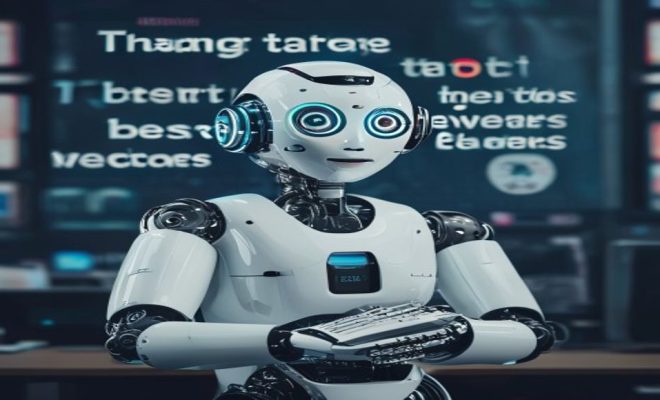
The news from Western New York recently sent ripples through the education world, and frankly, it’s about time we had this conversation. The Salamanca City Central School District, after much fanfare surrounding its pilot program to introduce humanoid robot teachers, has hit the brakes. Hard. This decision, following a New York Focus report and significant backlash from concerned parents and even the State Education Department, really makes you wonder: what were we thinking?
While tech company Realbotix might have envisioned a futuristic classroom, the reality quickly sparked heated debates about everything from the ethical implications of AI in education to student data privacy and, perhaps most crucially, the potential impact on human teachers. Critics rightly questioned the efficacy and safety of robot educators, while those pushing the tech highlighted AI’s supposed potential to enhance learning and prepare students for future careers. But let’s be honest, replacing a human connection with a machine, no matter how advanced, feels like a step backward, not forward.
This whole episode has gone viral, igniting discussions across social media about the future of teaching and technology’s role. It’s a crucial moment to pause and consider the best alternatives to robot teachers in education – approaches that genuinely engage students and empower educators without sacrificing the invaluable human element. So, what are these better ways? Let’s dive in.
1. Personalized Learning Platforms: Tailoring Education to Every Student
One of the big promises of AI teachers was personalized learning – the idea that a machine could adapt to each student’s pace and style. But here’s the thing: human teachers have been doing this for centuries, and technology can amplify their efforts without replacing them. Enter personalized learning platforms. These aren’t about automating the teacher; they’re about giving teachers powerful tools to understand and respond to individual student needs more effectively.
Think about platforms like Khan Academy, IXL, or Newsela. They offer adaptive learning pathways, diagnostic assessments, and a wealth of resources that can be tailored to a student’s current understanding, learning speed, and even interests. A student struggling with algebra can get extra practice and explanations, while another who’s excelling can be challenged with more advanced concepts. The key difference here is that a human teacher curates and guides this experience, using the platform’s data to inform their instruction, identify struggling students, and celebrate successes. It’s about empowering the teacher, not replacing them with a digital avatar.
2. Interactive Whiteboards and Displays: Bringing Lessons to Life
Remember the days of chalk dust and overhead projectors? We’ve come a long way, and interactive whiteboards and displays are a fantastic example of technology enhancing, not replacing, the classroom experience. Companies like SMART Technologies and Promethean have been at the forefront of this for years, offering large touchscreens that allow teachers to display multimedia content, annotate documents, and engage students in collaborative activities directly at the board.
Imagine a history lesson where students can drag and drop historical figures onto a timeline, or a science class where they can manipulate a 3D model of a cell with their fingertips. These tools make learning dynamic and participatory, moving beyond passive listening. They encourage problem-solving, teamwork, and critical thinking in ways that a static textbook simply can’t. Plus, they allow teachers to integrate a vast array of digital resources, from educational videos to interactive simulations, making lessons more engaging and memorable. This is precisely the kind of innovation that stands as one of the best alternatives to robot teachers in education.
3. Collaborative Online Tools: Fostering Teamwork and Communication
The modern workforce thrives on collaboration, and our classrooms should reflect that. Collaborative online tools are excellent for fostering teamwork, communication, and digital literacy among students. Platforms like Google Workspace for Education (Docs, Slides, Sheets), Microsoft 365 Education, and even specialized tools like Padlet or Jamboard allow students to work together on projects in real-time, regardless of whether they’re in the same room or learning remotely.
Consider a group project where students co-write a report, design a presentation, or brainstorm ideas using a shared digital canvas. These tools teach invaluable 21st-century skills: how to contribute to a shared document, provide constructive feedback, and manage a collective task. They also give teachers an unprecedented window into the group dynamic and individual contributions, allowing for more targeted feedback and intervention. It’s about building a learning community, not isolating students with a machine.
4. Virtual Reality (VR) and Augmented Reality (AR): Immersive Learning Experiences
If you want to talk about engaging students, VR and AR are where it’s at. These technologies offer truly immersive experiences that can transport students to ancient Rome, inside the human body, or even to the surface of Mars. Companies like VictoryXR are developing educational VR content that allows students to explore historical sites, conduct virtual lab experiments, or dissect virtual frogs without the mess.
AR, often accessible through tablets or smartphones, overlays digital information onto the real world. Imagine pointing your phone at a textbook page and seeing a 3D model of a volcano erupting on your desk. These tools don’t replace the teacher; they provide incredibly powerful new ways for teachers to illustrate complex concepts and make abstract ideas tangible. They spark curiosity, deepen understanding, and create memorable learning moments that stick with students long after the lesson ends. For truly impactful learning, these immersive technologies are among the best alternatives to robot teachers in education.
5. Project-Based Learning (PBL): Hands-On, Real-World Engagement
Sometimes, the best technology is no technology at all, or at least, technology used as a tool within a broader, more engaging framework. Project-Based Learning (PBL) is a pedagogical approach where students learn by actively engaging in real-world, meaningful projects. Instead of rote memorization, students tackle complex questions, problems, or challenges over an extended period, developing deep content knowledge as well as critical thinking, collaboration, creativity, and communication skills. (See: U.S. Department of Education.)
For instance, instead of just reading about local government, students might research a community issue, interview local officials, and propose solutions to the city council. They might design a sustainable garden, build a robot (a human-designed one, of course!), or create a documentary. PBL inherently requires students to apply what they learn in practical contexts, making learning relevant and motivating. Teachers act as facilitators, mentors, and guides, helping students navigate challenges and synthesize their findings. It’s a stark contrast to the passive consumption of information that a robot teacher might encourage.
6. Gamification and Educational Games: Making Learning Fun and Engaging
Let’s face it, kids love games. And smart educators are leveraging that natural inclination to make learning more engaging and effective. Gamification isn’t just about playing games; it’s about applying game design elements and game principles in non-game contexts. This can include earning points, badges, leaderboards, or progressing through levels as students master new concepts. For more context, see using technology in education.
Beyond gamification, there’s a growing field of truly excellent educational games. Think about platforms like Prodigy for math, or Minecraft: Education Edition, where students can build and explore in a collaborative environment, learning about everything from architecture to coding. These tools tap into intrinsic motivation, providing immediate feedback and a sense of accomplishment. They can turn what might otherwise be a dry subject into an exciting challenge, making them far superior among the best alternatives to robot teachers in education.
7. Professional Development for Teachers: Empowering the Human Element
Perhaps the most crucial, and often overlooked, ‘alternative’ to robot teachers is investing in human teachers themselves. No amount of fancy tech will compensate for an under-supported, under-trained, or uninspired educator. High-quality professional development (PD) is absolutely essential. This isn’t just about learning how to use new software; it’s about continuous growth in pedagogy, classroom management, understanding diverse learners, and leveraging technology effectively.
PD can take many forms: workshops on inquiry-based learning, training in trauma-informed practices, conferences focused on educational innovation, or even peer-to-peer coaching programs. When teachers feel valued, supported, and equipped with the latest strategies and tools, they are infinitely more effective. They bring creativity, empathy, and adaptability to the classroom – qualities no robot, no matter how sophisticated, can replicate. Investing in PD isn’t just an alternative; it’s the fundamental bedrock upon which all other educational improvements rest.
8. Hybrid Learning Models: Blending the Best of Both Worlds
While the focus here is on alternatives to robot teachers, it’s worth noting that effective integration of technology often involves blending different learning environments. Hybrid learning, or blended learning, combines face-to-face instruction with online learning components. This isn’t just about remote learning during a pandemic; it’s a deliberate pedagogical choice to optimize learning outcomes.
For example, students might complete introductory lessons or watch instructional videos online at home (the “flipped classroom” model), freeing up valuable class time for deeper discussions, group projects, and individualized teacher support. Or, they might use online simulations and labs to supplement hands-on experiments in school. This model allows for flexibility, caters to different learning paces, and can extend learning beyond the traditional school day, all while keeping the human teacher at the center of the educational experience. It recognizes that technology can enhance access and differentiate instruction without taking away the critical in-person interactions that foster social-emotional growth and deeper understanding.
9. Social-Emotional Learning (SEL) Programs: Nurturing the Whole Child
One area where robots fundamentally fall short is in fostering social-emotional development. Education isn’t just about academics; it’s about helping children grow into well-adjusted, empathetic, and resilient individuals. Social-Emotional Learning (SEL) programs focus on teaching students essential life skills like self-awareness, self-management, social awareness, relationship skills, and responsible decision-making.
Schools implementing strong SEL programs might incorporate mindfulness exercises, conflict resolution strategies, peer mentoring, and explicit lessons on empathy and emotional regulation. These programs often involve collaborative activities, role-playing, and guided discussions facilitated by a human teacher who can model appropriate behaviors and provide sensitive feedback. The human element is absolutely critical here – a teacher’s ability to connect with students, understand their emotional landscape, and guide them through complex social situations is something no algorithm can replicate. Investing in SEL is a profound alternative to purely academic, robot-driven instruction, as it prioritizes the holistic development that shapes a child’s future well-being and success.
10. Community Partnerships and Experiential Learning: Connecting Education to the Real World
Learning extends far beyond the four walls of a classroom. For truly rich and relevant education, schools can forge strong partnerships with local businesses, non-profits, government agencies, and cultural institutions. This opens doors to experiential learning opportunities that are impossible to replicate with a robot teacher.
Imagine students interning at a local tech company, volunteering at an animal shelter, participating in a city council meeting, or working with a museum to curate an exhibit. These experiences provide authentic contexts for learning, allow students to apply classroom knowledge to real-world problems, and expose them to diverse career paths. Teachers play a vital role in identifying these opportunities, preparing students for them, and helping them reflect on their experiences. This kind of hands-on, community-integrated learning fosters civic engagement, practical skills, and a deeper understanding of the world, making it a powerful and human-centric alternative to isolated, machine-led instruction.
The Salamanca Setback: A Wake-Up Call for Education
The Salamanca City Central School District’s decision to pause its robot teacher pilot program with Realbotix is more than just a local news story; it’s a critical moment for the entire education sector. The initial enthusiasm for a humanoid robot teacher, while perhaps well-intentioned, clearly outpaced a thorough consideration of the ethical implications, student data privacy concerns, and the actual pedagogical value. Parents, naturally, raised flags about their children interacting with AI in such a fundamental way, and the State Education Department’s intervention underscored the broader systemic issues at play.
This situation highlights a crucial truth: technology in education should always serve to augment human interaction and expertise, not replace it. The backlash wasn’t just about a fear of the unknown; it was a deeply human reaction to the potential loss of connection, the concern for children’s holistic development, and the recognition that teaching is far more than just delivering information. It’s about empathy, mentorship, and the nuanced understanding of individual student needs that only another human can provide. (See: The New York Times.)
The Ethical Maze of AI in Classrooms
Beyond the practical concerns, the ethical implications of deploying robot teachers are truly a maze. Who is responsible when an AI makes an instructional error? What data is being collected on students, how is it stored, and who has access to it? These aren’t minor technical glitches; they’re fundamental questions about privacy, accountability, and the very nature of human development. A human teacher, bound by professional ethics and a deep understanding of child psychology, can adapt, empathize, and respond to emotional cues in ways no algorithm can yet replicate.
The Salamanca case serves as a stark reminder that we need robust ethical frameworks and clear guidelines for AI in education before we deploy such technologies. The idea of a robot monitoring student behavior, assessing emotional states, or making critical judgments about learning pathways without human oversight is deeply unsettling. It risks creating a sterile, data-driven environment that prioritizes metrics over the messy, unpredictable, and profoundly human process of learning and growth.
Beyond Hype: Focusing on Genuine Innovation
The temptation to embrace flashy, cutting-edge technology can be strong, especially when promises of ‘revolutionizing’ education are dangled before us. However, genuine innovation in education often looks less like a sci-fi movie and more like thoughtfully integrated tools that empower human educators and engage students more deeply. The best alternatives to robot teachers in education aren’t about chasing the next viral trend; they’re about investing in proven strategies and technologies that enhance learning outcomes and foster a rich, supportive classroom environment. For more context, see voice search in educational tools.
This means prioritizing tools that facilitate collaboration, provide personalized feedback (with human oversight), create immersive experiences, and, most importantly, free up teachers to do what they do best: teach, mentor, and inspire. It means moving beyond the narrow definition of ‘efficiency’ that AI often promises and embracing the complex, multifaceted nature of human learning.
The Future is Human-Centered, Not Robot-Dominated
Ultimately, the discussion around robot teachers forces us to confront what we truly value in education. Is it merely the efficient transfer of information, or is it the development of well-rounded, empathetic, critical-thinking individuals? I’d argue it’s the latter, and for that, human connection is irreplaceable.
The future of education should be human-centered, with technology serving as a powerful assistant, not a replacement for the heart and soul of the classroom – the teacher. The Salamanca school district’s pause is not a failure of technology itself, but a crucial re-evaluation of its appropriate role. It’s an opportunity to double down on the strategies and tools that genuinely empower both educators and students, ensuring that our classrooms remain vibrant, interactive spaces where real learning and growth can flourish.
Addressing Common Concerns About Technology in Education
When we talk about technology in education, a few common worries often pop up. People sometimes fear that even well-intentioned tech will somehow dilute the human element, or that it’ll create a digital divide where some students have access and others don’t. These are valid concerns, and it’s important to address them head-on when considering the best alternatives to robot teachers in education.
First, the digital divide: access to technology is indeed an equity issue. When implementing personalized learning platforms or VR experiences, schools need to ensure all students have equitable access, whether at school or at home. This might involve providing devices, ensuring internet access, or creating dedicated school resources. The goal isn’t just to introduce technology, but to introduce it fairly.
Second, the concern that technology will somehow make teachers obsolete, even if it’s not a humanoid robot. The strategies we’ve discussed here are designed to do the opposite: they empower teachers. Personalized learning platforms give teachers data to make better instructional decisions. Interactive whiteboards make lessons more engaging, freeing teachers to facilitate instead of just lecture. Collaborative tools allow teachers to observe group dynamics and intervene strategically. The technology becomes a powerful assistant, enabling teachers to focus on the higher-order tasks that require human judgment, creativity, and empathy.
Finally, there’s the worry about screen time. It’s true that excessive, unstructured screen time can be detrimental. However, integrating technology purposefully into learning is different. Using an interactive whiteboard for 15 minutes to explore a 3D model, or collaborating on a document for 30 minutes, is a far cry from hours of passive consumption. The key is balance and intentional design. Technology should be a tool for active learning, not a babysitter. When used thoughtfully, it enhances the learning experience without replacing crucial human interaction.
The Economic Reality: Cost-Effectiveness of Alternatives
Let’s talk about money. One of the arguments sometimes made for robot teachers is that, in the long run, they might be more cost-effective than human teachers. This perspective often ignores the immense upfront costs of developing, manufacturing, and maintaining advanced humanoid robots, not to mention the specialized technical support they would require. The Salamanca pilot, for instance, involved a significant investment.
When we look at the best alternatives to robot teachers in education, many of them offer compelling cost-effectiveness. Investing in personalized learning platforms, for example, can be done incrementally and scaled as needed. Professional development for teachers, while an ongoing expense, is a direct investment in the core asset of any school: its educators. Many collaborative online tools have free or low-cost educational versions. Even VR/AR, while initially more expensive, is seeing hardware costs drop, and the content can often be shared across multiple classrooms or even districts. For more context, see designing educational spaces with SketchUp. (See: BBC Education News.)
Crucially, the return on investment for human-centered strategies is multifaceted. It’s not just about academic gains; it’s about improved student engagement, reduced behavioral issues, higher teacher retention, and the development of well-rounded individuals. These intangible benefits are incredibly valuable and simply can’t be delivered by a machine. Focusing on these proven, human-empowering technologies and pedagogies tends to be a far more sustainable and impactful use of educational budgets than chasing futuristic, unproven robotic solutions.
FAQ: Understanding the Best Alternatives to Robot Teachers in Education
Q1: Why are robot teachers generally considered a poor idea for primary and secondary education?
Robot teachers are widely seen as inappropriate because they lack the capacity for genuine human connection, empathy, and nuanced understanding of a child’s social-emotional needs. Teaching involves more than just delivering information; it requires adapting to complex situations, fostering relationships, providing emotional support, and inspiring creativity – qualities that advanced AI still can’t replicate. Concerns about student data privacy, ethical accountability, and the potential impact on human teacher jobs also play a significant role.
Q2: What is the primary goal of using technology as an alternative to robot teachers?
The primary goal is to enhance and empower human teachers, not replace them. The best educational technologies serve as tools that help teachers personalize learning, make lessons more engaging, facilitate collaboration, and provide richer learning experiences. They free up teachers to focus on mentorship, individualized support, and fostering social-emotional development, which are uniquely human roles.
Q3: How do personalized learning platforms differ from robot teachers?
Personalized learning platforms are digital tools that adapt content and pace to individual students. The key difference is that a human teacher oversees and guides this process. Teachers use the data from these platforms to inform their instruction, identify students needing extra help, and provide targeted interventions. A robot teacher, conversely, would be the primary instructional delivery system, lacking human oversight and the ability to form meaningful relationships.
Q4: Can virtual reality (VR) and augmented reality (AR) replace traditional classroom instruction?
No, VR and AR are powerful tools designed to supplement and enrich traditional instruction, not replace it. They provide immersive experiences that can make abstract concepts tangible and bring subjects to life, sparking curiosity and deepening understanding. However, they are most effective when integrated into a lesson plan by a human teacher who can guide the experience, facilitate discussion, and connect the virtual world back to real-world learning objectives.
Q5: Is Project-Based Learning (PBL) considered a technology-free alternative?
PBL is a pedagogical approach that focuses on real-world projects. While it can certainly be implemented with minimal technology, technology often plays a crucial supporting role. Students might use collaborative online tools for research and presentation, interactive whiteboards for brainstorming, or even VR/AR to explore contexts relevant to their projects. The core of PBL is active, hands-on learning guided by a human teacher, with technology serving as an enabler rather than the central focus.
Q6: Why is professional development for teachers so important when discussing alternatives to robot teachers?
Professional development is paramount because human teachers are the cornerstone of effective education. No technology, no matter how advanced, can compensate for an under-supported or under-trained educator. Investing in PD ensures teachers are equipped with the latest pedagogical strategies, understand how to effectively integrate new technologies, and continue to grow in their ability to connect with and inspire students. Empowering teachers directly translates to better outcomes for students and strengthens the human element in education.
Q7: How can schools ensure equitable access to technology when implementing these alternatives?
Ensuring equitable access is critical. Schools can address this by providing devices (laptops, tablets) to students who need them, securing funding for reliable internet access, creating dedicated tech hubs or computer labs within schools, and offering training for both students and parents on how to use the tools effectively. Strategic planning and community partnerships are vital to bridge any digital divides and ensure all students benefit from technology-enhanced learning.
“`
Trending Now
Frequently Asked Questions
What are the disadvantages of robot teachers?
Robot teachers raise concerns about the loss of human connection in education, potential ethical issues regarding AI, and questions about data privacy. Critics argue that while technology can assist learning, it cannot replace the empathy and understanding that human teachers provide.
How can personalized learning improve education?
Personalized learning platforms adapt to each student's unique pace and learning style, enhancing engagement and understanding. By utilizing technology to support human teachers, these platforms allow for a more tailored educational experience without replacing the essential human element.
Why did Salamanca City Central School District stop using robot teachers?
The Salamanca City Central School District halted its robot teacher pilot program due to significant backlash from parents and the State Education Department, highlighting concerns over the effectiveness, safety, and ethical implications of using AI in classrooms.
What are better alternatives to robot teachers?
More effective alternatives to robot teachers include personalized learning platforms, project-based learning, collaborative group work, and enhanced teacher training. These approaches prioritize human interaction and engagement while leveraging technology to support learning.
What impact does technology have on education?
Technology can enhance education by providing tools for personalized learning, improving access to resources, and enabling innovative teaching methods. However, it's essential to balance technological integration with the irreplaceable human connection that teachers provide.
Have you experienced this yourself? We'd love to hear your story in the comments.