Apple’s Controversial Removal of ICE Tracking Apps
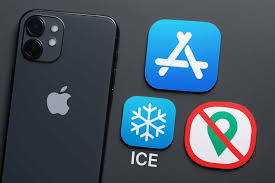
In a move that has sparked significant debate about free speech and tech company autonomy, Apple removed the ICEBlock app and similar applications from its App Store . The decision came after direct pressure from the Trump administration, raising critical questions about the intersection of technology, government influence, and civil liberties.
The ICEBlock App: Background and Purpose
Created by developer Joshua Aaron, ICEBlock was designed as a crowd-sourced alert system for Immigration and Customs Enforcement (ICE) agent sightings . The app, which had amassed over 1 million users, positioned itself as a “Waze for ICE sightings,” allowing users to anonymously report ICE agent locations.
Motivations Behind the App
Aaron stated that the app’s primary mission was to help communities protect themselves from what he described as the “terror” of aggressive immigration enforcement . The app included a disclaimer warning users that it should not be used to incite violence or interfere with law enforcement.
Government Intervention
Justice Department’s Stance
U.S. Attorney General Pam Bondi argued that the app put ICE agents at risk, calling it a “red line that cannot be crossed” . The Justice Department claimed the app violated App Store guidelines by potentially endangering law enforcement officers.
Apple’s Response
Apple removed the app, citing information from law enforcement about safety risks . The company stated that the app did not comply with App Store guidelines regarding “objectionable” and “defamatory” content.
Broader Context of Tech and Government Relations
Political Dynamics
The incident highlights the complex relationship between tech companies and the Trump administration. Apple, in particular, has been navigating a delicate balance, seeking to maintain favorable treatment regarding tariffs and manufacturing policies .
Transparency in App Removals
Interestingly, Apple removed more than 1,700 apps in 2024, with the majority coming from countries like China, Russia, and South Korea . The ICEBlock removal represents a rare instance of app removal due to U.S. government pressure.
Legal and Ethical Implications
Free Speech Concerns
Legal experts have raised significant concerns about the app’s removal. Kate Ruane from the Center for Democracy and Technology argued that such actions erode First Amendment protections .
Developer’s Response
Joshua Aaron expressed deep disappointment, describing Apple’s action as “capitulating to an authoritarian regime” . He suggested that his legal team would explore further options.
Conclusion
The removal of ICEBlock represents a critical moment in the ongoing dialogue about technology, government influence, and civil liberties. It raises fundamental questions about the extent of corporate responsibility and the delicate balance between public safety and free expression.
Hyperlinks:
- Digital Rights and Technology
- Immigration Rights Resources
- Tech and Civil Liberties
- App Store Guidelines
- Electronic Frontier Foundation