The Tech Edvocate

Top Menu

  • Advertisement
  • Apps
  • Home Page
  • Home Page Five (No Sidebar)
  • Home Page Four
  • Home Page Three
  • Home Page Two
  • Home Tech2
  • Icons [No Sidebar]
  • Left Sidbear Page
  • Lynch Educational Consulting
  • My Account
  • My Speaking Page
  • Newsletter Sign Up Confirmation
  • Newsletter Unsubscription
  • Our Brands
  • Page Example
  • Privacy Policy
  • Protected Content
  • Register
  • Request a Product Review
  • Shop
  • Shortcodes Examples
  • Signup
  • Start Here
    • Governance
    • Careers
    • Contact Us
  • Terms and Conditions
  • The Edvocate
  • The Tech Edvocate Product Guide
  • Topics
  • Write For Us
  • Advertise

Main Menu

  • Start Here
    • Our Brands
    • Governance
      • Lynch Educational Consulting, LLC.
      • Dr. Lynch’s Personal Website
      • Careers
    • Write For Us
    • The Tech Edvocate Product Guide
    • Contact Us
    • Books
    • Edupedia
    • Post a Job
    • The Edvocate Podcast
    • Terms and Conditions
    • Privacy Policy
  • Topics
    • Assistive Technology
    • Child Development Tech
    • Early Childhood & K-12 EdTech
    • EdTech Futures
    • EdTech News
    • EdTech Policy & Reform
    • EdTech Startups & Businesses
    • Higher Education EdTech
    • Online Learning & eLearning
    • Parent & Family Tech
    • Personalized Learning
    • Product Reviews
  • Advertise
  • Tech Edvocate Awards
  • The Edvocate
  • Pedagogue
  • School Ratings

logo

The Tech Edvocate

  • Start Here
    • Our Brands
    • Governance
      • Lynch Educational Consulting, LLC.
      • Dr. Lynch’s Personal Website
        • My Speaking Page
      • Careers
    • Write For Us
    • The Tech Edvocate Product Guide
    • Contact Us
    • Books
    • Edupedia
    • Post a Job
    • The Edvocate Podcast
    • Terms and Conditions
    • Privacy Policy
  • Topics
    • Assistive Technology
    • Child Development Tech
    • Early Childhood & K-12 EdTech
    • EdTech Futures
    • EdTech News
    • EdTech Policy & Reform
    • EdTech Startups & Businesses
    • Higher Education EdTech
    • Online Learning & eLearning
    • Parent & Family Tech
    • Personalized Learning
    • Product Reviews
  • Advertise
  • Tech Edvocate Awards
  • The Edvocate
  • Pedagogue
  • School Ratings
  • The Staggering Truth About These New Weight Loss Drugs — And Why You Need to Know

  • The Quiet Crisis: Why Your Auto Loan Interest Rates Are Still Skyrocketing

  • Elvis’s Ghost Haunts AI: The $41 Million Anthropic Copyright Lawsuit Explained

  • 7 Micro-SaaS Tools Quietly Transforming Freelance Productivity — Don’t Miss Out!

  • Who Really Owns the Moon? The Shocking Truth About Lunar Real Estate

  • 7 Shocking Ways Trophy Games’ Q3 2026 Earnings Reshape the Industry

  • The Trillion-Dollar Wall: 10 Urgent Steps to Protect Your CRE Investments Now

  • Mind-Blowing: AI in Law Will Unleash a 30% Deluge of New Cases

  • Slik leser du casinovurderinger utover poengsummen

  • Casinoomtaler som sammenligningsverktøy for ulike spillbehov

Digital & Mobile Technology
Home›Digital & Mobile Technology›What Is a DWG File?

What Is a DWG File?

By Matthew Lynch
June 6, 2023
0
Spread the love

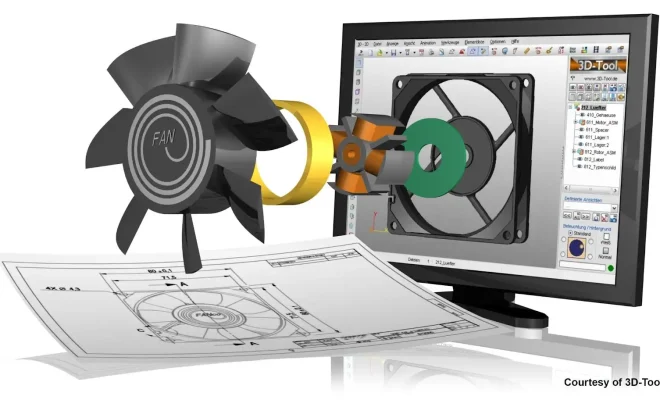
DWG files are a file format primarily used for storing 2D and 3D design data. DWG stands for “Drawing” and is a proprietary file format developed by AutoCAD, a popular computer-aided design (CAD) software. Nearly all CAD software programs can import and export DWG files, and they are widely used in a variety of industries, including engineering, architecture, construction, and product design.

DWG files come in several versions, with the most recent version being DWG 2018. While some older versions of CAD software may not support newer DWG files, most modern CAD software can handle files from earlier versions. The file format itself is binary, meaning that it consists of a series of 1s and 0s that represent the data stored within it. This makes it easy for different software programs to read and interpret the data stored in the file.

DWG files can contain a wide variety of design data, including 2D drawings, 3D models, text, and other information. They are commonly used for creating technical drawings, such as floor plans and blueprints, as well as for designing complex 3D models for machines or products. They also support layers, which allow designers to organize their work and control the visibility of different elements within a drawing.

In addition to being used for design purposes, DWG files can be used for other applications as well. For example, architects may use DWG files to create 3D visualizations of buildings, while engineers may use them to design complex parts for machinery. DWG files can also be used for 3D printing, as they contain all the necessary data for creating a physical object.

One of the benefits of using DWG files is that they are universal. Because they are widely used in the design industry, many software programs can read and write to the format. This means that designers can share their work with colleagues and clients, even if they are using different software programs. The ability to share files easily is crucial in the design industry, where collaboration is essential.

In conclusion, DWG files are a proprietary file format used primarily for storing 2D and 3D design data. They are widely used in the design industry and are supported by most CAD software programs. DWG files are binary files that can contain a wide variety of design data, including 2D drawings, 3D models, and text. They are universal, allowing designers to share their work easily with colleagues and clients. DWG files are an essential tool for designers, engineers, and architects who rely on CAD software to create their work.


Previous Article

How to Make an Awkward Potion in ...

Next Article

How to Identify Songs in YouTube Videos

Matthew Lynch

Related articles More from author

  • Digital & Mobile Technology

    Bandcamp Doesn’t Need to Replace Streaming to Win Big

    July 31, 2023
    By Matthew Lynch
  • Digital & Mobile Technology

    How to Empty Trash on Android

    June 6, 2023
    By Matthew Lynch
  • Digital & Mobile Technology

    Christmas Charity Organizations That Help Low Income Families

    August 5, 2023
    By Matthew Lynch
  • Digital & Mobile Technology

    20 Roku Hacks to Make Your Life Easier

    June 10, 2023
    By Matthew Lynch
  • Digital & Mobile Technology

    How to Use Split Screen on iPad

    June 12, 2023
    By Matthew Lynch
  • Digital & Mobile Technology

    How to Use FaceTime on Your Laptop

    May 30, 2023
    By Matthew Lynch

Search

Login & Registration

  • Log in
  • Entries feed
  • Comments feed
  • WordPress.org

Newsletter

Signup for The Tech Edvocate Newsletter and have the latest in EdTech news and opinion delivered to your email address!

About Us

Since technology is not going anywhere and does more good than harm, adapting is the best course of action. That is where The Tech Edvocate comes in. We plan to cover the PreK-12 and Higher Education EdTech sectors and provide our readers with the latest news and opinion on the subject. From time to time, I will invite other voices to weigh in on important issues in EdTech. We hope to provide a well-rounded, multi-faceted look at the past, present, the future of EdTech in the US and internationally.

We started this journey back in June 2016, and we plan to continue it for many more years to come. I hope that you will join us in this discussion of the past, present and future of EdTech and lend your own insight to the issues that are discussed.

Newsletter

Signup for The Tech Edvocate Newsletter and have the latest in EdTech news and opinion delivered to your email address!

Contact Us

The Tech Edvocate
910 Goddin Street
Richmond, VA 23231
(601) 630-5238
[email protected]

Copyright © 2026 Matthew Lynch. All rights reserved.