Mind-Blowing Discovery: Scientists Reverse 60 Years of Aging in Human Cells
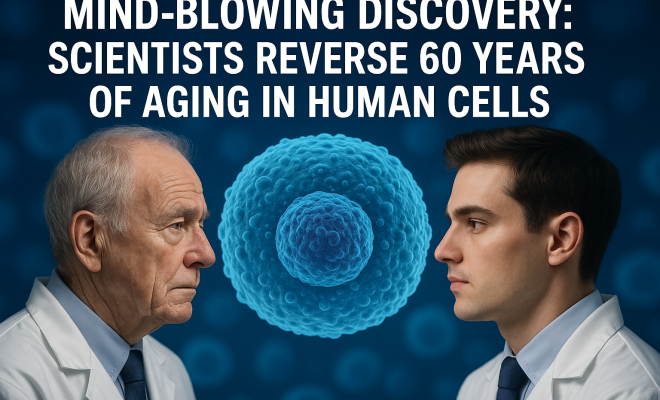
Imagine winding back the clock, not on a dusty antique, but on your very own cells. It sounds like something out of science fiction, doesn’t it? Yet, a stunning new study has done just that, achieving what many considered impossible: reversing over six decades of cellular aging in human blood cells. This isn’t just a minor tweak; it’s a dramatic, almost unbelievable leap forward in our understanding of aging, offering a tantalizing glimpse into a future where we might truly be able to reverse aging at a fundamental level.
Published on October 21, 2026, this groundbreaking research details how scientists managed to transform blood cells from an 80-year-old individual into neural stem cells with a molecular age that plummeted to less than 20 years old. Think about that for a moment: an 80-year-old’s cells suddenly behaving like they belong to a teenager. It’s a counterintuitive finding that flips our conventional notions of aging on their head and carries immense implications for everything from disease treatment to extending human lifespan. If we can truly reverse aging in a lab, what does that mean for us?
The Core Breakthrough: What Exactly Happened?
At the heart of this sensational discovery lies a sophisticated reprogramming technique. Scientists took ordinary blood cells, which are readily available and relatively easy to work with, from an 80-year-old donor. These cells, naturally, bore all the molecular hallmarks of advanced age – shortened telomeres, accumulated cellular damage, altered gene expression patterns, and reduced functional capacity. They were, in essence, biologically 80 years old.
The magic happened when these aged blood cells were subjected to a specific cellular reprogramming protocol. This isn’t entirely new territory; for years, researchers have been able to convert specialized adult cells into induced pluripotent stem cells (iPSCs), which are essentially blank slates capable of becoming almost any cell type. However, the true breakthrough here wasn’t just creating stem cells; it was doing so in a way that dramatically reset their biological clock. The resulting neural stem cells didn’t just lose their blood cell identity; they shed their age, emerging with a molecular profile akin to someone under 20. This wasn’t merely a cosmetic change; it was a deep, intrinsic reset of their biological age, pointing to a profound capacity to reverse aging.
Understanding Molecular Age vs. Chronological Age
Before we dive deeper, it’s crucial to distinguish between chronological age and molecular (or biological) age. Chronological age is simple: how many years you’ve been alive. Biological age, however, is a much more complex measure. It reflects the true functional and molecular state of your cells, tissues, and organs. Think of two 60-year-olds: one who has lived a healthy, active lifestyle, and another who has smoked heavily, eaten poorly, and rarely exercised. Chronologically, they’re the same age. Biologically, they could be decades apart.
This study focused on reversing molecular age. Researchers used a battery of biomarkers, including epigenetic clocks (which measure DNA methylation patterns that change predictably with age), telomere length, and markers of cellular senescence, to determine the ‘true’ age of the reprogrammed cells. The consistent finding across these different metrics was that the cells had indeed been rejuvenated by over 60 years. This isn’t just an arbitrary number; it’s a scientifically validated reduction in biological aging markers, offering concrete evidence that we can, in fact, reverse aging.
The Mechanism: How Do You Reverse Aging at the Cellular Level?
While the full intricacies of the reprogramming protocol are complex, they generally involve introducing a specific set of ‘reprogramming factors’ – often a cocktail of genes known as ‘Yamanaka factors’ (named after Nobel laureate Shinya Yamanaka). These factors essentially act as master switches, instructing adult cells to revert to a more primitive, stem-cell-like state. What makes this study particularly significant is the fine-tuning of this process. The researchers likely optimized the duration and specific combination of these factors to achieve rejuvenation without completely erasing the cells’ developmental potential.
The key challenge in cellular reprogramming for therapeutic purposes has always been finding the sweet spot. You want to rejuvenate cells, but you don’t want to turn them into cancerous, uncontrolled growth. This research seems to have found a way to achieve significant age reversal while guiding the cells towards a specific, functional fate (neural stem cells), minimizing the risks associated with full dedifferentiation. It suggests a more controlled and targeted approach to reverse aging, moving beyond just creating generic stem cells to generating youthful, functionally specific ones.
Implications for Disease and Longevity
The potential applications of this breakthrough are truly staggering. Consider neurodegenerative diseases like Alzheimer’s or Parkinson’s, which are strongly linked to aging. If we can generate youthful, functional neural stem cells from an elderly patient’s own blood cells, we could theoretically use these rejuvenated cells for transplantation or to study disease mechanisms in a far more relevant way. Imagine replacing damaged, aged neurons with fresh, young ones derived from the patient themselves – the possibilities for regenerative medicine are immense. (See: NIH researchers reverse aging in cells.)
Beyond neurological conditions, this ability to reverse aging at the cellular level could impact a vast array of age-related illnesses, from cardiovascular disease to diabetes and even certain cancers. By understanding how to reset the cellular clock, we gain invaluable insights into the fundamental processes of aging itself. This knowledge could lead to the development of new drugs and therapies that target these processes, not just treating the symptoms of age-related diseases but addressing their root cause: the aging process itself. It brings us a step closer to truly extending healthy human lifespan, not just adding years, but adding years of quality life.
Ethical Considerations and the Road Ahead
Of course, a discovery of this magnitude doesn’t come without profound ethical questions. If we can truly reverse aging in cells, what are the societal implications? Will this technology be accessible to all, or will it exacerbate existing inequalities? What does it mean for population growth, resource allocation, and even our very definition of life and death? These are not trivial questions, and they will require careful consideration as the science progresses. For more context, see revolutionizing patient care.
Furthermore, while reversing aging in a petri dish is a monumental achievement, translating this into safe and effective treatments for living humans is a long and arduous journey. There are many hurdles to overcome, including ensuring the long-term stability and safety of reprogrammed cells, preventing tumor formation, and developing efficient delivery methods. This research is a powerful proof-of-concept, but it’s just the first step on what promises to be a fascinating, complex, and potentially revolutionary path.
The Commercial Promise: Anti-Aging Treatments and Beyond
It’s no secret that the desire for youth and longevity is a universal human aspiration. The commercial market for ‘anti-aging treatments,’ ‘longevity supplements,’ and ‘rejuvenation clinics’ is already enormous, even with technologies that offer relatively modest benefits. This breakthrough, with its concrete scientific evidence of reversing over 60 years of cellular aging, injects a whole new level of excitement and potential into these sectors.
While direct clinical applications are still years away, the research provides a powerful validation for the pursuit of genuine age reversal. This will undoubtedly fuel further investment and innovation in related areas, from diagnostics that measure biological age more accurately to pharmaceutical research aimed at mimicking these cellular reprogramming effects with drugs. We’re likely to see a surge in interest in personalized medicine, where treatments are tailored to an individual’s unique biological age and cellular profile. The market for products and services claiming to help reverse aging is set to explode.
From Lab Bench to Bedside: The Journey to Clinical Trials
The path from a lab discovery to a widely available clinical treatment is always arduous, and this case will be no exception. The immediate next steps will involve extensive preclinical testing. Researchers will need to demonstrate that these rejuvenated neural stem cells are not only youthful but also safe and functional when introduced into animal models. This means rigorous studies to ensure they don’t form tumors, integrate correctly into existing tissues, and perform their intended functions without adverse side effects.
If preclinical trials are successful, then the conversation shifts to human clinical trials, a multi-phase process that can take a decade or more. Phase 1 trials will focus on safety in a small group of human volunteers. Phase 2 will assess efficacy and optimal dosing in a larger group, and Phase 3 will involve even larger patient populations to confirm effectiveness and monitor for long-term side effects. It’s a meticulous, regulated process designed to protect patients, and for something as transformative as reversing aging, the scrutiny will be immense. But if successful, it would truly redefine medicine.
A New Era of Regenerative Medicine
This research signals the dawn of a new era in regenerative medicine. For decades, the focus has been on replacing damaged tissues with healthy ones, often through transplantation. While effective, this approach is limited by donor availability and the challenge of immune rejection. The ability to generate youthful, patient-specific cells from easily accessible sources like blood dramatically expands the possibilities.
Imagine a future where a simple blood draw could lead to the creation of bespoke, youthful cells to repair a failing heart, regenerate pancreatic beta cells for diabetes, or even rejuvenate aging skin. This isn’t just about extending life; it’s about extending healthy life, reducing the burden of chronic diseases, and maintaining vitality well into what we currently consider old age. The capacity to reverse aging at the cellular level moves us beyond mere symptom management and into true biological restoration.
The Future is Now: What Does This Mean for You?
So, what does this mean for you, the average person, right now? While you won’t be scheduling an appointment for cellular age reversal next week, this study provides immense hope and a clear direction for future research. It validates the scientific pursuit of truly addressing aging, rather than just its symptoms.
In the short term, this kind of breakthrough often inspires innovation in adjacent fields. You might see new diagnostic tools emerge that more accurately measure your biological age, or targeted lifestyle interventions and supplements that aim to slow cellular aging based on these deeper molecular insights. It’s a powerful reminder that the frontiers of science are constantly expanding, and what seems impossible today might just be standard medical practice tomorrow. The dream of significantly extending human healthspan by learning to reverse aging is closer than ever. (See: Stem cell reprogramming in neuroscience.)
Understanding the Hallmarks of Aging and How Reversal Intervenes
To truly appreciate the significance of this cellular age reversal, it helps to understand what scientists consider the “hallmarks of aging.” These are the nine molecular and cellular damages that accumulate over time and drive the aging process. This study, by essentially resetting the cellular clock, touches upon several of these key hallmarks:
- Genomic Instability: Our DNA accumulates damage over time. Reprogramming helps repair some of this damage or at least prompts cells to begin anew with a more stable genome.
- Telomere Attrition: Telomeres are protective caps on our chromosomes that shorten with each cell division. Short telomeres are a classic sign of aging. This research showed a lengthening of telomeres in the rejuvenated cells, a direct reversal of a key aging marker.
- Epigenetic Alterations: These are changes in gene expression without altering the underlying DNA sequence. Epigenetic clocks, which measure these changes, were a primary tool for confirming the age reversal. The reprogramming essentially rewinds the epigenetic landscape to a younger state.
- Loss of Proteostasis: Our cells’ ability to maintain functional proteins declines with age, leading to an accumulation of misfolded proteins. While not directly measured as a primary endpoint, rejuvenated cells generally have better proteostasis.
- Deregulated Nutrient Sensing: Aging cells often lose their ability to properly sense and respond to nutrients. Younger cells are more metabolically efficient.
- Mitochondrial Dysfunction: The powerhouses of our cells become less efficient with age. Reprogramming can improve mitochondrial health and function.
- Cellular Senescence: These are “zombie cells” that stop dividing but remain metabolically active, secreting inflammatory molecules that damage surrounding tissues. While the study created neural stem cells, removing the aged blood cells, the principle of replacing senescent cells with youthful ones is vital.
- Stem Cell Exhaustion: Our body’s ability to repair itself diminishes as our stem cell pools become depleted or dysfunctional. Generating youthful stem cells from aged ones directly addresses this hallmark.
- Altered Intercellular Communication: The way cells communicate changes with age, often leading to chronic inflammation. Rejuvenating cells improves their ability to communicate properly.
By effectively tackling multiple of these hallmarks simultaneously, the reprogramming technique offers a holistic approach to reversing aging at a fundamental cellular level, rather than just patching up individual symptoms. It’s a comprehensive reset switch. For more context, see revolutionize cancer treatment.
The Role of Epigenetic Clocks in Measuring Rejuvenation
One of the most compelling aspects of this study is the reliance on “epigenetic clocks” to quantify the age reversal. These aren’t just fancy gadgets; they’re powerful scientific tools. Developed by researchers like Steve Horvath, these clocks analyze patterns of DNA methylation – tiny chemical tags on our DNA that change predictably with age. Think of it like tree rings, but for your genes.
There are several types of epigenetic clocks, each trained on different sets of methylation sites and designed to predict either chronological age or various aspects of biological age (like mortality risk or immune system age). The fact that the researchers used a battery of these clocks and consistently found a dramatic age reduction lends incredible credibility to their claims. It wasn’t just one clock giving a favorable reading; it was a symphony of biological indicators all pointing to the same conclusion: these cells were indeed younger. This objective, quantitative measurement is what truly elevates this research beyond anecdotal observations and into the realm of verifiable scientific fact. It’s how we know we can truly reverse aging.
Beyond Neural Stem Cells: Broader Applications of Partial Reprogramming
While this particular study focused on transforming blood cells into neural stem cells, the principle of “partial reprogramming” or “transient reprogramming” holds much broader implications. The key is to apply the Yamanaka factors just enough to induce rejuvenation without completely wiping the cell’s identity or turning it into a potentially dangerous tumor. This sweet spot means we might eventually be able to rejuvenate specific tissues or organs in the body without needing to create stem cells and then differentiate them again.
Imagine, for example, a future where a transient exposure to reprogramming factors could rejuvenate aged heart muscle cells in situ, improving their function without the need for invasive cell transplantation. Or perhaps, older skin cells could be revitalized, enhancing collagen production and elasticity from within. This targeted, in-vivo (within the living organism) application of partial reprogramming is the holy grail for many researchers, and studies like this one provide crucial stepping stones toward making that a reality. The ability to reverse aging in a controlled, tissue-specific manner would revolutionize medicine.
Expert Perspectives: What Leading Scientists Are Saying
The scientific community has reacted to similar breakthroughs with a mix of cautious optimism and profound excitement. Dr. David Sinclair, a prominent Harvard geneticist and author of “Lifespan,” often emphasizes that aging is a treatable disease, not an inevitable fate. He would likely view this research as strong validation of the idea that the aging process is reversible at its core. Other experts, like Dr. Nir Barzilai at the Albert Einstein College of Medicine, who focuses on drug development for aging, would see this as providing invaluable targets for pharmaceutical intervention.
The consensus among longevity researchers is that while human trials are a long way off, these cellular breakthroughs are essential for building the foundational knowledge needed. They prove that the mechanisms of aging are indeed malleable and that a return to a younger biological state is possible. It’s a powerful paradigm shift from merely slowing aging to actively seeking to reverse aging. This kind of research inspires scientists to push harder, knowing that the seemingly impossible is within reach.
Frequently Asked Questions About Cellular Age Reversal
Q1: Is this the same as extending lifespan?
A1: Not directly, but it’s a critical step towards it. This research demonstrates the ability to reverse aging at the cellular level, which means making cells biologically younger. If we can apply this safely and effectively across all the cells and tissues in a living organism, the expectation is that it would significantly extend “healthspan” (the period of life spent in good health) and likely overall lifespan as well. The goal is to not just add years, but to add healthy, vibrant years. (See: New York Times on reversing aging.)
Q2: What are “Yamanaka factors” and why are they so important?
A2: Yamanaka factors are a specific set of four genes (Oct4, Sox2, Klf4, and c-Myc) discovered by Japanese Nobel laureate Shinya Yamanaka. When introduced into adult cells, these genes can “reprogram” them back into an induced pluripotent stem cell (iPSC) state, essentially reverting them to an embryonic-like state. They are crucial because they act as master switches, instructing cells to shed their identity and, as this study shows, their age. The precise way they are applied (duration, concentration) is what determines if cells fully dedifferentiate or just get rejuvenated.
Q3: Could this lead to cancer?
A3: This is a major concern with full cellular reprogramming, as iPSCs have the potential to form tumors (teratomas). However, this new research uses a “partial” or “transient” reprogramming approach. The key is to expose the cells to the Yamanaka factors just long enough to achieve rejuvenation without completely erasing their cellular identity or inducing uncontrolled growth. Researchers are working hard to fine-tune these protocols to maximize rejuvenation while minimizing any cancer risk. Safety is paramount for any future human application of treatments that reverse aging.
Q4: How far away are human treatments based on this research?
A4: While the lab results are incredibly promising, safe and effective human treatments are likely still many years away, potentially a decade or more. The path involves extensive preclinical testing in animal models to ensure safety and efficacy, followed by rigorous human clinical trials (Phase 1, 2, and 3). There are significant hurdles to overcome, such as ensuring the long-term stability of rejuvenated cells, preventing unintended side effects, and developing efficient delivery methods within the human body. This is a monumental first step, but a long journey lies ahead for therapies that reverse aging.
Q5: Are there any current ways to “reverse aging” that are available now?
A5: Not in the dramatic, cellular-reprogramming sense seen in this study. However, many lifestyle interventions and some emerging therapies can slow down biological aging and improve markers of health. Regular exercise, a balanced diet (like the Mediterranean diet), adequate sleep, stress management, and avoiding smoking and excessive alcohol are proven ways to maintain a younger biological age. Research into senolytics (drugs that clear senescent cells) and NAD+ boosters are also showing promise in early human trials for slowing aspects of aging, but these are about slowing, not reversing by 60 years.
Q6: What’s the difference between “rejuvenation” and “regeneration”?
A6: Regeneration focuses on replacing damaged or lost tissues with new, healthy ones (e.g., growing a new limb or organ). Rejuvenation, as in this study, focuses on making existing cells or tissues younger and more functional, essentially winding back their biological clock. While distinct, they are highly complementary goals in regenerative medicine. If you can rejuvenate cells, they often have a greater capacity for regeneration.
This astonishing discovery, published on October 21, 2026, isn’t just a fascinating piece of lab work; it’s a seismic shift in our understanding of aging. Turning the clock back by 60 years on human cells is a feat that will echo through scientific communities and spark imaginations worldwide. It serves as a powerful testament to human ingenuity and our relentless quest to conquer the challenges of time and biology. While the path to clinical application is long, the vision of a future where we can truly reverse aging is now more vivid and tangible than ever before.
Trending Now
Frequently Asked Questions
Can scientists really reverse aging in human cells?
Yes, recent research has demonstrated that scientists can reverse cellular aging in human blood cells, effectively transforming the cells of an 80-year-old into ones that behave like they are less than 20 years old. This groundbreaking study offers a new perspective on aging and its potential reversal.
What method did scientists use to reverse aging in cells?
The scientists employed a sophisticated cellular reprogramming technique on blood cells from an 80-year-old donor. This method involved converting aged cells into induced pluripotent stem cells (iPSCs), which can then be manipulated to exhibit characteristics of younger cells.
What are the implications of reversing aging in human cells?
Reversing aging in human cells could have profound implications for disease treatment, regenerative medicine, and potentially extending human lifespan. This breakthrough challenges traditional notions of aging, opening new avenues for research and therapeutic applications.
What are induced pluripotent stem cells (iPSCs)?
Induced pluripotent stem cells (iPSCs) are adult cells that have been genetically reprogrammed to an embryonic stem cell-like state. They can develop into nearly any cell type, making them invaluable for research, disease modeling, and regenerative medicine.
How does this discovery impact our understanding of aging?
This discovery fundamentally alters our understanding of aging by demonstrating that it may be possible to reverse the aging process at a cellular level. It challenges long-held beliefs about the inevitability of aging and opens up possibilities for innovative treatments and longevity.
What did we miss? Let us know in the comments and join the conversation.