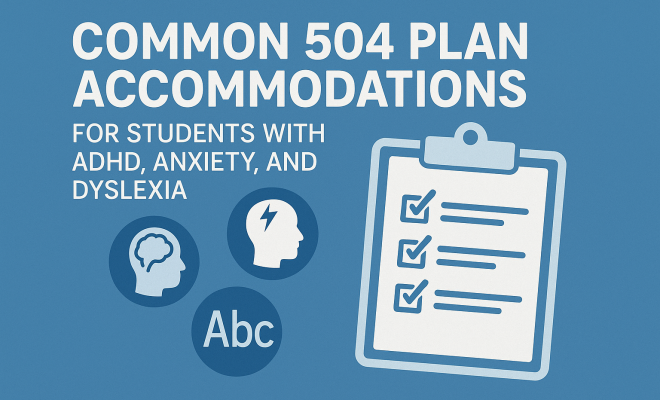
504 Plan Accommodations for ADHD, Anxiety & Dyslexia
When you hear about students needing extra support in school, your mind might immediately jump to special education, IEPs, and intensive interventions. And while those are absolutely crucial for many children, there’s a quieter, often misunderstood, but equally vital pathway to ensuring academic fairness and success: the 504 Plan. For millions of students across the United States dealing with conditions like ADHD, anxiety, dyslexia, and countless other impairments that affect their learning or daily life, a 504 Plan isn’t just a piece of paper; it’s a bridge to accessibility, allowing them to thrive in a general education setting. Understanding what 504 plan accommodations entail, who qualifies, and how to advocate for them is paramount for parents, educators, and even students themselves.
Let’s be clear: a 504 Plan isn’t special education. It operates under a different federal law, Section 504 of the Rehabilitation Act of 1973, which prohibits discrimination against individuals with disabilities in programs and activities receiving federal financial assistance – and that includes public schools. This means that if your child has a physical or mental impairment that substantially limits one or more major life activities (like learning, concentrating, reading, or communicating), they’re entitled to accommodations that level the playing field. It’s about equity, not advantage. It’s about ensuring a student with ADHD can focus better with preferential seating, or a student with anxiety can manage test-taking pressure with extended time, without being treated differently simply because their brain works a little differently.
Understanding the Foundation: What Exactly is a 504 Plan?
Before we dive into specific accommodations, it’s essential to grasp the core concept of a 504 Plan. As mentioned, it stems from Section 504 of the Rehabilitation Act of 1973. This civil rights law ensures that individuals with disabilities are not discriminated against and have equal access to educational opportunities. Unlike the Individuals with Disabilities Education Act (IDEA), which governs special education and IEPs, Section 504 has a broader definition of ‘disability.’ A student qualifies for a 504 Plan if they have a physical or mental impairment that substantially limits one or more major life activities. This ‘substantial limitation’ doesn’t necessarily mean a severe or profound limitation; it simply means the impairment makes it significantly more difficult for the student to perform a major life activity compared to their non-disabled peers.
Major life activities are a wide-ranging category. They include things we often take for granted: walking, seeing, hearing, speaking, breathing, caring for oneself, performing manual tasks, and, critically for students, learning, reading, concentrating, thinking, and communicating. It also encompasses bodily functions like neurological, immune, respiratory, and digestive functions, among others. This broad scope is precisely why 504 Plans can cover such a diverse array of conditions, from chronic health issues like diabetes or asthma to neurological differences like ADHD or dyslexia, and mental health challenges like anxiety or depression. The key is proving the impairment’s impact on a major life activity, not necessarily its specific diagnosis.
The Qualification Process: How Does a Student Get a 504 Plan?
Navigating the school system to secure appropriate support can feel daunting, but understanding the steps for a 504 Plan makes it less opaque. The process usually begins with a referral. This can come from a parent, a teacher, a school counselor, or even a doctor. If you suspect your child needs support, don’t wait for the school to initiate it; make your request in writing. This formalizes the process and creates a paper trail, which is always a good idea.
Once a referral is made, the school district is obligated to evaluate the student to determine if they qualify. This evaluation is less formal than an IEP assessment; it doesn’t require extensive psychological testing, though existing medical documentation from a doctor or therapist is incredibly valuable. The 504 team, which typically includes school administrators, teachers, and possibly a counselor or school psychologist, will review all available information: academic performance, teacher observations, medical diagnoses, and any other relevant data. They’ll ask: Does the student have a physical or mental impairment? Does this impairment substantially limit a major life activity? If the answer to both is yes, then the student qualifies for a 504 Plan, and the team will then develop a plan outlining the necessary accommodations. If the school denies the request, parents have due process rights, including the right to an impartial hearing. This builds on interventions for reading challenges.
ADHD and 504 Plan Accommodations: Creating a Conducive Learning Environment
For students with Attention-Deficit/Hyperactivity Disorder (ADHD), the classroom can present a minefield of distractions and executive function challenges. Their brains are wired differently, making it harder to sustain attention, control impulses, and manage time and tasks. Effective 504 plan accommodations for ADHD are designed to mitigate these challenges, allowing students to access the curriculum without being overwhelmed by their symptoms. The goal isn’t to lessen the academic rigor, but to create an environment where the student can demonstrate their knowledge and abilities.
Common accommodations often revolve around structure, reducing distractions, and managing workload. Preferential seating is a classic example – placing a student near the teacher, away from windows or high-traffic areas, can significantly improve focus. Providing fidget tools, offering frequent breaks to move around, or allowing a student to stand at their desk can help manage hyperactivity. For organizational challenges, accommodations might include providing written instructions alongside verbal ones, using a planner or assignment notebook (and ensuring teachers sign off on it), or having a ‘check-in’ system with a teacher or aide to ensure assignments are recorded and understood. Extended time on tests and assignments is another common and often critical accommodation, recognizing that processing information or initiating tasks can take longer for students with ADHD. Some students might benefit from having a quiet space for testing or completing work, or even using technology like noise-canceling headphones to minimize auditory distractions.
Anxiety and 504 Plan Accommodations: Fostering Emotional Well-being and Academic Access
Anxiety in students is far more prevalent than many realize, and its impact on school performance can be profound. From generalized anxiety disorder to social anxiety, panic disorder, or separation anxiety, these conditions can manifest as school refusal, difficulty concentrating, test anxiety, or challenges participating in class. 504 plan accommodations for anxiety focus on creating a supportive and predictable environment that reduces triggers and provides coping mechanisms, allowing students to engage with learning without being paralyzed by fear or worry. (See: CDC guidelines on ADHD.) (coping strategies for ADHD)
A primary goal is to minimize stressors. This might mean allowing a student to leave class early to avoid crowded hallways, providing a ‘safe space’ in the school (like the library or counselor’s office) they can retreat to when feeling overwhelmed, or allowing them to use fidgets or sensory tools to self-regulate. Test anxiety is a huge factor for many; accommodations like extended time, taking tests in a separate, quiet room, or breaking down large tests into smaller sections can make a significant difference. For students with social anxiety, accommodations could include not being called on unexpectedly in class, allowing presentations to be given to a smaller group or the teacher only, or providing pre-warning about changes in routine. Communication is key: having a designated staff member (counselor, teacher) for check-ins can provide crucial support. Some students might also benefit from not having their anxiety discussed publicly or having their symptoms reframed in a positive, understanding light by school staff.
Dyslexia and 504 Plan Accommodations: Unlocking Reading and Writing Potential
Dyslexia is a specific learning disability that primarily affects reading. It’s not about intelligence; it’s about the brain processing language differently, making decoding words, reading fluently, and spelling challenging. Students with dyslexia often struggle with phonological awareness, rapid naming, and working memory. 504 plan accommodations for dyslexia aim to bypass these decoding difficulties, allowing students to access grade-level content and demonstrate their understanding through alternative means, while also providing support for developing foundational literacy skills.
Technological aids are often central to supporting students with dyslexia. Text-to-speech software can read aloud digital text, helping students comprehend content they might struggle to decode visually. Speech-to-text software allows students to dictate assignments, circumventing spelling and handwriting challenges. Audiobooks are invaluable for accessing literature. In the classroom, accommodations might include providing notes or outlines of lectures, allowing students to use a word processor with spell-check and grammar-check, and reducing the amount of written work required. Extended time for reading and writing tasks, including tests, is almost always a necessity. Teachers might also provide graphic organizers to help structure thoughts, allow for oral responses instead of written ones, or grade based on content rather than spelling for certain assignments. It’s about ensuring they aren’t penalized for a disability that impacts their ability to process written language.
Beyond the Big Three: Other Common 504 Plan Accommodations
While ADHD, anxiety, and dyslexia are common conditions addressed by 504 Plans, the scope of Section 504 is much broader. Many other physical and mental impairments can substantially limit a major life activity and thus qualify a student for accommodations. Think about chronic health conditions like diabetes, asthma, epilepsy, or Crohn’s disease. These students might need accommodations for medication administration, access to a nurse’s office, frequent bathroom breaks, or a modified physical education program. A student with severe allergies might require an emergency action plan and avoidance of specific allergens in the classroom or cafeteria.
Mental health conditions beyond anxiety, such as depression or Obsessive-Compulsive Disorder (OCD), also frequently warrant 504 Plans. Accommodations could include a reduced workload during periods of acute symptoms, flexibility with attendance for therapy appointments, or a check-in system with a trusted adult. Even temporary disabilities, like a broken arm, can trigger a short-term 504 Plan for things like note-taking assistance or extended time on written assignments. The beauty of the 504 Plan is its flexibility and individualized nature; it’s tailored to the specific needs arising from a student’s impairment, whatever that impairment may be.
Developing Effective 504 Plan Accommodations: The Collaborative Approach
A truly effective 504 Plan isn’t just a list of generic accommodations; it’s a living document, carefully crafted to meet the unique needs of an individual student. This requires a collaborative approach involving parents, teachers, school administrators, and often the student themselves, especially as they get older. Parents bring invaluable insights into their child’s strengths, challenges, and what works at home. Teachers offer firsthand observations of how the student functions in the classroom environment. School administrators ensure the plan is feasible within the school’s resources and adheres to legal requirements.
During the 504 meeting, it’s crucial to discuss specific, actionable accommodations. Instead of just saying ‘extended time,’ clarify ‘extended time on all tests and major assignments, up to 1.5x the standard time.’ For ‘preferential seating,’ specify ‘front row, near the teacher, away from the window.’ The more specific the language, the less room there is for misinterpretation. It’s also important to discuss how accommodations will be communicated to all relevant staff (substitute teachers included!) and how their effectiveness will be monitored. A good 504 Plan isn’t set in stone; it should be reviewed periodically (at least annually) and adjusted as the student’s needs evolve or as the school environment changes.
Advocacy is Key: Parents as Partners and Protectors
For parents, becoming an effective advocate for your child’s 504 Plan accommodations is paramount. You are your child’s primary expert, and your involvement can make all the difference. Start by gathering all relevant documentation: medical diagnoses, therapy reports, evaluations, and even samples of schoolwork that illustrate challenges. Presenting a clear picture of your child’s needs, backed by professional opinions, strengthens your case significantly.
When you go into a 504 meeting, be prepared. Have a list of specific accommodations you believe your child needs, along with your rationale. Don’t be afraid to ask questions, challenge assumptions, or request clarification. If you feel the school isn’t adequately addressing your child’s needs, remember your rights. You have the right to disagree with the school’s findings, to request an an independent evaluation, and to pursue mediation or a due process hearing. While these steps can seem daunting, knowing your rights under Section 504 empowers you to ensure your child receives the equitable education they deserve. Remember, you’re not asking for special treatment, but for equal access. (See: NIH information on ADHD diagnosis.)
The Long-Term Impact: 504 Plans and Future Success
The benefits of well-implemented 504 plan accommodations extend far beyond just improved grades in the current school year. They lay a foundation for long-term academic success, emotional well-being, and self-advocacy. When students receive the support they need, they’re more likely to stay engaged in school, develop a positive self-image, and build confidence in their abilities. They learn that their challenges don’t define them, and that with the right tools, they can achieve their goals.
Furthermore, understanding and utilizing 504 accommodations in K-12 education can be a crucial stepping stone for future transitions. Section 504 protections extend to post-secondary education and employment. A student who has successfully navigated their high school years with accommodations for ADHD or dyslexia will be better equipped to advocate for similar supports in college or in the workplace. They’ll understand their own learning profile, know what strategies work for them, and feel empowered to ask for what they need to succeed in diverse environments. It’s not just about getting through school; it’s about preparing them for a lifetime of equitable opportunity.
Distinguishing 504 Plans from IEPs: Why the Difference Matters
While both 504 Plans and Individualized Education Programs (IEPs) aim to support students with disabilities, they operate under different federal laws and serve slightly different purposes. Understanding these distinctions is really important for parents and educators. An IEP falls under the Individuals with Disabilities Education Act (IDEA), which is an education law. IDEA provides for “special education and related services” for students with one of 13 specified disabilities (like autism, specific learning disability, emotional disturbance, etc.) who require specially designed instruction to access the general education curriculum. If a student qualifies for an IEP, they are entitled to a full range of services, modifications, and accommodations, including potentially being placed in a specialized classroom or receiving therapies like speech or occupational therapy.
A 504 Plan, on the other hand, operates under Section 504 of the Rehabilitation Act of 1973, which is a civil rights law. It ensures that students with a disability, as broadly defined earlier, are not discriminated against and have equal access to the general education environment. A student with a 504 Plan doesn’t necessarily need “specially designed instruction.” Instead, they receive “accommodations” that level the playing field, allowing them to participate in the regular classroom with their non-disabled peers. Think of it this way: an IEP changes *what* is taught or *how* it’s taught in fundamental ways, while a 504 Plan changes *how* a student accesses the existing curriculum. Many students might qualify for a 504 Plan but not an IEP, often because their disability doesn’t require specialized instruction, only adjustments to the learning environment or process.
Common Misconceptions About 504 Plans
Despite their prevalence, 504 Plans are often misunderstood, leading to confusion and sometimes inadequate support for students. Let’s clear up a few common myths:
- Myth 1: A medical diagnosis automatically means a 504 Plan. Not true. While a medical diagnosis is often critical documentation, the school still needs to determine if that impairment “substantially limits one or more major life activities” in the educational setting. A student might have ADHD, but if their symptoms don’t impact their learning or school functioning, they may not qualify for a 504 Plan.
- Myth 2: 504 Plans are only for academic difficulties. Absolutely not. As discussed, 504 Plans cover a wide range of major life activities, including breathing, walking, caring for oneself, and bodily functions. A student with severe allergies, diabetes, or a mobility impairment might have a 504 Plan for health and safety accommodations, even if they excel academically.
- Myth 3: 504 Plans are less important than IEPs. This is a dangerous misconception. A 504 Plan is equally important for the students it serves because it provides the necessary legal framework to prevent discrimination and ensure equitable access. For many students, a 504 Plan is exactly what they need to thrive in a general education setting without requiring the intensive resources of special education.
- Myth 4: Teachers don’t have to follow 504 Plans. This is legally incorrect. All school staff, including general education teachers, paraprofessionals, and even substitute teachers, are legally required to implement the accommodations outlined in a student’s 504 Plan. Failure to do so can be considered a violation of federal law.
The Role of Technology in Modern 504 Plan Accommodations
Technology has revolutionized the types of 504 plan accommodations available, making it easier for schools to implement support and for students to access the curriculum. Beyond the text-to-speech and speech-to-text tools mentioned for dyslexia, there’s a whole world of assistive technology (AT) that can be integrated into a 504 Plan. For students with executive function challenges (common with ADHD), apps and digital tools can help with organization, task management, and time tracking. Smartpens can record lectures while simultaneously linking audio to written notes, a game-changer for students who struggle with note-taking or auditory processing. Noise-canceling headphones are simple but incredibly effective for reducing distractions for many students. See also anxiety relief apps for all ages.
For students with visual impairments, screen readers, magnifiers, and braille displays can be crucial. For those with fine motor difficulties, ergonomic keyboards, alternative mice, or specialized writing tools can make a big difference. The key is for the 504 team to consider what specific technological supports might bridge the gap between a student’s impairment and their ability to participate fully in learning. Schools have a responsibility to provide these reasonable accommodations, and often, the upfront investment in technology can pay dividends in student success and independence.
Frequently Asked Questions About 504 Plan Accommodations
Let’s tackle some common questions parents and educators often have about 504 Plans.
Q1: Can a student have both an IEP and a 504 Plan?
No, a student will typically not have both simultaneously. If a student qualifies for an IEP under IDEA, their needs for accommodations will be addressed within the IEP document itself. An IEP provides a broader and more intensive level of support, encompassing both specialized instruction and accommodations. If a student doesn’t meet the stricter criteria for an IEP, but still needs support due to a disability, then a 504 Plan is the appropriate pathway.
Q2: How often is a 504 Plan reviewed?
By law, a 504 Plan must be reviewed periodically, which usually means at least annually. However, a review can be called sooner if there’s a significant change in the student’s needs, if the current accommodations aren’t working, or if the student’s placement changes (e.g., moving to a new school within the district). Parents always have the right to request a review at any time if they feel the plan isn’t meeting their child’s needs.
Q3: What if my child’s 504 Plan isn’t being followed by a teacher?
If you suspect a teacher isn’t implementing your child’s 504 Plan, your first step should be to communicate directly with that teacher in a calm and collaborative manner. Remind them of the specific accommodations outlined in the plan. If the issue persists, escalate your concern to the 504 coordinator, school principal, or another relevant administrator. Document all communications and incidents where the plan wasn’t followed. If necessary, you can remind the school of its legal obligations under Section 504 and your due process rights.
Q4: Do 504 Plans follow a student to college?
Yes, the protections of Section 504 extend to post-secondary institutions, but the implementation differs. Colleges and universities are also required to provide reasonable accommodations for students with disabilities. However, unlike K-12 schools, colleges generally don’t proactively identify students with disabilities or create individualized plans. It’s the student’s responsibility to self-identify, provide documentation of their disability, and request accommodations from the college’s disability services office. Having a well-documented 504 Plan from high school can be very helpful in this process, as it provides evidence of past accommodations and needs.
Q5: Can a student be disciplined if their behavior is a manifestation of their disability and they have a 504 Plan?
This is a complex area. For students with 504 Plans, if a disciplinary action leads to a significant change in placement (e.g., suspension for more than 10 cumulative school days in a year), the school must conduct a “manifestation determination review.” This review determines if the behavior was caused by, or had a direct and substantial relationship to, the student’s disability. If it was, the student cannot be disciplined in the same way as a non-disabled student for that behavior. The school would need to review the 504 Plan and potentially conduct a functional behavioral assessment to develop appropriate interventions. There’s a fuller look at understanding ADHD symptoms.
Ultimately, 504 plan accommodations are a powerful tool for fostering inclusivity and ensuring that every student has a fair shot at success. They recognize that not all students learn or function in the same way, and that a truly equitable education system must adapt to individual needs, rather than expecting every student to fit a single mold. For parents, understanding and advocating for these plans is a crucial part of supporting their child’s educational journey. For educators, implementing them with fidelity is a professional and ethical responsibility. It’s about leveling the playing field, one thoughtful accommodation at a time, so that every child can reach their full potential.
Trending Now
Frequently Asked Questions
What is a 504 Plan for students?
A 504 Plan is a formal plan developed under Section 504 of the Rehabilitation Act of 1973, designed to provide accommodations for students with disabilities, ensuring they have equal access to education. It addresses various impairments that substantially limit major life activities, allowing students to thrive in a general education environment.
Who qualifies for a 504 Plan?
Students qualify for a 504 Plan if they have a physical or mental impairment that significantly limits one or more major life activities, such as learning, concentrating, or communicating. This includes conditions like ADHD, anxiety, and dyslexia, allowing these students to receive necessary accommodations in school.
What are common accommodations in a 504 Plan?
Common accommodations in a 504 Plan for students with ADHD, anxiety, or dyslexia may include preferential seating, extended time on tests, access to quiet spaces for breaks, and modified assignments. These accommodations are tailored to help students succeed without giving them an unfair advantage.
How is a 504 Plan different from an IEP?
A 504 Plan differs from an Individualized Education Program (IEP) in that it provides accommodations rather than specialized instruction. While an IEP is designed for students with specific educational needs requiring special education services, a 504 Plan supports students with disabilities in a general education setting.
How can parents advocate for a 504 Plan?
Parents can advocate for a 504 Plan by gathering documentation of their child's disability, understanding their rights under Section 504, and communicating with school officials. It's important to collaborate with educators to ensure that appropriate accommodations are identified and implemented effectively.
Agree or disagree? Drop a comment and tell us what you think.