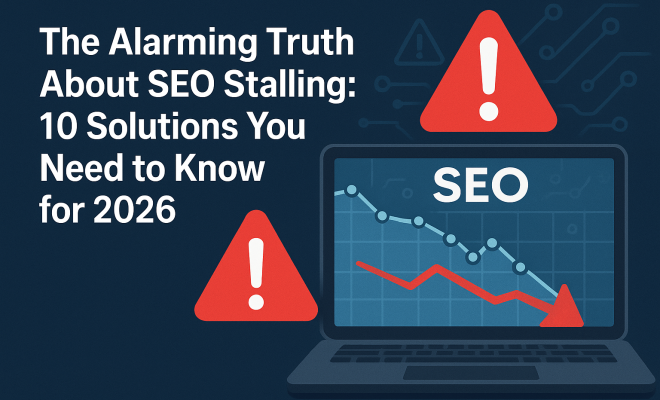
The Alarming Truth About SEO Stalling: 10 Solutions You Need to Know for 2026
“`html
1. The SEO Landscape is Changing
In the world of digital marketing, change is a constant. As we move into 2026, businesses are increasingly reporting a troubling trend: while their SEO rankings remain stable, traffic and leads are plummeting. This paradox can be attributed to the rise of AI-driven search technologies, including tools like ChatGPT that emphasize brand authority over traditional SEO strategies. Understanding this shift is crucial for your business to thrive in this new environment.
Gone are the days when simply perfecting your on-page SEO would guarantee a steady stream of visitors. Instead, search engines are now prioritizing brands that have established visibility and authority across multiple platforms. This means that if your brand isn’t recognized, even the most polished content may not be enough to attract organic traffic.
2. Understanding Brand Authority
Brand authority has emerged as a powerful factor in determining search visibility. Simply put, it’s not just about how well your content is optimized but how well your brand is recognized. Metrics like ‘Brand Mention Volume’ and ‘Direct Brand Search Volume’ have become essential indicators of trust, often outweighing traditional SEO practices.
For example, if multiple trusted sources mention your brand or if users frequently search for your company by name, these signals indicate to search engines that your brand is credible. As a result, businesses must focus on building their brand presence online to avoid falling victim to SEO stalling.
3. Key Metrics to Monitor
As we dive deeper into effective SEO stalling solutions, it’s vital to understand which metrics are now at the forefront of SEO strategy. In 2026, three critical metrics stand out: ‘Brand Mention Volume,’ ‘Share of Voice in AI Answers,’ and ‘Direct Brand Search Volume.’
1. Brand Mention Volume: This metric tracks how often your brand is cited in articles, blogs, and other content across the web. A higher volume indicates that your brand is being discussed, which can lead to increased visibility.
2. Share of Voice in AI Answers: This measures how frequently your brand appears in AI-generated responses. Being featured in these answers can significantly boost brand authority.
3. Direct Brand Search Volume: This tracks how often users search for your brand name directly. A high volume suggests strong brand recognition, which can positively influence your overall SEO performance.
4. The Role of Content Quality
While brand authority is crucial, it doesn’t mean that content quality should be neglected. High-quality, engaging content still plays a significant role in capturing and retaining audience attention. However, it should be paired with strategic branding efforts.
Creative content that resonates with your audience can foster brand loyalty, which in turn leads to more brand searches and mentions. This symbiotic relationship between content quality and brand authority creates a robust SEO strategy that can help mitigate the effects of stalling traffic.
5. Building Brand Recognition
Building your brand’s recognition online requires a multifaceted approach. Start by leveraging social media platforms to engage directly with users and promote your content. Frequent interaction can help establish a loyal following that will advocate for your brand and increase brand mention volume.
Consider partnerships with influencers or other brands to expand your reach. Collaborating with recognized names can provide valuable backlinks and citations that enhance your brand authority. Remember, the goal is to create a web of mentions that positively influences search engine rankings.
6. Optimizing for AI Search
As AI technologies become increasingly integrated into search algorithms, adapting your strategy to optimize for AI search is essential. This means understanding how AI systems evaluate content and user interaction. (See: importance of brand authority in SEO.)
Utilizing structured data markup can help AI systems better understand your content. This enhances the likelihood of being featured in AI-generated answers, thus improving your share of voice. Additionally, focus on creating concise, informative content that directly answers user queries, as this aligns well with AI search priorities.
7. Investing in PR and Media Relations
A proactive approach to public relations can significantly enhance brand visibility. Seek opportunities to get your brand featured in reputable media outlets. This not only increases brand mention volume but also establishes your brand as a trusted authority in your industry.
Press releases, guest articles, and interviews can effectively build credibility. By investing in media relations, you can create a ripple effect that enhances your brand’s presence across various platforms, leading to improved SEO performance.
8. Utilizing Analytics Tools
To effectively track the success of your SEO stalling solutions, it’s vital to utilize analytics tools. Platforms like Google Analytics, SEMrush, and Moz can provide valuable insights into your brand’s performance metrics.
By regularly monitoring your brand mention volume and direct search volume, you can gauge the effectiveness of your strategies. This data enables you to make informed decisions and adjust your tactics to stay ahead of the competition.
9. Staying Ahead of the Curve
The digital marketing landscape is ever-evolving. Staying informed about emerging trends and algorithm changes is crucial. Engaging in continuous learning through webinars, courses, and industry publications can help you stay ahead of the curve.
Networking with other professionals can also provide insights into successful strategies. As the SEO landscape shifts, being proactive rather than reactive can position your brand for success in the long run.
10. The Future of SEO
As we move further into 2026, the importance of brand authority in SEO cannot be overstated. While traditional SEO practices are not entirely obsolete, they must be adapted to fit the new reality shaped by AI and evolving consumer behaviors.
By focusing on building brand recognition, optimizing for AI, and leveraging analytics, businesses can effectively implement SEO stalling solutions that drive traffic and leads. The landscape is challenging, but with the right strategies, your business can thrive amid the changes and avoid the pitfalls of SEO stalling.
11. Understanding SEO Stalling
Before diving into solutions, it’s essential to comprehend what “SEO stalling” means. SEO stalling refers to a situation where your website’s organic traffic growth either halts or begins to decline despite maintaining or even improving your SEO rankings. It’s a frustrating situation for many businesses, and understanding the causes can help in formulating effective solutions.
Common causes include algorithm updates, changes in user behavior, or increased competition in your niche. These factors can lead to a disconnect between your rankings and actual traffic. Recognizing the symptoms early on can help you implement the right SEO stalling solutions before the problem worsens.
12. Analyzing Your Competitors
Competitor analysis is a crucial step in addressing SEO stalling. By identifying what your competitors are doing right, you can pinpoint gaps in your own strategy. Tools such as Ahrefs or SpyFu allow you to examine your competitors’ keyword strategies, backlink profiles, and content performance.
For instance, if a competitor begins outranking you for specific keywords, it’s wise to analyze their content quality, backlinks, and social signals. Understanding their strategies can help you refine your approach and regain lost traffic.
13. Leveraging User-Generated Content
User-generated content (UGC) is a powerful way to engage your audience and enhance brand authority. Encouraging customers to leave reviews, share testimonials, or even create content featuring your products can significantly increase brand mentions and improve SEO performance. (See: impact of AI on digital marketing.)
Platforms like Instagram and TikTok are particularly effective for UGC. By promoting hashtags and encouraging users to share their experiences, you can create a community around your brand. This not only boosts brand visibility but also fosters trust among potential customers. Related reading: importance of digital marketing.
14. Frequently Updating Your Content
Content is not a one-and-done effort; it requires regular updates to stay relevant. Search engines favor fresh, up-to-date content that reflects current trends and information. Reviewing and updating your existing content can improve rankings and drive more traffic.
Consider revisiting high-performing articles or pages and updating them with new data, examples, or insights. This practice not only boosts your SEO but also shows your audience that your brand is knowledgeable and engaged in ongoing conversations in your industry.
15. Building a Comprehensive FAQ Section
Creating a detailed FAQ section on your website can address user queries while boosting SEO. FAQ sections allow you to target long-tail keywords that might not be covered elsewhere on your site. Answering common questions not only provides value to your audience but also enhances your chances of being featured in Google’s “People Also Ask” boxes.
For example, if you run a skincare brand, your FAQ could include questions about product ingredients, usage instructions, or differences between products. This information not only aids your customers but also builds credibility and authority in your niche.
16. Utilizing Video Content
Video content is becoming increasingly important in digital marketing. Platforms like YouTube are the second largest search engine, and incorporating video can significantly improve your SEO efforts. Videos often lead to higher engagement rates and can be shared across social media platforms, amplifying your brand’s reach.
Consider creating tutorial videos, product reviews, or behind-the-scenes content that showcases your brand’s personality. Not only does this drive traffic, but it also encourages shares and discussions, further enhancing brand authority and recognition.
17. Frequently Asked Questions on SEO Stalling Solutions
What are common signs of SEO stalling?
Common signs include a drop in organic traffic, a stagnation in ranking improvements, and lower engagement rates. If your website’s traffic isn’t growing while your rankings appear stable, you might be experiencing SEO stalling.
How can I identify the cause of SEO stalling?
Analyze your website analytics, examine your competitors’ activities, and review any recent algorithm updates. Tools like Google Search Console can help identify any issues with indexing or visibility that may have arisen.
Are paid ads a solution for SEO stalling?
While paid ads can provide a temporary boost in visibility and traffic, they should not be seen as a long-term solution. Focusing on organic growth through improved SEO practices is crucial for sustainable success.
How often should I update my content?
It’s best to conduct content audits regularly—at least once every six months. Identify high-performing content and update it with new information, statistics, or keywords to keep it relevant.
What role does social media play in SEO stalling solutions?
Social media can greatly influence brand awareness and authority. Engaging with your audience on social platforms can drive traffic to your website and increase brand mentions, which can positively impact your SEO. (See: data on digital engagement trends.)
Can improving my website’s loading speed help with SEO stalling?
Absolutely! A faster-loading website provides a better user experience, which can lead to lower bounce rates and higher engagement. Search engines prioritize sites that load quickly, so improving your site’s speed can enhance your SEO performance.
What is the importance of mobile optimization in combating SEO stalling?
With a growing number of users accessing the internet via mobile devices, a mobile-optimized website is crucial. A site that offers a seamless mobile experience can help retain users and reduce bounce rates, positively influencing your SEO rankings.
How can I effectively use local SEO to combat stalling?
Local SEO focuses on optimizing your online presence to attract more business from relevant local searches. This includes claiming your Google My Business listing, using local keywords, and acquiring local backlinks. These strategies can help you tap into local markets and combat stagnation in organic traffic.
18. The Importance of Continuous Learning
The digital landscape is always shifting, and to stay competitive, it’s essential to engage in continuous learning. As SEO evolves, so should your understanding of it. Sign up for relevant courses, attend industry conferences, and read up on the latest research and case studies.
Participating in forums and online communities can provide insights from other professionals facing similar challenges. The more you learn, the better equipped you’ll be to implement effective SEO stalling solutions tailored to your specific needs.
19. Utilizing Advanced SEO Tools
Investing in advanced SEO tools can significantly enhance your ability to identify and rectify SEO stalling. For example, tools like Ahrefs, SEMrush, and Moz offer comprehensive audits, backlink analysis, and content suggestions that can inform your strategy. Some platforms even have AI-driven insights that can predict trends and shifts in the market.
Additionally, leveraging tools like Google Lighthouse can help improve site performance. It provides valuable data on loading speed, accessibility, and best practices, all of which play a role in SEO success.
20. Conclusion: A Holistic Approach to SEO Success
In an era where traditional SEO practices are being overshadowed by brand authority and AI-driven changes, adopting a holistic approach is crucial. From understanding the key metrics to leveraging UGC and continuous learning, there are numerous ways to combat SEO stalling.
Investing in your brand’s visibility and authority will pay dividends in the long run. By staying proactive and adapting to the evolving landscape, your business can not only survive but thrive in the complex world of digital marketing.
“`
Trending Now
Frequently Asked Questions
What is causing SEO traffic to drop in 2026?
The decline in SEO traffic can be attributed to the rise of AI-driven search technologies that prioritize brand authority over traditional SEO practices. Even if rankings are stable, businesses may struggle with traffic and leads if their brand isn't well recognized online.
How important is brand authority for SEO?
Brand authority has become crucial for SEO success. Search engines now consider factors like 'Brand Mention Volume' and 'Direct Brand Search Volume' as indicators of credibility, often outweighing traditional SEO metrics. Building a strong brand presence is essential to avoid SEO stalling.
What metrics should I focus on for SEO in 2026?
In 2026, key metrics to monitor include 'Brand Mention Volume,' 'Share of Voice in AI Answers,' and 'Direct Brand Search Volume.' These metrics reflect how well your brand is recognized and trusted, which is vital for maintaining search visibility.
How can I improve my brand's online presence?
To enhance your brand's online presence, focus on generating quality content that gets cited by trusted sources, engage in social media marketing, and encourage direct searches for your brand. These strategies will help build brand authority and improve your SEO performance.
What should businesses do to avoid SEO stalling?
To avoid SEO stalling, businesses must adapt to the changing landscape by prioritizing brand authority. This involves actively increasing brand visibility across various platforms, monitoring key metrics, and creating content that resonates with audiences, ensuring they remain competitive in search results.
What did we miss? Let us know in the comments and join the conversation.