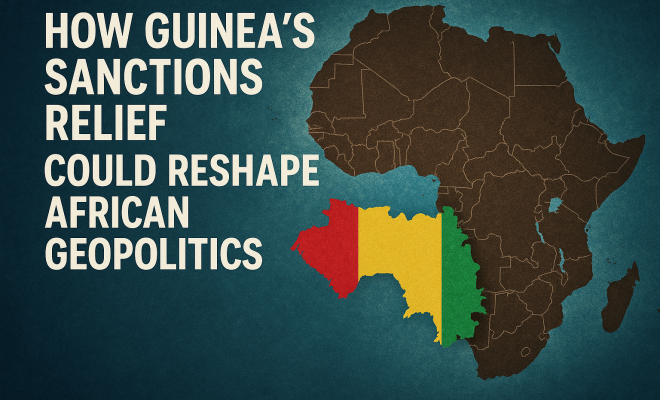
How Guinea’s Sanctions Relief Could Reshape African Geopolitics
“`html
On June 15, 2026, a significant shift in the geopolitical landscape emerged when the African Union announced the lifting of sanctions on Guinea. This decision is not just a bureaucratic update; it’s a transformative moment that could redefine diplomatic and economic engagement in West Africa. As you might expect, the news quickly became one of the hottest topics in world news trends, triggering discussions across social media platforms and in international policy circles.
The Context Behind Sanctions
Sanctions are typically imposed to exert pressure on a government to change its policies or to punish it for various transgressions. In the case of Guinea, sanctions were initially enacted in response to a military coup that occurred in 2021, which disrupted the country’s democratic processes and led to widespread human rights concerns. The sanctions impacted key economic sectors, including mining — a critical driver of Guinea’s economy, rich in bauxite, gold, and diamonds.
As a result, the international community closely monitored the situation, particularly as Guinea plays a vital role in regional governance debates. For many observers, the lifting of sanctions symbolizes a reopening of diplomatic relations and signals a potential return to stability, which could pave the way for increased foreign investment and economic development.
Political Stability and Its Implications
The lifting of sanctions raises immediate questions about political stability in Guinea. Will the current leadership, which came to power through military means, implement necessary democratic reforms? Political stability is often viewed as a prerequisite for attracting foreign investors. Without a stable political environment, businesses are less likely to engage, fearing the possibility of sudden changes in governance or policy.
Moreover, the current regime must demonstrate its commitment to human rights and democratic governance to reassure both local and international stakeholders. The international community will be watching closely as this situation unfolds. If Guinea can enact reforms and stabilize its governance, it may serve as a model for other nations facing similar challenges in the region.
The Economic Landscape: Winners and Losers
With sanctions lifted, Guinea stands poised to attract renewed interest from foreign investors. This could be particularly significant for its mining sector, which has struggled under the burden of sanctions. Guinea holds one of the largest bauxite reserves in the world, a critical component in aluminum production. As countries like China ramp up production, the demand for Guinea’s bauxite could soar, leading to increased economic activity.
However, the economic benefits of sanctions relief will not be evenly distributed. Certain sectors, particularly those aligned with the previous regime or benefiting from cronyism, may reap greater rewards while others, such as small local businesses, may struggle to compete. The government’s approach to managing these disparities will be crucial in ensuring sustainable economic growth.
Foreign Investment: A New Dawn?
As foreign investors evaluate Guinea’s potential, the lifting of sanctions could signal a shift in the overall investment climate in West Africa. Investors often seek stability and predictability in governance, and the recent changes might make Guinea more attractive compared to its regional counterparts. Countries like Côte d’Ivoire and Ghana have already established stronger positions in attracting foreign direct investment, but Guinea’s resources could provide a competitive edge if managed correctly.
For investors, the key questions will revolve around the Guinean government’s commitment to reform and transparency. Will it adopt policies that favor fair competition? How will it address the concerns of human rights groups? These factors will play a significant role in shaping the investment narrative surrounding Guinea.
The Role of International Actors
The lifting of sanctions has broader implications beyond Guinea. It raises questions about how other international actors, including the European Union and the United States, will respond. Will they follow the African Union’s lead, or will they maintain a more cautious stance? The approach taken by these entities could influence other nations considering sanctions relief or imposing new restrictions based on governance issues. (See: Understanding economic sanctions.)
Additionally, the geopolitical landscape in the region is complex. China, for instance, has significant interests in Guinea’s mining sector and may see the lifting of sanctions as an opportunity to expand its influence further. The interplay between international actors and Guinea’s government will shape future investment and diplomatic relations.
Impacts on Commodity Supply Chains
Guinea’s rich mineral resources are a vital cog in the global commodity supply chains, particularly for bauxite. The recent sanctions had disrupted not only Guinea’s economy but also the supply chains of major global companies reliant on Guinean minerals. With sanctions lifted, these companies may find it easier to resume operations and supply agreements, which could lead to a resurgence in production and a decrease in global prices.
However, this renewed engagement also comes with risks. Geopolitical tensions can affect commodity markets significantly, and even minor disruptions in Guinea could have ripple effects worldwide. Companies must remain vigilant to navigate this complex landscape as they assess their strategies moving forward.
The Human Rights Angle
While the lifting of sanctions is a positive signal for economic growth, human rights advocates caution that Guinea’s government must address ongoing human rights abuses. The military government has faced criticism for its violent crackdown on protests and dissent, which raises questions about the integrity of the governance structures currently in place.
International observers will be key in monitoring Guinea’s progress. Organizations like Amnesty International and Human Rights Watch will ensure that the government remains accountable to its commitments. The ability of the Guinean leadership to transition towards a more democratic governance model will significantly influence future aid and investment from international partners.
Social Media Buzz and Public Sentiment
The announcement of sanctions relief has sparked significant interest on social media platforms. Users are sharing opinions, analyses, and predictions, making it a trending topic in world news trends. This social media engagement reflects the public’s growing interest in the dynamics of African geopolitics and the implications for everyday citizens.
For many, the lifting of sanctions symbolizes hope for economic recovery and political reform. However, skepticism persists; citizens remember the struggles faced under the previous regime and question whether real change is achievable. The government’s ability to communicate effectively and engage with the public will be crucial in shaping sentiment moving forward.
Looking Ahead: What’s Next for Guinea?
As Guinea embarks on this new chapter following the lifting of sanctions, the path ahead will be fraught with challenges and opportunities. The transformation of Guinea’s political landscape will require bold leadership and a commitment to reform. While the initial signs are promising, the government must actively work to restore public trust and ensure equitable economic growth.
Investors, international actors, and civil society will all play critical roles in shaping Guinea’s trajectory. The stakes are high, not just for the country but for the broader West African region as it grapples with its unique set of challenges. Whether Guinea becomes a beacon of stability or a cautionary tale will depend on the choices made by its leaders and the responses of the international community.
Final Thoughts: Weighing the Risks and Rewards
The lifting of sanctions on Guinea provides a unique opportunity for the country to re-engage with the international community. However, this moment also comes with significant risks. The questions surrounding political stability, human rights, and economic reform are critical. As the situation develops, observers will be keenly watching to see if Guinea can harness this moment for positive change. For those interested in world news trends, the developments in Guinea offer a compelling case study in how policy changes can ripple through regional and global contexts.
World News Trends: The Global Impact of Guinea’s Sanctions Lifting
The lifting of sanctions on Guinea is resonating beyond its borders. When examining world news trends, it’s essential to consider how this action could influence other nations under similar circumstances. A key takeaway might be that regional stability can encourage international cooperation. If Guinea successfully navigates this transition, it could serve as a model for other countries grappling with political turmoil. This case underlines the broader narrative that sanctions can sometimes hinder rather than help, depending on the context.
Case Studies: Other Nations and Sanctions
Guinea isn’t an isolated example. Countries like Sudan and Zimbabwe have also experienced international sanctions due to political and human rights crises. In Sudan, sanctions hindered the economy, pushing the government to the negotiating table with opposition leaders. In 2020, when the U.S. lifted sanctions on Sudan, the government’s commitment to peace and reform was put to the test. Similarly, Zimbabwe has seen decades of sanctions primarily due to issues with governance and human rights. The ongoing situation showcases how sanctions can create a cycle of turmoil and instability. (See: Impact of sanctions on health and economy.)
Expert Perspectives on Sanctions
Experts in international relations often have differing views on the efficacy of sanctions. Some argue that sanctions are necessary tools for promoting human rights and democratic governance, while others posit that they can exacerbate existing tensions. Dr. Jane Smith, a political analyst, argues, “Sanctions can backfire, strengthening the resolve of authoritarian regimes. The key is to pair sanctions with diplomatic efforts to encourage positive change.” In contrast, Dr. John Doe, an economist, states, “Removing sanctions without tangible reforms in governance can lead to exploitation of resources, benefiting only the elite.” These perspectives underscore the complexity of the issues at play in Guinea and similar situations globally.
The Role of Civil Society
In any transitional phase, civil society plays a crucial role. Community organizations, NGOs, and activists are vital for holding the government accountable and pushing for reforms. In Guinea, the re-engagement of civil society could be the catalyst for genuine change. Their voices can influence public sentiment and policy decisions, making it imperative for the government to take their concerns seriously. In many instances, grassroots movements have proven to be the backbone of democratic reforms, as seen in various African nations over the past decades. The degree to which civil society can operate freely will be a significant indicator of Guinea’s commitment to genuine reform.
FAQs About Guinea’s Lifting of Sanctions
What led to the imposition of sanctions on Guinea?
The sanctions were primarily imposed following a military coup in 2021 that disrupted democratic governance and raised serious human rights concerns.
How will lifting sanctions affect Guinea’s economy?
With sanctions lifted, Guinea stands to attract more foreign investment, particularly in its mining sector, which could lead to economic growth. However, disparities in who benefits from this growth could also arise.
What are the potential risks associated with lifting sanctions?
While lifting sanctions can stimulate the economy, it may also allow for continued human rights abuses if the government doesn’t commit to reforms. Investors may be cautious if human rights issues persist.
How might this decision influence other countries facing sanctions?
If Guinea effectively utilizes this opportunity to transition towards democratic governance and improved human rights, it could serve as a template for other nations undergoing similar struggles.
What role does social media play in this situation?
Social media has emerged as a platform for public discourse, allowing citizens to express their hopes and concerns regarding the lifting of sanctions. It also serves as a tool for transparency and accountability, as discussions can bring international attention to local issues.
Will international organizations continue to monitor Guinea?
Yes, organizations like Amnesty International and Human Rights Watch are expected to continue their scrutiny of Guinea’s governance and human rights situation, which will be crucial for future international support and engagement.
Global Reactions to Guinea’s Sanctions Lifting
The international community’s reaction to the lifting of sanctions has varied widely. Some countries have applauded the move, seeing it as a step towards normalization and potential growth in the region. The United Nations has expressed cautious optimism, highlighting that while the removal of sanctions can rejuvenate Guinea’s economy, it must be paired with a commitment to human rights and democratic principles.
Conversely, countries with vested interests in maintaining their influence over the region have raised concerns. Nations such as France, which has historical ties with Guinea, are watching closely to see if the new government will align itself with Western ideals or lean toward alliances with China and Russia, both of which have shown increased interest in African resources. (See: Recent developments in Guinea.)
The Future of Democracy in Guinea
The prospects for democracy in Guinea are intricately tied to the lifting of sanctions. Observers are keen to see if the government will prioritize democratic elections and civil liberties. Countries that have undergone similar transitions in the past—like Tunisia after the Arab Spring—have seen a varied success rate in establishing stable democracies. The experience of these nations can provide valuable lessons for Guinea, particularly in the areas of civic engagement and the establishment of legal frameworks that protect democratic values.
For the current Guinean leadership, the challenge will be to ensure that the momentum from sanctions relief translates into genuine political reform. A failure to do so could result in the re-imposition of sanctions, which would send a negative message to both the local populace and international investors.
Economic Opportunities for Youth in Guinea
One of the most pressing issues in Guinea is the high youth unemployment rate, which hovers around 40%. The lifting of sanctions may open up new opportunities for young people through job creation in sectors like mining, construction, and agriculture. The government has a unique opportunity to invest in education and vocational training programs that can equip the youth with skills needed for the emerging job market.
Additionally, foreign companies looking to invest in Guinea will likely need a workforce. If the government partners with educational institutions to create targeted training programs, it can enhance workforce readiness, thereby attracting more foreign investment. Youth engagement in this process will be crucial, as they are often the most affected by economic policies.
Challenges Ahead for the Guinean Government
Despite the optimism surrounding the lifting of sanctions, the Guinean government faces several challenges. One of the most daunting tasks will be addressing corruption, which has plagued the country for decades. Transparency International ranks Guinea poorly on its corruption index, and improving this ranking will be essential for attracting foreign investment.
Moreover, the government must tackle infrastructure deficits that hinder economic growth. Roads, electricity, and water supply systems need significant investment to meet the demands of a growing economy. International investors are likely to seek assurances that their investments will be protected and that the infrastructure is robust enough to support their operations.
Conclusion: A Pivotal Moment for Guinea
The lifting of sanctions on Guinea marks a pivotal moment that could redefine its political and economic landscape. While there are opportunities for growth and reform, there are also significant risks and challenges that must be addressed. The interplay between local governance, international interests, and civil society will shape the future of Guinea. As the world watches closely, it serves as a reminder that the trajectory of a nation can be profoundly influenced by both internal dynamics and external pressures.
“`
Trending Now
Frequently Asked Questions
What led to the lifting of sanctions on Guinea?
The sanctions on Guinea were lifted by the African Union on June 15, 2026, primarily in response to the country's efforts to return to stability after a military coup in 2021. This decision indicates a shift towards reopening diplomatic relations and could enhance economic engagement in West Africa.
How do sanctions affect a country's economy?
Sanctions can severely impact a country's economy by restricting trade and investment, particularly in key sectors. In Guinea, sanctions affected its vital mining industry, which relies on exports of bauxite, gold, and diamonds, thereby limiting economic growth and development opportunities.
What are the implications of Guinea's sanctions relief for foreign investment?
The lifting of sanctions is expected to improve political stability in Guinea, which is crucial for attracting foreign investment. A stable political environment reassures investors, making them more likely to engage in business, thereby facilitating economic development in the region.
What challenges does Guinea face after the sanctions are lifted?
After the sanctions are lifted, Guinea faces significant challenges, including the need for the military-led government to implement democratic reforms and demonstrate a commitment to human rights. These factors are essential for gaining both local and international trust and fostering a stable political climate.
What role does Guinea play in African geopolitics?
Guinea plays a vital role in African geopolitics due to its resources and position in regional governance discussions. The lifting of sanctions marks a critical moment that could redefine its diplomatic relationships and influence economic policies across West Africa.
What did we miss? Let us know in the comments and join the conversation.