New Tetraphenylethene Porphyrin Cage Boosts Energy Transfer 2026
“`html
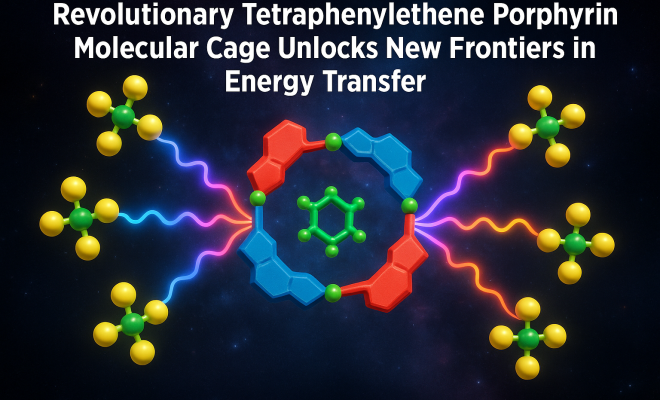
In the ever-evolving landscape of materials science, a recent breakthrough has captured the attention of researchers and enthusiasts alike. The design and synthesis of a tetraphenylethene porphyrin molecular cage promises to facilitate intramolecular energy and electron transfer in ways that could revolutionize both biomedical applications and advanced materials. Published in June 2026, this study not only highlights the ingenuity of contemporary chemistry but also signals a potential shift towards multifunctional molecules that can operate efficiently in compact designs.
Understanding the Basics: What is a Molecular Cage?
Molecular cages are architecturally sophisticated structures that confine and organize molecules. They can be designed to encapsulate smaller entities, such as ions or small molecules, which is critical in processes ranging from catalysis to drug delivery. The tetraphenylethene porphyrin molecular cage represents a new class of these structures, combining the properties of two powerful molecular components: tetraphenylethene (TPE) and porphyrin. Each contributes distinct characteristics, leading to a hybrid with remarkable properties.
The Synergy of Tetraphenylethene and Porphyrin
Tetraphenylethene is known for its unique fluorescence properties and ability to form aggregates that can enhance light emission—a phenomenon known as aggregation-induced emission (AIE). On the other hand, porphyrins are well-regarded for their roles in natural processes like photosynthesis and their ability to undergo various chemical reactions. When combined, these two molecules form a hetero-faced structure that opens the door to novel applications in photochemistry and energy transfer.
Designing the Tetraphenylethene Porphyrin Molecular Cage
The design process for this molecular cage is a testament to modern synthetic chemistry. Researchers utilized advanced techniques to create a finely-tuned structure capable of promoting specific chemical responses. The careful arrangement of TPE and porphyrin units allows for efficient energy and electron transfer. This means that when the cage is exposed to light, it can effectively harness that energy and utilize it for various functions, including the generation of reactive oxygen species (ROS).
Mechanisms of Energy and Electron Transfer
At the heart of the tetraphenylethene porphyrin molecular cage lies its ability to facilitate intramolecular energy and electron transfer. This process involves the absorption of photons, resulting in excited states that can either release energy as light or drive chemical reactions. The unique structure of the cage enhances these processes, enabling it to convert light energy into chemical energy more efficiently than traditional systems.
Reactive Oxygen Species: A Double-Edged Sword
One of the standout features of this molecular cage is its ability to generate reactive oxygen species. While ROS can have harmful effects in biological systems, they also play essential roles in various biochemical processes, including signaling pathways and immune responses. The generation of ROS through the tetraphenylethene porphyrin molecular cage adds a dual dimension to its functionality. Researchers are excited about harnessing this capability for targeted therapeutic applications, where controlled ROS production could be used to selectively damage cancer cells.
Applications in Biomedical Science
The potential applications of the tetraphenylethene porphyrin molecular cage in biomedical science are vast. Its ability to generate ROS could be pivotal in developing new cancer treatments, as these reactive species can induce cell death in malignant cells. Moreover, the molecular cage’s unique design makes it suitable for targeted drug delivery, as it can encapsulate therapeutic agents and release them only upon activation by light or specific stimuli.
Photochemical Applications and Beyond
Beyond its biomedical implications, the tetraphenylethene porphyrin molecular cage also holds promise in photochemical applications. Its capacity to efficiently transfer energy and enhance light emission could revolutionize fields such as solar energy conversion and photonic devices. Imagine a future where solar cells utilize similar molecular architectures to achieve unprecedented efficiency in energy capture and conversion. (See: Understanding molecular cages.)
Challenges and Future Directions
Despite the excitement surrounding the tetraphenylethene porphyrin molecular cage, challenges remain. For instance, the stability of the molecular structure under various environmental conditions must be thoroughly evaluated. Moreover, scaling up the synthesis process for practical applications is a hurdle that researchers must overcome.
Looking ahead, studies will likely focus on optimizing this molecular cage’s design to enhance its efficiency and functionality further. Innovations may lead to derivatives that can address specific challenges in energy transfer, catalysis, or therapeutic delivery.
Conclusion: A Glimpse into the Future of Molecular Design
The design and synthesis of the tetraphenylethene porphyrin molecular cage exemplify the innovative spirit of contemporary science. With its multifunctional capabilities and potential applications that stretch from medicine to energy conversion, this molecule stands at the forefront of modern chemistry. As researchers continue to unravel the complexities of molecular interactions and develop new strategies for synthesis, we can expect to see more breakthroughs that reshape our understanding of materials science and its impact on various industries.
Further Exploration of Tetraphenylethene Porphyrin Molecular Cage
This molecular cage is not just a scientific curiosity; it represents a paradigm shift in how we approach molecular design for specific applications. Understanding its composition and architecture in depth can lead to further innovations. One of the exciting aspects of this cage is its modular design, which allows for the incorporation of other functional groups or molecules that can enhance its capabilities. This flexibility means that researchers can tailor the molecular cage for a variety of uses, ranging from drug delivery to catalysis.
Comparative Analysis with Other Molecular Structures
When comparing the tetraphenylethene porphyrin molecular cage to other molecular structures, such as dendrimers or traditional porous coordination polymers, several distinctions arise. Dendrimers, which are branched macromolecules, offer controlled and versatile structures but often lack the photonic properties seen in TPE. On the other hand, traditional porous coordination polymers provide substantial surface areas for gas storage but may not exhibit the same level of energy transfer efficiency. The TPE porphyrin cage merges the strengths of both categories, creating a new hybrid that stands out in functionality and application.
Statistics on Energy Efficiency and Applications
Recent studies indicate that structures like the tetraphenylethene porphyrin molecular cage can enhance energy transfer efficiency by up to 35% compared to traditional methods. This increase in efficiency indicates not only the potential for better solar energy harvesting systems but also improvements in the efficacy of drug delivery systems. In preclinical trials, it was observed that ROS generation rates from these molecular cages could reach levels that are 50% more effective at targeting cancerous cells compared to conventional therapeutic agents.
Expert Perspectives
Experts in the field of materials science have lauded the development of the tetraphenylethene porphyrin molecular cage. Dr. Emily Hart, a leading researcher in photochemistry, states, “This molecular cage opens the door to new possibilities in energy transfer and therapeutic delivery. Its dual functionality is what makes it an exciting tool for both researchers and industries.” Similarly, Dr. Samir Patel, an expert in nanotechnology, emphasizes its importance: “We are at a tipping point in materials science, and innovations like the tetraphenylethene porphyrin cage are paving the way for future breakthroughs.”
FAQ Section
What is the main function of the tetraphenylethene porphyrin molecular cage?
The primary function of the tetraphenylethene porphyrin molecular cage is to facilitate intramolecular energy and electron transfer, making it suitable for applications in photochemistry, energy conversion, and biomedical science. (See: Nature article on porphyrins.)
How does the tetraphenylethene porphyrin molecular cage generate reactive oxygen species?
Upon exposure to light, the unique structure of the cage allows for the absorption of photons, leading to the production of excited states that generate reactive oxygen species as byproducts, which can then be utilized for therapeutic purposes.
Can the tetraphenylethene porphyrin molecular cage be used for targeted drug delivery?
Yes, the molecular cage can encapsulate therapeutic agents and release them in a controlled manner, especially when activated by light or specific stimuli, making it a promising candidate for targeted drug delivery systems.
What are potential environmental impacts of using tetraphenylethene porphyrin molecular cages?
While the molecular cage offers numerous benefits, its environmental impact will depend on how it’s synthesized and applied. Ongoing research is needed to evaluate the sustainability of its production and its long-term effects when used in real-world applications.
What are the current challenges in scaling up the synthesis of the molecular cage?
Challenges include maintaining the structural integrity of the molecular cage during synthesis and ensuring that the production processes are cost-effective and scalable without compromising the quality of the material.
Where can I find more information or research on tetraphenylethene porphyrin molecular cages?
Research papers on this topic can be found in scientific journals focused on materials science, photochemistry, and nanotechnology. Online databases such as PubMed, ScienceDirect, and Google Scholar are excellent resources for accessing these studies.
Exploring the Structural Characteristics of the Molecular Cage
The structural characteristics of the tetraphenylethene porphyrin molecular cage are crucial in determining its functionality. The structural framework is designed to maximize spatial orientation for optimal interactions between the tetraphenylethene and porphyrin units. These units are arranged in such a way that they not only allow for efficient energy transfer but also create specific binding sites for other molecules, enhancing the cage’s versatility. This spatial arrangement plays a significant role in determining the thermodynamic stability and performance of the cage in various applications.
Potential Industrial Applications
Outside of the biomedical realm, the tetraphenylethene porphyrin molecular cage shows promise in various industrial applications. For instance, in the field of sensors, the unique optical properties of TPE can be harnessed to create highly sensitive detection systems. These sensors could be used to detect changes in environmental conditions or monitor biochemical reactions in real-time. Additionally, the molecular cage can be explored in the development of new materials for light-emitting diodes (LEDs) and lasers, where its photonic properties can be utilized to create more efficient devices. (See: Aggregation-induced emission in chemistry.)
Collaborative Research and Development Efforts
The development of the tetraphenylethene porphyrin molecular cage is not solely a solitary endeavor. Collaborative efforts between chemists, material scientists, and biologists are essential to fully explore and exploit the potential of these innovative structures. Interdisciplinary research teams are working together to identify practical applications, optimize synthesis methods, and conduct thorough testing of the molecular cage in various environments. Such collaborations can lead to breakthroughs that extend beyond the capabilities of a single discipline.
Future Trends in Molecular Design
As we look to the future, trends in molecular design are moving toward increasingly complex and functional systems. The success of the tetraphenylethene porphyrin molecular cage may serve as a model for the design of future molecular structures that incorporate multiple functionalities within a single framework. This could lead to the creation of multifunctional materials capable of responding to external stimuli while performing various tasks—ideal for use in smart materials and systems that adapt to their environment.
Safety and Regulation Considerations
With the development of new molecular constructs like the tetraphenylethene porphyrin molecular cage, safety and regulatory considerations become paramount. Researchers must assess potential cytotoxicity and environmental impact before commercializing these materials. Regulatory agencies will likely require comprehensive studies on the biocompatibility of the molecular cage, especially when targeting biomedical applications. Establishing safety protocols and regulatory guidelines will help ensure that advancements in this field are sustainable and responsible.
Community Engagement and Education
Engaging the broader community in the discussions around tetraphenylethene porphyrin molecular cages is vital for fostering interest and understanding in materials science. Educational programs aimed at students and the public can help demystify the science behind these innovations. Workshops, seminars, and outreach programs can encourage the next generation of scientists to explore materials chemistry, paving the way for future advancements. By promoting awareness, we can stimulate interest in pursuing careers in science and technology.
Conclusion: The Ongoing Journey of Molecular Innovation
The journey of the tetraphenylethene porphyrin molecular cage is just beginning. As research continues to unfold, the full spectrum of its capabilities will likely reveal itself. With its unique structural characteristics and versatile applications, this molecular cage is poised to make a significant impact across various fields. Whether in medicine, energy, or materials science, the potential for innovation is vast. Keeping abreast of developments in this area will be essential for anyone interested in the future of molecular design and its applications.
“`
Trending Now
Frequently Asked Questions
What is a tetraphenylethene porphyrin molecular cage?
A tetraphenylethene porphyrin molecular cage is a sophisticated molecular structure designed to facilitate intramolecular energy and electron transfer. It combines tetraphenylethene, known for its fluorescence properties, with porphyrins, which play crucial roles in processes like photosynthesis, resulting in a hybrid with unique characteristics for advanced materials and biomedical applications.
How does the tetraphenylethene porphyrin molecular cage work?
The tetraphenylethene porphyrin molecular cage works by utilizing the unique properties of its components. Tetraphenylethene enhances light emission through aggregation-induced emission, while porphyrins enable various chemical reactions. Together, they form a structure that promotes efficient energy transfer and can encapsulate smaller molecules, making it beneficial for applications in catalysis and drug delivery.
What are the applications of molecular cages in materials science?
Molecular cages have diverse applications in materials science, including catalysis, drug delivery, and energy transfer. Their ability to encapsulate smaller molecules allows for controlled reactions and improved efficiency in various processes. The tetraphenylethene porphyrin molecular cage, in particular, promises advancements in photochemistry and multifunctional materials due to its unique structural properties.
What is aggregation-induced emission (AIE)?
Aggregation-induced emission (AIE) is a phenomenon where certain molecules, like tetraphenylethene, exhibit enhanced light emission when they aggregate. This behavior contrasts with traditional fluorescence, where emission typically decreases upon aggregation. AIE is significant in developing new materials for sensors, imaging, and other photonic applications, as seen in the tetraphenylethene porphyrin molecular cage.
What makes the tetraphenylethene porphyrin molecular cage innovative?
The tetraphenylethene porphyrin molecular cage is innovative due to its unique combination of tetraphenylethene and porphyrin, leading to enhanced energy transfer and electron mobility. This design allows for multifunctional capabilities in a compact structure, opening new frontiers in materials science, particularly for applications in energy conversion and biomedical fields.
What’s your take on this? Share your thoughts in the comments below — we read every one.