School Board Politics Ignite: Insights from Hall Pass 2026
“`html
The landscape of local governance is evolving, and nowhere is this more evident than in school board elections. The Hall Pass 2026 newsletter from Ballotpedia highlights this critical juncture, focusing on the interplay of parental rights, educational policies, and community dynamics. This article delves into how school board governance has emerged as a highly charged political battleground, intertwining with broader ideological conflicts and sparking viral debates across social media.
The Local Nature of School Board Governance
At its core, school board governance is an inherently local affair. Unlike broader political contests, which often involve national figures and sweeping campaigns, school board elections are characterized by their proximity to the community. Decisions made at this level can directly impact children’s education, shaping everything from curriculum to budget allocation. The Hall Pass 2026 newsletter emphasizes that this localized approach allows for passionate involvement from parents, educators, and community members.
This hyper-local focus often leads to emotionally charged debates that can rapidly escalate. Issues such as funding for specific programs, textbook choices, and policies regarding student conduct become lightning rods for community engagement. When parents feel their rights or values are at stake, the stakes grow high. This has been particularly evident in recent years as more families express concerns over how educational content aligns with their personal beliefs.
The Viral Nature of School Politics
One of the most fascinating aspects of school board politics is their viral potential. Disputes over school policies often resonate beyond local boundaries, drawing national attention. The Hall Pass 2026 highlights how these discussions can spread rapidly on social media, igniting conversations that may have otherwise remained confined to school board meetings. For example, a controversial decision regarding the inclusion of a particular book in the curriculum can lead to widespread outcry, hashtags trending on Twitter, or viral TikTok videos.
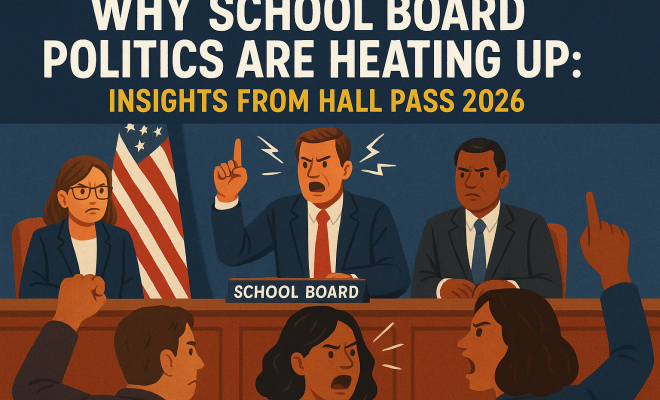
Furthermore, school board meetings themselves have become battlegrounds for ideological clashes. When parents or activists voice their concerns during public comment periods, those moments can quickly capture media attention and become talking points for politicians. This reflects a broader trend where local school issues are often framed within the context of larger societal conflicts, such as debates over parental rights and educational standards.
Education as a Proxy for Ideological Conflicts
The Hall Pass 2026 newsletter suggests that school politics often serve as a proxy for wider ideological battles. Education policy has become entwined with discussions around safety, government control, and family values. As parents voice their concerns about what their children are being taught, these issues reveal deeper ideological divides within communities.
For instance, debates over gender identity in schools or the teaching of critical race theory have catalyzed significant backlash and mobilization. Parents’ groups form, organizing protests and advocating for changes in policy that reflect their beliefs. These movements are frequently covered by the media, throwing the spotlight on school boards and their decisions. The line between local governance and national politics blurs, as candidates for other offices begin to weigh in on these issues.
Parental Rights and Community Backlash
Parental rights in educational governance have taken center stage in many communities, leading to increased activism around school boards. The Hall Pass 2026 newsletter notes that when parents feel that their rights are being infringed upon, whether through imposed curriculum or school policies, they often mobilize quickly. This can result in heated debates, protests, and even attempts to recall board members.
For instance, in several states, parents have rallied against mask mandates and vaccine requirements in schools. These local battles are often fueled by national narratives and have led to significant activism. Groups advocating for parental rights have emerged, often aligning with broader political movements that prioritize personal freedoms.
This backlash can be indicative of a larger trend where parents increasingly view school boards as not just educational institutions but as reflections of their values and priorities. Decisions made by school boards are interpreted as endorsements or rejections of these values, leading to significant emotional investment in the outcomes.
The Financial Implications of School Board Decisions
Money is another critical aspect of school board governance that cannot be ignored. The Hall Pass 2026 newsletter highlights that many debates surrounding school policies are intertwined with budgetary concerns. Whether it’s funding for extracurricular activities, teacher salaries, or infrastructure improvements, financial decisions often become contentious. (See: CDC on youth health and education.)
As school boards grapple with the implications of funding cuts or increases, the decisions they make can have profound effects on educational quality. For instance, a decision to cut funding for arts programs can elicit strong reactions from parents and community members who believe in a well-rounded education. As such, financial discussions are not merely technical; they are deeply tied to the values and expectations that communities have for their schools.
Moreover, the growing reliance on local funding sources—such as property taxes—means that disparities in wealth can lead to significant inequities between school districts. These discrepancies can fuel anger and resentment, particularly in economically disadvantaged areas, leading to calls for reform in how educational funding is approached.
Influence of Social Media on School Board Elections
In today’s digital age, social media plays a pivotal role in shaping public perception of school board elections. The Hall Pass 2026 newsletter emphasizes the impact of platforms like Facebook and Twitter in amplifying local issues. Candidates and activist groups can reach wider audiences, mobilizing support or opposition with unprecedented speed.
Social media also allows for the rapid dissemination of information—true or false—creating an environment where misinformation can thrive. For example, a rumor about a school’s curriculum can spread quickly, leading to public outcry before any fact-checking occurs. This environment can create challenges for school board members who are trying to provide clarity and transparency in their decision-making processes.
Moreover, candidates for school board positions are increasingly leveraging social media as a campaign tool. Engaging with the community through live streams, Q&A sessions, and targeted ads allows them to connect with voters on a personal level. This shift has transformed school board elections into highly competitive contests, where the ability to mobilize online support can make a significant difference.
Case Studies: Recent School Board Elections
To better understand the dynamics at play in school board governance, it’s helpful to look at recent case studies from various districts. The Hall Pass 2026 newsletter points to a few noteworthy elections that exemplify the trends discussed.
In a recent election in Fairfax County, Virginia, candidates who campaigned on platform issues such as parental rights and transparency in curriculum selection won significant victories. Fueled by a wave of parental activism, these candidates were able to unseat incumbents, demonstrating the power of community engagement in shaping educational policy.
Conversely, in a progressive district in California, candidates focused on equity and inclusion faced intense backlash. Despite aiming to implement comprehensive educational reforms, they encountered organized resistance from groups who felt their values were under threat. This case illustrates the polarized nature of school board politics and how various factions can influence the electoral process.
The Future of School Board Politics
As we look to the future, the environment surrounding school board governance is poised to remain volatile. The Hall Pass 2026 newsletter underscores the likelihood of continued activism and engagement from parents and community members. The stakes will only grow higher as educational policies become even more entwined with local and national ideological battles.
The upcoming elections will likely feature candidates who are willing to take bold stances on controversial issues, knowing that grassroots support can significantly impact their chances of success. School boards may find themselves at the center of heated national debates, further complicating their efforts to maintain a focus on educational quality and equity.
What’s Next for Voters?
For voters looking to engage with local school board elections, understanding the issues at stake is critical. The Hall Pass 2026 newsletter serves as a valuable resource for staying informed about upcoming elections and the candidates’ positions. Engaged citizens should attend school board meetings, participate in discussions, and educate themselves about the implications of policies that affect their children’s education.
Moreover, as debates around education continue to heat up, it’s essential for voters to approach these discussions with an open mind. While it’s natural to have strong opinions about the direction of education, fostering dialogue between differing perspectives can lead to more thoughtful and productive outcomes for the community.
Common Misconceptions About School Board Elections
Many voters have misconceptions about school board elections that can lead to disengagement or misinformed opinions. One common belief is that these elections are not as important as higher-profile races, such as those for state or federal offices. However, the decisions made at the school board level have a direct and lasting impact on the education and well-being of children in the community. (See: Associated Press news on education.)
Another misconception is that only parents with children in the schools should be concerned about school board decisions. In reality, the ripple effects of school policies can affect entire communities, including local economies and social cohesion. Engaging all community members, regardless of their immediate relationship to the school system, fosters a more inclusive and informed dialogue.
Statistics to Consider
Understanding the statistics surrounding school board elections can also help to illustrate their importance. For example, in recent years, voter turnout for school board elections has been steadily increasing. According to the National School Boards Association, turnout in some districts has risen by over 30% compared to previous years, indicating a growing interest in local governance.
Moreover, surveys indicate that over 70% of voters believe that education is a crucial issue when deciding how to vote. This statistic underscores the importance of engaging with school board candidates and understanding their positions on key issues. With education being a top priority for many voters, it’s clear that school board decisions can influence broader electoral outcomes.
Expert Perspectives on School Board Dynamics
Experts in educational policy and political science provide valuable insights into the ongoing changes within school board governance. Dr. Jane Smith, a political scientist specializing in education policy, notes that the increasing polarization in school board elections reflects broader national trends. “Parents are now more than ever organizing around specific issues that resonate with their values,” she explains. “This creates a highly charged atmosphere where local elections can mirror the intensity of national races.”
Another perspective comes from educational consultant Mark Johnson, who emphasizes the importance of transparency in decision-making. “When school boards operate without clear communication, it can lead to misunderstandings and conflict,” he states. “Ensuring that parents and community members understand the reasoning behind decisions can help mitigate backlash.”
FAQs About School Board Elections
1. What are the key responsibilities of a school board?
A school board primarily oversees the management of local school districts, which includes setting policies, approving budgets, and hiring superintendents. They play a vital role in shaping educational standards and ensuring that schools meet the needs of their communities.
2. How can I get involved in my local school board elections?
You can get involved by attending school board meetings, volunteering for campaigns, or even running for a position yourself. Engaging with community groups focused on educational issues is also a great way to make your voice heard.
3. What issues are commonly addressed in school board elections?
Common issues include budget allocations, curriculum choices, school safety, and policies regarding student conduct. More recently, topics like parental rights and educational equity have become focal points in many districts.
4. How do school board elections impact my child’s education?
School board decisions directly affect the resources available for your child’s education, including class sizes, extracurricular activities, and the quality of teachers. They also shape the educational environment and policies that govern how students learn.
5. Are school board meetings open to the public?
Yes, school board meetings are typically open to the public. This allows community members to attend, observe, and provide input during public comment periods. Engaging in these meetings is a vital way for citizens to stay informed and influence local education policies.
Exploring Candidate Platforms
As elections approach, candidates for school board positions often outline their platforms on critical issues. Understanding these platforms is essential for voters who want to make informed choices. Many candidates focus on themes that resonate with their communities, such as enhancing educational outcomes, ensuring equitable access to resources, and fostering a safe environment for students. (See: New York Times education section.)
For instance, some candidates may prioritize STEM (science, technology, engineering, and mathematics) education, advocating for increased funding for technology and training. Others might emphasize the importance of mental health resources in schools, arguing that students need comprehensive support systems to thrive. By closely examining these platforms, voters can gauge how candidates align with their views and the needs of the community.
The Role of Community Engagement
Community engagement is a fundamental element of successful school board governance. When citizens participate in discussions, attend meetings, and voice their opinions, they help create a transparent and accountable system. This engagement extends beyond just voting; it involves forming coalitions, attending public forums, and utilizing social media to advocate for specific educational policies.
For example, in some districts, community engagement has led to the formation of advisory committees comprising parents, educators, and students. These committees can provide valuable insights into local issues and help school boards make informed decisions that reflect community values and expectations. By fostering an environment where diverse voices are heard, school boards can enhance decision-making processes and build trust within the community.
Challenges Facing School Boards
School boards face a myriad of challenges as they navigate the complexities of governance. One significant challenge is managing the diverse interests of stakeholders, including parents, teachers, students, and community members. Conflicting views on educational policies can create tensions that complicate consensus-building.
Another challenge is the pace of change in educational standards and societal expectations. With rapid advancements in technology and shifts in cultural attitudes, school boards must be agile in adapting to new realities. This includes reevaluating curricula to ensure they are relevant and inclusive, addressing issues of equity, and preparing students for a rapidly changing job market.
Looking at the Bigger Picture: National Trends
While school boards operate at a local level, they are influenced by national trends and policies. The push for educational reform, the impact of standardized testing, and the rising emphasis on social justice in education are all issues that school boards must grapple with. The Hall Pass 2026 newsletter frequently reports on how national movements, such as those advocating for diverse and inclusive curricula, influence local governance.
Moreover, the funding landscape for education is often affected by broader economic policies and legislative changes. Local school boards must navigate these shifting tides carefully, ensuring that they can provide quality education despite potential financial constraints or changes in policy direction.
In summary, the landscape of school board governance is not just a reflection of educational priorities but a microcosm of broader societal debates. As the Hall Pass 2026 illustrates, these issues will continue to shape the political narrative in local communities, making it imperative for voters to stay engaged and informed. The outcome of these elections could very well influence the trajectory of public education in America for years to come.
“`
Trending Now
Frequently Asked Questions
Why are school board elections becoming more contentious?
School board elections are heating up due to heightened parental involvement and ideological conflicts. Issues such as curriculum choices and funding decisions have become focal points for community debates, often reflecting broader societal tensions and concerns over educational content.
What role do parents play in school board governance?
Parents play a crucial role in school board governance, as their involvement can significantly influence decisions that affect local education. Their concerns about curriculum and policies lead to passionate debates, making school boards a key battleground for community values.
How does social media influence school board politics?
Social media amplifies school board politics by allowing local disputes to gain national attention. Controversial decisions and debates can quickly spread online, engaging a wider audience and prompting discussions that extend beyond the local community.
What issues are currently driving school board debates?
Current debates in school boards often revolve around funding for programs, textbook selections, and policies on student conduct. These issues resonate deeply with parents and community members, especially when they feel their values or rights are being challenged.
What is the significance of Hall Pass 2026 in understanding school board politics?
Hall Pass 2026 provides insights into the evolving landscape of school board politics by highlighting the interplay of parental rights and educational policies. It emphasizes the local nature of governance and the viral potential of school-related discussions, making it a critical resource for understanding these dynamics.
Have you experienced this yourself? We’d love to hear your story in the comments.