The Tech Edvocate

Top Menu

  • Advertisement
  • Apps
  • Home Page
  • Home Page Five (No Sidebar)
  • Home Page Four
  • Home Page Three
  • Home Page Two
  • Home Tech2
  • Icons [No Sidebar]
  • Left Sidbear Page
  • Lynch Educational Consulting
  • My Account
  • My Speaking Page
  • Newsletter Sign Up Confirmation
  • Newsletter Unsubscription
  • Our Brands
  • Page Example
  • Privacy Policy
  • Protected Content
  • Register
  • Request a Product Review
  • Shop
  • Shortcodes Examples
  • Signup
  • Start Here
    • Governance
    • Careers
    • Contact Us
  • Terms and Conditions
  • The Edvocate
  • The Tech Edvocate Product Guide
  • Topics
  • Write For Us
  • Advertise

Main Menu

  • Start Here
    • Our Brands
    • Governance
      • Lynch Educational Consulting, LLC.
      • Dr. Lynch’s Personal Website
      • Careers
    • Write For Us
    • The Tech Edvocate Product Guide
    • Contact Us
    • Books
    • Edupedia
    • Post a Job
    • The Edvocate Podcast
    • Terms and Conditions
    • Privacy Policy
  • Topics
    • Assistive Technology
    • Child Development Tech
    • Early Childhood & K-12 EdTech
    • EdTech Futures
    • EdTech News
    • EdTech Policy & Reform
    • EdTech Startups & Businesses
    • Higher Education EdTech
    • Online Learning & eLearning
    • Parent & Family Tech
    • Personalized Learning
    • Product Reviews
  • Advertise
  • Tech Edvocate Awards
  • The Edvocate
  • Pedagogue
  • School Ratings

logo

The Tech Edvocate

  • Start Here
    • Our Brands
    • Governance
      • Lynch Educational Consulting, LLC.
      • Dr. Lynch’s Personal Website
        • My Speaking Page
      • Careers
    • Write For Us
    • The Tech Edvocate Product Guide
    • Contact Us
    • Books
    • Edupedia
    • Post a Job
    • The Edvocate Podcast
    • Terms and Conditions
    • Privacy Policy
  • Topics
    • Assistive Technology
    • Child Development Tech
    • Early Childhood & K-12 EdTech
    • EdTech Futures
    • EdTech News
    • EdTech Policy & Reform
    • EdTech Startups & Businesses
    • Higher Education EdTech
    • Online Learning & eLearning
    • Parent & Family Tech
    • Personalized Learning
    • Product Reviews
  • Advertise
  • Tech Edvocate Awards
  • The Edvocate
  • Pedagogue
  • School Ratings
  • Baffling: CrowdStrike’s $500 Million AI Bet Reshapes Cybersecurity

  • This Crucial Autonomous Driving Rule Could Cost You Everything

  • Baffling: Microsoft AI CEO Demands Halt to Conscious AI Development

  • O seară în ritmul tău: atmosfera divertismentului de cazinou pe internet

  • Outrageous: AppLovin Hit With Lawsuit Over AI Claims — What Investors Need to Know

  • 9 Critical Ways AI Investment Fraud Is Quietly Draining Your Bank Account

  • Is the AI Bubble Bursting? OpenAI’s Funding Woes Revealed

  • Why Millions Are Skipping College for These 7 Online Courses Right Now

  • The Astonishing Truth About PS5 Pro vs Xbox Ally X Financing

  • The Urgent Truth About 2026 Privacy Laws: Why Your Business Could Face Catastrophic Fines

Uncategorized
Home›Uncategorized›Supreme Court to Clarify Fourth Amendment Rights in Traffic Stops

Supreme Court to Clarify Fourth Amendment Rights in Traffic Stops
By Matthew Lynch
March 12, 2026
0
Spread the love

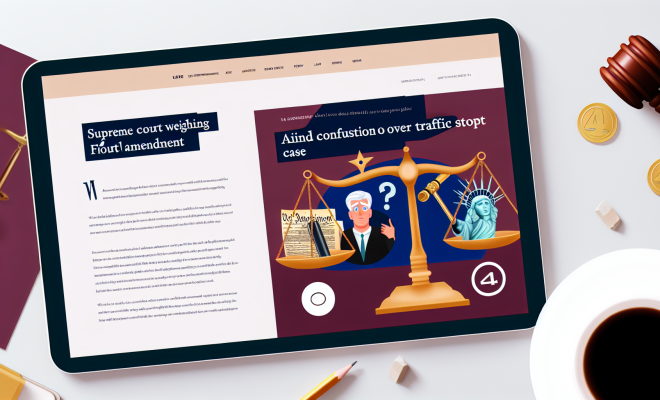
The United States Supreme Court is set to deliberate on a significant case involving Fourth Amendment protections during traffic stops, stemming from a ruling by the Montana Supreme Court. The case raises critical questions about the nature of consent given by drivers when subjected to extended questioning and searches by law enforcement.

The Case at Hand

This pivotal case revolves around the circumstances under which a driver’s consent to further questioning and searches during a traffic stop can be deemed voluntary rather than coerced. The Montana Supreme Court’s earlier decision has sparked a debate among lower courts regarding how to evaluate prolonged stops, particularly whether consent obtained in such scenarios can be considered legitimate.

Background on the Incident

The case originated from a routine traffic stop in Montana, where law enforcement officers pulled over a driver for a minor traffic violation. During the stop, officers engaged the driver in extended questioning, which ultimately led to a search of the vehicle. The circumstances surrounding the stop and the subsequent search have been scrutinized, as the driver contended that his consent was not freely given but rather coerced by the law enforcement officers’ demeanor and actions.

Legal Implications of the Montana Ruling

The Montana Supreme Court’s ruling has led to a nuanced interpretation of Fourth Amendment rights, which protect citizens against unreasonable searches and seizures. The decision has created a ripple effect, leading to confusion and inconsistency in how lower courts approach similar cases. Legal experts have noted that the ruling raises essential questions about the threshold for determining whether consent during traffic stops is truly voluntary.

  • Prolonged Stops: The Montana Supreme Court’s decision highlights the ambiguity surrounding prolonged traffic stops and the parameters that define reasonable questioning by law enforcement.
  • Consent Validity: The core issue remains whether drivers can genuinely provide consent when faced with the intimidating presence of law enforcement during a traffic stop.
  • Impact on Future Cases: The ruling is likely to influence how courts across the country interpret similar situations, potentially leading to a patchwork of legal standards.

Expert Opinions

Legal analysts have expressed concern about the implications of the Montana Supreme Court’s decision on civil liberties. Some argue that the ruling could pave the way for more aggressive law enforcement practices, eroding the protections afforded by the Fourth Amendment. Others contend that clear guidelines are needed to help law enforcement navigate the complexities of consent during traffic stops.

National Response and Broader Context

This case comes at a time when the Supreme Court’s interpretations of constitutional rights are under intense scrutiny, particularly concerning the balance between law enforcement authority and individual freedoms. The ongoing discussions around Fourth Amendment rights have gained prominence as communities across the nation grapple with issues of policing and civil rights.

In a related development, the Trump administration has announced plans to establish an online portal that will allow individuals who have been prohibited from possessing firearms to request the restoration of their gun rights. This initiative follows a landmark Supreme Court ruling from 2022 that struck down a New York gun-control law, which had placed strict regulations on firearm ownership.

Gun Rights Restoration Initiative

The proposed online portal aims to streamline the process for individuals seeking to regain their gun rights, reflecting a broader trend in the legal landscape concerning Second Amendment protections. The administration’s move is significant, as it responds to the Supreme Court’s directive and acknowledges the complexities surrounding gun ownership rights in the United States.

  • Impact of the 2022 Ruling: The Supreme Court’s decision in 2022 has provided a foundation for individuals advocating for their gun ownership rights.
  • Restoration Process: The online portal is expected to simplify the bureaucratic hurdles that have historically made it difficult for individuals to navigate the restoration of their rights.
  • Broader Implications: This initiative may set a precedent for future policies surrounding gun ownership and the rights of individuals with past convictions.

Conclusion

As the Supreme Court prepares to review the Montana case, the implications of its decision could reverberate throughout the judicial system, shaping how courts interpret consent during traffic stops and the enforcement of Fourth Amendment rights. Additionally, the administration’s move to restore gun rights through an online portal underscores the ongoing evolution of legal interpretations surrounding individual freedoms. Observers will be keenly watching how these developments unfold, as they hold significant ramifications for both law enforcement practices and civil liberties in the United States.


Previous Article

Embracing Lower Birthrates: A Societal Benefit?

Next Article

Court Restores Billions in Disaster Mitigation Funding ...

Matthew Lynch

Related articles More from author

  • Uncategorized

    Growing the Next Generation of Data Scientists

    June 29, 2016
    By Matthew Lynch
  • Uncategorized

    This One Thing Is Quietly Reshaping Illegal Crypto Trading — And Regulators Are Panicking

    September 22, 2026
    By Matthew Lynch
  • Uncategorized

    AI Plus Symposium 2026: Shaping Education’s Future with AI

    March 12, 2026
    By Matthew Lynch
  • Uncategorized

    This One Crucial Difference Is Reshaping Web3 Gaming vs Traditional Gaming Investment

    September 22, 2026
    By Matthew Lynch
  • Uncategorized

    The Billion-Dollar Race to Replace the ISS: Who Will Win as NASA Decommissions?

    October 13, 2026
    By Matthew Lynch
  • How ToUncategorized

    3 Ways to Train a Horse to Lead

    November 10, 2023
    By Matthew Lynch

Search

Login & Registration

  • Log in
  • Entries feed
  • Comments feed
  • WordPress.org

Newsletter

Signup for The Tech Edvocate Newsletter and have the latest in EdTech news and opinion delivered to your email address!

About Us

Since technology is not going anywhere and does more good than harm, adapting is the best course of action. That is where The Tech Edvocate comes in. We plan to cover the PreK-12 and Higher Education EdTech sectors and provide our readers with the latest news and opinion on the subject. From time to time, I will invite other voices to weigh in on important issues in EdTech. We hope to provide a well-rounded, multi-faceted look at the past, present, the future of EdTech in the US and internationally.

We started this journey back in June 2016, and we plan to continue it for many more years to come. I hope that you will join us in this discussion of the past, present and future of EdTech and lend your own insight to the issues that are discussed.

Newsletter

Signup for The Tech Edvocate Newsletter and have the latest in EdTech news and opinion delivered to your email address!

Contact Us

The Tech Edvocate
910 Goddin Street
Richmond, VA 23231
(601) 630-5238
[email protected]

Copyright © 2026 Matthew Lynch. All rights reserved.