The Billion-Dollar Race to Replace the ISS: Who Will Win as NASA Decommissions?
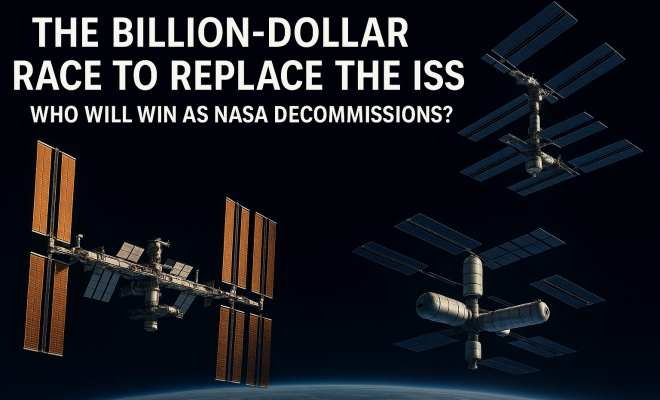
Imagine a future where the iconic International Space Station, that marvel of human ingenuity orbiting our planet for decades, is no more. It’s a sobering thought, isn’t it? Yet, this isn’t some far-off sci-fi premise; it’s the reality we’re rapidly approaching. On October 9, 2026, NASA officially kicked off a monumental transition, issuing a direct call to action — a request for proposals — inviting private industry to step up and build the next generation of space stations in low Earth orbit (LEO). This isn’t just about replacing a piece of hardware; it’s about fundamentally reshaping the entire landscape of human spaceflight. The era of government-led, single-entity space stations is drawing to a close, and a new, commercially driven chapter is beginning. As NASA prepares for the inevitable process of NASA decommissioning ISS, the stakes couldn’t be higher for both space agencies and private enterprises.
For years, the ISS has been a symbol of international cooperation and scientific advancement. It has provided an unparalleled laboratory for understanding how humans live and work in microgravity, pushing the boundaries of biological research, materials science, and fundamental physics. But like all things, its operational lifespan has limits. The decision to retire the station isn’t taken lightly; it’s born from a combination of aging infrastructure, escalating maintenance costs, and a strategic pivot towards deeper space exploration. NASA’s sights are now firmly set on the Moon and, eventually, Mars. To achieve those ambitious goals, the agency needs to offload the considerable financial and operational burden of LEO operations. This commercialization strategy isn’t just a cost-cutting measure; it’s a calculated gamble on the burgeoning private space sector, a belief that companies can innovate faster, operate more efficiently, and ultimately open up space to a wider array of users than ever before.
The End of an Era: Why NASA is Decommissioning ISS
Let’s be blunt: the International Space Station is old. Launched in segments starting in 1998, with the first crew arriving in 2000, it’s been continuously inhabited for over two decades. That’s an incredible achievement, a testament to the engineers and astronauts who built and maintained it. But an aging structure in the harsh environment of space comes with increasing challenges. Imagine trying to keep a car from the late 90s running perfectly today, with parts that are custom-made and nearly impossible to replace, while it’s constantly bombarded by radiation and micrometeoroids. That’s a simplified analogy for the ISS.
The maintenance costs alone are staggering. NASA has invested billions into the station, and a significant portion of its annual budget goes towards keeping the lights on, the air breathable, and the systems functional. As components age, the risk of failures increases, and the complexity of repairs escalates. Furthermore, the agency has a new mandate: the Artemis program. This ambitious initiative aims to return humans to the Moon, establish a sustainable lunar presence, and pave the way for human missions to Mars. Diverting resources and personnel to LEO operations, when private industry shows a growing capability, simply doesn’t align with NASA’s long-term strategic objectives. The shift away from operating its own LEO platform allows NASA to focus its finite resources on these more distant, more challenging endeavors. The process of NASA decommissioning ISS is a necessary step to free up these vital resources.
A New Vision: Commercializing Low Earth Orbit
NASA’s request for proposals isn’t merely about replacing the ISS; it’s about fundamentally changing the economic model of space. For decades, space exploration was almost exclusively the domain of national governments. Think about the Apollo program, the Space Shuttle, and indeed, the ISS itself. These were massive, publicly funded projects. Now, the agency is essentially saying, “We’ve built the highway; now it’s up to you, private enterprise, to build the hotels, gas stations, and restaurants along it.”
This shift towards commercial ownership and operation of LEO infrastructure is designed to foster a robust and competitive space economy. By creating demand for private space stations, NASA hopes to stimulate innovation, reduce costs through competition, and ultimately make space more accessible for a wider range of users. This isn’t just about space tourism, though that’s certainly a part of the vision. It’s about commercial research and development, in-space manufacturing, media production, and even the potential for dedicated national or international research modules leased on private platforms. It’s a bold move, but one that reflects the growing maturity and capability of companies like SpaceX, Blue Origin, and other emerging players.
Who Are the Contenders? Early Players in the Space Station Race
While NASA’s official request for proposals was issued in late 2026, several companies have been anticipating this shift for years and have already laid groundwork. These aren’t just speculative ventures; many have substantial backing and proven track records in other areas of the space industry. Think about Orbital Reef, a collaborative effort led by Blue Origin and Sierra Space, which envisions a “mixed-use business park” in space. Their concept emphasizes modularity, allowing for flexible configurations to accommodate various users, from scientific research to industrial and commercial applications.
Then there’s Starlab, a joint venture between Voyager Space and Airbus, aiming to be a continuously crewed, free-flying commercial space station. Their focus is heavily on science and research, leveraging Airbus’s extensive experience in space module design and manufacturing. Axiom Space, another key player, has a slightly different approach. They’ve already launched private astronaut missions to the ISS and plan to attach their own commercial modules to the existing station before it’s decommissioned. These modules would then detach and form the core of a new, independent commercial station. Each of these contenders brings a unique vision and a distinct set of capabilities to the table, making this competition incredibly dynamic and exciting to watch.
The Financial Frontier: Monetizing Orbit
This isn’t charity; it’s big business. The monetization angle for these commercial space stations is absolutely central to NASA’s strategy and the companies’ business models. The idea is that these private platforms won’t just serve NASA’s research needs, but will attract a diverse clientele. Imagine pharmaceutical companies conducting microgravity experiments to develop new drugs or materials science firms fabricating advanced alloys impossible to create on Earth. Think about the entertainment industry filming movies or reality shows in orbit, or even dedicated space hotels for ultra-luxury tourism.
The financial implications extend far beyond the station operators themselves. This push will create a ripple effect across numerous industries. We’re talking about opportunities for B2B technology providers, cybersecurity firms protecting critical orbital infrastructure, insurance companies developing bespoke policies for space assets, and engineering software developers creating tools for design and operations. The investment community is already keenly watching publicly traded space companies, and this shift will only intensify that scrutiny. The prospect of generating revenue from orbital operations is a powerful incentive, promising to transform LEO from a government-subsidized outpost into a vibrant economic zone. (See: NASA International Space Station Overview.)
Safety First: Ensuring Astronaut Well-being in Commercial Space
While the commercial imperative is strong, astronaut safety remains paramount. This is a non-negotiable aspect of any space endeavor, and NASA has a long-standing reputation for prioritizing the lives of its crew. The agency won’t simply hand over the keys to LEO without rigorous oversight and stringent safety standards. Commercial operators will be expected to adhere to incredibly high bars for everything from life support systems and radiation shielding to emergency procedures and crew training. For more context, see the impact of AI on future industries.
This isn’t unfamiliar territory for NASA. They’ve already established a robust commercial crew program, certifying private capsules like SpaceX’s Crew Dragon and Boeing’s Starliner to transport astronauts to the ISS. This existing framework provides a blueprint for how NASA can work with private companies to ensure safety while fostering innovation. Expect extensive certification processes, independent safety reviews, and ongoing monitoring to be integral parts of any agreement. The debate over privatization will undoubtedly touch on whether commercial operators can maintain the same safety record as a government agency, but NASA’s insistence on robust oversight aims to mitigate these concerns.
The Geopolitical Landscape: International Partnerships and Competition
The International Space Station, by its very name, embodies international cooperation. Partners like Russia, Europe, Japan, and Canada have been integral to its success. As NASA decommissioning ISS proceeds, what does this mean for these long-standing relationships? It’s a complex question. Some international partners might choose to join commercial ventures, perhaps leasing modules or participating in joint research programs on private stations.
Others, however, might view this as an opportunity to develop their own independent capabilities. China, for instance, has been steadily building its own Tiangong space station, clearly signaling its intent to be a major player in LEO. Russia has also expressed interest in developing its own orbital outpost post-ISS. This commercialization push by NASA could therefore lead to a more diversified LEO environment, with multiple national and commercial stations operating simultaneously. While competition can drive innovation, it also raises questions about orbital traffic management, debris mitigation, and the potential for a more fragmented international presence in space. It’s a delicate balance between fostering new markets and maintaining diplomatic ties.
Navigating the Regulatory and Ethical Maze
Opening up LEO to widespread commercial activity isn’t just an engineering challenge; it’s a legal and ethical one as well. Who owns what in space? What are the liabilities in case of an accident involving multiple commercial entities? How do we ensure equitable access to these new platforms, preventing LEO from becoming an exclusive playground for the wealthy? These are complex questions that will require careful consideration and the development of new regulatory frameworks.
The Outer Space Treaty of 1967 provides a foundational legal framework, but it was drafted in an era when only governments operated in space. It’s ill-equipped to handle the nuances of commercial space stations, private resource extraction, or even space tourism. Regulators will need to address issues like property rights in space, environmental protection (especially concerning orbital debris), and the responsibility of nations for the activities of their private companies in orbit. This isn’t just about making rules; it’s about establishing a new jurisprudence for the final frontier, a task that will require collaboration between governments, legal experts, and the burgeoning space industry.
The Future Beyond LEO: What This Means for Deep Space Exploration
Ultimately, NASA’s decision to commercialize LEO is intrinsically linked to its ambitious goals for deep space. By offloading the operational burden of the ISS, the agency frees up not only financial resources but also engineering talent and strategic focus for the Artemis program and future missions to Mars. The commercial LEO platforms are envisioned as more than just replacements for the ISS; they could become testbeds for technologies needed for lunar and Martian missions.
Imagine using a commercial space station to test advanced life support systems that could sustain astronauts for years on a journey to Mars, or developing in-space manufacturing techniques to build habitats on the Moon. These commercial platforms could also serve as staging points or training grounds for astronauts preparing for longer duration missions. The symbiotic relationship between a thriving commercial LEO economy and NASA’s deep space ambitions is clear: one enables the other. The process of NASA decommissioning ISS is not an end, but a pivotal transition towards a more expansive future in space.
The Legacy of the ISS and the Dawn of a New Era
The International Space Station will eventually make its controlled descent, likely plunging into a remote part of the Pacific Ocean, a dramatic, fiery end to an extraordinary chapter. But its legacy will endure. It taught us how to live and work in space, how to collaborate across nations, and how to push the boundaries of scientific discovery. It inspired generations and demonstrated what humanity can achieve when it works together.
As we look towards a future where commercial entities take the lead in LEO, it’s crucial to remember the foundations laid by the ISS. The upcoming era, ushered in by NASA’s call for proposals, promises a dynamic, competitive, and potentially revolutionary phase in human spaceflight. It’s a future where innovation is driven by private enterprise, where access to space is democratized, and where the possibilities for scientific advancement and economic growth are truly boundless. The stakes are high, the challenges are immense, but the potential rewards are nothing short of astronomical. (See: New York Times on NASA's ISS Decommissioning.)
The Technical Challenges of Decommissioning and Controlled Re-entry
Decommissioning a structure as massive and complex as the ISS isn’t like closing down an old factory. It’s an incredibly intricate engineering challenge. The station weighs over 450 tons and is roughly the size of a football field. You can’t just let it tumble uncontrolled back to Earth; that would pose an unacceptable risk to populated areas. The plan is for a controlled re-entry, guiding the station to break up over a remote ocean area, specifically the uninhabited South Pacific Ocean Uninhabited Area (SPOUA), also known as Point Nemo.
This controlled re-entry requires precise orbital mechanics. Thrusters will be used to de-orbit the station, nudging it into a decaying trajectory. The timing has to be perfect, accounting for atmospheric drag, solar activity, and the station’s changing mass as various components are shed or consumed. Engineers need to calculate the exact burn sequences and durations to ensure the station descends safely and predictably. It’s a delicate dance of physics and propulsion, designed to minimize risk to life and property on Earth. This process involves a lot of analysis and preparation, ensuring that the final act of NASA decommissioning ISS is as safe and controlled as its assembly was. For more context, see the future of technology in medicine.
The Science Continues: Bridging the Gap Between ISS and Commercial Stations
Even with the shift to commercial platforms, NASA isn’t abandoning its research goals. A key part of the transition strategy involves ensuring a seamless continuum of scientific inquiry. The agency has expressed a clear need for continuous access to microgravity environments for critical research, particularly in areas like human health, advanced materials, and astrophysics.
To bridge the gap between the ISS’s retirement and the full operational readiness of commercial stations, NASA plans to be an anchor tenant, purchasing services from these private platforms. This means providing funding to commercial entities to support specific research initiatives, ensuring that valuable experiments can continue without interruption. Think of it as NASA becoming a major customer rather than the sole owner. This approach not only sustains scientific progress but also provides a stable revenue stream for the commercial operators, helping them establish their businesses and attract other customers. The goal is to leverage the efficiencies and innovations of the private sector to advance scientific understanding even faster.
Beyond Science: The Economic Potential for In-Space Manufacturing
While scientific research is a primary driver, the commercialization of LEO opens up exciting new avenues for economic development, particularly in in-space manufacturing. Imagine a future where specialized components, too delicate or complex to manufacture on Earth, are produced in orbit. Microgravity offers unique conditions that can yield materials with superior properties – think about fiber optics with ultra-low signal loss, or pharmaceuticals with perfect crystal structures.
Companies are already exploring this. For example, some are looking into 3D printing in space, not just for spare parts for the station, but for creating entirely new products. Others are researching the production of artificial retinas, semiconductors, or even human organs using bio-printing techniques that leverage microgravity’s unique environment. This isn’t just theoretical; early experiments on the ISS have shown promising results. A thriving commercial LEO economy could see factories in orbit, producing high-value goods for consumption both on Earth and for future deep-space missions. This represents a significant long-term economic opportunity that goes hand-in-hand with the NASA decommissioning ISS plan.
Public Perception and Educational Outreach: Keeping the Spark Alive
The ISS has been an incredible tool for inspiring the next generation of scientists and engineers. Millions of students have participated in experiments, watched live broadcasts, and followed the lives of astronauts in orbit. As we transition to commercial stations, maintaining this public engagement and educational outreach is crucial. NASA understands that public support is vital for long-term space exploration endeavors.
The agency will likely work with commercial partners to ensure that educational opportunities continue on the new platforms. This could involve dedicated modules for student experiments, virtual reality tours of commercial stations, or even sponsored educational missions where teachers or citizen scientists can participate. The goal is to show that space isn’t just for governments or billionaires, but remains a frontier for everyone. Keeping the public excited and informed about the possibilities of space is essential for fostering a sustainable space economy and ensuring a steady stream of talent for the industry.
Frequently Asked Questions About NASA Decommissioning ISS
When exactly will the ISS be decommissioned?
NASA’s current plan is to operate the International Space Station until 2030, after which the controlled re-entry process will begin. The exact date for the re-entry itself depends on various factors, but it’s expected to occur shortly after 2030, likely in early 2031. (See: ScienceDirect on Microgravity Research.)
What will happen to the ISS after it’s decommissioned?
The ISS will undergo a controlled de-orbit. This means that its thrusters will be fired in a specific sequence to lower its orbit and guide it towards a designated, uninhabited area of the South Pacific Ocean (Point Nemo). Most of the station will burn up during re-entry into Earth’s atmosphere, but any surviving fragments will fall harmlessly into the ocean.
Will there be a gap in human presence in LEO after the ISS retires?
NASA aims to avoid a significant gap. The agency is actively working with private companies to develop and launch commercial space stations before the ISS is retired. NASA plans to be a primary customer for these commercial platforms, ensuring a continuous human presence and research capability in LEO.
Who will own and operate the next generation of space stations?
The next generation of space stations will be privately owned and operated by commercial companies. NASA is transitioning from being an owner/operator to a customer, purchasing services from these commercial providers. This shift is designed to foster a competitive space economy and reduce the operational burden on the agency.
What kind of research will be done on commercial space stations?
Commercial space stations are expected to host a diverse range of research, including continued microgravity experiments for NASA, as well as private research from pharmaceutical companies, materials science firms, and other industries. They’ll also support in-space manufacturing, media production, and potentially space tourism.
What about the international partners of the ISS? Will they be involved in commercial stations?
Many international partners are exploring options to continue their presence in LEO. Some may choose to collaborate with or become customers of commercial space station ventures. Others, like China and potentially Russia, are developing their own independent national space stations. The LEO landscape is expected to become more diverse.
How much will these commercial space stations cost, and who is paying for them?
The exact costs vary by project, but commercial space stations represent multi-billion dollar investments. These projects are primarily funded by the private companies themselves, often through a combination of corporate investment, venture capital, and anticipated revenue from customers like NASA and other commercial clients. NASA provides seed funding and contracts to stimulate development, but the long-term financial viability rests with the private sector.
Is space tourism a major driver for these new commercial stations?
Space tourism is certainly a part of the long-term vision and potential revenue stream for commercial space stations, but it’s not the sole driver. Research, manufacturing, and other commercial activities are equally, if not more, important in the initial phases. As infrastructure matures and costs potentially decrease, space tourism could become a more significant market.
Trending Now
Frequently Asked Questions
Why is NASA decommissioning the ISS?
NASA is decommissioning the ISS due to aging infrastructure, rising maintenance costs, and a strategic shift towards deeper space exploration goals, such as missions to the Moon and Mars. This transition allows NASA to focus on more ambitious projects while encouraging private industry to take over low Earth orbit operations.
What will happen to the ISS after it is decommissioned?
After decommissioning, the ISS will likely be deorbited and re-enter Earth's atmosphere, with plans for controlled disposal to minimize risks. NASA is inviting private companies to propose new space stations to replace the ISS, marking a shift towards commercial operations in low Earth orbit.
Who is expected to build the next generation of space stations?
NASA is calling on private industry to propose and build the next generation of space stations. This shift allows for innovation and efficiency in low Earth orbit operations, moving away from government-led initiatives to a more commercially driven approach.
What are the benefits of commercial space stations?
Commercial space stations are expected to operate more efficiently, innovate faster, and provide access to a wider range of users compared to government-run stations. This shift could lead to advancements in scientific research, technology development, and commercial opportunities in space.
When will NASA officially decommission the ISS?
NASA has initiated the decommissioning process for the ISS, with a significant transition starting on October 9, 2026. The exact timeline for the complete decommissioning will depend on various factors, including the readiness of new commercial space stations.
Agree or disagree? Drop a comment and tell us what you think.