Supreme Court Weighs Key Fourth Amendment Case Amid Confusion Over Traffic Stops
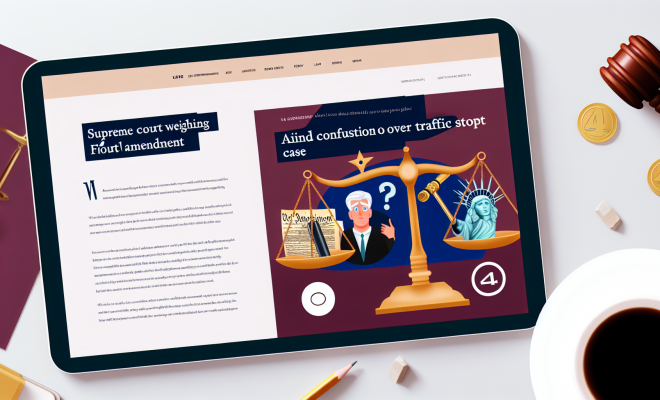
The United States Supreme Court is set to deliberate on a significant case involving Fourth Amendment protections during traffic stops, stemming from a ruling by the Montana Supreme Court. The case raises critical questions about the nature of consent given by drivers when subjected to extended questioning and searches by law enforcement.
The Case at Hand
This pivotal case revolves around the circumstances under which a driver’s consent to further questioning and searches during a traffic stop can be deemed voluntary rather than coerced. The Montana Supreme Court’s earlier decision has sparked a debate among lower courts regarding how to evaluate prolonged stops, particularly whether consent obtained in such scenarios can be considered legitimate.
Background on the Incident
The case originated from a routine traffic stop in Montana, where law enforcement officers pulled over a driver for a minor traffic violation. During the stop, officers engaged the driver in extended questioning, which ultimately led to a search of the vehicle. The circumstances surrounding the stop and the subsequent search have been scrutinized, as the driver contended that his consent was not freely given but rather coerced by the law enforcement officers’ demeanor and actions.
Legal Implications of the Montana Ruling
The Montana Supreme Court’s ruling has led to a nuanced interpretation of Fourth Amendment rights, which protect citizens against unreasonable searches and seizures. The decision has created a ripple effect, leading to confusion and inconsistency in how lower courts approach similar cases. Legal experts have noted that the ruling raises essential questions about the threshold for determining whether consent during traffic stops is truly voluntary.
- Prolonged Stops: The Montana Supreme Court’s decision highlights the ambiguity surrounding prolonged traffic stops and the parameters that define reasonable questioning by law enforcement.
- Consent Validity: The core issue remains whether drivers can genuinely provide consent when faced with the intimidating presence of law enforcement during a traffic stop.
- Impact on Future Cases: The ruling is likely to influence how courts across the country interpret similar situations, potentially leading to a patchwork of legal standards.
Expert Opinions
Legal analysts have expressed concern about the implications of the Montana Supreme Court’s decision on civil liberties. Some argue that the ruling could pave the way for more aggressive law enforcement practices, eroding the protections afforded by the Fourth Amendment. Others contend that clear guidelines are needed to help law enforcement navigate the complexities of consent during traffic stops.
National Response and Broader Context
This case comes at a time when the Supreme Court’s interpretations of constitutional rights are under intense scrutiny, particularly concerning the balance between law enforcement authority and individual freedoms. The ongoing discussions around Fourth Amendment rights have gained prominence as communities across the nation grapple with issues of policing and civil rights.
In a related development, the Trump administration has announced plans to establish an online portal that will allow individuals who have been prohibited from possessing firearms to request the restoration of their gun rights. This initiative follows a landmark Supreme Court ruling from 2022 that struck down a New York gun-control law, which had placed strict regulations on firearm ownership.
Gun Rights Restoration Initiative
The proposed online portal aims to streamline the process for individuals seeking to regain their gun rights, reflecting a broader trend in the legal landscape concerning Second Amendment protections. The administration’s move is significant, as it responds to the Supreme Court’s directive and acknowledges the complexities surrounding gun ownership rights in the United States.
- Impact of the 2022 Ruling: The Supreme Court’s decision in 2022 has provided a foundation for individuals advocating for their gun ownership rights.
- Restoration Process: The online portal is expected to simplify the bureaucratic hurdles that have historically made it difficult for individuals to navigate the restoration of their rights.
- Broader Implications: This initiative may set a precedent for future policies surrounding gun ownership and the rights of individuals with past convictions.
Conclusion
As the Supreme Court prepares to review the Montana case, the implications of its decision could reverberate throughout the judicial system, shaping how courts interpret consent during traffic stops and the enforcement of Fourth Amendment rights. Additionally, the administration’s move to restore gun rights through an online portal underscores the ongoing evolution of legal interpretations surrounding individual freedoms. Observers will be keenly watching how these developments unfold, as they hold significant ramifications for both law enforcement practices and civil liberties in the United States.