The Tech Edvocate

Top Menu

  • Advertisement
  • Apps
  • Home Page
  • Home Page Five (No Sidebar)
  • Home Page Four
  • Home Page Three
  • Home Page Two
  • Home Tech2
  • Icons [No Sidebar]
  • Left Sidbear Page
  • Lynch Educational Consulting
  • My Account
  • My Speaking Page
  • Newsletter Sign Up Confirmation
  • Newsletter Unsubscription
  • Our Brands
  • Page Example
  • Privacy Policy
  • Protected Content
  • Register
  • Request a Product Review
  • Shop
  • Shortcodes Examples
  • Signup
  • Start Here
    • Governance
    • Careers
    • Contact Us
  • Terms and Conditions
  • The Edvocate
  • The Tech Edvocate Product Guide
  • Topics
  • Write For Us
  • Advertise

Main Menu

  • Start Here
    • Our Brands
    • Governance
      • Lynch Educational Consulting, LLC.
      • Dr. Lynch’s Personal Website
      • Careers
    • Write For Us
    • The Tech Edvocate Product Guide
    • Contact Us
    • Books
    • Edupedia
    • Post a Job
    • The Edvocate Podcast
    • Terms and Conditions
    • Privacy Policy
  • Topics
    • Assistive Technology
    • Child Development Tech
    • Early Childhood & K-12 EdTech
    • EdTech Futures
    • EdTech News
    • EdTech Policy & Reform
    • EdTech Startups & Businesses
    • Higher Education EdTech
    • Online Learning & eLearning
    • Parent & Family Tech
    • Personalized Learning
    • Product Reviews
  • Advertise
  • Tech Edvocate Awards
  • The Edvocate
  • Pedagogue
  • School Ratings

logo

The Tech Edvocate

  • Start Here
    • Our Brands
    • Governance
      • Lynch Educational Consulting, LLC.
      • Dr. Lynch’s Personal Website
        • My Speaking Page
      • Careers
    • Write For Us
    • The Tech Edvocate Product Guide
    • Contact Us
    • Books
    • Edupedia
    • Post a Job
    • The Edvocate Podcast
    • Terms and Conditions
    • Privacy Policy
  • Topics
    • Assistive Technology
    • Child Development Tech
    • Early Childhood & K-12 EdTech
    • EdTech Futures
    • EdTech News
    • EdTech Policy & Reform
    • EdTech Startups & Businesses
    • Higher Education EdTech
    • Online Learning & eLearning
    • Parent & Family Tech
    • Personalized Learning
    • Product Reviews
  • Advertise
  • Tech Edvocate Awards
  • The Edvocate
  • Pedagogue
  • School Ratings
  • 100 Best Resource Management Apps

  • The Startling Truth About Viral Weight Loss Drugs You Need to Know

  • 57% Failure Rate: The Unsettling Truth About AI Financial Advice You Need to Know

  • AI’s Quiet Takeover: 179,542 Tech Layoffs 2023 Signal a Troubling Future

  • The Billion-Dollar Race: Why U.S. Tech Giants Are Scrambling for Israeli Startups

  • The Secret Way Activision Blizzard May Be Exploiting Kids for Millions

  • This One AI Change Could Cost You Thousands in Medical Bills

  • The Billion-Dollar AI Learning Boom: Why Experts Are Sounding the Alarm

  • Your Student Loans Just Got a Massive Overhaul — Here’s What It Means For Your Future

  • Identity Theft Nightmare: Johnson Investment Counsel Data Breach Exposes SSNs

Digital & Mobile Technology
Home›Digital & Mobile Technology›RDP vs. VPNs: What’s the Difference?

RDP vs. VPNs: What’s the Difference?
By Matthew Lynch
July 31, 2023
0
Spread the love

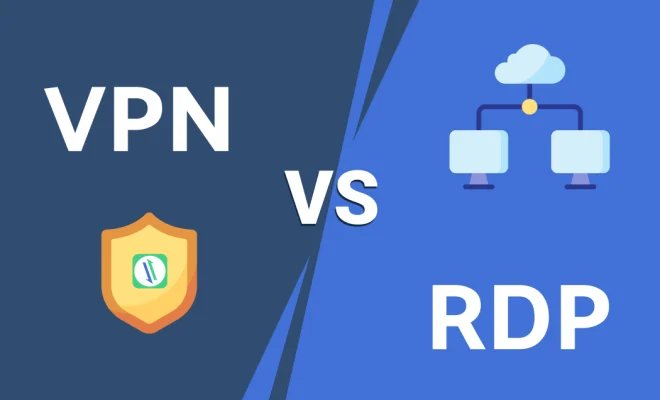
In today’s fast-paced world, remote access to data and systems is becoming increasingly important. A remote connection is a necessity not only for companies with employees working in different locations but also for businesses that require certain employees to be accessible through remote means. Two of the most common remote access technologies are Remote Desktop Protocol (RDP) and Virtual Private Networks (VPNs).

When it comes to remote connections, both RDP and VPNs have different functionalities that make them ideal for various situations. Let’s explore these technologies and their differences.

Remote Desktop Protocol (RDP)

RDP is a feature built into Microsoft Windows that allows a user to connect to a remote computer and use it just as if they were sitting directly in front of it. When a user connects to a remote system using RDP, the remote system’s desktop is displayed on the user’s local screen, giving the impression that they are using the remote system locally.

RDP is ideal for companies with a lot of Windows-based systems, as it requires a single Windows machine to act as a host or server. This enables RDP to be integrated into a company’s existing infrastructure easily.

However, one of the main drawbacks of RDP is that it allows access to the entire remote computer, which can result in security risks if the remote computer is infected with malware or contains sensitive information that shouldn’t be accessed. Another issue with RDP is that it’s only available for Windows-based systems.

Virtual Private Networks (VPNs)

A VPN is a network technology that provides a secure and encrypted connection over the Internet. The main function of a VPN is to enable users to access a private network from a remote location securely. With VPN, a user can access files and websites that are blocked in their current geographic location, as if they were connected directly to the private network.

VPNs have many advantages over RDP since they don’t require a specific operating system to work. VPNs are also much more secure than RDP because they provide users with encrypted and secure access to the network. This guarantees that data transmitted between the remote user and the network’s server is encrypted, protected from unauthorized access, and stored on the server.

The downside with VPNs is configuring and setting them up can be a bit more complex than RDP. Additionally, network capacity and bandwidth must be taken into account, as this can impact the speed and performance of the VPN considerably.

In Conclusion

In conclusion, selecting between RDP and VPNs generally depends on the specific requirements of the user and the organization. If employees need to access files and data from remote locations, VPN may be a better option; however, if employees need to operate specific applications on a remote desktop, RDP is the way to go.

While both remote access technologies provide remote access to a network or system, VPNs offer more secure and versatile options, while RDP is more straightforward to set up and use. Therefore, it is essential to assess all options and determine which method is best suited for your organization’s needs.


Previous Article

How to Disable Auto-Rotate for Individual Apps ...

Next Article

How to Play Heardle, the Beat the ...

Matthew Lynch

Related articles More from author

  • Digital & Mobile Technology

    What Is a WebEx Document Loader?

    May 15, 2023
    By Matthew Lynch
  • Artificial IntelligenceDigital & Mobile Technology

    Best Alternatives to ChatGPT

    June 6, 2023
    By Matthew Lynch
  • Digital & Mobile Technology

    How to Fix Hulu Streaming Issues

    June 2, 2023
    By Matthew Lynch
  • Digital & Mobile Technology

    What is Server Colocation?

    May 11, 2023
    By Matthew Lynch
  • Digital & Mobile Technology

    How to Program a Google Nest Thermostat

    June 8, 2023
    By Matthew Lynch
  • Digital & Mobile Technology

    Fun Things to Do With QR Codes

    June 22, 2023
    By Matthew Lynch

Search

Login & Registration

  • Log in
  • Entries feed
  • Comments feed
  • WordPress.org

Newsletter

Signup for The Tech Edvocate Newsletter and have the latest in EdTech news and opinion delivered to your email address!

About Us

Since technology is not going anywhere and does more good than harm, adapting is the best course of action. That is where The Tech Edvocate comes in. We plan to cover the PreK-12 and Higher Education EdTech sectors and provide our readers with the latest news and opinion on the subject. From time to time, I will invite other voices to weigh in on important issues in EdTech. We hope to provide a well-rounded, multi-faceted look at the past, present, the future of EdTech in the US and internationally.

We started this journey back in June 2016, and we plan to continue it for many more years to come. I hope that you will join us in this discussion of the past, present and future of EdTech and lend your own insight to the issues that are discussed.

Newsletter

Signup for The Tech Edvocate Newsletter and have the latest in EdTech news and opinion delivered to your email address!

Contact Us

The Tech Edvocate
910 Goddin Street
Richmond, VA 23231
(601) 630-5238
[email protected]

Copyright © 2026 Matthew Lynch. All rights reserved.