The Tech Edvocate

Top Menu

  • Advertisement
  • Apps
  • Home Page
  • Home Page Five (No Sidebar)
  • Home Page Four
  • Home Page Three
  • Home Page Two
  • Home Tech2
  • Icons [No Sidebar]
  • Left Sidbear Page
  • Lynch Educational Consulting
  • My Account
  • My Speaking Page
  • Newsletter Sign Up Confirmation
  • Newsletter Unsubscription
  • Our Brands
  • Page Example
  • Privacy Policy
  • Protected Content
  • Register
  • Request a Product Review
  • Shop
  • Shortcodes Examples
  • Signup
  • Start Here
    • Governance
    • Careers
    • Contact Us
  • Terms and Conditions
  • The Edvocate
  • The Tech Edvocate Product Guide
  • Topics
  • Write For Us
  • Advertise

Main Menu

  • Start Here
    • Our Brands
    • Governance
      • Lynch Educational Consulting, LLC.
      • Dr. Lynch’s Personal Website
      • Careers
    • Write For Us
    • The Tech Edvocate Product Guide
    • Contact Us
    • Books
    • Edupedia
    • Post a Job
    • The Edvocate Podcast
    • Terms and Conditions
    • Privacy Policy
  • Topics
    • Assistive Technology
    • Child Development Tech
    • Early Childhood & K-12 EdTech
    • EdTech Futures
    • EdTech News
    • EdTech Policy & Reform
    • EdTech Startups & Businesses
    • Higher Education EdTech
    • Online Learning & eLearning
    • Parent & Family Tech
    • Personalized Learning
    • Product Reviews
  • Advertise
  • Tech Edvocate Awards
  • The Edvocate
  • Pedagogue
  • School Ratings

logo

The Tech Edvocate

  • Start Here
    • Our Brands
    • Governance
      • Lynch Educational Consulting, LLC.
      • Dr. Lynch’s Personal Website
        • My Speaking Page
      • Careers
    • Write For Us
    • The Tech Edvocate Product Guide
    • Contact Us
    • Books
    • Edupedia
    • Post a Job
    • The Edvocate Podcast
    • Terms and Conditions
    • Privacy Policy
  • Topics
    • Assistive Technology
    • Child Development Tech
    • Early Childhood & K-12 EdTech
    • EdTech Futures
    • EdTech News
    • EdTech Policy & Reform
    • EdTech Startups & Businesses
    • Higher Education EdTech
    • Online Learning & eLearning
    • Parent & Family Tech
    • Personalized Learning
    • Product Reviews
  • Advertise
  • Tech Edvocate Awards
  • The Edvocate
  • Pedagogue
  • School Ratings
  • Cybersecurity vs. Green Energy: Which Path Will Make You Richer in 2026?

  • Why These 10 Renewable Energy Certifications Are Quietly Reshaping Careers by 2026

  • Why Millions Are Rushing to Online Renewable Energy Certifications Right Now

  • August AI vs. USMLE: The Unsettling Future of Medical Licensing

  • One AI’s Perfect USMLE Score Just Blew Up Medical Education As We Know It

  • This AI Just Aced the USMLE: Why Your Medical Career Might Never Be the Same

  • The Quiet Exodus: Why Senior FinTech Developers Are Abandoning Corporate Life

  • The Quiet Revolution: Where Elite FinTech Developers Are Fleeing in 2026

  • The Quiet Exodus: Why Senior FinTech Developers Are Ditching Corporate Life

  • AI Governance Software: Pricing and Features Comparison

Digital Age TeachersOnline Learning & eLearningTeaching Strategies, Tactics, and Methods
Home›Digital Age Teachers›4 Tips for Making the Transition to Remote Learning a Smooth One

4 Tips for Making the Transition to Remote Learning a Smooth One
By Matthew Lynch
September 23, 2020
0
Spread the love

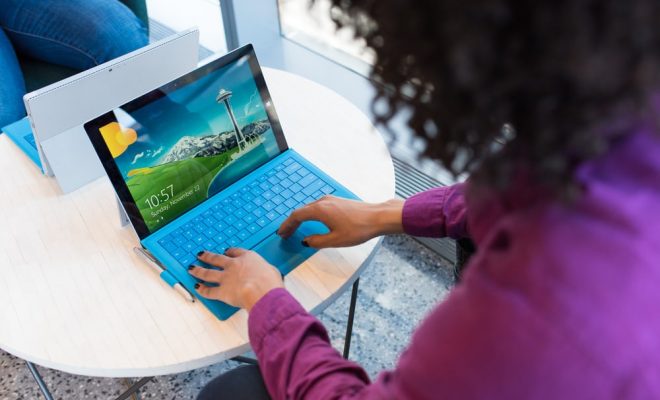
When all teaching and learning activities are moved online, having a sound strategy in place is crucial for making this transition as smooth as possible. Many use artificial intelligence or AI to help with the transition, especially in providing students’ real-time assessments.  

Meanwhile, here are four tips that can help in the transition to remote learning:

1. Utilize multiple remote learning strategies

Effective online instructors will utilize multiple remote learning techniques in tandem, just as the best teachers provide students with multiple learning tools and strategies in the classroom. Keep in mind that some students are tactile learners, while others most effectively gain knowledge when presented in a visual format, while others are also auditory learners.

While research abounds and is still evolving regarding how individuals most effectively learn and why there is one crucial point known to everyone – rather than singularly, most people learn in highly distinctive ways and benefit from receiving information in multiple formats. With this, be sure to use a combination of video lectures, email lessons, discussion board posts, and any other digital modalities that you think will be effective in teaching your material. Gamification is also an excellent way to engage students.

2. Make it personal

When live interactions and face-to-face contact are absent, chances are many students will feel alienated from their teachers. This travesty can come across as detracting to the quality and impact of education.

As studies have shown, students learn most effectively when they feel loved and connected to their teacher.

There are several strategies you can deploy if you want to give remote learning a personal touch. When students feel connected to both the teacher and the topic, their academic experience and performance are optimized.

So that your students know that you are still a real person who is dedicated to working on their behalf; one strategy you can use is posting photos of yourself at your desk. Also, consider the value of posting live values in which you present your subject-related material or conduct experiments in an aesthetically appealing and engaging fashion.

The key to making it personal is inserting a part of you into every lesson. Discuss how the material impacts you and make personal references engaging the subject matter as possible!

3. Become more technologically savvy

Now is the time to become a tech expert. Many, if not most, teachers are familiar with a wide range of technological platforms. With technology, you can communicate with co-workers, give feedback to students, and securely present lessons by using products such as online conferencing technology and learning management systems. 

4. For those who don’t have Internet access, have a back-up plan

Teachers need to have an individual lesson plan for students who cannot participate in live digital sessions. From preparing hard copies of the material for students who lack internet access to recording the lecture, your plan can involve anything so that it is available for individuals who are experiencing temporary technical difficulties.

These four easy and practical ways can help students transition to remote learning in no time. It will take them days or weeks to get used to this kind of set-up, but they’ll get used to it, especially with parents and teachers’ support.

Previous Article

How Do I Monitor Learner Assignments in ...

Next Article

Why is Google Classroom So Popular?

Matthew Lynch

Related articles More from author

  • Online Learning & eLearning

    Hybrid Cloud: Benefits and Barriers

    March 27, 2023
    By Matthew Lynch
  • Online Learning & eLearning

    The Best Online Courses for AI, ChatGPT, Midjourney, and More

    March 11, 2024
    By Matthew Lynch
  • Online Learning & eLearning

    NordVPN vs ExpressVPN: ‘s VPN battle of the titans

    March 29, 2023
    By Matthew Lynch
  • Teaching Strategies, Tactics, and Methods

    High-Level Questioning Skills in Young Children: Part 2

    January 14, 2025
    By Matthew Lynch
  • Online Learning & eLearning

    What Is a Ring Light and What Does It Do?

    June 23, 2023
    By Matthew Lynch
  • Online Learning & eLearning

    Phone Won’t Charge? Try This Easy DIY Toothpick Trick First

    March 29, 2023
    By Matthew Lynch

Search

Login & Registration

  • Log in
  • Entries feed
  • Comments feed
  • WordPress.org

Newsletter

Signup for The Tech Edvocate Newsletter and have the latest in EdTech news and opinion delivered to your email address!

About Us

Since technology is not going anywhere and does more good than harm, adapting is the best course of action. That is where The Tech Edvocate comes in. We plan to cover the PreK-12 and Higher Education EdTech sectors and provide our readers with the latest news and opinion on the subject. From time to time, I will invite other voices to weigh in on important issues in EdTech. We hope to provide a well-rounded, multi-faceted look at the past, present, the future of EdTech in the US and internationally.

We started this journey back in June 2016, and we plan to continue it for many more years to come. I hope that you will join us in this discussion of the past, present and future of EdTech and lend your own insight to the issues that are discussed.

Newsletter

Signup for The Tech Edvocate Newsletter and have the latest in EdTech news and opinion delivered to your email address!

Contact Us

The Tech Edvocate
910 Goddin Street
Richmond, VA 23231
(601) 630-5238
[email protected]

Copyright © 2026 Matthew Lynch. All rights reserved.