The Tech Edvocate

Top Menu

  • Advertisement
  • Apps
  • Home Page
  • Home Page Five (No Sidebar)
  • Home Page Four
  • Home Page Three
  • Home Page Two
  • Home Tech2
  • Icons [No Sidebar]
  • Left Sidbear Page
  • Lynch Educational Consulting
  • My Account
  • My Speaking Page
  • Newsletter Sign Up Confirmation
  • Newsletter Unsubscription
  • Our Brands
  • Page Example
  • Privacy Policy
  • Protected Content
  • Register
  • Request a Product Review
  • Shop
  • Shortcodes Examples
  • Signup
  • Start Here
    • Governance
    • Careers
    • Contact Us
  • Terms and Conditions
  • The Edvocate
  • The Tech Edvocate Product Guide
  • Topics
  • Write For Us
  • Advertise

Main Menu

  • Start Here
    • Our Brands
    • Governance
      • Lynch Educational Consulting, LLC.
      • Dr. Lynch’s Personal Website
      • Careers
    • Write For Us
    • The Tech Edvocate Product Guide
    • Contact Us
    • Books
    • Edupedia
    • Post a Job
    • The Edvocate Podcast
    • Terms and Conditions
    • Privacy Policy
  • Topics
    • Assistive Technology
    • Child Development Tech
    • Early Childhood & K-12 EdTech
    • EdTech Futures
    • EdTech News
    • EdTech Policy & Reform
    • EdTech Startups & Businesses
    • Higher Education EdTech
    • Online Learning & eLearning
    • Parent & Family Tech
    • Personalized Learning
    • Product Reviews
  • Advertise
  • Tech Edvocate Awards
  • The Edvocate
  • Pedagogue
  • School Ratings

logo

The Tech Edvocate

  • Start Here
    • Our Brands
    • Governance
      • Lynch Educational Consulting, LLC.
      • Dr. Lynch’s Personal Website
        • My Speaking Page
      • Careers
    • Write For Us
    • The Tech Edvocate Product Guide
    • Contact Us
    • Books
    • Edupedia
    • Post a Job
    • The Edvocate Podcast
    • Terms and Conditions
    • Privacy Policy
  • Topics
    • Assistive Technology
    • Child Development Tech
    • Early Childhood & K-12 EdTech
    • EdTech Futures
    • EdTech News
    • EdTech Policy & Reform
    • EdTech Startups & Businesses
    • Higher Education EdTech
    • Online Learning & eLearning
    • Parent & Family Tech
    • Personalized Learning
    • Product Reviews
  • Advertise
  • Tech Edvocate Awards
  • The Edvocate
  • Pedagogue
  • School Ratings
  • US Battery as a Service Market Shifts Toward Fleet-Based Energy

  • The Startling Truth: Why Americans Distrust AI with Their Health

  • This Crucial Deadline for Banks Is Closer Than You Think

  • Baffling: CrowdStrike’s $500 Million AI Bet Reshapes Cybersecurity

  • This Crucial Autonomous Driving Rule Could Cost You Everything

  • Baffling: Microsoft AI CEO Demands Halt to Conscious AI Development

  • O seară în ritmul tău: atmosfera divertismentului de cazinou pe internet

  • Outrageous: AppLovin Hit With Lawsuit Over AI Claims — What Investors Need to Know

  • 9 Critical Ways AI Investment Fraud Is Quietly Draining Your Bank Account

  • Is the AI Bubble Bursting? OpenAI’s Funding Woes Revealed

Early Childhood & K-12 EdTechGoogle ClassroomHigher EducationHigher Education EdTech
Home›Early Childhood & K-12 EdTech›4 Mistakes to Avoid When Integrating Google Classroom

4 Mistakes to Avoid When Integrating Google Classroom
By Matthew Lynch
September 4, 2018
0
Spread the love

Google Classroom is a powerful tool for educators and students which is quickly becoming a highly used resource. Classroom is user-friendly and offers many options for productivity, organization, and engagement. There are a few precautions to take, however, before integrating Classroom into lessons. It is imperative for teachers to remember that technology should not drive instruction. Google Classroom, just like most other technology, is a tool with which to deliver a lesson. The lesson itself should be well-planned by the teacher and focused on the needs of students. The objective of lessons delivered should not be to use Classroom, but to learn meaningful content which may be enhanced through the use of the technology. There are a few other key mistakes teachers should avoid when integrating Classroom into lessons.

Each Class Needs a Classroom

Avoid placing all students into one Classroom, even if it’s for the same subject. Each class section taught should have a separate Classroom, and each Classroom should have a distinct name. Naming conventions vary by user; however, more specific names can help with organization and make finding assignments easier. Many users choose to use the subject name, class period, and school year as Classroom names which makes archiving classes more organized as well.

Keep Notifications On

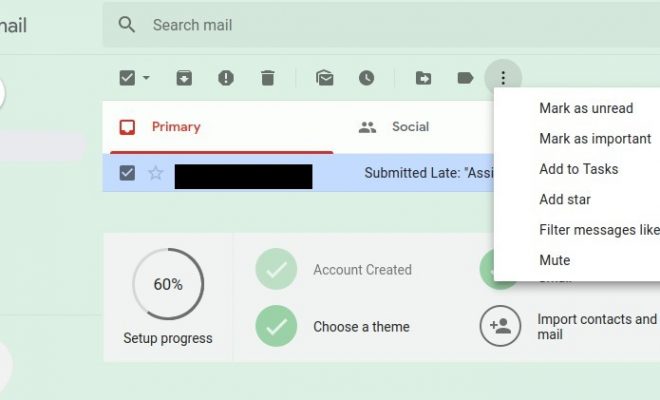
Don’t completely turn off Classroom notifications. Instead, tweak them to suit your needs. If email notifications are getting out of hand, create rules within GMail to help filter notifications and keep them organized. There are two main ways to create filters in GMail. The first method is to access “Filters and Blocked Addresses” in the Settings menu and choose “Create a New Filter” to access the filtering options. Another way is to choose an email that’s already been received from Classroom by clicking the checkbox to the left of the email. Click the More menu (three dots) above the email, and select “Filter Messages Like These.”

Filtering Method 1 – Filtering Options


Filtering Method 2 – Filter Directly From Message


Monitor Student Comments

Student comments are a great way for students to communicate and help one another with assignments; however, this feature can quickly become an issue if the teacher doesn’t monitor what students are posting. If a student posts inappropriate comments, all students in the classroom will see the post. Student comments can also be turned off completely if the assignment doesn’t rely on student discussion.

 Always have a Plan B

Imagine you’ve created the perfect lesson in Google Classroom. You’ve differentiated instruction, included formative assessment, created interactive activities, and even added in a few questions to increase discourse among students. Now imagine the school’s Wi-Fi stops working. Do you have a Plan B? Losing valuable instructional time should not happen because the lesson was planned around technology. Instead, plan the lesson first and then decide which technology tools would enhance the lesson or increase student understanding of content.




Previous Article

Why Edtech Companies Need to Win Over ...

Next Article

10 Benefits of Google Classroom Integration

Matthew Lynch

Related articles More from author

  • Early Childhood & K-12 EdTechEdTech Policy & Reform

    Bring or buy: would you let your child take their tablet to school?

    November 5, 2016
    By Matthew Lynch
  • Early Childhood & K-12 EdTechEdTech Futures

    Buses with Broadband: The Key to Expanding Internet Access

    October 29, 2016
    By Matthew Lynch
  • Early Childhood & K-12 EdTechHigher EducationThe Hechinger Report

    Do classroom clickers improve learning? It depends.

    June 8, 2017
    By Matthew Lynch
  • EdTech NewsHigher Education EdTech

    Explainer: what it will take to make computer science education available in all schools

    September 13, 2016
    By Matthew Lynch
  • Higher Education

    College Waitlists: Everything You Need to Know

    September 30, 2022
    By Matthew Lynch
  • Best of the Best ListsEarly Childhood & K-12 EdTech

    39 of the Best Apps for Kids in the Second Grade

    February 2, 2018
    By Matthew Lynch

Search

Login & Registration

  • Log in
  • Entries feed
  • Comments feed
  • WordPress.org

Newsletter

Signup for The Tech Edvocate Newsletter and have the latest in EdTech news and opinion delivered to your email address!

About Us

Since technology is not going anywhere and does more good than harm, adapting is the best course of action. That is where The Tech Edvocate comes in. We plan to cover the PreK-12 and Higher Education EdTech sectors and provide our readers with the latest news and opinion on the subject. From time to time, I will invite other voices to weigh in on important issues in EdTech. We hope to provide a well-rounded, multi-faceted look at the past, present, the future of EdTech in the US and internationally.

We started this journey back in June 2016, and we plan to continue it for many more years to come. I hope that you will join us in this discussion of the past, present and future of EdTech and lend your own insight to the issues that are discussed.

Newsletter

Signup for The Tech Edvocate Newsletter and have the latest in EdTech news and opinion delivered to your email address!

Contact Us

The Tech Edvocate
910 Goddin Street
Richmond, VA 23231
(601) 630-5238
[email protected]

Copyright © 2026 Matthew Lynch. All rights reserved.