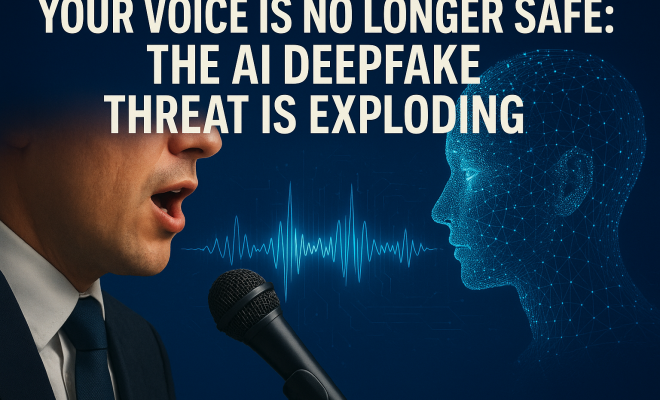
Your Voice Is No Longer Safe: The AI Deepfake Threat Is Exploding
“`html
We’ve all heard the phrase, “seeing is believing.” For generations, it’s been a bedrock of trust, a fundamental way we verify reality. But what happens when what you see, or even more chillingly, what you hear, is a meticulously crafted lie? We’re not talking about simple photo manipulation anymore; we’re talking about something far more insidious. The digital landscape is undergoing a dramatic, unsettling transformation, driven by the relentless march of generative AI. And frankly, it’s a game-changer for cybersecurity, one that demands a complete re-evaluation of how we approach digital trust. This isn’t just a niche concern for tech geeks; it’s a looming threat to every individual and organization, fundamentally challenging our ability to distinguish fact from fiction in an increasingly AI-saturated world.
The rise of AI deepfakes cybersecurity isn’t just a theoretical future problem; it’s here, it’s potent, and it’s already being weaponized by cybercriminals. These aren’t crude, easily detectable fakes. Generative AI allows bad actors to create content — images, videos, and especially audio — that is so convincing, so nuanced, it can bypass traditional technical filters with alarming ease. Think about that for a moment: the very tools designed to protect us are struggling against an adversary that can mimic the most trusted voices in our lives. This isn’t just about data breaches; it’s about the erosion of trust, the manipulation of human emotion, and the weaponization of our most fundamental social instincts.
The Unsettling Truth About Deepfake Proliferation
The numbers speak for themselves, and they are frankly alarming. While deepfake videos often grab headlines for their sensational nature, it’s the audio deepfakes, often used in what’s known as ‘vishing’ (voice phishing), that are seeing truly exponential growth. We’re talking about a staggering 1,633% surge in deepfake-enabled vishing quarter-over-quarter in late 2024 into early 2025. Let that sink in. This isn’t incremental growth; it’s an explosion. This specific type of attack, where AI clones someone’s voice to make a fraudulent phone call, has become a go-to tactic for cybercriminals because it exploits a profound human vulnerability: our innate trust in familiar voices.
Imagine receiving a call from your CEO, your parent, or even your child, their voice sounding perfectly normal, conveying a sense of urgency or distress. The request might be for an immediate wire transfer, sensitive personal information, or even access to a secure system. In that moment of perceived crisis, how likely are you to pause and question the authenticity of the voice you’ve known your entire life? This is the core of the deepfake threat: it bypasses our rational filters and goes straight for our emotional core. It’s a direct assault on the trust networks that underpin both our personal relationships and our professional operations. And unfortunately, studies show that human detection accuracy for these AI-cloned voices is barely above chance – a truly sobering thought when the stakes are so high.
Why Traditional Cybersecurity Defenses Are Failing Against AI Deepfakes
For years, cybersecurity strategies have focused heavily on technical controls: firewalls, intrusion detection systems, email filters, anti-malware solutions. These tools are fantastic at catching known threats, identifying suspicious file attachments, or blocking malicious IP addresses. They operate on patterns, signatures, and anomaly detection. But AI deepfakes cybersecurity presents a fundamentally different challenge. These aren’t malicious executables; they are seemingly legitimate communications, crafted to perfection by advanced algorithms. The very thing that makes them dangerous is their ability to appear utterly normal.
Consider a phishing email. Traditional filters might flag it for a suspicious sender address, a strange link, or unusual phrasing. But what if the email comes from an address that looks perfectly legitimate, the language is impeccable, and it refers to details only someone within your organization would know? And what if the accompanying video or audio message features your CEO, speaking naturally, addressing you by name, and asking you to perform an urgent task? Suddenly, the technical filters are often powerless. They are designed to detect malicious code or suspicious digital artifacts, not to discern the authenticity of human-like communication. This paradigm shift means our defenses need to evolve beyond purely technical solutions to incorporate a much stronger human element.
The Psychology of Deception: Exploiting Human Trust and Emotion
At its heart, the effectiveness of AI deepfakes cybersecurity lies in its masterful exploitation of human psychology. We are wired to trust. We are wired to respond to authority figures, to help those in distress, and to react quickly to urgent requests, especially when they come from someone we know and respect. Cybercriminals understand this intimately. They aren’t just sending out random phishing attempts; they are performing highly targeted social engineering attacks, often preceded by extensive reconnaissance. They gather information about their targets from public profiles, social media, and even previous data breaches, building a profile of who to impersonate and what kind of request will be most effective.
The emotional manipulation is key. A deepfake voice of a CEO expressing extreme urgency or even anger about a missed deadline can pressure an employee into making a snap decision. A deepfake of a loved one in a fabricated emergency can bypass all rational thought, leading someone to transfer funds without question. This isn’t just about financial loss; it’s about the psychological toll. The betrayal of trust, the feeling of foolishness, the emotional distress that follows being duped by such a sophisticated scam can be profound. It highlights the urgent need for a ‘verify-first’ mindset, not just as a policy, but as a deeply ingrained cultural practice.
Building a ‘Verify-First’ Culture: The Human Firewall
Given the limitations of technical defenses against such sophisticated social engineering, the most robust line of defense against AI deepfakes cybersecurity becomes the human element. This isn’t about blaming the victim; it’s about empowering individuals with the tools and mindset to resist manipulation. Establishing a “verify-first” culture within organizations and even within personal circles is no longer optional; it’s essential. This means consciously developing habits of skepticism and verification, particularly when faced with urgent or unusual requests, even if they seem to come from a trusted source.
One of the most effective strategies is to implement a system of pre-shared code words or phrases. Imagine you and your colleagues agree on a specific, non-obvious word or phrase that must be included in any urgent, out-of-band communication, especially those involving financial transactions or sensitive data. If a deepfake call or email comes in asking for a wire transfer, and that code word isn’t present, it’s an immediate red flag. This simple, low-tech solution leverages human intelligence and memory to combat advanced AI. It creates a ‘secret handshake’ that only genuine individuals would know, effectively nullifying the deepfake’s ability to perfectly mimic identity. (See: BBC on AI deepfake technology.)
Leveraging Secondary Communication Channels for Verification
Another critical component of the ‘verify-first’ culture is the use of secondary communication channels. If you receive an urgent email from your CEO asking for something unusual, don’t reply to that email. Instead, pick up the phone and call them on a known, verified number (not a number provided in the suspicious email). If you receive a voice message that sounds like a family member in distress, don’t call back the number they called from. Instead, call them on their usual cell phone number or through a video call to visually confirm their identity.
The key here is to break the chain of communication initiated by the potential attacker. By switching channels, you force the attacker to re-engage on a platform they might not control, or where their deepfake capabilities are less effective. For example, a voice deepfake might be convincing on a phone call, but it’s much harder to generate a real-time, convincing video deepfake for a spontaneous video call. This multi-channel verification strategy adds layers of friction for the attacker, significantly increasing their chances of detection and reducing the likelihood of a successful scam. It’s about making it harder for the bad actors, and easier for you to trust your gut when something feels off. For more context, see urgent steps if your data was exposed.
The Broader Implications for Identity Theft and Fraud
The implications of AI deepfakes cybersecurity extend far beyond corporate espionage or simple financial fraud. We’re looking at a future where personal identity theft becomes frighteningly sophisticated. Imagine a deepfake of you applying for a loan, opening a new bank account, or even casting a vote. The ability to convincingly mimic someone’s voice, face, and mannerisms opens up a Pandora’s box of potential abuses. This isn’t just about someone stealing your credit card number; it’s about someone stealing your very identity, your digital persona, and using it for malicious purposes.
The monetization opportunities for criminals in this space are vast, touching high-CPC (cost-per-click) niches like identity theft protection, advanced cybersecurity training focused specifically on social engineering, and security awareness platforms. This tells us that the market recognizes the severity of the threat and the demand for solutions. Individuals and organizations will increasingly seek out robust identity protection services that go beyond credit monitoring, looking for tools that can detect deepfake usage or provide secure verification methods for critical transactions. The focus will shift from just protecting data to protecting the authenticity of human interaction itself.
Training and Awareness: Empowering the Human Element
Ultimately, the most powerful tool in the fight against AI deepfakes cybersecurity is human education and awareness. We can’t simply build more sophisticated technical filters and expect them to handle this evolving threat. We need to train ourselves, our employees, and our families to be vigilant, skeptical, and proactive. This means regular, engaging security awareness training that specifically addresses deepfake tactics, provides concrete examples, and outlines clear verification protocols. It’s not enough to tell people to “be careful”; we need to provide actionable steps and make them second nature.
Think about simulated phishing campaigns that incorporate deepfake elements – perhaps a voice message from a ‘CEO’ asking for an urgent action. These exercises can help individuals practice their verification protocols in a safe environment, reinforcing the importance of code words and secondary channels. The goal is to move beyond passive awareness to active engagement, transforming every individual into an active participant in the organization’s or family’s cybersecurity posture. This continuous learning and adaptation are crucial because the threat landscape is not static; it’s constantly evolving, and so must our defenses.
The Future of Trust in a Deepfake World
So, where does this leave us? In a world increasingly populated by AI-generated content, the very concept of “trust” is undergoing a seismic shift. The old adage of “trust, but verify” has never been more relevant, but it needs a modern update: “verify first, trust later.” We can no longer afford the luxury of implicit trust, especially in digital interactions involving sensitive information or urgent requests. The emotional manipulation inherent in deepfake technology makes it incredibly powerful, directly impacting personal and professional trust at a fundamental level.
The battle against AI deepfakes cybersecurity won’t be won solely by new algorithms or advanced detection tools, though those will certainly play a role. It will be won by a collective shift in human behavior, by fostering a culture of healthy skepticism, and by implementing simple, yet effective, verification habits. As generative AI continues its relentless march, making fakes even more indistinguishable from reality, our human intuition and our commitment to rigorous verification will be our most potent weapons. It’s a challenging new reality, but by understanding the threat and adapting our behaviors, we can still navigate this era of sophisticated deception and protect what truly matters: our trust, our identities, and our sense of security.
Emerging Technical Defenses Against AI Deepfakes
While human vigilance is paramount, it doesn’t mean technical solutions are irrelevant. The cybersecurity industry is rapidly innovating to create new tools specifically designed to combat AI deepfakes cybersecurity. These aren’t your grandpa’s firewalls; they’re leveraging advanced AI themselves to fight fire with fire.
One promising area is the development of deepfake detection algorithms. These algorithms analyze various characteristics of digital media – from subtle inconsistencies in facial expressions or eye blinks in video, to unnatural speech patterns, background noise anomalies, or even the spectral characteristics of synthesized voices in audio. They look for the digital “fingerprints” left by generative AI models, which, for all their sophistication, often still leave traces that differ from organically captured media. Think of it like a digital forensics team looking for microscopic clues that a human might miss.
Another approach involves digital watermarking and provenance tracking. Imagine a system where every piece of media created or captured by a trusted source (like a news agency or a government body) is invisibly watermarked with cryptographic signatures. This watermark would attest to the media’s origin and integrity. If a piece of media has been altered or is a deepfake, the watermark would either be missing, corrupted, or indicate a different origin. This creates a chain of custody for digital content, making it harder for fakes to masquerade as authentic. While still in early stages for widespread adoption, these technologies offer a potential future where the authenticity of digital information can be verified at its source. (See: New York Times article on deepfakes.)
Then there are real-time authentication systems. These might integrate into communication platforms, using biometric analysis or challenge-response mechanisms that are difficult for AI to fake in real-time. For example, during a video call, a system might prompt the speaker to perform a specific, random action (like touching their nose or saying a unique, spontaneous phrase) to confirm they are a live human, not a deepfake avatar. These dynamic challenges add a layer of verification that static deepfakes struggle to overcome.
The Regulatory Landscape and Ethical Considerations
The rapid evolution of AI deepfakes cybersecurity isn’t just a technical challenge; it’s also creating a complex regulatory and ethical minefield. Governments and international bodies are grappling with how to legislate against the misuse of deepfake technology without stifling innovation. What constitutes a “harmful” deepfake? How do we balance free speech with the need to combat misinformation and fraud? These are not easy questions to answer. For more context, see how the Georgia Power breach exposes your data.
Some jurisdictions are starting to implement laws requiring disclosure when AI-generated content is used, particularly in political advertising or news. The idea is to ensure transparency so audiences know when they’re consuming synthetic media. However, enforcing such laws is notoriously difficult, especially with content originating from anonymous sources or hostile foreign actors.
Ethical considerations extend to the developers of AI technology themselves. There’s a growing debate about the responsibility of AI creators to implement safeguards against malicious use. Should generative AI models have built-in “kill switches” or ethical guardrails that prevent them from creating harmful deepfakes? This moves beyond simple cybersecurity to the broader societal impact of powerful, easily accessible AI tools. The “dual-use” nature of AI – its potential for both immense good and profound harm – means that ethical design and responsible deployment are becoming as critical as technical prowess.
Impact on Different Sectors: Beyond Finance
While financial fraud and identity theft are prominent concerns for AI deepfakes cybersecurity, the threat extends to nearly every sector. Consider the impact on:
- Politics and Democracy: Deepfakes can be used to spread disinformation, create fake scandals, or impersonate political figures to sway public opinion during elections. Imagine a deepfake video of a candidate making a highly controversial statement they never uttered, released just days before an election.
- Journalism and Media: The proliferation of deepfakes makes it incredibly difficult for news organizations to verify sources and ensure the authenticity of visual and audio evidence. This can erode public trust in legitimate news outlets, making it harder to discern truth from propaganda.
- Law Enforcement and Justice: Deepfake evidence could be introduced in court cases, fabricating confessions or alibis. This poses immense challenges for forensic analysis and could undermine the judicial process. Police investigations could also be hampered by deepfake-generated false leads.
- National Security: State-sponsored actors could use deepfakes for psychological warfare, creating fake distress calls, spreading panic, or sowing discord within an adversary’s population. It’s a powerful tool for destabilization.
- Personal Reputation and Harassment: Individuals can become targets of deepfake pornography or defamatory content, leading to severe emotional distress, reputational damage, and even professional ruin. The personal cost can be devastating.
Each sector faces unique vulnerabilities and requires tailored strategies for defense, emphasizing that AI deepfakes cybersecurity isn’t a monolithic problem but a multifaceted challenge demanding comprehensive responses.
The Role of International Cooperation
Fighting AI deepfakes cybersecurity is not something any single nation or organization can do alone. The internet is borderless, and deepfake threats can originate from anywhere in the world, targeting victims globally. This necessitates a strong emphasis on international cooperation.
Sharing intelligence about deepfake tactics, identifying threat actors, and coordinating law enforcement efforts across borders are crucial. International forums, cybersecurity alliances, and intelligence agencies need to collaborate closely to track the evolution of deepfake technology, develop common standards for detection, and prosecute offenders. Without a unified global front, cybercriminals and hostile state actors will continue to exploit jurisdictional differences to their advantage, making it incredibly difficult to bring them to justice.
Frequently Asked Questions About AI Deepfakes Cybersecurity
Q: What exactly is a deepfake?
A: A deepfake is synthetic media (usually video or audio) that has been manipulated or generated using artificial intelligence, specifically deep learning techniques, to replace one person’s likeness or voice with another’s. The goal is to make it appear as though the person in the deepfake actually said or did something they never did. (See: NIST research on deepfakes.)
Q: Are all deepfakes malicious?
A: Not inherently. Deepfake technology has legitimate applications in entertainment (like de-aging actors), education, and creative arts. However, its powerful ability to create convincing fakes makes it highly susceptible to malicious use in cybersecurity, fraud, and misinformation campaigns.
Q: How can I tell if something is a deepfake?
A: It’s getting increasingly difficult for humans to detect deepfakes, especially for audio. For videos, look for subtle inconsistencies: unnatural blinking patterns, strange facial distortions, mismatched lighting, blurry edges around the face, or unusual voice pitch/tone shifts. For audio, listen for a lack of natural pauses, robotic intonations, or unusual background noise. When in doubt, verify the information through a secondary, trusted source or communication channel.
Q: What are the primary types of deepfake attacks in cybersecurity?
A: The most prevalent types are ‘vishing’ (voice phishing) using deepfake audio to impersonate a trusted individual for financial fraud or data exfiltration, and ‘CEO fraud’ where a deepfake video or audio of a CEO instructs an employee to make an urgent, unauthorized transaction. Deepfake images can also be used in highly targeted spear-phishing campaigns.
Q: Can deepfake detection software reliably identify all deepfakes?
A: Deepfake detection software is constantly improving, but it’s an ongoing arms race. As detection methods get better, so do the deepfake generation techniques. No software can reliably catch 100% of deepfakes, which is why human vigilance and verification protocols remain essential.
Q: What’s the best defense against deepfake scams for individuals?
A: The best defense is a “verify-first” mindset. If you receive an urgent or unusual request from someone you know, especially if it involves money or sensitive information, contact that person directly through a separate, known communication channel (e.g., call them on their known phone number, don’t reply to the email or call the number provided in the suspicious message). Implement personal code words with family members for emergencies.
Q: How can organizations protect themselves from AI deepfakes cybersecurity threats?
A: Organizations should implement robust security awareness training focusing on deepfakes and social engineering, establish clear verification protocols for financial transactions and sensitive data requests (like pre-shared code words or multi-channel verification), and consider deploying advanced deepfake detection technologies as part of their cybersecurity stack. Strong internal communication policies are also key.
Q: Will deepfakes make all digital evidence unreliable?
A: Not entirely, but they certainly complicate the matter. The rise of deepfakes means that the authenticity of digital evidence will increasingly be scrutinized. This emphasizes the need for robust digital forensics, provenance tracking, and legal frameworks that can differentiate genuine from fabricated content.
“`
Trending Now
Frequently Asked Questions
What are AI deepfakes and how do they work?
AI deepfakes use generative AI technology to create realistic audio, images, and videos that mimic real people. This involves training algorithms on vast amounts of data to replicate voices and appearances, making it increasingly difficult to distinguish between genuine and manipulated content.
How are deepfakes being used in cybercrime?
Cybercriminals are leveraging deepfake technology to execute sophisticated scams, such as vishing (voice phishing), where they impersonate trusted voices to deceive individuals and organizations into revealing sensitive information or transferring funds.
Why are audio deepfakes considered more dangerous than video deepfakes?
Audio deepfakes pose a significant threat because they can exploit the trust people place in familiar voices. With a staggering increase in vishing attacks, the ability to convincingly replicate voices can lead to serious financial and security breaches without relying on video evidence.
What impact do deepfakes have on digital trust?
Deepfakes undermine digital trust by blurring the lines between reality and fabrication. As these manipulated media become more convincing, individuals and organizations may struggle to verify authenticity, leading to increased skepticism and vulnerability to scams.
How can individuals protect themselves from deepfake threats?
To protect against deepfake threats, individuals should stay informed about the technology, verify communications through multiple channels, and be cautious when sharing sensitive information. Employing advanced security measures and awareness training can also help mitigate risks.
What did we miss? Let us know in the comments and join the conversation.