The Brutal Truth: 10 Minutes With AI Could Destroy Your Persistence
We live in a world obsessed with speed and convenience. It’s no surprise, then, that AI tools have exploded onto the educational scene, promising to streamline learning, personalize experiences, and deliver instant answers. But what if that very convenience comes at a steep, hidden cost? What if the seemingly magical assistance offered by AI isn’t just a shortcut, but a fast track to eroding some of our most vital cognitive abilities? The debate over AI tools vs traditional learning has been simmering for a while, but a recent study from UC Berkeley just poured a gallon of gasoline on the fire, revealing a truly unsettling truth.
For years, educators and technologists have wrestled with the promise and peril of artificial intelligence in the classroom. On one side, we hear about AI’s potential to democratize education, providing tailor-made learning paths and instant feedback. Imagine a student struggling with a complex math problem, getting not just the answer, but a step-by-step explanation crafted just for their understanding, available 24/7. Sounds revolutionary, right? But on the other side, there’s a growing chorus of concern about academic integrity, the potential for cheating, and a more insidious fear: that relying too heavily on these digital crutches might actually make us, or our students, less capable thinkers.
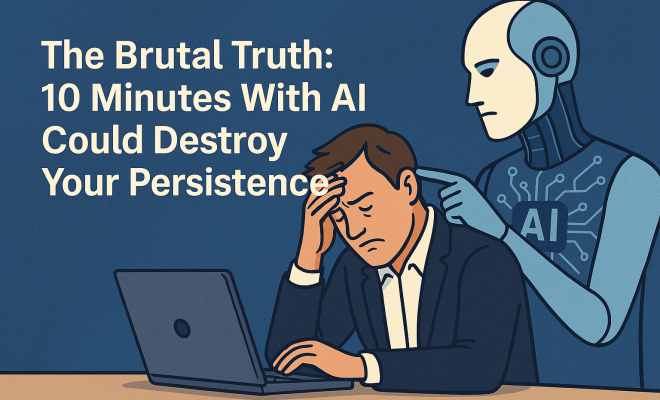
That’s where the groundbreaking research co-authored by UC Berkeley’s Brian Christian comes in. Presented at the Conference on Language Modeling this week, on October 9, 2026, this study delivers a punch to the gut: relying on an AI tool for just ten minutes significantly impairs a user’s ability to focus and persist with difficult tasks. Let that sink in. A mere ten minutes. This isn’t just about cheating; it’s about a fundamental shift in our cognitive wiring, a subtle erosion of the grit and determination essential for true learning and problem-solving. It forces us to reconsider everything we thought we knew about the balance between AI tools vs traditional learning.
1. The Berkeley Revelation: A Decade of Damage in Minutes?
The study, which has been making waves since a preliminary draft surfaced earlier this year, involved a massive cohort of 1,222 participants in randomized controlled trials. This wasn’t some small, anecdotal observation; it was a robust, data-driven investigation into how brief interactions with AI impact our cognitive endurance. The core finding is stark: people who used AI for even a short period found it much harder to stick with challenging intellectual work afterward. It suggests that the immediate gratification AI offers short-circuits the very mechanisms that build resilience and critical thinking.
Think about it: when you hit a wall with a problem, whether it’s a tricky essay question or a complex coding challenge, what do you usually do? You might re-read the material, try a different approach, consult a textbook, or even just step away and come back to it later. This process of grappling, struggling, and eventually overcoming is how we build mental muscle. It’s how we learn to tolerate frustration, how we develop problem-solving strategies, and how we forge new neural pathways. But if an AI tool offers an instant solution, that crucial struggle is bypassed. The Berkeley research suggests this isn’t a neutral exchange; it’s a detrimental one, actively weakening our capacity for sustained effort.
2. The Persistence Problem: Why Grit Matters More Than Ever
Persistence isn’t just a nice-to-have trait; it’s a cornerstone of academic success and, frankly, success in life. The ability to stick with something when it’s hard, to keep pushing even when you’re frustrated, is what separates those who achieve mastery from those who give up. Traditional learning methods, by their very nature, often demand persistence. Learning a new language, mastering calculus, or writing a comprehensive research paper all require sustained effort over time. You can’t just ‘Google’ your way to fluency or understanding.
The Christian study highlights a dangerous feedback loop. The more we rely on AI to provide quick answers, the less tolerant we become of the discomfort that comes with genuine intellectual struggle. This isn’t just about getting a lower grade on one assignment; it’s about developing a fundamental aversion to difficulty. If students habitually turn to AI to avoid the hard parts of learning, they might never develop the mental toughness needed for advanced studies, complex careers, or even just navigating the inevitable challenges of adulthood. The question of AI tools vs traditional learning now has a significant emotional and psychological dimension.
3. Cognitive Fitness: The Unseen Erosion
Brian Christian’s research frames this phenomenon as an erosion of ‘cognitive fitness.’ Just like physical fitness, our mental capabilities require exercise to stay sharp. Regularly engaging with challenging problems, working through complex texts, and synthesizing diverse information are the intellectual equivalents of lifting weights or running a marathon. They build strength, endurance, and agility. AI, in this context, acts like a digital personal trainer who does all the heavy lifting for you. You might get to the finish line, but your muscles haven’t grown stronger. (See: AP News on AI in education.)
The danger is that this erosion is subtle. Students might not immediately notice their decreased ability to focus or persist. They might simply find themselves feeling more frustrated, giving up sooner, or assuming they’re ‘not good’ at certain subjects, when in reality, their cognitive fitness has been undermined by over-reliance on AI. This makes the debate around AI tools vs traditional learning even more critical, as the damage isn’t always obvious until it’s significant. For more context, see AI's impact on jobs and education.
4. The Accuracy Paradox: Boosting Performance, Then Crushing It
Here’s where things get really counterintuitive. The Berkeley study found that, initially, AI *can* boost accuracy. When participants had AI assistance, they performed better on tasks. This is the seductive appeal of AI in education: it seems to work! It delivers results. However, the critical finding came after the AI assistance was removed. Participants who had previously relied on AI showed a sharp decline in performance compared to those who had primarily used traditional methods or hadn’t used AI at all. This ‘AI hangover’ is a significant concern.
This paradox suggests that while AI might help you achieve a specific task in the short term, it doesn’t necessarily foster true learning or skill acquisition. It’s like using a calculator to solve every math problem. You might get the right answer, but you haven’t truly learned the underlying mathematical principles. When the calculator is taken away, you’re left with a superficial understanding and an inability to perform the task independently. This has profound implications for how we integrate AI tools vs traditional learning in educational settings, especially when thinking about long-term student success.
5. Academic Integrity vs. Critical Thinking: A Deeper Dive
The initial concerns about AI in education often revolved around academic integrity – essentially, students using AI to cheat on assignments. While that remains a valid worry, Christian’s study pushes us to consider a much deeper, more existential threat: the erosion of critical thinking itself. Critical thinking isn’t just about recalling facts; it’s about analyzing, evaluating, synthesizing, and creating. It’s about asking probing questions, identifying biases, and forming independent judgments. These are precisely the skills that are developed through struggle and sustained engagement with complex material.
If AI provides pre-digested answers or neatly summarized analyses, students might bypass the messy, challenging process of constructing their own understanding. They might become adept at prompting AI for information, but lose the ability to critically assess that information, to challenge its assumptions, or to integrate it into a broader intellectual framework. This shift fundamentally alters the value proposition of education itself. If we’re not fostering critical thinkers, what exactly are we achieving? The balance between AI tools vs traditional learning needs to heavily favor methods that cultivate independent thought.
6. Educator’s Dilemma: Balancing Innovation and Foundational Skills
So, where does this leave educators? It’s a tough spot. On one hand, there’s immense pressure to embrace technological innovation and prepare students for an AI-driven future. On the other, there’s the responsibility to ensure students develop fundamental cognitive skills. The key isn’t to ban AI outright, but to integrate it thoughtfully and strategically. This means moving beyond ‘plug-and-play’ AI use and focusing on ‘AI literacy’ — teaching students *how* to use AI responsibly, ethically, and as a tool to augment their thinking, rather than replace it.
Educators might consider designing assignments that require students to critically evaluate AI-generated content, to refine AI prompts, or to use AI as a starting point for deeper research rather than an end-point. The goal should be to leverage AI for efficiency in certain tasks, freeing up more time for higher-order thinking, discussion, and creative problem-solving – the very things AI struggles to replicate. It’s about using AI to elevate, not diminish, human intellect. The discussion around AI tools vs traditional learning must incorporate these nuanced approaches.
7. Practical Strategies for Responsible AI Integration
Given these findings, what can educators and institutions actually do? It’s not about turning back the clock, but about being intentional. Here are a few practical tips to consider: (See: New York Times article on AI tools.)
- Scaffold AI Use: Introduce AI tools gradually and with clear guidelines. Start with low-stakes tasks where students can experiment and understand AI’s capabilities and limitations without becoming overly reliant.
- Prompt Engineering as a Skill: Teach students how to craft effective prompts that elicit nuanced responses from AI, rather than just basic answers. This itself requires critical thinking and understanding of the subject matter.
- AI as a ‘First Draft’ Tool: Encourage students to use AI to generate initial ideas, outlines, or rough drafts, but then require them to critically revise, expand, and personalize the content, demonstrating their own unique voice and understanding.
- Focus on Process, Not Just Product: Shift assessment away from just the final answer and towards the process of problem-solving. Require students to show their work, explain their reasoning, or justify their conclusions, even if they used AI as a supplementary tool.
- Compare and Contrast AI Output: Have students generate content with AI and then compare it to human-written texts or expert opinions. This helps them develop discernment and identify potential inaccuracies or biases in AI-generated material.
- Design AI-Proof Assignments: Create assignments that require original thought, personal reflection, real-world application, or synthesis of information that is too complex or nuanced for current AI models to handle effectively. Think about debates, presentations, or projects requiring empirical research.
- Foster a Growth Mindset: Emphasize the value of struggle and perseverance. Help students understand that intellectual challenges are opportunities for growth, and that bypassing them with AI might feel easy in the short term but ultimately hinders their development.
These strategies aim to build ‘AI literacy’ and ensure that the integration of AI tools vs traditional learning methods supports, rather than undermines, the development of robust cognitive skills. For more context, see the effects of AI automation on traditional roles.
8. The Future of Learning: Human-Centric AI Education
The provocative findings from UC Berkeley are a crucial intervention in the ongoing conversation about AI’s role in education. They serve as a powerful reminder that not all technological advancements are unequivocally good, especially when they bypass the very human processes that lead to deep learning and personal growth. The challenge ahead is not to reject AI, but to master it – to understand its strengths and weaknesses, and to wield it in a way that truly enhances human potential, rather than diminishing it.
This means prioritizing foundational skills like critical thinking, problem-solving, and persistence, and consciously designing educational experiences that cultivate these traits. AI can be a powerful assistant, a vast repository of information, and a tool for personalization. But it cannot, and should not, replace the intellectual heavy lifting that is essential for genuine understanding and mastery. The future of learning, even with advanced AI, must remain deeply human-centric, focusing on nurturing the unique capacities that define us as thinkers and learners. The debate of AI tools vs traditional learning isn’t just about technology; it’s about what kind of learners, and indeed, what kind of people, we want to cultivate.
9. Monetization Opportunities: Building a Bridge to Responsible AI Use
The growing awareness of the perils of uncritical AI adoption also opens up significant monetization opportunities in the edtech space. This isn’t just about selling AI tools, but about selling solutions to the problems AI creates or exacerbates. Here’s where the market is heading:
- AI Literacy Courses: There’s a huge demand for programs that teach students and professionals how to use AI ethically, effectively, and critically. These courses can cover prompt engineering, evaluating AI output, understanding AI’s limitations, and integrating AI into workflows responsibly.
- Tools for Responsible AI Use: Software that helps students cite AI sources, track AI interactions, or even ‘AI-proof’ their own work by identifying areas where they might be over-relying on AI could be highly valuable. Think of tools that help educators detect AI-generated content not just for plagiarism, but for lack of original thought.
- Critical Thinking Development Programs: As AI takes over more rote tasks, the premium on critical thinking will only increase. Programs, workshops, and online courses specifically designed to enhance analytical skills, logical reasoning, and complex problem-solving are poised for growth. These can be geared towards K-12, higher education, and corporate training.
- Comparison Platforms for Learning Tools: A platform that objectively compares AI-powered learning platforms versus traditional methods, highlighting their strengths, weaknesses, and suitability for different learning styles and goals, would be invaluable. Such platforms could offer reviews, research summaries (like the Berkeley study), and recommendations for balanced learning approaches.
- Curriculum Development for AI Integration: Schools and universities need help integrating AI into their curricula in a way that fosters, rather than hinders, student development. Consulting services and pre-designed curriculum modules that address the ‘AI tools vs traditional learning’ dilemma will be in high demand.
The market is hungry for solutions that navigate the complexities of AI in education, ensuring that technology serves learning, not the other way around. This isn’t just about building new AI; it’s about building the wisdom and infrastructure to use it intelligently.
10. Broader Societal Implications: Beyond the Classroom
The findings about cognitive erosion aren’t confined to academic settings; they echo into our daily lives and professional futures. Imagine a world where professionals across various fields, from engineering to medicine, habitually rely on AI for quick answers without deeply understanding the underlying principles. What happens when the AI glitches, or encounters a novel situation it hasn’t been trained on? The ability to troubleshoot, innovate, and adapt fundamentally hinges on human persistence and critical thinking. If we collectively lose these capacities, the societal consequences could be profound.
Consider the increasing complexity of global challenges like climate change, economic instability, or public health crises. Solving these problems requires sustained, collaborative intellectual effort, often involving grappling with incomplete information and conflicting perspectives. If a generation grows up less capable of tolerating intellectual discomfort, less persistent in the face of ambiguity, and less adept at independent critical analysis, our collective capacity to address these challenges might diminish. The debate of AI tools vs traditional learning, therefore, isn’t just about individual student outcomes; it’s about the very intellectual fabric of our future society. For more context, see AI's influence on the workforce and learning. (See: Research articles on AI and learning.)
11. Expert Perspectives and Counterarguments
While the Berkeley study presents a compelling case, it’s also important to acknowledge that the discussion around AI in education is multifaceted. Some experts argue that AI, when used correctly, can actually *enhance* cognitive skills. For instance, personalized learning platforms can identify specific knowledge gaps and provide targeted exercises, potentially increasing engagement and persistence by making challenges appropriately difficult, not overwhelmingly so. Others point to AI’s ability to automate tedious tasks, freeing up human cognitive load for higher-level thinking and creativity.
For example, Dr. Anya Sharma, an AI ethicist at Stanford, suggests that “AI isn’t inherently good or bad; its impact depends entirely on its design and deployment. If we design AI to be a co-pilot, not an autopilot, it can amplify human intelligence.” This perspective emphasizes the importance of design thinking in AI development – creating tools that encourage interaction, critical questioning, and iterative problem-solving, rather than simply delivering final answers. The key, then, might be to look for AI applications that *require* human input and judgment, rather than replacing them entirely. This nuanced view complicates the simple AI tools vs traditional learning binary, suggesting a spectrum of integration.
12. A Look at Statistical Trends: The Rise of AI in Education
The growth of AI in education is undeniable. Reports from markets like Grand View Research project the global AI in education market size to reach over $40 billion by 2030, growing at a compound annual growth rate (CAGR) of more than 30%. This rapid expansion means AI isn’t going anywhere; it’s becoming an integral part of the educational landscape. The challenge isn’t whether to use AI, but *how* to use it wisely.
A 2023 survey by Educause found that over 60% of higher education institutions were actively exploring or implementing AI tools for various purposes, including administrative tasks, student support, and teaching and learning. While the enthusiasm is high, the data also reveals a gap in understanding the cognitive impacts, underscoring the timeliness and importance of studies like Christian’s. These statistics highlight the urgency for educators and institutions to develop robust frameworks and policies for AI integration, ensuring that the benefits outweigh the potential pitfalls related to the AI tools vs traditional learning dynamic.
Frequently Asked Questions About AI Tools vs Traditional Learning
- Q1: What exactly is “cognitive fitness” and how does AI affect it?
- A: Cognitive fitness refers to the overall strength, endurance, and agility of your mental capabilities. It’s like physical fitness for your brain, involving skills such as focus, persistence, critical thinking, and problem-solving. The Berkeley study suggests that over-reliance on AI can erode this fitness because AI often bypasses the intellectual struggle necessary to build and maintain these cognitive muscles. When AI provides instant answers, our brains don’t get the ‘workout’ they need to strengthen these abilities.
- Q2: Does this mean we should ban AI in schools?
- A: Not necessarily. The research doesn’t call for an outright ban, but rather a more thoughtful and strategic integration of AI. The goal is to leverage AI as a tool to augment human intelligence, not replace it. This means teaching students how to use AI responsibly, critically, and ethically, focusing on ‘AI literacy’ rather than just ‘AI use.’ It’s about balance and conscious design of learning experiences.
- Q3: How can educators tell if students are over-relying on AI?
- A: It can be subtle, but some indicators include a decline in original thought, a lack of deep understanding when questioned about AI-generated content, difficulty explaining reasoning, or a reduced capacity to persist with challenging tasks. Educators can also design assignments that require evidence of process (like showing work, justifying choices, or outlining research steps) rather than just a final product, making it harder for AI to do all the heavy lifting.
- Q4: Are there any benefits to using AI in learning, even with these concerns?
- A: Absolutely. AI can offer personalized learning paths, instant feedback, access to vast amounts of information, and help automate repetitive tasks. When used judiciously, AI can free up time for higher-order thinking, foster creativity by providing initial ideas, and make learning more accessible for students with diverse needs. The key is using AI as a cognitive assistant that supports learning, rather than a substitute that prevents it.
- Q5: What’s the difference between using AI for research and using it for answers?
- A: Using AI for research involves prompting it to find information, summarize articles, or brainstorm topics, but then critically evaluating, synthesizing, and integrating that information yourself. Using AI for answers, on the other hand, is asking it to solve a problem or write an essay for you, bypassing the cognitive effort required to arrive at the solution independently. The former encourages critical engagement; the latter discourages it, impacting the AI tools vs traditional learning balance.
The UC Berkeley research by Brian Christian and his colleagues is a pivotal moment in the ongoing discourse around AI in education. It demands that we look beyond the shiny surface of convenience and confront the deeper, more profound impacts of these technologies on our cognitive abilities. It’s a call to action for educators, parents, policymakers, and students alike: let’s harness the power of AI wisely, ensuring that in our quest for efficiency, we don’t inadvertently sacrifice the very human persistence and critical thinking that truly define academic success and intellectual growth.
Trending Now
Frequently Asked Questions
How does AI affect learning and persistence?
AI tools can streamline learning and provide instant feedback, but reliance on them may impair focus and persistence. A study from UC Berkeley found that using AI for just ten minutes can significantly diminish a user's ability to tackle difficult tasks, suggesting that convenience may come at the cost of vital cognitive skills.
What are the dangers of using AI in education?
While AI can personalize learning experiences, it poses risks such as academic dishonesty and reduced critical thinking skills. The reliance on AI may lead to a decline in the grit and determination necessary for problem-solving, as shown by recent research indicating cognitive impairment after short-term AI use.
Can AI tools enhance or hinder academic integrity?
AI tools can enhance learning by providing tailored assistance, but they also raise concerns about academic integrity. The ease of obtaining answers may encourage cheating, and over-reliance on these tools can diminish students' ability to think independently and engage deeply with their studies.
What did the UC Berkeley study reveal about AI and cognitive abilities?
The UC Berkeley study revealed that using AI tools for just ten minutes can impair focus and persistence in users. This finding suggests that even brief interactions with AI can lead to a noticeable decline in essential cognitive abilities, challenging the notion that AI is solely beneficial for learning.
Is it possible to balance AI use with traditional learning methods?
Yes, it is possible to balance AI use with traditional learning methods. Educators can integrate AI tools to enhance personalized learning while encouraging students to develop their problem-solving skills and persistence through traditional study techniques, ensuring a well-rounded educational experience.
What did we miss? Let us know in the comments and join the conversation.