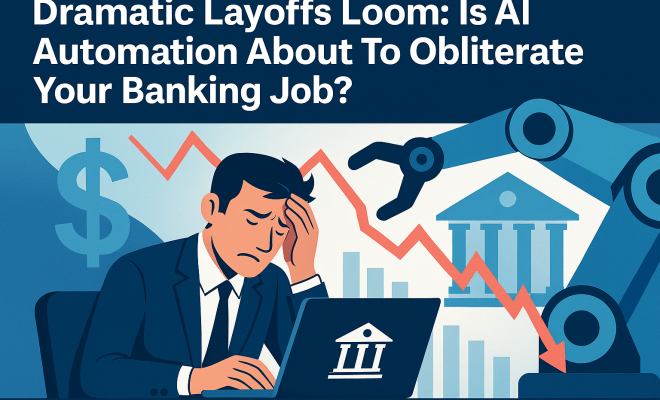
Dramatic Layoffs Loom: Is AI Automation About To Obliterate Your Banking Job?
“`html
The financial world is undergoing a seismic shift, and if you work in banking, you’ve likely felt the tremors. What was once the stable bedrock of many careers is now being reshaped by an invisible force: artificial intelligence. We’re not talking about some far-off sci-fi future; this is happening right now, with major institutions making tough decisions that directly impact thousands of employees. It’s a deeply emotional topic, especially when your livelihood is on the line, and it brings into sharp focus the profound AI automation impact on banking jobs.
For years, we’ve heard whispers about automation’s potential to streamline operations and cut costs. Now, those whispers have become a roar, and it’s shaking the foundations of traditional banking roles. Think about it: every transaction, every customer inquiry, every piece of data analysis – much of this can now be handled by algorithms with greater speed and accuracy than a human. This isn’t just about efficiency; it’s about a fundamental redefinition of what human value looks like in a digital-first financial landscape. And it raises a critical question for anyone in the sector: how do you adapt when the ground beneath your feet is moving so rapidly?
The Unfolding Reality: Major Banks Announce Significant Cuts
The headlines aren’t pretty, and they paint a stark picture of the current trajectory. We’re seeing major financial institutions, household names even, pulling the trigger on significant job reductions. Take HSBC, for instance. This isn’t some small regional bank; it’s a global giant. They’re reportedly planning to slash a staggering 70% of their financial advisors in their UK wealth management division. Seventy percent! That’s not a minor adjustment; that’s a wholesale restructuring. And it doesn’t stop there. Roughly half of their managers and specialists in the same division are also on the chopping block. These changes aren’t theoretical; they’re expected to be finalized by the end of October, making it an immediate concern for many.
But HSBC isn’t alone. Across the North Sea, Norway’s DNB, another significant player in the European banking scene, is following a similar path. They’re set to eliminate approximately 400 full-time positions. While 400 might sound less dramatic than HSBC’s percentages, it still represents nearly 4% of their entire workforce. And where are these cuts hitting hardest? Primarily in their technology and services sectors – precisely the areas where AI agents and digital automation are being integrated most aggressively. These aren’t just isolated incidents; they’re clear indicators of a broader trend, signaling a new era for banking employment where the AI automation impact on banking jobs is undeniable and immediate.
Why Now? The Economic and Technological Imperatives Driving Change
So, why are these changes accelerating now? It’s a confluence of factors, really. On one hand, there’s the relentless march of technological progress. AI isn’t just better; it’s cheaper in the long run. Once the initial investment is made, an AI system can work 24/7 without breaks, sick days, or benefits. It can process vast quantities of data, identify patterns, and execute tasks with a speed and consistency that no human workforce can match. This efficiency isn’t just a nice-to-have; it’s becoming a competitive necessity in a globalized financial market where margins are constantly squeezed.
On the other hand, banks are under immense pressure from multiple angles. Regulatory compliance is more complex and costly than ever before. Customer expectations have skyrocketed, with demands for instant, personalized, and seamless digital experiences. Fintech startups, unburdened by legacy systems, are constantly innovating and chipping away at traditional banking services. In this environment, anything that can reduce operational costs, enhance customer service, and improve efficiency becomes a strategic imperative. AI automation, therefore, isn’t just about replacing human tasks; it’s about survival and thriving in a brutally competitive landscape. The AI automation impact on banking jobs is a direct consequence of these converging forces, forcing banks to rethink their entire operational model.
Redefining Roles: Which Banking Jobs Are Most Vulnerable?
It’s natural to wonder which roles are most at risk when we talk about such sweeping changes. Historically, many banking jobs involved repetitive, rule-based tasks – the very definition of what AI excels at. Think about data entry, basic loan application processing, routine customer service inquiries, or even some aspects of compliance checking. These are tasks that can be codified, automated, and executed by intelligent systems with remarkable accuracy.
Consider the financial advisor role. While complex financial planning still requires human nuance, the initial stages of gathering information, assessing risk profiles, and even recommending standardized portfolios can be largely automated. This is precisely why HSBC is targeting a 70% reduction in this area. Similarly, back-office operations, which often involve massive amounts of data processing and reconciliation, are prime candidates for AI takeover. Even managerial roles, particularly those focused on overseeing teams performing these automatable tasks, are being re-evaluated. If the work can be done by a machine, the need for a human to manage that work diminishes significantly. The AI automation impact on banking jobs is most pronounced where tasks are predictable and data-driven, rather than requiring complex interpersonal skills or abstract problem-solving.
The Rise of the AI Agent: A New Face for Customer Interaction
One of the most visible shifts is happening right at the customer interface. For decades, a human voice or face was synonymous with banking customer service. Now, AI agents are increasingly stepping into this role. DNB, for example, explicitly mentions its shift towards AI agents. These aren’t just basic chatbots anymore; modern AI agents, powered by natural language processing and machine learning, can handle a remarkable range of inquiries.
They can answer common questions, guide customers through online processes, troubleshoot minor issues, and even personalize recommendations based on a customer’s history and preferences. For simpler, high-volume interactions, AI agents offer instant responses, 24/7 availability, and consistent service delivery. This frees up human staff to focus on more complex, nuanced, or sensitive issues that truly require empathy, judgment, and deep problem-solving skills. It’s a strategic move to optimize resources, but it undeniably changes the nature of customer service roles, creating a significant AI automation impact on banking jobs in call centers and front-line support. (See: impact of AI on banking jobs.)
Beyond Layoffs: The Evolution of Remaining Roles
It’s not all doom and gloom, though. While some roles are disappearing, others are evolving, and entirely new ones are emerging. The banking jobs that remain will likely look very different. They’ll require a new set of skills, shifting away from repetitive tasks towards areas where human strengths truly shine. Think about roles that demand creativity, critical thinking, strategic planning, complex problem-solving, emotional intelligence, and interpersonal communication. These are the domains where AI, for all its advancements, still struggles to compete. For more context, see AI Security Incident Reporting.
For example, instead of manually processing data, a human might now be responsible for designing the AI systems that process that data, or for interpreting the insights those systems generate. Instead of simply advising on standard financial products, an advisor might focus on highly bespoke wealth management strategies for ultra-high-net-worth clients, requiring deep understanding of complex family dynamics and unique investment opportunities. The AI automation impact on banking jobs means that the focus is shifting from ‘doing’ to ‘thinking,’ ‘designing,’ and ‘connecting.’ It’s a move up the value chain, demanding higher-order cognitive abilities and soft skills.
Reskilling and Upskilling: The Mandate for Banking Professionals
Given this dramatic shift, the message for banking professionals is clear: adapt or risk being left behind. Reskilling and upskilling are no longer optional extras; they are foundational requirements for career longevity in the financial sector. What does this mean in practical terms? It means acquiring skills that complement, rather than compete with, AI. Understanding data analytics, for instance, is becoming crucial. Even if you’re not a data scientist, being able to interpret data visualizations, understand statistical concepts, and make data-driven decisions will be invaluable.
Proficiency in AI and machine learning tools is also becoming highly sought after, not necessarily to build algorithms from scratch, but to effectively utilize and manage them. Beyond technical skills, ‘human’ skills are more important than ever: communication, collaboration, empathy, adaptability, and complex problem-solving. Banks will still need people to build relationships, negotiate deals, innovate new products, and navigate complex ethical dilemmas. Investing in learning these skills now is not just about staying relevant; it’s about positioning yourself for the next generation of banking roles. The smart professional recognizes the AI automation impact on banking jobs and proactively seeks to acquire the skills that will be in demand.
Navigating Career Transitions: A Strategic Approach
For those whose current roles are directly threatened, navigating a career transition can feel daunting, even terrifying. But it’s also an opportunity to pivot into growth areas. The first step is honest self-assessment: what are your core strengths? What transferable skills do you possess? Where do your passions lie? Then, research the emerging roles within banking and fintech. Roles in cybersecurity, AI ethics, data governance, user experience (UX) design for digital banking platforms, and specialized financial product development are all seeing increased demand.
Online education platforms, professional certifications, and even short-term bootcamps offer accessible pathways to acquire new skills. Networking is also more important than ever. Talk to people in roles you aspire to, understand their day-to-day, and identify the skill gaps you need to fill. Don’t wait for your current role to disappear; be proactive in shaping your future. This might mean taking a step back to learn, or even accepting a different kind of role initially to gain experience in a new domain. The key is to see this not as an ending, but as a catalyst for a new beginning, informed by the understanding of the significant AI automation impact on banking jobs.
The Broader Societal Implications and the Path Forward
The AI automation impact on banking jobs isn’t just an industry-specific issue; it has broader societal implications. When thousands of well-paying jobs in a historically stable sector are at risk, it affects families, communities, and national economies. Governments, educational institutions, and businesses all have a role to play in mitigating the negative consequences and harnessing the positive potential of this technological revolution.
Investment in public reskilling programs, rethinking educational curricula to focus on future-proof skills, and encouraging lifelong learning initiatives are crucial. For individuals, it means embracing a mindset of continuous learning. The idea of a single career path lasting 40 years is increasingly obsolete. Instead, we’ll likely see individuals navigating multiple career chapters, constantly acquiring new skills, and adapting to technological shifts. The financial services industry, often a bellwether for technological adoption, is simply showing us what’s coming to many other sectors. How we respond collectively to this challenge will define not just the future of banking, but the future of work itself.
AI’s Role in Risk Management and Compliance: A Double-Edged Sword
Beyond customer service and advisory roles, AI is rapidly transforming critical functions like risk management and regulatory compliance. Banks operate in highly regulated environments, constantly battling fraud, money laundering, and market manipulation. Traditionally, these tasks involved enormous human effort, sifting through mountains of data and transactions to identify anomalies.
Now, AI and machine learning algorithms can analyze vast datasets in real-time, detecting suspicious patterns with a speed and accuracy impossible for humans alone. This means things like anti-money laundering (AML) checks, fraud detection, and even stress testing for financial stability can be significantly enhanced. On one hand, this improves the bank’s security and adherence to regulations, potentially preventing huge fines and reputational damage. On the other hand, it reduces the need for large teams of human analysts who previously performed these investigative tasks. So, while AI makes banks safer and more compliant, it also creates a significant AI automation impact on banking jobs within these specialized areas, shifting roles from manual review to AI oversight and exception handling. (See: automation and workforce implications.)
Hyper-Personalization and Product Development: The New Frontier
AI isn’t just about cutting costs; it’s also a powerful tool for generating new revenue and improving customer relationships through hyper-personalization. Think about how streaming services suggest movies or online retailers recommend products – banks are applying similar AI-driven approaches. By analyzing a customer’s spending habits, life events, and financial goals, AI can identify personalized product offerings, from tailored loan options to customized investment portfolios.
This goes way beyond generic marketing. AI can predict when a customer might need a mortgage, when they’re likely to save for retirement, or even when they might be vulnerable to financial hardship. This level of insight allows banks to offer truly relevant services at the precise moment a customer needs them. For employees, this means a shift from standardized product pushing to more strategic roles focused on designing these AI-driven personalization engines, or working with customers on highly complex, unique financial needs that AI can’t yet fully address. The AI automation impact on banking jobs here means fewer sales roles relying on broad outreach and more specialized roles focused on data strategy and customer relationship optimization. For more context, see AI in Medicine.
The Ethics of AI in Finance: A Growing Area of Concern and Opportunity
As AI becomes more embedded in banking, ethical considerations are moving front and center. Questions arise about algorithmic bias, data privacy, transparency, and accountability. What if an AI system unfairly denies loans to certain demographics because of historical data biases? Who is responsible when an AI makes a significant financial error? How do banks ensure the data used to train AI models is secure and used responsibly?
These aren’t hypothetical questions; they’re real challenges banks are grappling with. This growing concern creates a demand for new roles focused on AI ethics, governance, and auditing. Professionals in these fields will need a blend of technical understanding, legal expertise, and a strong ethical compass. They’ll be responsible for building frameworks to ensure AI systems are fair, transparent, and compliant with evolving regulations. This is a critical area where human judgment and oversight remain irreplaceable, marking a new frontier where the AI automation impact on banking jobs creates specialized, high-demand positions rather than displacing existing ones.
Case Study: Robo-Advisors and Wealth Management
Let’s zoom in on wealth management, a sector particularly affected by automation. Robo-advisors are a prime example of AI’s direct impact. These platforms use algorithms to provide automated, algorithm-driven financial planning services with little to no human intervention. They can assess a client’s risk tolerance, financial goals, and time horizon, then automatically construct and rebalance diversified investment portfolios. They typically offer lower fees than traditional human advisors, making sophisticated investment advice accessible to a broader market.
While a human financial advisor might still handle highly complex estates, philanthropic planning, or deeply emotional client conversations, robo-advisors are taking over the more standardized aspects of wealth management. This is exactly why institutions like HSBC are making significant cuts to their human advisor teams. The remaining human advisors are shifting to roles focused on truly complex problem-solving, high-net-worth client relationship management, and integrating these automated tools into a hybrid service model. This illustrates a clear AI automation impact on banking jobs where technology handles the routine, freeing up humans for the exceptional.
The Future Skills Map: What to Learn NOW
If you’re looking to future-proof your career in banking, it’s essential to understand the skills that will be in demand. Think of it as building a “future skills map.”
- Data Literacy & Analytics: Not just data scientists, but anyone who can interpret data, understand metrics, and make data-driven decisions. Learning SQL, Python for data analysis (Pandas, NumPy), or even advanced Excel skills will be crucial.
- AI & Machine Learning Fundamentals: You don’t need to be a coder, but understanding how AI works, its capabilities, and its limitations is vital for managing and deploying AI tools. Consider courses on machine learning concepts or prompt engineering for generative AI.
- Cloud Computing: Much of modern banking infrastructure and AI runs on cloud platforms (AWS, Azure, Google Cloud). Familiarity with cloud concepts and services will be an asset.
- Cybersecurity: As banks become more digital, cybersecurity risks multiply. Understanding basic security principles, threat detection, and data protection is increasingly important for all employees.
- Design Thinking & UX: With a focus on digital customer experiences, understanding how to design intuitive, user-friendly banking applications and services will be highly valued.
- Emotional Intelligence (EQ): The ability to empathize, build rapport, and navigate complex interpersonal dynamics will differentiate humans from machines.
- Complex Problem-Solving: AI excels at defined problems; humans excel at ambiguous, novel problems that require creative solutions.
- Adaptability & Lifelong Learning: The most important skill might simply be the willingness to continuously learn, unlearn, and relearn as technology evolves.
Investing in these areas means you’re not just reacting to the AI automation impact on banking jobs, but actively shaping your role within the evolving financial ecosystem.
FAQs: Understanding the AI Automation Impact on Banking Jobs
Q1: Is AI going to completely eliminate all banking jobs?
No, it’s highly unlikely that AI will eliminate ALL banking jobs. The consensus among experts is that AI will transform jobs rather than completely eradicate them. Many repetitive, rule-based tasks will be automated, but roles requiring complex problem-solving, creativity, emotional intelligence, strategic thinking, and relationship management will remain and even grow in importance. The focus is shifting from routine tasks to higher-value activities. For more context, see AI in Higher Education. (See: banking sector job cuts.)
Q2: Which specific banking roles are most at risk from AI automation?
Roles involving high volumes of repetitive, data-driven tasks are most vulnerable. This includes areas like basic data entry, some aspects of loan processing, routine customer service inquiries (like answering FAQs), back-office operations, and standardized compliance checks. Financial advisor roles that primarily focus on basic portfolio construction are also seeing significant automation through robo-advisors.
Q3: What new job opportunities are emerging in banking due to AI?
AI is creating many new roles. These include AI strategists, data scientists, machine learning engineers, AI ethics and governance specialists, cybersecurity analysts, user experience (UX) designers for digital banking platforms, AI trainers and annotators, and professionals focused on integrating AI solutions into existing systems. There’s also a growing need for “human-in-the-loop” roles where people oversee and optimize AI performance.
Q4: How can current banking professionals prepare for these changes?
The best preparation involves continuous reskilling and upskilling. Focus on developing skills that complement AI, such as data literacy, understanding AI/ML fundamentals, critical thinking, complex problem-solving, and emotional intelligence. Many online courses, certifications, and bootcamps are available. Networking and staying informed about industry trends are also crucial.
Q5: Will AI make banking more impersonal for customers?
Not necessarily. While AI agents handle routine inquiries, this frees up human staff to focus on more complex or sensitive customer needs that require empathy and personalized attention. AI can also enable hyper-personalization, allowing banks to offer tailored products and services based on individual customer data, potentially making interactions feel more relevant and helpful. The goal is often a hybrid model, combining the efficiency of AI with the human touch where it matters most.
Q6: What are the main benefits for banks adopting AI automation?
Banks adopt AI for several key benefits: increased efficiency and cost reduction (AI works 24/7 without breaks), improved accuracy in tasks like fraud detection and compliance, enhanced customer experience through faster service and personalization, and the ability to process and derive insights from vast amounts of data more effectively. AI also enables banks to innovate faster and stay competitive against fintech startups.
Q7: Are there ethical concerns regarding AI in banking?
Absolutely. Key ethical concerns include algorithmic bias (where AI reflects historical biases in data, leading to unfair outcomes), data privacy and security, transparency (understanding how AI makes decisions), and accountability (who is responsible when AI makes an error). Banks are increasingly establishing AI ethics committees and developing governance frameworks to address these issues responsibly.
The changes unfolding in the banking sector are profound and, for many, deeply unsettling. The immediate impact of AI automation on banking jobs, as evidenced by the significant layoffs at institutions like HSBC and DNB, is a stark reminder that the future of work is already here. However, amidst the disruption, there’s also immense opportunity for those willing to adapt, learn, and embrace new ways of working. It’s a call to action for every banking professional to critically assess their skills, anticipate future demands, and proactively shape their career path in an increasingly automated world. The future belongs to those who are not just aware of the changes, but actively engaged in navigating them.
“`
Trending Now
Frequently Asked Questions
Will AI replace banking jobs?
AI is increasingly being integrated into banking operations, leading to concerns about job displacement. Major banks are already announcing significant layoffs, with some, like HSBC, planning to reduce their workforce by up to 70% in certain divisions due to automation. This shift highlights the urgent need for banking professionals to adapt to a digital-first landscape.
How is AI impacting the banking industry?
AI is transforming the banking industry by streamlining operations and enhancing efficiency. Tasks such as transaction processing, customer inquiries, and data analysis are increasingly performed by algorithms, which can operate faster and more accurately than humans. This change prompts a reevaluation of the roles and skills needed in the sector.
What should banking professionals do in response to automation?
Banking professionals should focus on developing new skills that complement AI technologies. Emphasizing digital literacy, data analysis, and customer relationship management can help individuals remain valuable in a rapidly changing environment. Continuous learning and adaptability are essential to thrive amid automation.
What are the recent layoffs in banking?
Recent layoffs in the banking sector have been significant, with major institutions like HSBC announcing plans to cut a large percentage of their workforce, particularly in wealth management. These layoffs are a direct response to the growing implementation of AI and automation technologies.
What roles are most at risk from AI in banking?
Roles that involve repetitive tasks, such as financial advisors, transaction processors, and customer service representatives, are most at risk from AI automation in banking. As algorithms become capable of performing these functions more efficiently, many traditional positions may be eliminated or redefined.
Agree or disagree? Drop a comment and tell us what you think.