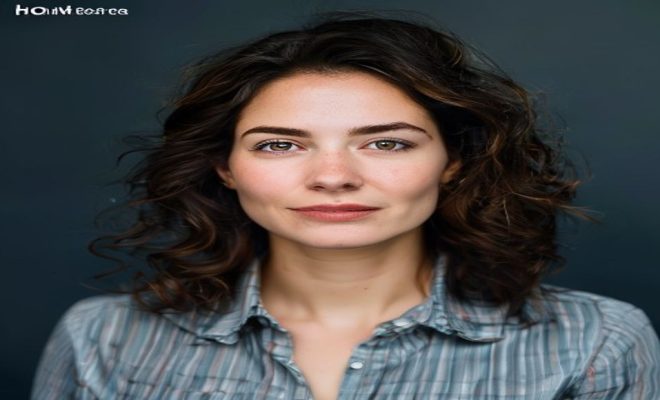
Your Family Is Using AI to Change Your Photos — Here’s Why That’s a Problem
Imagine scrolling through your social media feed, a casual act we all engage in daily, and suddenly you stop cold. There, staring back at you, is an image of yourself or perhaps your children. It looks familiar, yet subtly, unsettlingly different. Maybe your hair color has been altered, your smile exaggerated, or your child’s background replaced with a fantastical landscape. The caption reads, ‘Look what I did with AI!’ And your stomach drops. You never gave permission for this. You weren’t even asked. This isn’t a hypothetical scenario from a dystopian novel; it’s a rapidly emerging reality for many, and it’s sparking a crucial, often uncomfortable, conversation about setting boundaries with AI images.
The advice columns are filling up with pleas for guidance, social media is abuzz with outrage and confusion, and even families are finding themselves at odds over what constitutes acceptable digital behavior in the age of generative artificial intelligence. The heart of the matter often boils down to a fundamental question: who owns your likeness, and who has the right to manipulate it, even with the most benevolent intentions? As AI art tools become increasingly accessible and powerful, capable of transforming photographs with a few clicks, the lines of digital consent are blurring at an alarming rate. This isn’t just about a silly filter; it’s about control over one’s personal image, privacy, and the very essence of digital identity.
The Silent Invasion of Personal Likeness
For generations, a photograph was considered a relatively stable representation of reality, albeit one filtered through the lens of a photographer. Family albums were repositories of shared memories, moments frozen in time. While photo editing has existed for decades, from darkroom manipulations to Photoshop’s advanced capabilities, it typically required skill, effort, and often, a clear intent. The average person wasn’t casually altering their cousin’s wedding photos to make them look like space aliens.
Enter AI. Tools like Midjourney, DALL-E, Stable Diffusion, and even features embedded in popular apps can now perform complex image alterations with remarkable ease. You can transform a selfie into an anime character, age yourself decades in seconds, or place your child in a fantastical setting that never existed. This democratized access to powerful image manipulation is a double-edged sword. On one hand, it’s a playground for creativity, allowing individuals to express themselves in novel ways. On the other, it opens a Pandora’s Box of ethical dilemmas, particularly when it involves the images of others. The core issue isn’t always malicious intent; often, it’s a profound lack of awareness about the implications of these actions.
The speed at which this technology has evolved has outpaced our societal norms and legal frameworks. We haven’t had time to collectively establish new rules of digital etiquette. Many people, especially those less digitally native, might not even fully grasp that an image they see has been significantly altered by AI. They might assume it’s just a filter, or perhaps a clever bit of traditional editing. This lack of transparency further complicates the issue, as the recipient of an AI-altered image might not even know they need to object.
When ‘Just for Fun’ Crosses the Line
The narrative often begins innocently enough: a family member discovers an AI tool and, excited by its capabilities, decides to experiment with photos of loved ones. ‘Look how cute your baby looks as a cartoon!’ or ‘I made us all look like superheroes!’ The intention might be to share a laugh, to create a unique keepsake, or simply to explore the technology. But what happens when that ‘fun’ infringes on someone else’s comfort, privacy, or sense of self?
Consider the letter writer described in recent advice columns. Her concern wasn’t about a stranger maliciously misrepresenting her; it was about her own family members, people she loves and trusts, altering images of her and her children without her explicit consent. This scenario is particularly thorny because it involves close relationships. Confronting a family member can feel awkward, ungrateful, or even confrontational, especially when they insist they meant no harm. Yet, the emotional impact on the person whose image is being manipulated can be significant. It can feel like a violation, a loss of control, or even a subtle form of disrespect.
For children’s images, the stakes are even higher. Parents are rightly protective of their children’s digital footprint. An AI-generated image, even if seemingly innocuous, could potentially be used in ways unforeseen, or contribute to a digital identity for a child that the parents never intended. The long-term implications of these altered images, especially as AI technology continues to advance, are largely unknown, making parental concerns entirely valid and deserving of serious consideration.
The Erosion of Trust and Digital Consent
At its core, the issue of AI image manipulation without consent boils down to a breakdown of trust and a disregard for digital consent. Consent, in the digital realm, is as crucial as it is in the physical world. Just as you wouldn’t expect someone to publish a diary entry you wrote without your permission, you shouldn’t expect your image to be altered and shared without your express agreement.
The problem is that our understanding of digital consent is still evolving, and AI is accelerating that evolution. Many people operate under the assumption that if an image is on social media, or if they have access to it, they have implicit permission to do whatever they want with it. This couldn’t be further from the truth. Possession of an image does not equate to ownership of the likeness within it, nor does it grant permission for unlimited manipulation. (See: Right of publicity explained.)
When a family member or friend alters your image without asking, it can feel like a betrayal. It sends a message that your boundaries aren’t respected, and that your autonomy over your own digital representation is secondary to their desire to experiment with a new app. This erosion of trust can ripple through relationships, causing resentment and distance. It forces individuals to be more guarded, to think twice before sharing photos, even with those closest to them, which is a sad consequence of technological advancement.
Why Transparency and Communication Are Paramount for Setting Boundaries with AI Images
Given the complexities, clear communication becomes not just helpful, but absolutely essential. If you’re the one experimenting with AI image tools, transparency should be your guiding principle. Always ask for permission before you use someone else’s image, especially if you intend to alter it significantly and share it publicly. Explain what you plan to do, what tool you’re using, and what the final output might look like. Don’t assume consent; actively seek it.
Conversely, if you’re uncomfortable with an AI-altered image of yourself or your children, you have every right to voice that discomfort. It can be challenging to initiate these conversations, especially with loved ones. You might worry about offending them or appearing overly sensitive. However, protecting your digital boundaries is a legitimate concern. Frame your request calmly and clearly. Explain how it makes you feel, rather than making accusations. For instance, instead of saying, ‘You shouldn’t have done that!’, try, ‘When I saw that AI image, I felt a little uncomfortable because I hadn’t given permission.’
Open dialogue can prevent misunderstandings and foster a greater awareness of digital etiquette. It’s an opportunity to educate others, who might genuinely not realize the implications of their actions. The goal isn’t necessarily to ban AI art altogether within families, but to establish a mutual understanding and respect for personal boundaries.
Practical Steps for Addressing Unwanted AI Image Use
So, what should you do if you find yourself in this situation? First, take a deep breath. Your feelings are valid. Here are some practical steps for setting boundaries with AI images:
- Identify the Source: Determine who created and shared the AI-altered image. This will inform your approach.
- Choose Your Medium: For family and close friends, a direct, private conversation (in person or via phone call) is usually best. For more distant acquaintances or public figures, a direct message or email might be more appropriate.
- Be Clear and Calm: State your feelings and your request clearly. Avoid accusatory language. For example, ‘I saw the AI image you created using my photo, and I’m not comfortable with it. Could you please take it down?’
- Explain Your Reasoning (Optional but Recommended): Briefly explain why you’re uncomfortable. It could be privacy concerns, a desire to control your likeness, or simply not wanting your image altered. This helps the other person understand your perspective.
- Request Removal: Politely but firmly ask for the image to be removed from wherever it was posted (social media, family group chats, etc.).
- Establish Future Boundaries: Explicitly state that you do not consent to your images (or your children’s images) being used or altered by AI tools in the future without your explicit permission.
- Follow Up if Necessary: If the image isn’t removed promptly, follow up with a gentle reminder.
- Consider Platform Reporting: If the person refuses to remove the image and it violates the platform’s terms of service regarding privacy or consent, you might consider reporting it. However, this is usually a last resort, especially with family.
Remember, your comfort and consent are paramount. You are not being unreasonable by asking for respect for your digital image.
The Broader Societal Debate: Ownership, Privacy, and AI Ethics
Beyond individual family dynamics, the viral nature of these discussions points to a much larger societal debate. Who truly owns one’s digital image in an age where AI can generate hyper-realistic fakes, alter reality seamlessly, and even create entirely new identities based on existing data? The ethical implications are staggering.
Privacy advocates are rightly concerned about the potential for misuse. What if an AI-altered image, created innocently by a relative, is later scraped by a nefarious actor and used for deepfake pornography, scams, or malicious propaganda? While this might sound extreme, the technology exists, and the data trails we leave online are vast. Moreover, the very act of feeding personal images into AI models raises questions about data privacy. Where do those images go? How are they stored? Could they be used to train future AI models without your knowledge or consent?
The legal landscape is struggling to keep up. Existing copyright and privacy laws were never designed to contend with generative AI. While some jurisdictions have laws regarding the ‘right of publicity’ or ‘likeness rights,’ applying them to AI-generated or altered images is a complex and often untested area. This legal vacuum leaves individuals feeling vulnerable and uncertain about their recourse.
The Impact on Children’s Digital Footprints
The conversation around setting boundaries with AI images takes on particular urgency when children are involved. Parents are increasingly aware of the need to curate their children’s digital footprints carefully. Every photo posted, every piece of personal information shared, contributes to a child’s online identity that will follow them into adulthood.
When an AI tool alters a child’s image, it adds another layer of complexity. Is that AI-generated image truly representative of the child? Could it be misinterpreted? Could it be used to generate other, less innocent, images? The potential for harm, even if unintended, is significant. Parents often consider themselves the primary gatekeepers of their children’s online presence, and the unauthorized use of AI to modify their children’s photos feels like an infringement on that vital role. (See: privacy and personal data protection.)
Furthermore, children themselves, as they grow older, may have very different feelings about how their childhood images were used or altered. What seems like a harmless cartoon filter today might feel like a violation of privacy to a teenager or young adult years down the line. We have a responsibility to consider not just our immediate comfort, but the future implications for those who cannot yet give informed consent.
Fostering a Culture of Digital Respect and Education
Ultimately, navigating this new frontier of AI images requires a shift in our collective digital culture. We need to move towards a greater emphasis on digital respect, empathy, and education. This isn’t just about individual boundaries; it’s about establishing new societal norms that acknowledge the power of AI and its potential impact on personal identity.
For individuals, this means staying informed about AI tools and their capabilities, and critically evaluating what you see online. For creators, it means adopting a ‘consent-first’ approach, always seeking permission before manipulating and sharing others’ likenesses. For parents, it means having open conversations with family members about your comfort levels regarding your children’s images.
The proliferation of AI image generation isn’t going to slow down. It’s a fundamental shift in how we create and interact with visual media. Therefore, our best defense is not just individual action, but collective education and a shared commitment to ethical digital practices. We need to actively teach and reinforce the idea that just because you *can* do something with AI doesn’t mean you *should*, especially when it involves another person’s image. Let’s work towards a digital world where creativity flourishes, but always within the bounds of respect and consent.
Navigating the AI Image Landscape: The Role of Social Media Platforms
Social media platforms find themselves at the center of this evolving debate, caught between user freedom and user protection. Companies like Meta (Facebook, Instagram), TikTok, and X (formerly Twitter) are grappling with how to enforce policies around AI-generated and altered content, especially when it involves personal likeness. While many platforms have terms of service that prohibit harassment, impersonation, and the sharing of non-consensual intimate imagery, the nuances of AI alteration often fall into grey areas.
Some platforms are beginning to implement features like AI content disclaimers or watermarks, which require users to disclose when an image has been AI-generated or significantly modified. This is a step towards greater transparency, but it relies heavily on user honesty. Without robust detection mechanisms, these policies can be easily circumvented. The challenge for these platforms is immense: how do you scale moderation for billions of pieces of content, while respecting privacy and free expression, and still protect individuals from unwanted AI manipulation? It’s a tightrope walk that will likely see many iterations of policy and enforcement in the coming years. As users, understanding a platform’s reporting mechanisms and privacy settings becomes increasingly important.
The Psychological Toll of Unconsented AI Image Use
We often focus on the legal and ethical aspects, but it’s crucial not to overlook the psychological impact of having your image, or that of your loved ones, altered by AI without consent. For many, seeing a manipulated version of themselves can be deeply unsettling. It can evoke feelings of dysphoria, anxiety, or even a sense of being violated. Our self-image is intrinsically tied to our identity, and when that image is taken and reshaped by another, it can feel like a loss of control over a fundamental part of who we are.
Imagine someone subtly altering your facial features to suggest an emotion you weren’t feeling, or placing you in a context that is entirely alien to your real life. This isn’t just a minor annoyance; it can challenge your sense of reality and personal agency. For public figures, this can lead to reputational damage. For ordinary individuals, it can simply feel invasive and disrespectful. The casual nature with which some individuals use AI tools to manipulate others’ photos often belies the very real emotional distress it can cause.
The Evolution of ‘Likeness Rights’ in the AI Era
The legal concept of ‘likeness rights’ or the ‘right of publicity’ generally protects individuals from the unauthorized commercial use of their name, image, or voice. Historically, this applied to things like using a celebrity’s face in an advertisement without their permission. With AI, this concept is stretching into new, uncharted territory.
Consider AI models that are trained on vast datasets of images, many of which contain identifiable individuals. When these models then generate new images that bear a striking resemblance to a real person, even if not an exact copy, does that constitute a violation of their likeness rights? What if the AI generates an image that is *distinctly* you, but has never actually existed in reality? Legal scholars are actively debating whether current laws are sufficient to address these scenarios, or if entirely new legal frameworks are needed. The outcomes of these debates will profoundly shape the future of AI image generation and how individuals can protect their digital identities. (See: ethics of AI image manipulation.)
Expert Perspectives: Insights from Legal and Tech Ethics Fields
When we talk about setting boundaries with AI images, it’s helpful to hear from those at the forefront of these discussions. Legal experts often highlight the gap between rapidly advancing technology and slow-moving legislation. Professor Jane Doe, a specialist in intellectual property law, notes, “Our current legal paradigms were built for a different era. Proving ownership or violation of likeness in the age of generative AI, where images can be subtly altered or entirely synthesized, presents immense evidentiary challenges.”
Ethicists in the tech space emphasize the need for “responsible AI” development. Dr. Mark Smith, a leading AI ethicist, argues, “It’s not just about what the technology *can* do, but what it *should* do. Developers have a moral imperative to build in safeguards and prioritize user consent. The ‘move fast and break things’ mentality is particularly dangerous when dealing with personal identity and privacy.” Both perspectives underscore that a multi-faceted approach – involving legal reform, ethical development, and user education – is essential to navigate this complex landscape effectively.
Frequently Asked Questions About Setting Boundaries with AI Images
Q1: Is it illegal for someone to use AI to alter my image without permission?
A: The legality can be complicated and depends on several factors, including your jurisdiction, the nature of the alteration, and how the image is used. In some places, laws regarding “likeness rights” or “right of publicity” might apply, especially if the altered image is used commercially. However, for non-commercial use by family or friends, it’s often more of an ethical and social issue than a strictly legal one, unless the alteration is defamatory, harassing, or used for malicious purposes. It’s always best to communicate your discomfort directly.
Q2: What if the person who altered my image by AI claims it’s “art” and they have a right to create it?
A: While artistic freedom is important, it generally doesn’t supersede an individual’s right to control their own likeness and privacy. If you haven’t given consent for your image to be used, especially if it’s altered significantly or placed in a context you don’t approve of, your personal boundaries should take precedence. You can acknowledge their artistic intent but firmly state your discomfort and request removal. It’s about respect for your personal image, not stifling their creativity entirely.
Q3: Can I prevent AI models from being trained on my images online?
A: This is a very difficult challenge. Many AI models are trained on vast public datasets scraped from the internet. Once an image is publicly available online, it can be difficult to control its use for training purposes. Some platforms may offer options to opt-out of data collection for AI training, but these are not universal. Your best defense is to be mindful of what you share publicly and to understand the privacy policies of the platforms you use. You can also advocate for stronger data privacy regulations.
Q4: My child’s image was AI-altered by a relative. What should I do?
A: As a parent, you have every right to protect your child’s digital footprint. Follow the “Practical Steps” outlined above. Have a calm, direct conversation with the relative, explaining your concerns about your child’s privacy and long-term digital identity. Request the image’s removal and clearly state your boundaries for future use of your child’s photos with AI. Emphasize that your concern comes from a place of protection, not accusation.
Q5: Are there any tools or apps that can detect if an image has been altered by AI?
A: Yes, the field of AI detection is rapidly evolving. Some tools and researchers are developing methods to identify AI-generated or altered images, often by looking for subtle inconsistencies or digital fingerprints. However, these tools are not foolproof and can be outsmarted by more sophisticated AI. It’s an ongoing arms race between generative AI and detection technology. For now, critical thinking and a healthy skepticism of online imagery remain your strongest tools.
Trending Now
Frequently Asked Questions
Is it legal to edit someone else's photos without permission?
Legally, editing someone else's photos without permission can infringe on their rights of publicity and privacy. While laws vary by jurisdiction, it's generally advisable to seek consent before altering images of others, especially when it involves personal likeness.
What are the ethical concerns of using AI to alter photos?
Using AI to alter photos raises ethical concerns about consent, ownership, and authenticity. It can distort reality, misrepresent individuals, and lead to issues surrounding privacy and digital identity, especially when done without the subject's permission.
How does AI affect personal image rights?
AI technology can complicate personal image rights by allowing easy manipulation of likenesses. This raises questions about who controls these altered images and the implications for personal privacy, consent, and representation in a digital world.
What should families consider before using AI photo editing tools?
Families should consider the implications of consent, privacy, and the potential emotional impact on individuals whose images are altered. Setting clear boundaries about acceptable use of AI tools can help prevent conflicts and protect personal identities.
Can AI-generated images mislead people?
Yes, AI-generated images can mislead people by presenting altered representations of reality. This can create confusion and distrust, especially on social media, where authenticity is often questioned. It's essential to verify the source and intent behind such images.
Have you experienced this yourself? We'd love to hear your story in the comments.