Generative AI: Unleashing $4.4 Trillion Economic Growth & Job Evolution
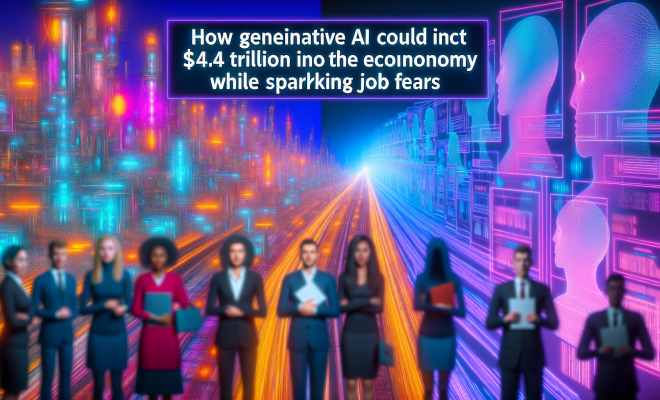
As the world becomes increasingly digital, a seismic shift is underway — one that promises to reshape industries and economies globally. According to a recent analysis by McKinsey, generative AI could add an astounding $4.4 trillion annually to the global economy. This figure underscores the transformative potential of artificial intelligence, which is rapidly finding applications across diverse sectors, from healthcare and finance to manufacturing and retail.
Generative AI: A Catalyst for Economic Growth
The economic muscle of generative AI is becoming increasingly evident. McKinsey’s analysis highlights that the technology has already woven itself into the fabric of various industries, revolutionizing how they operate. In marketing, for example, teams are leveraging generative AI to manage the ever-increasing demand for content, allowing them to produce high-quality materials at unprecedented speeds.
This surge in productivity is just one facet of how generative AI is poised to bolster the economy. By automating routine tasks and enhancing decision-making processes, generative AI can free up valuable human resources, allowing organizations to focus on higher-level, strategic initiatives. The promise of such efficiency is driving optimism among tech enthusiasts and business leaders alike, who foresee a future where AI augments human capabilities rather than replacing them.
The Emotional Landscape of Change
However, this burgeoning potential is not without its challenges. The prospect of mass job displacement due to automation looms large, igniting widespread anxiety among workers. Labor economists caution that millions of jobs may be at risk of automation in the next 2-3 years. As the conversation around generative AI intensifies, a dichotomy emerges: the exhilarating possibility of economic growth versus the sobering reality of job insecurity.
The Job Displacement Dilemma
This anxiety is palpable across social media platforms, where discussions about the generative AI impact on the economy frequently trend. Workers are raising concerns about their roles in an increasingly automated world, questioning whether they will be able to compete with machines that can operate more efficiently and at a lower cost.
- What will happen to workers in sectors that are heavily reliant on manual processes?
- How can individuals adapt their skills to remain relevant in a changing job landscape?
- What measures can be taken to mitigate the effects of job losses due to automation?
These questions underscore a growing fear: that the tide of technological advancement may wash away livelihoods faster than society can adapt. This emotional tension has fueled intense debate and sharing across platforms, creating a viral engagement phenomenon as both tech enthusiasts and concerned workers seek clarity on AI’s real-world impact.
Industries Facing Transformation
The generative AI impact on economy is not limited to just one sector; it is a sweeping transformation affecting a multitude of industries. Here’s a closer look at how various sectors stand to gain or lose from this technological evolution.
Healthcare: A New Frontier
In healthcare, generative AI offers the potential for groundbreaking advancements in patient care. From streamlining administrative tasks like patient record management to enhancing diagnostic accuracy through predictive analytics, the technology is poised to save time and resources.
For instance, AI-driven systems can analyze vast datasets faster than any human, identifying patterns that can lead to earlier diagnoses. This not only improves patient outcomes but also reduces operational costs, ultimately contributing to the impressive projected economic boost.
Finance: Automated Efficiency
The finance sector is already witnessing a shift towards automation, with generative AI being utilized for risk assessment, fraud detection, and personalized financial services. Algorithms can analyze market trends and consumer behavior at lightning speed, providing financial institutions with the insights they need to make informed decisions.
As generative AI continues to evolve, financial services can expect increased efficiency, reduced costs, and enhanced customer experiences. However, this shift raises questions about the future of jobs in finance, particularly in roles traditionally focused on data entry and basic analysis.
Manufacturing: Smart Production
In the realm of manufacturing, generative AI is revolutionizing production lines. Smart machines equipped with AI capabilities can optimize workflows, reduce waste, and improve quality control. By employing AI-driven predictive maintenance, manufacturers can anticipate equipment failures before they occur, ensuring minimal downtime.
While this innovation promises to enhance productivity and profitability, it also poses a challenge to the workforce. The question remains: how will workers transition from manual roles to tech-savvy positions in an increasingly automated environment?
Retail: Personalized Experiences
The retail industry is undergoing a major transformation thanks to generative AI. From personalized shopping experiences to inventory management, AI algorithms can analyze consumer preferences, predict trends, and optimize pricing strategies. Retailers leveraging generative AI can create tailored experiences that enhance customer satisfaction while driving sales.
However, as AI becomes more integrated into retail operations, positions that rely heavily on customer service and manual inventory tracking may face significant disruption. Retail workers must adapt by acquiring new skills that align with this technology-driven landscape.
Navigating the Transition
As the generative AI impact on economy unfolds, it is crucial for workers, employers, and policymakers to navigate this transition thoughtfully. Here are some strategies to consider:
- Upskilling and Reskilling: Investing in education and training programs to equip workers with the skills needed in an AI-driven economy is essential. Lifelong learning initiatives can help individuals stay relevant.
- Policy Interventions: Governments can play a pivotal role by implementing policies that support displaced workers, such as unemployment benefits and job placement programs.
- Fostering Innovation: Encouraging innovation and entrepreneurship can create new job opportunities, ensuring that the workforce remains adaptable.
The Path Forward
As we venture further into the age of generative AI, a delicate balance must be struck between embracing the economic opportunities and addressing the concerns surrounding job displacement. The tension between optimism and fear will likely fuel continued discourse and engagement in the coming years.
The potential of generative AI to add $4.4 trillion to the global economy is staggering, but this figure is not merely a number — it represents real lives, jobs, and futures. The key will be to harness the power of this technology while ensuring that workers are not left behind. As society grapples with these changes, the generative AI impact on economy will continue to be a focal point for discussion, research, and policy-making.
Conclusion
The generative AI impact on economy presents a double-edged sword. It holds the promise of unprecedented economic growth and innovation, but simultaneously raises significant concerns about job displacement and workforce transformation. As we embrace this technology, we must also commit to supporting those affected by its rise. Only then can we ensure that the benefits of generative AI are distributed equitably across society, paving the way for a brighter, more sustainable future.