X-Class Solar Flare Disrupts Radio, Raises Artemis 2 Concerns 2026
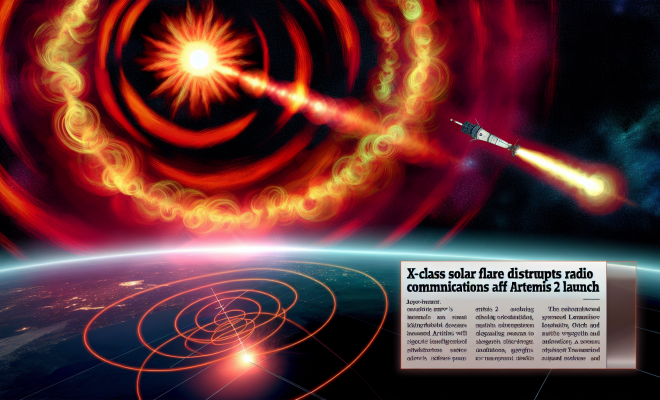
On March 30, 2026, the Sun unleashed a powerful X1.4 solar flare, creating significant disruptions in radio communications on Earth and raising concerns regarding NASA’s upcoming Artemis 2 mission, scheduled to launch on April 1. This event underscores the dynamic nature of solar activity and its potential impacts on space missions and terrestrial technology.
The Solar Flare and Its Impacts
The X1.4 solar flare, categorized as an X-class flare, is indicative of intense solar activity. Such flares are capable of producing significant amounts of radiation, which can lead to various disruptions in the Earth’s ionosphere, affecting radio signals and satellite operations. The recent flare triggered a radio blackout, particularly impacting high-frequency communications, which are critical for aviation and maritime operations.
The National Oceanic and Atmospheric Administration’s (NOAA) Space Weather Prediction Center promptly issued a moderate (G2) geomagnetic storm watch for March 31, 2026. The prediction indicated the possibility of minor (G1) storm conditions both on March 30 and April 1, creating a potentially complex environment for the Artemis 2 mission preparations.
Artemis 2 Mission Overview
The Artemis 2 mission represents a significant milestone in NASA’s ambitious program aimed at returning humans to the Moon. This mission will build upon the successes of Artemis 1, which tested the Space Launch System (SLS) and the Orion spacecraft in an uncrewed flight around the Moon. Artemis 2 aims to carry astronauts on a similar trajectory, providing vital data and experience for future lunar missions, including Artemis 3, which plans to land astronauts on the lunar surface.
The Artemis 2 crew is set to embark on a 10-day journey that will take them around the Moon and back to Earth, testing critical systems and operations with human participants aboard. However, the recent solar activity poses a unique challenge, as the electromagnetic emissions from solar flares can interfere with the spacecraft’s navigational and communication systems.
Potential Effects of Solar Activity
Solar flares are not merely a concern for spacecraft; they can also affect various systems on Earth:
- Radio Communication: As demonstrated by the recent X-class flare, high-frequency radio communications can be disrupted, impacting everything from air traffic control to maritime navigation.
- GPS Systems: Increased ionospheric disturbances can lead to inaccuracies in GPS signals, which may complicate navigation for both terrestrial and aerial vehicles.
- Power Grids: Geomagnetic storms can induce currents in power lines, potentially leading to voltage irregularities and outages.
- Auroras: On the positive side, heightened solar activity often results in increased visibility of the northern and southern lights, creating stunning natural displays in the polar regions and beyond.
Monitoring and Preparedness
In light of these phenomena, agencies like NOAA and NASA continuously monitor solar activity to provide timely warnings and forecasts. The ability to predict solar flares and geomagnetic storms is crucial for mitigating their impacts on technology and human activities.
NASA has taken steps to prepare for the effects of solar activity on missions like Artemis 2. Engineers and mission planners are well aware of the risks posed by solar flares and design spacecraft systems with redundancies and protective measures to minimize disruptions. This includes shielding sensitive electronics and utilizing robust communication systems to ensure that critical operations can continue, even in the event of solar interference.
Looking Ahead
The Artemis 2 mission is poised to be a historic step in lunar exploration, paving the way for future missions that aim to establish a sustainable human presence on the Moon. As preparations continue, the space community remains vigilant about solar activity that could affect launch conditions and mission success.
With the possibility of geomagnetic storms in the coming days, NASA and its partners will be closely monitoring the situation. The success of Artemis 2 will not only depend on the capabilities of the spacecraft and crew but also on their ability to adapt to the unpredictable nature of space weather.
Conclusion
The X1.4 solar flare serves as a reminder of the Sun’s powerful influence on our planet and the technologies we rely on daily. As humanity ventures further into space with ambitious missions like Artemis 2, understanding and preparing for solar activity will be crucial in ensuring safe and successful exploration of the cosmos.