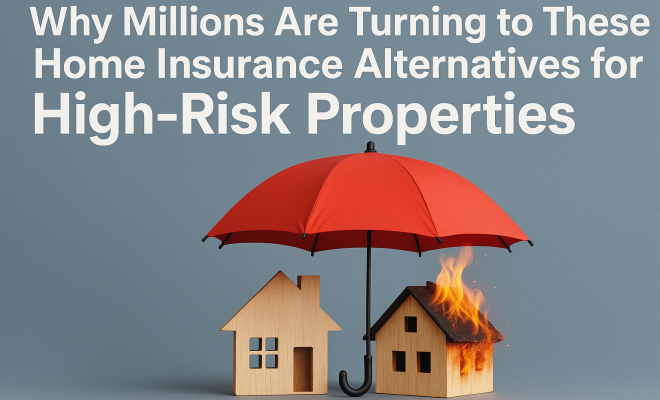
Why Millions Are Turning to These Home Insurance Alternatives for High-Risk Properties
It’s a conversation happening in hushed tones among real estate agents, lenders, and, most acutely, within the insurance industry’s boardrooms: traditional home insurance, as we’ve known it, is changing. And for many homeowners, especially those in areas deemed ‘high-risk,’ it’s not just changing—it’s vanishing. We’re talking about a shift so profound it could, according to a confidential memo circulated among senior insurance executives, destabilize housing markets in a way that echoes the Global Financial Crisis. That’s a pretty heavy statement, isn’t it?
The core issue? Climate change. It’s no longer a distant threat; it’s here, driving escalating rebuilding costs, record-breaking catastrophe losses, and soaring reinsurance expenses. What does this mean for you, the homeowner? It means your average premiums are climbing faster than inflation. In the first half of 2026, new policies saw a 5.9% jump, while renewing policyholders were hit with an average 10.6% hike. These aren’t minor adjustments; they’re significant financial burdens. And the stark warning from that memo? A major increase in uninsured, high-risk properties could absolutely undermine the mortgage market as climate impacts intensify. This isn’t just about protecting your home; it’s about protecting your biggest asset and, for many, their financial future. So, if traditional coverage is becoming a luxury, or even an impossibility, what are your options? Let’s explore the essential home insurance alternatives for high-risk properties that every homeowner needs to understand right now.
The Vanishing Act: Why Traditional Insurance is Pulling Back
To truly grasp why alternatives are so critical, we need to understand the forces pushing traditional insurers away from certain markets. It’s not a conspiracy; it’s pure economics, albeit with devastating human consequences. Insurers are in the business of assessing and pricing risk. When that risk becomes too high, too unpredictable, or too expensive to cover, they have two choices: dramatically increase premiums to compensate, or simply stop offering coverage altogether. We’re seeing both play out simultaneously across the country.
Think about coastal communities in Florida or Louisiana, or wildfire-prone regions in California. These areas, once desirable for their natural beauty, are now ground zero for climate-related disasters. Hurricane Ian alone caused an estimated $113 billion in damages in 2022. The Lahaina wildfires in Maui in 2023, while still being fully assessed, are projected to be one of the costliest natural disasters in Hawaii’s history. These aren’t isolated incidents; they’re becoming more frequent and more intense. For insurers, this means massive payouts, which deplete their reserves and drive up the cost of reinsurance – the insurance that insurance companies buy to protect themselves. When reinsurance costs skyrocket, so do your premiums. And when the math simply doesn’t add up, insurers pack their bags, leaving homeowners in a lurch. This exodus creates a vacuum, forcing homeowners to scramble for viable home insurance alternatives for high-risk properties.
Understanding the Mortgage Market’s Vulnerability
The insurance crisis isn’t just a homeowner’s problem; it’s a systemic risk to the entire housing market. Your mortgage lender requires you to carry home insurance. It’s a non-negotiable condition of your loan agreement. Why? Because your home is their collateral. If your home is destroyed and uninsured, who pays for the damage? Not the lender. They’re left with a worthless asset and a defaulted loan. This is precisely why that confidential memo warned of a potential destabilization reminiscent of the Global Financial Crisis.
Imagine millions of homes across the U.S. in high-risk zones suddenly losing their insurance coverage. What happens then? Many homeowners, unable to find or afford new policies, would be in breach of their mortgage contracts. This could trigger a wave of defaults, foreclosures, and a significant devaluation of properties in these regions. Lenders, suddenly holding a portfolio of high-risk, uninsured, and potentially devalued properties, would tighten lending standards dramatically, making it even harder for prospective buyers to get loans. This domino effect could ripple through the entire economy, impacting construction, real estate sales, and consumer confidence. It’s a sobering thought, and it underscores the urgency of finding practical, sustainable home insurance alternatives for high-risk properties to safeguard both individual finances and market stability. (See: impact of climate change on insurance.)
State-Sponsored Insurance Programs: A Safety Net, But With Caveats
When private insurers retreat, state governments often step in to fill the void. These are often referred to as ‘insurers of last resort’ programs, designed to provide coverage for properties that can’t get it anywhere else. The most well-known examples include California’s FAIR Plan (Fair Access to Insurance Requirements) and Florida’s Citizens Property Insurance Corporation. These programs are a crucial lifeline for many homeowners, ensuring that at least some form of basic coverage is available. For more context, see the impact of climate change on housing markets.
However, it’s vital to understand that these state-sponsored programs are not a perfect substitute for traditional policies. For one, they often provide more limited coverage. A FAIR Plan policy, for instance, typically covers perils like fire, lightning, and explosion, but might exclude coverage for water damage, theft, or liability that a standard HO-3 policy would include. This means you might need to purchase additional ‘difference in conditions’ (DIC) coverage from a private insurer to get comprehensive protection, if you can find one willing to offer it. Secondly, these plans can be expensive. While they aim to be affordable, the sheer volume of high-risk properties they cover often means higher premiums, especially if the program has to levy assessments on all policyholders (including those with private insurance) to cover massive catastrophic losses, as we’ve seen happen in Florida. They serve a critical function, no doubt, but approaching them requires a clear understanding of their limitations and potential costs as viable home insurance alternatives for high-risk properties.
Self-Insurance and High Deductibles: A Calculated Risk
For some homeowners, particularly those with significant financial assets, self-insurance might become a consideration. This isn’t about simply not having insurance; it’s a deliberate strategy where you set aside a substantial sum of money in a dedicated, easily accessible account to cover potential losses. The idea is that you’re taking on the risk yourself, rather than paying an insurer to do it. This strategy is typically only feasible for very wealthy individuals who can comfortably absorb a total loss of their property without financial distress.
A more common and practical approach for many homeowners facing prohibitive premiums is to opt for higher deductibles. A deductible is the amount you pay out of pocket before your insurance coverage kicks in. By choosing a higher deductible – say, $5,000 or even $10,000 instead of the standard $1,000 – you significantly reduce your annual premium. The trade-off, of course, is that you’re taking on more initial financial risk. You must have that deductible amount readily available in an emergency fund. This isn’t a strategy for everyone, and it definitely requires careful financial planning. But for those who can comfortably bear the increased deductible, it can make otherwise unaffordable traditional policies (or even state-sponsored ones) more accessible, effectively acting as one of the proactive home insurance alternatives for high-risk properties, albeit with a significant personal contribution.
Parametric Insurance: A New Horizon for Specific Risks
Parametric insurance is an innovative approach that’s gaining traction, especially for very specific, quantifiable risks. Unlike traditional insurance, which pays out based on the actual loss you incur (after an adjuster assesses the damage), parametric insurance pays out a pre-agreed amount if a specific, measurable event occurs and meets predefined parameters. Think of it this way: instead of covering ‘hurricane damage,’ a parametric policy might pay out a fixed sum if a Category 3 hurricane passes within 50 miles of your home, regardless of the actual damage. The payout is triggered by the event itself, not the damage assessment.
This approach offers several advantages, particularly in high-risk scenarios. First, payouts are typically much faster because there’s no lengthy claims process involving damage assessment. Once the parameter is met (e.g., the wind speed reached 120 mph at a specific weather station), the payment is issued. Second, it provides a very clear, transparent agreement about what triggers a payout. This simplicity can be appealing. However, it also has drawbacks. The payout might not perfectly match your actual losses. If the hurricane passes but causes minimal damage, you still get paid. If it causes catastrophic damage but doesn’t quite meet the agreed-upon wind speed parameter, you might get nothing. Parametric insurance isn’t usually a standalone solution but can be a valuable supplement to traditional coverage, providing quick capital for immediate needs after a catastrophic event, making it a powerful tool among home insurance alternatives for high-risk properties for specific, high-frequency hazards.
Building Resilience: Mitigation as the Ultimate Defense
Perhaps the most empowering alternative, and certainly the one with the broadest long-term benefits, is investing in mitigation and making your home more resilient. Insurers are increasingly looking at a property’s risk profile when determining coverage and premiums. A home that has been hardened against specific threats is inherently less risky. This isn’t just about saving on insurance; it’s about protecting your family and your biggest asset, reducing the likelihood of damage, and potentially avoiding the catastrophic losses that make insurance so difficult to obtain. (See: climate change and health risks.)
What does mitigation look like? For wildfire-prone areas, it means creating defensible space around your home, using fire-resistant building materials, and regularly clearing brush. For hurricane zones, it involves installing impact-resistant windows, reinforcing roofs with hurricane straps, and elevating foundations. In flood zones, it could mean installing backwater valves, elevating utilities, or even raising the entire structure. Many states and federal programs (like FEMA’s Hazard Mitigation Grant Program) offer grants or incentives for these improvements. While the upfront cost can be significant, the long-term benefits are undeniable: reduced damage, faster recovery, and a greater chance of securing and maintaining affordable insurance coverage. Ultimately, a resilient home is often the best of the home insurance alternatives for high-risk properties because it proactively addresses the root cause of the insurance problem. For more context, see the financial implications of changing insurance policies.
Understanding Community-Based & Mutual Insurance Models
Another fascinating area to explore, particularly as traditional insurers retreat, is the rise of community-based or mutual insurance models. These aren’t new concepts; mutual insurance companies have existed for centuries, where policyholders are also owners, sharing both the risks and the benefits. In today’s context, we’re seeing renewed interest in these models, sometimes at a hyper-local level, to address specific community risks.
Imagine a community in a flood zone where residents collectively pool their resources to self-insure against flood damage. They might hire experts to assess risks, implement community-wide mitigation projects (like building levees or improving drainage), and manage a fund for payouts. The benefits can include more tailored coverage, lower administrative costs, and a greater sense of collective responsibility. However, these models require strong community leadership, significant initial capital, and a robust risk assessment framework. They also face the challenge of catastrophic events; if a single major flood impacts everyone, the pooled funds might be insufficient. Despite these hurdles, for highly organized communities facing specific, shared risks, these cooperative approaches represent a compelling and potentially sustainable option among the emerging home insurance alternatives for high-risk properties.
The Role of Federal Programs: NFIP and Beyond
When it comes to specific perils like flooding, the federal government has historically played a significant role. The National Flood Insurance Program (NFIP), administered by FEMA, is the primary source of flood insurance for most homeowners in the United States. Private insurers often don’t offer flood coverage due to the catastrophic nature and unpredictability of flood events, particularly in designated floodplains.
The NFIP is a critical lifeline, but it’s not without its challenges. The program has faced significant financial difficulties, often running large deficits due to massive payouts after major hurricanes and other flood events. Recent reforms, like Risk Rating 2.0, aim to make the program more financially stable and accurately reflect a property’s true flood risk, which for many means higher premiums. While essential, the NFIP underscores the broader issue: even government-backed solutions struggle with the escalating costs of climate change. Beyond flood, other federal initiatives, like those promoting hazard mitigation, are indirectly shaping the landscape of home insurance alternatives for high-risk properties by making homes safer and thus more insurable. Understanding the NFIP is crucial for any homeowner in a flood-prone area, as it’s often the only game in town for this particular peril. For more context, see how economic factors affect homeowners. (See: effects of climate change on health.)
The Future of Property Ownership in High-Risk Zones
The implications of this insurance crisis extend far beyond individual policies. They touch upon the very nature of property ownership and the viability of entire communities. If home insurance becomes unavailable or prohibitively expensive, what does that mean for property values in high-risk zones? It’s not just an academic question; it’s already a reality in places like parts of coastal Florida, where property values are beginning to stagnate or even decline as insurance costs soar. Mortgage lenders will become increasingly wary of lending in these areas, further dampening demand and accelerating value depreciation.
This trajectory paints a challenging picture for future generations. Will living in a stunning beachfront home or a beautiful forest retreat become a luxury only for the ultra-wealthy who can afford to self-insure or rebuild without assistance? Or will it force a fundamental rethinking of where and how we build, encouraging managed retreat from the most vulnerable areas? These are not easy questions, and the answers will require a concerted effort from policymakers, urban planners, the insurance industry, and individual homeowners. The search for viable home insurance alternatives for high-risk properties isn’t just a band-aid solution; it’s a critical component of adapting to a changing climate and preserving the dream of homeownership for as many people as possible.
Navigating Your Options: A Practical Checklist
So, what should you, the homeowner, do if you find yourself in a high-risk property facing insurance challenges? Here’s a practical checklist to help you navigate these complex waters:
- Review Your Current Policy Meticulously: Don’t just glance at your renewal notice. Understand exactly what perils are covered, what your deductibles are, and what exclusions apply. Many homeowners are shocked to discover they lack coverage for specific risks like floods or earthquakes.
- Shop Around Aggressively: Even if traditional insurers are pulling back, there might still be niche players or smaller regional carriers willing to offer coverage. Work with independent insurance brokers who have access to a wider range of options, including surplus lines carriers who specialize in high-risk properties.
- Explore State-Sponsored Programs: If private options are exhausted, investigate your state’s ‘insurer of last resort’ program. Understand its coverage limitations and consider supplementary policies if needed.
- Assess Your Risk and Mitigate: Get a professional risk assessment for your property. What are its specific vulnerabilities to fire, flood, wind, or other perils? Invest in mitigation measures. Document all improvements, as these can be powerful arguments for securing or lowering insurance.
- Build Your Emergency Fund: If you opt for higher deductibles or consider self-insurance for smaller losses, ensure you have sufficient liquid funds to cover those amounts. This is non-negotiable.
- Understand Federal Programs: If you’re in a flood zone, understand the NFIP and its current pricing structure. Don’t assume your standard home insurance covers flood damage – it almost certainly doesn’t.
- Talk to Your Lender: If you’re struggling to find coverage, communicate openly with your mortgage lender. They have a vested interest in your property being insured and might be able to offer guidance or even temporary solutions, though they will ultimately require compliance with your mortgage terms.
- Consider Parametric Options: For specific, high-frequency events, explore if parametric policies could supplement your primary coverage, providing quick cash for immediate post-disaster needs.
- Advocate for Change: Get involved in local community efforts to address climate resilience. Collective action can lead to broader mitigation projects and stronger political will to support homeowners.
The landscape of home insurance is undeniably shifting, and it’s doing so rapidly. For homeowners in high-risk areas, proactive engagement with these home insurance alternatives for high-risk properties isn’t just smart financial planning—it’s becoming an absolute necessity to protect your home, your equity, and your peace of mind.
Trending Now
Frequently Asked Questions
What are the alternatives to traditional home insurance?
Homeowners facing high-risk situations can explore alternatives such as specialized high-risk insurance policies, private insurance markets, or risk-sharing agreements. These options often provide coverage tailored to unique needs, especially in areas affected by climate change and natural disasters.
Why is traditional home insurance becoming harder to obtain?
Traditional home insurance is becoming harder to obtain due to rising risks associated with climate change, leading to increased costs for insurers. As a result, many companies are pulling back from high-risk markets, making it challenging for homeowners in those areas to find affordable coverage.
How does climate change affect home insurance premiums?
Climate change drives up home insurance premiums significantly as insurers face higher rebuilding costs and catastrophe losses. In recent policy renewals, homeowners have experienced average premium hikes of 10.6%, reflecting the heightened risk associated with extreme weather events.
What impact does the insurance market have on the housing market?
The insurance market plays a crucial role in the housing market; if homeowners are unable to secure affordable insurance, it can lead to a rise in uninsured high-risk properties. This scenario can destabilize the mortgage market, potentially mirroring past financial crises.
What should homeowners do if they can't get traditional insurance?
Homeowners unable to secure traditional insurance should consider seeking specialized high-risk insurance policies, exploring state-sponsored programs, or consulting with insurance brokers who can provide insights into alternative coverage options tailored to their unique situations.
What's your take on this? Share your thoughts in the comments below — we read every one.