AI Therapy: Millions Seek Support – What Psychologists Think
“`html
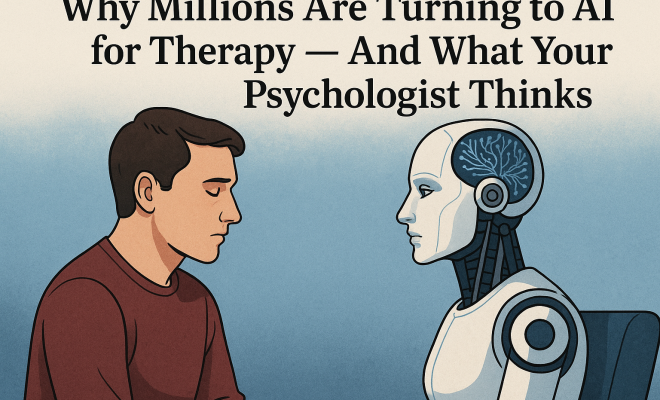
It’s no secret that artificial intelligence has permeated nearly every corner of our lives, from personalized shopping recommendations to sophisticated data analysis. But what happens when AI steps into the most intimate and vulnerable spaces of human experience? What happens when it starts offering emotional support, coping strategies, or even a semblance of therapeutic guidance? This isn’t a hypothetical question anymore. The integration of AI into mental health support is not just evolving; it’s here, and it’s creating a seismic shift in how people seek help.
A recent survey by the American Psychological Association (APA) brought this trend into sharp focus, revealing a truly fascinating, and perhaps a little unsettling, statistic: over a third of psychologists have patients who are already utilizing AI as an additional mental health resource. Think about that for a moment. This isn’t just about people dabbling with a new app; it’s about individuals actively incorporating AI into their personal journeys towards mental well-being, often alongside professional human guidance. This widespread adoption, with nearly half of all U.S. adults reportedly using large language models (LLMs) for psychological support, sparks a heated debate over AI dependency, critical ethical considerations, and that delicate balance between cutting-edge technological innovation and the irreplaceable human connection that has long defined effective therapy. The implications for the future of mental healthcare are quite frankly, staggering, and they touch on deeply emotional questions about our health, our privacy, and what it truly means to heal.
The Unexpected Rise of AI in Personal Mental Health
For years, the idea of a robot therapist seemed like something out of a science fiction movie. Yet, here we are. The accessibility of sophisticated AI tools, particularly large language models like ChatGPT, has democratized access to information and, in many cases, to what feels like a non-judgmental, always-available confidant. People are typing in their anxieties, their fears, their relationship woes, and receiving responses that, for many, feel surprisingly helpful. This isn’t necessarily about replacing traditional therapy; for many, it’s about supplementing it, or perhaps filling a void when human therapy isn’t readily available or affordable.
Consider the sheer convenience. You don’t need an appointment, you don’t need to leave your house, and there’s no perceived stigma in opening up to an algorithm. For individuals struggling with social anxiety, fear of judgment, or geographical barriers to mental health services, AI offers an immediate, low-stakes entry point. This ease of access has undoubtedly contributed to the rapid uptake, making AI therapy a more common, albeit often quiet, practice than many mental health professionals might have initially anticipated. The APA’s data isn’t just a snapshot; it’s a clear signal that this trend is deeply embedded in patient behavior. There’s a fuller look at apps for better mental health.
Psychologists Confront a New Reality: Patients Using AI Therapy
The fact that over a third of psychologists are encountering patients who are already engaging with AI for mental health support is a significant indicator of how swiftly this landscape is changing. This isn’t a future concern; it’s a present reality that clinicians are grappling with daily. What does a therapist do when a patient shares insights gained from an AI chatbot? How do they integrate this information, or even address potential misinformation, without invalidating the patient’s efforts to seek help?
This situation presents both challenges and potential opportunities. On one hand, therapists might feel a sense of unease. Is the AI providing sound advice? Is it reinforcing maladaptive patterns? Is it creating an over-reliance? On the other hand, a patient’s engagement with AI could be seen as a proactive step, a sign of their motivation to address their mental health. It opens up new avenues for discussion within the therapeutic space, allowing the psychologist to explore what the patient is learning, how they are processing it, and whether it aligns with their therapeutic goals. It forces a conversation about digital literacy and critical evaluation of information, even when that information comes from an AI designed to be helpful.
The Allure of Always-On Support: Why AI Appeals to Millions
Why are nearly half of U.S. adults turning to large language models for psychological support? The reasons are multifaceted and compelling, particularly in an era where mental health needs often outstrip available resources. First and foremost, there’s the aforementioned accessibility. Traditional therapy can be expensive, waiting lists are often long, and finding a therapist who is a good fit can be a daunting process. AI bypasses these hurdles entirely.
Secondly, there’s the anonymity. For many, discussing deeply personal and often painful experiences with another human, even a trained professional, can feel incredibly vulnerable. AI offers a perceived safe space where judgment isn’t a factor. You can confess your darkest thoughts, explore embarrassing habits, or vent about frustrating situations without fear of facial expressions, tone of voice, or a therapist’s personal biases. This perceived neutrality can be incredibly liberating for individuals who have struggled to open up in traditional settings. The 24/7 availability also means support is there precisely when a crisis hits, or when a nagging thought keeps you awake at 3 AM – times when human therapists are typically unavailable.
Navigating the Ethical Minefield of AI Therapy
While the benefits of AI therapy are clear, the ethical considerations are a dense thicket of challenges that demand our immediate attention. One of the most pressing concerns is data privacy. When you share deeply personal information with an AI, where does that data go? How is it stored? Who has access to it? Unlike licensed therapists who are bound by strict confidentiality laws like HIPAA in the United States, the regulatory landscape for AI mental health tools is still nascent and often ambiguous. This lack of clear guidelines leaves users vulnerable to potential data breaches, misuse of their sensitive information, or even the sale of their data to third parties. (See: CDC resources on mental health.)
Beyond privacy, there’s the critical issue of accuracy and potential for harm. AI models, while sophisticated, are trained on vast datasets that can contain biases or even misinformation. What if an AI provides unhelpful, or even actively harmful, advice? It doesn’t have the emotional intelligence, the nuanced understanding of human psychology, or the ethical training of a licensed professional. It can’t recognize suicidal ideation with the same sensitivity or intervene in a crisis situation. The risk of misdiagnosis or inappropriate guidance, especially for complex mental health conditions, is a serious and largely unaddressed concern. We’re talking about mental well-being here, not just recommending a movie; the stakes couldn’t be higher.
The Specter of AI Dependency and Diminished Human Connection
One of the most profound anxieties surrounding the widespread adoption of AI therapy is the potential for dependency and the erosion of genuine human connection. Therapy, at its core, is a relational process. It’s about building trust, experiencing empathy, and learning to navigate complex social interactions within a safe, guided environment. An AI, no matter how advanced, cannot replicate the warmth of human presence, the subtle cues of body language, or the profound impact of shared vulnerability with another person. This builds on childhood attachment impacts.
If individuals become overly reliant on AI for emotional processing, could it hinder their ability to form and maintain healthy human relationships? Could it create a generation that struggles with real-world interpersonal communication, preferring the predictable, non-judgmental responses of a machine over the messy, complex, but ultimately growth-inducing dynamics of human interaction? This isn’t to say AI can’t be a valuable tool, but rather to caution against a future where it becomes the primary, or sole, source of emotional support, potentially isolating individuals further in an already often-lonely world. We thrive on connection, and a digital interface, however sophisticated, can only offer a simulation of that vital human element.
Balancing Innovation with Human Touch: A New Paradigm for Mental Healthcare
The challenge before us isn’t to reject AI outright, but rather to figure out how to integrate it thoughtfully and ethically into existing mental healthcare frameworks. It’s about finding that sweet spot where technological innovation enhances, rather than diminishes, the human touch. Imagine a future where AI tools could serve as incredibly effective preliminary screeners, identifying individuals at risk and directing them to appropriate human care more efficiently. Or perhaps, AI could provide accessible psychoeducational resources, coping mechanism suggestions, or journaling prompts between human therapy sessions, thereby extending the reach of care.
The key here is ‘augmentation,’ not ‘replacement.’ Professionals like Dr. John Smith, a clinical psychologist specializing in digital therapeutics, often emphasize that AI can handle routine tasks, provide information, and even help track mood patterns, freeing up human therapists to focus on the complex, nuanced, and deeply human aspects of therapy—things like building rapport, processing trauma, and facilitating profound personal insight. This collaborative model requires clear guidelines, rigorous testing, and an ongoing dialogue between tech developers, mental health professionals, and policymakers to ensure patient safety and optimize outcomes.
The Regulatory Wild West: A Call for Standards in AI Mental Health
One of the most critical issues impeding the safe and effective integration of AI therapy is the current lack of robust regulatory oversight. The market for AI-powered mental health apps and platforms is booming, yet many operate without the stringent ethical and safety standards that govern traditional medical devices or therapeutic practices. This creates a ‘wild west’ scenario where consumers are often left to discern the trustworthiness and efficacy of these tools on their own, a task that is incredibly difficult for those already in a vulnerable state.
What’s desperately needed are clear, enforceable regulations that address data privacy, algorithmic bias, clinical validation, and accountability. Who is responsible if an AI provides harmful advice? What are the minimum qualifications for the developers of these tools? Organizations like the APA are beginning to advocate for these standards, but the legislative and regulatory processes are notoriously slow, often lagging far behind the pace of technological innovation. Without a clear framework, the risks associated with AI therapy will continue to outweigh many of its potential benefits, leaving both patients and conscientious providers in a precarious position.
Monetization and the Future of Digital Mental Health
From a business perspective, the realm of AI therapy and digital mental health is ripe with monetization opportunities. This isn’t just about app downloads; it’s about a burgeoning ecosystem of services, platforms, and educational content. High-CPC (cost-per-click) niches like medical/healthcare technology, specialized software, and online education are already seeing significant investment. We’re witnessing a rise in comparison searches for terms like “AI therapy apps review” or “ethical AI in mental health courses,” indicating a strong consumer interest in evaluating and understanding these tools.
Affiliate partnerships with vetted digital mental health platforms offer another avenue for growth, allowing content creators and health organizations to recommend reliable services while generating revenue. This economic landscape, however, further underscores the urgent need for ethical guidelines. As more money flows into this sector, the temptation to prioritize profit over patient safety could intensify. Therefore, any monetization strategy must be inextricably linked with a commitment to transparency, evidence-based practices, and rigorous ethical standards. The financial potential of AI in mental health is enormous, but its responsible development and deployment must remain paramount.
Case Studies: AI Therapy in Action
To truly grasp the impact of AI therapy, let’s look at a couple of real-world (or near-real-world) examples. Consider “Wysa,” an AI chatbot that offers anonymous, judgment-free support and therapeutic techniques based on cognitive behavioral therapy (CBT) and dialectical behavior therapy (DBT). Users can chat about their feelings, engage in guided meditation, or use tools to manage anxiety. Wysa has been deployed in various settings, including employee wellness programs, and has shown promising results in reducing symptoms of anxiety and depression for some users. It’s a prime example of AI offering an accessible first line of defense or supplementary support.
Another example is “Woebot,” an AI-powered chatbot designed by Stanford University researchers. Woebot uses CBT principles to help users identify and challenge negative thought patterns. It engages in daily check-ins, provides psychoeducation, and offers exercises to improve mood. The creators of Woebot conducted a randomized controlled trial that found users of the app experienced a significant reduction in depressive symptoms over two weeks compared to an information-only control group. These examples aren’t perfect, and they certainly don’t replace human therapists for severe conditions, but they illustrate how AI is already providing tangible, evidence-backed support for mild to moderate mental health challenges. (See: NIMH statistics on mental illness.)
These case studies underscore a critical point: the effectiveness of AI in mental health isn’t uniform. It’s highly dependent on the specific AI’s design, its underlying therapeutic model, and the user’s individual needs and willingness to engage. What works for someone seeking basic stress management might be entirely insufficient for someone battling severe clinical depression. The nuance here is crucial and often overlooked in broader discussions about AI’s role.
Expert Perspectives: What Clinicians Are Saying
It’s vital to hear directly from the clinicians on the front lines. Dr. Emily Carter, a licensed clinical social worker with decades of experience, notes, “Many of my clients are using AI apps, and it’s a mixed bag. For some, it helps them articulate feelings they struggle to voice in session, almost like a warm-up. For others, it can reinforce a superficial understanding of complex emotional issues, or they bring in advice from an AI that’s completely unsuited for their unique situation. My role becomes partly about helping them critically evaluate that information.”
Dr. David Lee, a psychiatrist specializing in mood disorders, offers a more cautious view: “While I see the potential for AI in screening and providing resources, I’m deeply concerned about its use for anything beyond that without direct human oversight. Psychiatric conditions often require medication management, complex diagnostic reasoning, and a human’s ability to pick up on subtle non-verbal cues. An AI simply can’t do that. The risk of mismanaging a serious condition, like bipolar disorder or schizophrenia, is too high. We need strict guidelines on what AI can and cannot ethically claim to do.”
These perspectives highlight the ongoing tension. There’s enthusiasm for AI’s potential to expand access and offer preliminary support, but also significant apprehension about its limitations and the potential for harm if used inappropriately. The consensus among many experts seems to be that AI should be viewed as a tool in a larger toolkit, not a standalone solution, especially for complex or severe mental health conditions. The ethical imperative is to ensure that AI complements, rather than compromises, patient safety and the quality of care.
Comparing AI Therapy to Traditional Therapy: Key Differences
It’s helpful to lay out the fundamental differences between AI therapy and traditional human-led therapy. This isn’t just about technology versus person; it’s about distinct approaches with different strengths and weaknesses. We covered comprehensive mental health guide in more detail.
- Empathy and Rapport: A human therapist builds genuine rapport and offers authentic empathy, which is a cornerstone of therapeutic change. AI can simulate empathy through language, but it cannot truly feel or understand.
- Nuance and Context: Human therapists can pick up on subtle non-verbal cues, understand complex life contexts, and adapt their approach dynamically. AI, while improving, often struggles with true contextual understanding and the subtleties of human communication.
- Crisis Intervention: In situations involving suicidal ideation, abuse, or severe mental health crises, a human therapist can intervene directly, connect individuals to emergency services, and provide immediate, life-saving support. AI’s capabilities here are severely limited and often rely on pre-programmed disclaimers rather than active intervention.
- Privacy and Confidentiality: Traditional therapy has clear legal and ethical frameworks (like HIPAA) protecting patient data. AI therapy platforms operate in a much greyer area, with varying levels of data security and privacy policies that might not meet medical standards.
- Cost and Accessibility: AI therapy generally offers significantly lower costs and 24/7 accessibility, removing many barriers present in traditional therapy, such as scheduling, location, and financial strain.
- Personal Growth Beyond Symptom Reduction: While AI can help with symptom management, human therapy often facilitates deeper self-discovery, identity exploration, and the development of interpersonal skills through the therapeutic relationship itself – something AI cannot replicate.
Understanding these differences isn’t about choosing one over the other, but about recognizing where each excels and where they fall short. This understanding allows for a more informed integration of AI into mental health ecosystems.
The Road Ahead: Cultivating Responsible AI in Mental Health
The integration of AI into mental health support is no longer a futuristic concept; it’s a present-day reality that demands our careful attention. The APA’s survey data is a wake-up call, demonstrating that patients are already embracing these tools, often ahead of the professional community’s full understanding or preparation. This isn’t a trend we can ignore or wish away. Instead, we must engage with it proactively, thoughtfully, and with an unwavering commitment to patient well-being.
The path forward involves several critical components: fostering a robust dialogue between AI developers, mental health professionals, ethicists, and policymakers; developing clear regulatory frameworks that ensure safety, privacy, and efficacy; investing in research to understand the long-term impacts of AI therapy; and educating both the public and practitioners on the responsible use of these powerful tools. We have the opportunity to harness AI to expand access to mental health support in unprecedented ways, but only if we proceed with caution, empathy, and a profound respect for the complexities of the human mind. The future of mental healthcare will undoubtedly involve AI, but its success will ultimately depend on how well we integrate it with the irreplaceable wisdom and compassion of human care.
Frequently Asked Questions About AI Therapy
Given the rapidly evolving nature of AI therapy, it’s natural to have a lot of questions. Here are some of the most common ones people ask:
Q1: Is AI therapy effective?
A: For certain mental health concerns, particularly mild to moderate anxiety, depression, or stress management, some AI therapy apps have shown promising results in studies. They often use techniques from established therapies like CBT. However, their effectiveness varies widely depending on the specific AI, the user’s condition, and how consistently the user engages with it. It’s generally not recommended as a standalone treatment for severe mental illnesses or crises.
Q2: Can AI therapy replace a human therapist?
A: Not currently, and likely not in the foreseeable future for complex cases. AI lacks true empathy, the ability to understand nuanced human context, and the capacity for crisis intervention that a human therapist possesses. While AI can provide support, information, and coping strategies, it cannot replicate the deep, therapeutic relationship that is often crucial for profound personal growth and healing.
Q3: How private is my data with AI therapy apps?
A: This is a major concern. Unlike licensed human therapists who are bound by strict confidentiality laws like HIPAA, the regulatory landscape for AI mental health apps is less defined. Data privacy policies can vary significantly between apps. It’s absolutely essential to read the privacy policy carefully before sharing sensitive information. Look for apps that clearly state how your data is stored, who has access, and whether it’s used for training or shared with third parties.
Q4: What are the risks of using AI therapy?
A: Risks include potential data breaches, receiving unhelpful or even harmful advice, misdiagnosis (or lack of diagnosis for serious conditions), over-reliance on AI, and a diminished sense of human connection. AI can also perpetuate biases present in its training data, leading to skewed or culturally insensitive responses. For individuals in crisis, AI may not be able to provide the immediate, life-saving support a human professional can.
Q5: When should I consider using AI therapy?
A: You might consider AI therapy if you’re looking for supplementary support between human therapy sessions, need accessible tools for stress management, want to explore coping mechanisms, or face barriers to traditional therapy like cost or availability. It can also be a good starting point to explore your feelings before committing to human therapy. If you’re experiencing severe symptoms, suicidal thoughts, or a mental health crisis, always seek help from a human professional immediately.
Q6: How can I choose a reputable AI therapy app?
A: Look for apps developed by reputable organizations or universities, ideally with published research supporting their efficacy. Check for clear privacy policies and data security measures. Read reviews, but also be critical. See if they offer disclaimers about their limitations and provide clear pathways to human support in emergencies. Apps that are transparent about their AI models and how they were trained are generally more trustworthy. See also support for young minds.
“`
Trending Now
Frequently Asked Questions
How is AI being used in therapy?
AI is being integrated into therapy by offering emotional support, coping strategies, and therapeutic guidance. Many individuals are using AI tools like large language models to complement traditional therapy, creating a blend of technology and human interaction in mental health support.
What do psychologists think about AI therapy?
Psychologists have mixed feelings about AI therapy. While some see it as a valuable supplementary resource for patients, concerns about AI dependency and the need for human connection in therapy remain significant. A survey indicates that many psychologists have patients using AI for additional mental health support.
Is AI therapy effective?
The effectiveness of AI therapy can vary. Many users find AI tools helpful for immediate support and information, but they are not a replacement for professional therapy. The integration of AI can enhance mental health journeys when used alongside traditional therapeutic practices.
What are the ethical concerns of AI in mental health?
The ethical concerns surrounding AI in mental health include privacy issues, the potential for over-reliance on technology, and the challenge of maintaining a human connection in therapy. These concerns highlight the need for careful consideration and regulation as AI becomes more prevalent in mental health care.
Why are people turning to AI for mental health support?
People are turning to AI for mental health support due to its accessibility and the convenience it offers. With many adults using AI tools for psychological support, these technologies provide immediate resources and information, making mental health assistance more readily available to a wider audience.
What did we miss? Let us know in the comments and join the conversation.