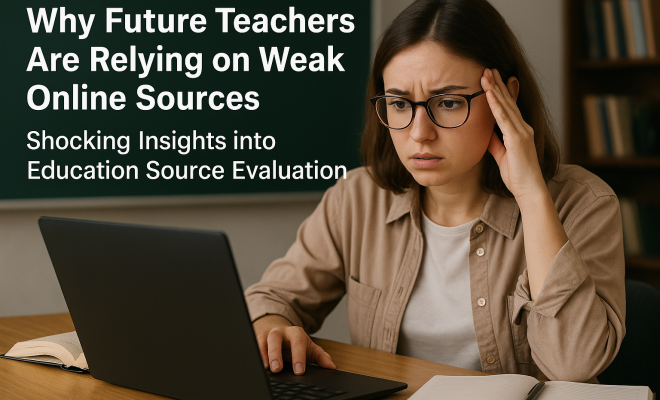
Why Future Teachers Are Relying on Weak Online Sources: Shocking Insights into Education Source Evaluation
“`html
Introduction: The Digital Dilemma in Education
In an age where information is at our fingertips, the way we evaluate sources has never been more critical, particularly in education. As technology permeates every aspect of our lives, the challenge of distinguishing credible information from noise becomes increasingly daunting. A recent study sheds light on this issue, revealing that even those training to be teachers are often not equipped to rigorously evaluate online sources. This calls into question the very foundations of education source evaluation, especially in the context of digital literacy and the growing prevalence of misinformation.
The Research Context: A Closer Look at Preservice Teachers
The study in question investigates how preservice teachers assess online information as they prepare for their future careers. Most notably, it uncovers a startling trend: these future educators tend to gravitate towards Google-owned resources. While this might seem convenient, it raises significant concerns about the quality and credibility of the information they’re using to inform their teaching practices.
As preservice teachers turn to popular online platforms, the risk of selecting non-scholarly resources increases dramatically. This behavior not only reflects their immediate search habits but also has profound implications for their future students, who will learn from teachers armed with potentially unreliable information. This situation highlights a troubling gap in teacher education programs regarding education source evaluation.
Understanding the WHY Method in Source Evaluation
To better understand how preservice teachers evaluate sources, the study employs the WHY method—a framework designed to encourage critical thinking about online resources. The WHY method prompts users to ask three fundamental questions:
- Why is this source being presented? Acknowledge the author’s purpose.
- Who is behind the source? Consider the credibility and expertise of the author.
- What backing does this source have? Evaluate the evidence supporting the claims made.
Utilizing the WHY method encourages preservice teachers to engage in a deeper analysis of the sources they encounter, pushing them beyond surface-level evaluations. Yet, the study suggests that many students still fail to utilize this framework effectively, opting instead for convenience.
The Role of Digital Literacy in Teacher Education
Digital literacy is an essential skill in today’s educational landscape, and its importance cannot be overstated. As educators, preservice teachers must model effective information evaluation for their future students. However, if they themselves rely on weak sources, there’s a risk of perpetuating the cycle of misinformation.
To combat this challenge, teacher education programs must prioritize digital literacy as a core component of their curricula. This means not only teaching students how to search for information but also how to evaluate it critically. The goal should be to foster a generation of educators who are not just consumers of information but active analysts capable of discerning credible evidence from popular but flawed sources.
The Impact of Misinformation on Classroom Practices
The findings from the study resonate in the broader educational conversation about misinformation. In a world where AI-generated content and sensationalized media often dominate search results, it’s easy to see how preservice teachers might become overwhelmed. The implications of this extend to the classroom, where misinformation can shape lesson plans and influence teaching methods.
Consider a scenario where a teacher presents information from a popular blog post without verifying its accuracy. This could lead to the dissemination of incorrect or biased information, ultimately affecting students’ understanding of critical subjects. Educators must be acutely aware of the sources they choose, as these decisions can have lasting impacts on young minds. (See: importance of health literacy.)
Rethinking the Approach to Source Evaluation
Given the clear need for improved education source evaluation among preservice teachers, it’s crucial for teacher training programs to rethink their approach. Simply introducing the WHY method isn’t enough; educators must provide ongoing practice and support in evaluating sources.
One potential strategy is to integrate workshops and hands-on activities where preservice teachers are tasked with evaluating real-world sources. By simulating the challenges they will face in their careers, these training sessions can help students develop a critical eye for credible evidence. Moreover, bringing in guest speakers—such as librarians or information specialists—can further enhance their understanding of resource evaluation.
The Role of Technology in Source Evaluation
As technology continues to evolve, so do the methods we use to evaluate sources. Artificial intelligence, for instance, can be a double-edged sword in the realm of education. While AI tools can facilitate the search for credible information, they can also reinforce biases if not used judiciously.
Preservice teachers should be trained to understand the capabilities and limitations of AI in education source evaluation. This includes recognizing when AI-generated content may be misleading or inaccurate. By combining technology with traditional evaluation methods, future educators can cultivate a more holistic approach to sourcing information.
Addressing Convenience Bias in Source Selection
The study highlights a concerning trend known as convenience bias, where individuals opt for easily accessible sources rather than rigorously vetted ones. This bias is particularly prevalent among preservice teachers, who—under pressure to find quick answers—might be tempted to rely on the first results that appear in their search queries.
To combat convenience bias, education programs must emphasize the value of patience and diligence in source evaluation. Encouraging future educators to take the time to sift through multiple sources, cross-check facts, and seek out scholarly materials is essential. This shift in mindset can help break the cycle of reliance on casual, popular sources.
The Broader Implications for Education
The implications of this research extend beyond preservice teachers to the entire education system. If future educators are not adequately trained to evaluate sources, their students may also struggle with critical thinking and information literacy. This creates a concerning feedback loop that perpetuates misinformation and undermines the integrity of education.
Education source evaluation should be a priority at all levels, from K-12 classrooms to higher education institutions. By fostering a strong foundation in source evaluation, educators can equip students with the skills they need to navigate an increasingly complex information landscape.
Strategies for Effective Source Evaluation
Improving education source evaluation doesn’t just hinge on teaching theoretical frameworks; practical strategies are essential. Here are some effective methods that teacher training programs can implement: (See: teachers and online information sources.)
- Source Comparison Exercises: Set up exercises where preservice teachers compare various sources on the same topic. They can evaluate differences in credibility, bias, and the evidence presented. This hands-on approach encourages critical thinking and allows students to see firsthand how source evaluation works.
- Case Studies: Analyze real-world instances where misinformation has led to significant consequences. Discussing these case studies in a classroom setting can illuminate the potential dangers of poor source evaluation and motivate future educators to take the topic seriously.
- Peer Review Sessions: Create opportunities for preservice teachers to review each other’s source evaluations. This collaborative feedback can improve their analytical skills and help them learn from one another’s perspectives.
- Integration of Ethical Considerations: Discuss the ethical implications of misinformation in an educational context. When preservice teachers understand the weight of their choices in source selection, they may adopt a more responsible approach to sourcing information.
Expert Perspectives on Education Source Evaluation
To further enrich the discourse surrounding education source evaluation, it’s essential to include insights from experts in the field. Educators, librarians, and researchers emphasize the importance of source evaluation in various ways:
Dr. Sarah Thompson, Education Researcher: “Without proper source evaluation, we risk not only the quality of education but also the integrity of future generations’ understanding of truth and reliability. It’s not just about teaching content; it’s about teaching how to think critically about that content.”
Mark Johnson, Librarian and Information Specialist: “The tools we have to evaluate information are only as good as the training we provide. We need to create a culture of inquiry, where questioning sources is the norm, not the exception.”
Dr. Emily Chen, Digital Literacy Advocate: “Teaching preservice teachers the skills to navigate misinformation is a crucial step in creating informed citizens. Their ability to evaluate sources effectively will ripple out to their students, who will be better equipped to handle the complexities of the digital world.”
The Future of Education Source Evaluation
As we move further into the digital age, the future of education source evaluation is increasingly intertwined with technological advancements. Educators must adapt to emerging tools and methodologies that can enhance source evaluation practices. Here are some trends to watch:
- AI and Machine Learning: The integration of AI into educational tools can enhance source evaluation by providing real-time analysis of information credibility. However, educators must be aware of the biases that AI systems can introduce and remain vigilant in their evaluations.
- Gamification: Incorporating gamified elements into source evaluation training can make the learning process more engaging. Games that challenge preservice teachers to identify credible sources in a fun and interactive way can foster better retention of these critical skills.
- Collaborative Online Platforms: As remote learning continues, online platforms that allow for collaborative evaluation of sources can be beneficial. Preservice teachers can work together to assess, critique, and discuss various resources, enriching their learning experience.
Frequently Asked Questions (FAQ)
What are the most common mistakes made in source evaluation?
One of the most common mistakes is relying on superficial indicators of credibility, such as a website’s appearance or domain. Additionally, preservice teachers often overlook the author’s qualifications or fail to check for citations and references supporting the claims made.
How can preservice teachers improve their source evaluation skills?
Engaging in practical exercises, seeking feedback from peers, and utilizing frameworks like the WHY method can significantly enhance their source evaluation skills. Continuous practice and real-world application of these skills are also crucial for their development.
Why is digital literacy important for preservice teachers?
Digital literacy equips preservice teachers with the necessary skills to navigate the vast amounts of information available online. It empowers them to discern credible sources from unreliable ones, ensuring they can provide accurate information to their future students. (See: study on digital literacy in education.)
What role do teacher education programs play in combating misinformation?
Teacher education programs have the responsibility to incorporate education source evaluation into their curricula, effectively training future educators to critically assess resources. By doing so, they can help break the cycle of misinformation and foster a more informed generation of learners.
Are there specific tools recommended for evaluating sources?
Yes, there are several tools and resources that can help preservice teachers evaluate sources effectively. Websites like CRAAP Test and UT Austin’s Source Evaluation Guide provide checklists and criteria to assist in assessing credibility, relevance, accuracy, authority, and purpose.
How can educators foster a culture of critical evaluation in their classrooms?
Educators can promote a culture of critical evaluation by modeling the source evaluation process in their teachings, encouraging students to question the information presented, and facilitating discussions about the trustworthiness of various sources. Engaging students in group projects that require sourcing information can also enhance collaborative critical thinking.
What are the consequences of poor source evaluation in education?
Poor source evaluation can lead to the dissemination of misinformation, which can result in students developing misconceptions about key subjects. This not only undermines the educational process but can also contribute to larger societal issues, such as the spread of false information and diminished trust in educational institutions.
Conclusion: A Call to Action for Educators
The research findings serve as a wake-up call for educators, policymakers, and teacher training programs. It’s crucial to prioritize education source evaluation in preservice teacher training, emphasizing both digital literacy and critical thinking. By instilling these skills in future educators, we can help ensure that the next generation is equipped to discern credible information from the noise.
Ultimately, the responsibility lies with all stakeholders in the education sector. By recognizing the importance of rigorous source evaluation and committing to ongoing education around this issue, we can make strides towards a more informed and responsible teaching profession. The future of education depends on it.
“`
Trending Now
Frequently Asked Questions
Why is it important for teachers to evaluate online sources?
Evaluating online sources is crucial for teachers to ensure they provide accurate and credible information to their students. With the rise of misinformation, teachers must discern reliable resources to foster critical thinking and promote digital literacy in their classrooms.
What challenges do preservice teachers face in source evaluation?
Preservice teachers often struggle with evaluating online information due to a reliance on popular platforms like Google. This trend can lead to the use of non-scholarly resources, undermining the quality of education they provide and affecting their future students.
What is the WHY method in source evaluation?
The WHY method is a framework that encourages critical thinking about online resources by prompting users to ask three questions: Why is this source being presented? Who is behind the source? And What is the purpose of the information? This method helps improve source evaluation skills.
How do preservice teachers typically search for information online?
Many preservice teachers tend to gravitate towards Google-owned resources for convenience. However, this habit often leads to selecting less credible information, raising concerns about the quality of knowledge they will impart to their future students.
What implications does poor source evaluation have for future students?
If preservice teachers rely on unreliable sources, it can negatively impact their students' learning experiences. Students may receive misinformation, which can hinder their ability to think critically and discern credible information in an increasingly digital world.
Have you experienced this yourself? We’d love to hear your story in the comments.