The Tech Edvocate

Top Menu

  • Advertisement
  • Apps
  • Home Page
  • Home Page Five (No Sidebar)
  • Home Page Four
  • Home Page Three
  • Home Page Two
  • Home Tech2
  • Icons [No Sidebar]
  • Left Sidbear Page
  • Lynch Educational Consulting
  • My Account
  • My Speaking Page
  • Newsletter Sign Up Confirmation
  • Newsletter Unsubscription
  • Our Brands
  • Page Example
  • Privacy Policy
  • Protected Content
  • Register
  • Request a Product Review
  • Shop
  • Shortcodes Examples
  • Signup
  • Start Here
    • Governance
    • Careers
    • Contact Us
  • Terms and Conditions
  • The Edvocate
  • The Tech Edvocate Product Guide
  • Topics
  • Write For Us
  • Advertise

Main Menu

  • Start Here
    • Our Brands
    • Governance
      • Lynch Educational Consulting, LLC.
      • Dr. Lynch’s Personal Website
      • Careers
    • Write For Us
    • The Tech Edvocate Product Guide
    • Contact Us
    • Books
    • Edupedia
    • Post a Job
    • The Edvocate Podcast
    • Terms and Conditions
    • Privacy Policy
  • Topics
    • Assistive Technology
    • Child Development Tech
    • Early Childhood & K-12 EdTech
    • EdTech Futures
    • EdTech News
    • EdTech Policy & Reform
    • EdTech Startups & Businesses
    • Higher Education EdTech
    • Online Learning & eLearning
    • Parent & Family Tech
    • Personalized Learning
    • Product Reviews
  • Advertise
  • Tech Edvocate Awards
  • The Edvocate
  • Pedagogue
  • School Ratings

logo

The Tech Edvocate

  • Start Here
    • Our Brands
    • Governance
      • Lynch Educational Consulting, LLC.
      • Dr. Lynch’s Personal Website
        • My Speaking Page
      • Careers
    • Write For Us
    • The Tech Edvocate Product Guide
    • Contact Us
    • Books
    • Edupedia
    • Post a Job
    • The Edvocate Podcast
    • Terms and Conditions
    • Privacy Policy
  • Topics
    • Assistive Technology
    • Child Development Tech
    • Early Childhood & K-12 EdTech
    • EdTech Futures
    • EdTech News
    • EdTech Policy & Reform
    • EdTech Startups & Businesses
    • Higher Education EdTech
    • Online Learning & eLearning
    • Parent & Family Tech
    • Personalized Learning
    • Product Reviews
  • Advertise
  • Tech Edvocate Awards
  • The Edvocate
  • Pedagogue
  • School Ratings
  • US Battery as a Service Market Shifts Toward Fleet-Based Energy

  • The Startling Truth: Why Americans Distrust AI with Their Health

  • This Crucial Deadline for Banks Is Closer Than You Think

  • Baffling: CrowdStrike’s $500 Million AI Bet Reshapes Cybersecurity

  • This Crucial Autonomous Driving Rule Could Cost You Everything

  • Baffling: Microsoft AI CEO Demands Halt to Conscious AI Development

  • O seară în ritmul tău: atmosfera divertismentului de cazinou pe internet

  • Outrageous: AppLovin Hit With Lawsuit Over AI Claims — What Investors Need to Know

  • 9 Critical Ways AI Investment Fraud Is Quietly Draining Your Bank Account

  • Is the AI Bubble Bursting? OpenAI’s Funding Woes Revealed

Digital & Mobile Technology
Home›Digital & Mobile Technology›Why Do PCs Still Require a CMOS Battery Even Though They Run on Electricity?

Why Do PCs Still Require a CMOS Battery Even Though They Run on Electricity?
By Matthew Lynch
May 16, 2023
0
Spread the love

Computers have come a long way since the inception of the first personal computer in 1975. The earliest computers relied on punch cards and vacuum tubes, and the technology has advanced significantly since then. One feature that has stuck around is the use of the complementary metal-oxide-semiconductor (CMOS) battery. Even though personal computers (PCs) today are powered by electricity, they still require these batteries to operate correctly.

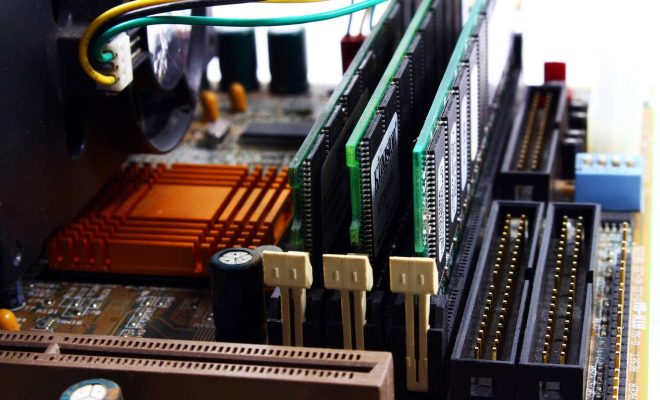
A CMOS battery is a small, round lithium-ion battery that is typically found on the motherboard of a computer. It provides power to the CMOS chip, which stores the system’s configuration data like the date and time, the initial boot-up configuration, and other settings.

While it may seem strange that a computer that runs on electricity needs a battery to maintain some of the settings, there are a few reasons why this is necessary:

1. Power Outages and Interruptions

The reason most commonly given for the need for a CMOS battery is that it helps to keep the computer’s settings intact during a power outage. If the power goes out, the computer will lose its power source, meaning that it will not be able to keep the settings saved in the CMOS chip. However, with the CMOS battery in place, the computer can remember its settings even if the power is lost.

2. Battery Life

The CMOS battery’s lifespan is usually between 2-10 years, depending on the manufacturer and the usage. When the battery life runs out, the CMOS chip may lose some of its saved data like the date and time as well as other settings. Changing the CMOS battery is easy, and all one needs is to unscrew the old one and replace it with a new one.

3. Start-up Process

When a computer is turned on, the BIOS firmware initializes the hardware, and it is the CMOS chip that stores the BIOS settings. Therefore, when there is a power outage, and the battery is dead, the computer will not initialize its BIOS setting, and it will make the hardware inoperable.


Previous Article

Why Is an IR Blaster Still Useful ...

Next Article

How Much Does a Home EV Charger ...

Matthew Lynch

Related articles More from author

  • Digital & Mobile Technology

    How to Recover Deleted Messages on Facebook Messenger

    June 1, 2023
    By Matthew Lynch
  • Digital & Mobile Technology

    Fixes for When You Can’t Make Phone Calls on Your iPhone

    August 5, 2023
    By Matthew Lynch
  • Digital & Mobile Technology

    Definition of RAM Slots

    April 12, 2023
    By Matthew Lynch
  • Digital & Mobile Technology

    What is Microsoft Volume Licensing?

    May 24, 2023
    By Matthew Lynch
  • Digital & Mobile Technology

    How to Remove a Glass or Plastic Screen Protector Safely

    August 5, 2023
    By Matthew Lynch
  • Digital & Mobile Technology

    Why Your Mac is So Slow and How to Speed It Up?

    May 29, 2023
    By Matthew Lynch

Search

Login & Registration

  • Log in
  • Entries feed
  • Comments feed
  • WordPress.org

Newsletter

Signup for The Tech Edvocate Newsletter and have the latest in EdTech news and opinion delivered to your email address!

About Us

Since technology is not going anywhere and does more good than harm, adapting is the best course of action. That is where The Tech Edvocate comes in. We plan to cover the PreK-12 and Higher Education EdTech sectors and provide our readers with the latest news and opinion on the subject. From time to time, I will invite other voices to weigh in on important issues in EdTech. We hope to provide a well-rounded, multi-faceted look at the past, present, the future of EdTech in the US and internationally.

We started this journey back in June 2016, and we plan to continue it for many more years to come. I hope that you will join us in this discussion of the past, present and future of EdTech and lend your own insight to the issues that are discussed.

Newsletter

Signup for The Tech Edvocate Newsletter and have the latest in EdTech news and opinion delivered to your email address!

Contact Us

The Tech Edvocate
910 Goddin Street
Richmond, VA 23231
(601) 630-5238
[email protected]

Copyright © 2026 Matthew Lynch. All rights reserved.