The Tech Edvocate

Top Menu

  • Advertisement
  • Apps
  • Home Page
  • Home Page Five (No Sidebar)
  • Home Page Four
  • Home Page Three
  • Home Page Two
  • Home Tech2
  • Icons [No Sidebar]
  • Left Sidbear Page
  • Lynch Educational Consulting
  • My Account
  • My Speaking Page
  • Newsletter Sign Up Confirmation
  • Newsletter Unsubscription
  • Our Brands
  • Page Example
  • Privacy Policy
  • Protected Content
  • Register
  • Request a Product Review
  • Shop
  • Shortcodes Examples
  • Signup
  • Start Here
    • Governance
    • Careers
    • Contact Us
  • Terms and Conditions
  • The Edvocate
  • The Tech Edvocate Product Guide
  • Topics
  • Write For Us
  • Advertise

Main Menu

  • Start Here
    • Our Brands
    • Governance
      • Lynch Educational Consulting, LLC.
      • Dr. Lynch’s Personal Website
      • Careers
    • Write For Us
    • The Tech Edvocate Product Guide
    • Contact Us
    • Books
    • Edupedia
    • Post a Job
    • The Edvocate Podcast
    • Terms and Conditions
    • Privacy Policy
  • Topics
    • Assistive Technology
    • Child Development Tech
    • Early Childhood & K-12 EdTech
    • EdTech Futures
    • EdTech News
    • EdTech Policy & Reform
    • EdTech Startups & Businesses
    • Higher Education EdTech
    • Online Learning & eLearning
    • Parent & Family Tech
    • Personalized Learning
    • Product Reviews
  • Advertise
  • Tech Edvocate Awards
  • The Edvocate
  • Pedagogue
  • School Ratings

logo

The Tech Edvocate

  • Start Here
    • Our Brands
    • Governance
      • Lynch Educational Consulting, LLC.
      • Dr. Lynch’s Personal Website
        • My Speaking Page
      • Careers
    • Write For Us
    • The Tech Edvocate Product Guide
    • Contact Us
    • Books
    • Edupedia
    • Post a Job
    • The Edvocate Podcast
    • Terms and Conditions
    • Privacy Policy
  • Topics
    • Assistive Technology
    • Child Development Tech
    • Early Childhood & K-12 EdTech
    • EdTech Futures
    • EdTech News
    • EdTech Policy & Reform
    • EdTech Startups & Businesses
    • Higher Education EdTech
    • Online Learning & eLearning
    • Parent & Family Tech
    • Personalized Learning
    • Product Reviews
  • Advertise
  • Tech Edvocate Awards
  • The Edvocate
  • Pedagogue
  • School Ratings
  • Your Home Insurance Bill Just Exploded: 5 Reasons Why — And What Comes Next

  • Your Home Insurance Premiums Are Skyrocketing: Is Your State On This List?

  • The Brutal Truth: Why 30-Year vs. 15-Year Fixed Mortgage Rates in 2026 Could CRUSH Your Homeownership Dreams

  • 7 Things First-Time Homebuyers MUST Know About the New 6.89% Mortgage Rates

  • Your Dream Home Just Got Pricier: Why Mortgage Rates 2026 Are Soaring Toward 7%

  • Unbelievable: The True Cost of CRISPR Anti-Aging Will Absolutely Shock You

  • Your Genes Hold The Key: How CRISPR Could Restore Youthful Function

  • The Mind-Blowing Way CRISPR Could End Aging As We Know It

  • Why Millions Are Rushing to Install Home Battery Storage Now

  • Google’s €13 Billion Bet: The Unseen Renewable Energy Funds Quietly Reshaping Your Portfolio

EdTech & InnovationElementary Education
Home›EdTech & Innovation›Why Digital Learning is Reshaping Education

Why Digital Learning is Reshaping Education
By Matthew Lynch
March 30, 2017
0
Spread the love

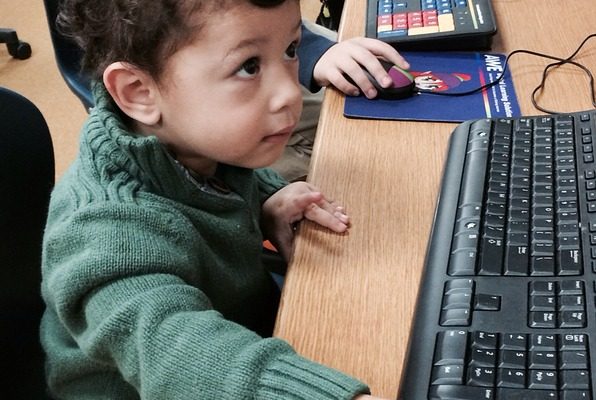
Technology has changed just about every field, including education. Digital learning is reshaping education in unprecedented ways. The ways in which students learn are changing rapidly thanks to technology, and both students and teachers will benefit from it.

There are several specific changes that we can expect to see as digital learning takes over education. For one, the way teachers present information and how students work with that information has changed. Students are asked to be more hands-on and collaborative than ever before. There are also new skills that students must learn, such as digital literacy.

The Flipped Classroom

The traditional model of teachers lecturing in the classroom and students completing practice and homework on their own is changing. Instead, students are learning on their own and using the classroom as a place to dig more deeply into what they’ve learned. This model, known as the flipped classroom, is gaining popularity thanks to the rise of EdTech.

How does the flipped classroom work? Students watch lecture videos or complete readings at home. The following day in class, the teacher clarifies anything students didn’t understand. Students then work with the information to answer questions, complete projects, and do other activities that used to be reserved for homework.

The flipped classroom provides benefits for students and teachers alike. Teachers spend more time helping students with the content they don’t understand. This means more one-on-one help for students and less time listening to boring lectures in class.

Emphasis on Collaboration

Another change brought about by digital learning is a new emphasis on collaboration. Thanks to increased technology in the classroom, students able to collaborate online and work on projects together. With a flipped classroom model, teachers can spend less time lecturing and devote more time to collaborative activities and projects.

Technology has also created a more connected world, where everyone is reachable almost any time of day. Cloud-based apps, like Google’s Drive, allow students to share work and collaborate outside of school. Many teachers are already using social media or education apps to encourage students to communicate about class content or ask questions from home. As digital learning becomes more popular, this kind of after-hours collaboration will only increase.

More Higher-Order Thinking

Thanks to technology, students have instant access to all the information they could ever want or need. There’s no longer a need for students to memorize facts or dates. Today, there is much more emphasis placed on higher-order thinking.

Higher-order thinking occurs when students are asked not just to know a piece of information but to do something with that information. At the most basic level, this can mean analyzing information—comparing and contrasting, for example. At the highest level, students are asked to create something on their own that shows their understanding.

In nearly every classroom today, students are asked to do these types of higher-order thinking tasks. Gone are the days when teachers lectured and students regurgitated information for a quiz or test. Today’s students are learning how to be critical thinkers, a skill that is in-demand in today’s job market.

New Skills

There are other skills that students will need to stay competitive in the 21st century. Digital literacy, the ability to use the internet and other digital technologies, is increasingly important for a wide variety of jobs. As technology becomes a bigger part of education, teachers will devote more time to teaching digital literacy.

In some states, digital literacy is already a part of the curriculum. More states are creating standards for digital literacy just as they would for reading or math.

These are just some of the ways that digital learning is reshaping education. As digital learning becomes a bigger part of the world of education, you can expect to see more changes in classrooms around the world.

How do you envison technology changing education?

TagsEdtechedtechchatelearningSTEAMSTEM
Previous Article

Reframing the Debate About Screen Time

Next Article

The Absence of Internet at Home is ...

Matthew Lynch

Related articles More from author

  • Child Development TechEarly Childhood & K-12 EdTech

    9 Ways that Technology Boosts Student Confidence in the Classroom

    November 11, 2017
    By Matthew Lynch
  • Personalized Learning

    Using Gamification in Teacher Professional Development

    January 19, 2017
    By Matthew Lynch
  • Higher Education EdTech

    How technology can help connect off-campus students

    August 26, 2017
    By Matthew Lynch
  • EdTech & Innovation

    Five Ways to Leverage Wearable Technology in the Classroom

    June 13, 2017
    By Matthew Lynch
  • Assistive Technology

    4 Benefits of Virtual Labs

    March 6, 2017
    By Matthew Lynch
  • Early Childhood & K-12 EdTech

    Integrating Technology into the Classroom, Part I

    October 20, 2016
    By Matthew Lynch

Search

Login & Registration

  • Log in
  • Entries feed
  • Comments feed
  • WordPress.org

Newsletter

Signup for The Tech Edvocate Newsletter and have the latest in EdTech news and opinion delivered to your email address!

About Us

Since technology is not going anywhere and does more good than harm, adapting is the best course of action. That is where The Tech Edvocate comes in. We plan to cover the PreK-12 and Higher Education EdTech sectors and provide our readers with the latest news and opinion on the subject. From time to time, I will invite other voices to weigh in on important issues in EdTech. We hope to provide a well-rounded, multi-faceted look at the past, present, the future of EdTech in the US and internationally.

We started this journey back in June 2016, and we plan to continue it for many more years to come. I hope that you will join us in this discussion of the past, present and future of EdTech and lend your own insight to the issues that are discussed.

Newsletter

Signup for The Tech Edvocate Newsletter and have the latest in EdTech news and opinion delivered to your email address!

Contact Us

The Tech Edvocate
910 Goddin Street
Richmond, VA 23231
(601) 630-5238
[email protected]

Copyright © 2026 Matthew Lynch. All rights reserved.