The Tech Edvocate

Top Menu

  • Advertisement
  • Apps
  • Home Page
  • Home Page Five (No Sidebar)
  • Home Page Four
  • Home Page Three
  • Home Page Two
  • Home Tech2
  • Icons [No Sidebar]
  • Left Sidbear Page
  • Lynch Educational Consulting
  • My Account
  • My Speaking Page
  • Newsletter Sign Up Confirmation
  • Newsletter Unsubscription
  • Our Brands
  • Page Example
  • Privacy Policy
  • Protected Content
  • Register
  • Request a Product Review
  • Shop
  • Shortcodes Examples
  • Signup
  • Start Here
    • Governance
    • Careers
    • Contact Us
  • Terms and Conditions
  • The Edvocate
  • The Tech Edvocate Product Guide
  • Topics
  • Write For Us
  • Advertise

Main Menu

  • Start Here
    • Our Brands
    • Governance
      • Lynch Educational Consulting, LLC.
      • Dr. Lynch’s Personal Website
      • Careers
    • Write For Us
    • The Tech Edvocate Product Guide
    • Contact Us
    • Books
    • Edupedia
    • Post a Job
    • The Edvocate Podcast
    • Terms and Conditions
    • Privacy Policy
  • Topics
    • Assistive Technology
    • Child Development Tech
    • Early Childhood & K-12 EdTech
    • EdTech Futures
    • EdTech News
    • EdTech Policy & Reform
    • EdTech Startups & Businesses
    • Higher Education EdTech
    • Online Learning & eLearning
    • Parent & Family Tech
    • Personalized Learning
    • Product Reviews
  • Advertise
  • Tech Edvocate Awards
  • The Edvocate
  • Pedagogue
  • School Ratings

logo

The Tech Edvocate

  • Start Here
    • Our Brands
    • Governance
      • Lynch Educational Consulting, LLC.
      • Dr. Lynch’s Personal Website
        • My Speaking Page
      • Careers
    • Write For Us
    • The Tech Edvocate Product Guide
    • Contact Us
    • Books
    • Edupedia
    • Post a Job
    • The Edvocate Podcast
    • Terms and Conditions
    • Privacy Policy
  • Topics
    • Assistive Technology
    • Child Development Tech
    • Early Childhood & K-12 EdTech
    • EdTech Futures
    • EdTech News
    • EdTech Policy & Reform
    • EdTech Startups & Businesses
    • Higher Education EdTech
    • Online Learning & eLearning
    • Parent & Family Tech
    • Personalized Learning
    • Product Reviews
  • Advertise
  • Tech Edvocate Awards
  • The Edvocate
  • Pedagogue
  • School Ratings
  • A Visitors Guide to Santa Maria, Brazil

  • Uncovering the Truth: This Salmonella Outbreak Sprouts Warning You Can’t Ignore

  • This One Flaw Just Melted an RTX 5090 — What Happens Next?

  • This Startup Just Raised $40 Million to Revolutionize Women’s Health

  • This AI Coding Startup Just Tripled Its Value to $5 Billion Overnight

  • The Blood Of Dawnwalker: 10 Burning Questions After Its Console Demo Scandal

  • Gamers vs. Critics: Why Wolverine Game Reviews Are Sparking a Culture War

  • AI-Generated Content Is Flooding Social Media, Research Shows

  • Florida’s Latest Education Scandal: The Climate Change Curriculum You Won’t Believe

  • Millions Face a Brutal Student Loan Payment Hike — What You MUST Do Now

Assistive Technology
Home›Assistive Technology›4 Benefits of Virtual Labs

4 Benefits of Virtual Labs
By Matthew Lynch
March 6, 2017
0
Spread the love

It seems that there is nothing that cannot be done online anymore. On a personal level, we do everything from paying bills to scheduling entire vacations in a matter of minutes because of online access. Think about it for a moment: What daily online activities do you do today that were not an option 10 years ago? Five years ago? Last year?

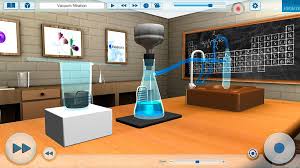
Now consider classroom technology and how it is also evolving rapidly. Implementation of technology in the classroom goes beyond Google searches and reading apps. It stretches into every area of learning, including the sciences. Virtual laboratories are popping up in school districts and online learning curriculum across the country and making it easier and less expensive for students to do experiments remotely. Here are some of the benefits of virtual labs:

  1. Flexible access.Perhaps the most often cited benefit of any online learning is that it can be done at the student’s convenience and when he or she learns best. The same is true of virtual laboratories if the experiments are on the student’s own time. In some cases, a virtual lab may be used during regular class time which narrows this benefit but still allows flexibility for the teacher who is not limited by using resources within a strict timeframe.
  1. Instant feedback.Students can redo experiments on the spot while they are still in a critical thinking mode. All the results are recorded, making communication between teachers and students more efficient too. Experiments no longer have a “one chance” option and students can analyze what went wrong immediately and give it another shot.
  1. Top-notch equipment.Schools and students that use virtual labs have access to cutting-edge technology when it comes to experimentation. Companies that build and maintain virtual labs must compete with each other to stay ahead of technology progression and that raises the quality of options for students. With a virtual lab, students do not have to settle on outdated, yet expensive, equipment because a school cannot afford to replace it consistently.
  1. Lower costs.There is a fee associated with using virtual labs but the capital and maintenance costs are drastically reduced. Instead of one school footing the bill for resources, the cost is split among the clients of the particular virtual lab. This allows school to provide a better learning experience for students at a fraction of the cost.

Higher efficiency, lower costs, better equipment – is there a downside to virtual labs? I’d say it is too early to really see the effects, positive or negative, of science through virtual experimentation, but a few red flags pop into my own mind. I remember many of my in-class science experiments vividly. The sights, smells and sounds of biology and chemistry reactions at my own hand cemented the lessons into memory. It was real for me because it was right in front of my face and I was the one controlling the outcomes (or so I thought).

I wonder how much of that wonder is lost in a digital format? I can’t imagine the next generation of scientists will fall in love with their fields from watching experiments on a computer screen but I could be wrong. Even with the in-person science experimentation I did in school, I had no desire to enter those fields. So perhaps those with a predisposition for the true sciences will not be deterred by virtual experimentation. Perhaps even more students will find a love for those fields because digital lessons allow for more repetition and instant feedback.

Like all classroom technology, virtual labs need to be scrutinized to ensure that behind the flashy capabilities, their true purpose is being met. That will take some time and testing, of course, but I think it is possible with the right combination of in-person and remote lessons.

Do you use a virtual lab in your classroom? What do you think about its potential for learning?


TagsEdtechedtechchatelearningSTEAMSTEM
Previous Article

Cheating and Technology – Unethical Indifference

Next Article

Assistive Technology: A Necessity for Student Success

Matthew Lynch

Related articles More from author

  • Early Childhood & K-12 EdTech

    8 Must Have Challenge-Based Learning Apps, Tools & Resources

    August 4, 2017
    By Matthew Lynch
  • Early Childhood & K-12 EdTechEdTech News

    Black and white students score far apart on a new test of technology skills

    June 8, 2017
    By Matthew Lynch
  • Higher Education EdTechOnline Learning & eLearning

    Confessions of a MOOC professor: three things I learned and two things I worry about

    April 6, 2017
    By Matthew Lynch
  • EdTech NewsHigher Education EdTech

    Can ed-tech inequality be solved by roving buses with Wi-Fi and loads of equipment?

    July 5, 2016
    By Matthew Lynch
  • Early Childhood & K-12 EdTechEdTech NewsHigher Education EdTech

    Come for the computers, stay for the books: Libraries are re-booting to become the tech hub for schools

    June 23, 2017
    By Matthew Lynch
  • EdTech NewsHigher Education EdTech

    Why access to computers won’t automatically boost children’s grades

    June 27, 2016
    By Matthew Lynch

Search

Login & Registration

  • Log in
  • Entries feed
  • Comments feed
  • WordPress.org

Newsletter

Signup for The Tech Edvocate Newsletter and have the latest in EdTech news and opinion delivered to your email address!

About Us

Since technology is not going anywhere and does more good than harm, adapting is the best course of action. That is where The Tech Edvocate comes in. We plan to cover the PreK-12 and Higher Education EdTech sectors and provide our readers with the latest news and opinion on the subject. From time to time, I will invite other voices to weigh in on important issues in EdTech. We hope to provide a well-rounded, multi-faceted look at the past, present, the future of EdTech in the US and internationally.

We started this journey back in June 2016, and we plan to continue it for many more years to come. I hope that you will join us in this discussion of the past, present and future of EdTech and lend your own insight to the issues that are discussed.

Newsletter

Signup for The Tech Edvocate Newsletter and have the latest in EdTech news and opinion delivered to your email address!

Contact Us

The Tech Edvocate
910 Goddin Street
Richmond, VA 23231
(601) 630-5238
[email protected]

Copyright © 2026 Matthew Lynch. All rights reserved.