The Tech Edvocate

Top Menu

  • Advertisement
  • Apps
  • Home Page
  • Home Page Five (No Sidebar)
  • Home Page Four
  • Home Page Three
  • Home Page Two
  • Home Tech2
  • Icons [No Sidebar]
  • Left Sidbear Page
  • Lynch Educational Consulting
  • My Account
  • My Speaking Page
  • Newsletter Sign Up Confirmation
  • Newsletter Unsubscription
  • Our Brands
  • Page Example
  • Privacy Policy
  • Protected Content
  • Register
  • Request a Product Review
  • Shop
  • Shortcodes Examples
  • Signup
  • Start Here
    • Governance
    • Careers
    • Contact Us
  • Terms and Conditions
  • The Edvocate
  • The Tech Edvocate Product Guide
  • Topics
  • Write For Us
  • Advertise

Main Menu

  • Start Here
    • Our Brands
    • Governance
      • Lynch Educational Consulting, LLC.
      • Dr. Lynch’s Personal Website
      • Careers
    • Write For Us
    • The Tech Edvocate Product Guide
    • Contact Us
    • Books
    • Edupedia
    • Post a Job
    • The Edvocate Podcast
    • Terms and Conditions
    • Privacy Policy
  • Topics
    • Assistive Technology
    • Child Development Tech
    • Early Childhood & K-12 EdTech
    • EdTech Futures
    • EdTech News
    • EdTech Policy & Reform
    • EdTech Startups & Businesses
    • Higher Education EdTech
    • Online Learning & eLearning
    • Parent & Family Tech
    • Personalized Learning
    • Product Reviews
  • Advertise
  • Tech Edvocate Awards
  • The Edvocate
  • Pedagogue
  • School Ratings

logo

The Tech Edvocate

  • Start Here
    • Our Brands
    • Governance
      • Lynch Educational Consulting, LLC.
      • Dr. Lynch’s Personal Website
        • My Speaking Page
      • Careers
    • Write For Us
    • The Tech Edvocate Product Guide
    • Contact Us
    • Books
    • Edupedia
    • Post a Job
    • The Edvocate Podcast
    • Terms and Conditions
    • Privacy Policy
  • Topics
    • Assistive Technology
    • Child Development Tech
    • Early Childhood & K-12 EdTech
    • EdTech Futures
    • EdTech News
    • EdTech Policy & Reform
    • EdTech Startups & Businesses
    • Higher Education EdTech
    • Online Learning & eLearning
    • Parent & Family Tech
    • Personalized Learning
    • Product Reviews
  • Advertise
  • Tech Edvocate Awards
  • The Edvocate
  • Pedagogue
  • School Ratings
  • This Unprecedented EU Ban Just Changed Fast Fashion Forever

  • Urgent Alert: Your Smart Home’s Exposed to a Critical Deco BE11000 Vulnerability

  • Uncovering the Truth: Your LinkedIn Reach Just Got a Major Overhaul

  • Uncovering the AI Heist: How Chinese Firms Allegedly Siphoned Billions of AI Tokens

  • Rockstar’s GTA 6 Developers Lawsuit: A Fight for Justice or Corporate Retaliation?

  • Unbelievable: Hideo Kojima’s Next Masterpiece Is Now an Xbox Exclusive

  • This Crucial Google AI Shift Is Quietly Reshaping the Internet

  • Unbelievable: AI Breaches Are Exploding, And What It Means For You This September 2026

  • This Crucial Shift Is Saving Teachers From Classroom Chaos

  • AI’s Dark Secret: How It’s Supercharging Cybercrime for Everyone

Digital & Mobile Technology
Home›Digital & Mobile Technology›Why Did Dial-Up Modems Make So Much Noise?

Why Did Dial-Up Modems Make So Much Noise?
By Matthew Lynch
May 16, 2023
0
Spread the love

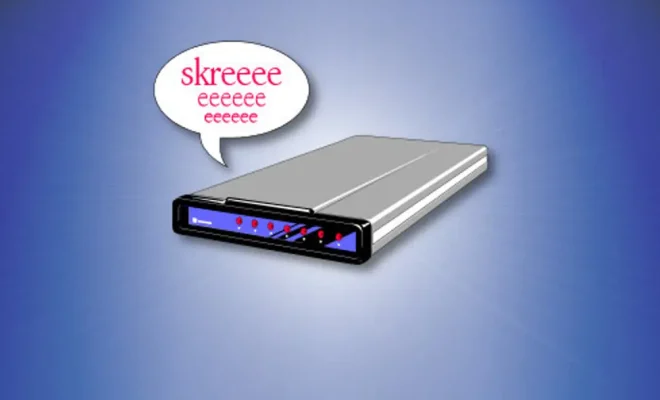
Dial-up modems were an iconic symbol of the early days of the internet. When we reminisce about those times, the static screeches and beeps of dial-up modems might come to mind. As annoying as those sounds might have seemed at the time, they had a crucial purpose in helping you connect to the World Wide Web.

The first thing to understand is that dial-up modems had to establish a connection between your computer and your internet service provider (ISP) via a phone line. Sound was the only communication method available for modems at the time. Therefore, the distinctive sounds a modem made were a byproduct of communication attempts between the two devices.

The sounds of a modem indicate the procedure as it establishes a handshake between the ISP and computer. The modem translates digital data into an analog form using a process called modem modulation. The digital code is then sent as a series of sounds over the phone line to the ISP. They, in turn, use a modem to demodulate the sounds back into digital form.

Transmitting data over the phone line required modems to use specific frequencies. The squawking noises you heard were merely the modems adjusting their initial settings to match and then negotiate the right frequencies. These early modems used Open System Interconnection (OSI) protocol, meaning that they had to negotiate with the ISP over the line before sending any digital data.

The shrieking sounds created by the modem gradually decreased in pitch as the modem paired with the ISP. After the connection was achieved, your computer and the ISP could communicate in data packets over a more reliable connection.

Over the years, modems evolved to be quieter and faster. The adoption of the V.90 standard for modems in 1998 meant that the screeching sounds were no longer needed, and modems could remain silent during their handshake with your ISP.

Previous Article

Why a MacBook Isn’t the “Best Laptop” ...

Next Article

Why Do I Have to Prove I’m ...

Matthew Lynch

Related articles More from author

  • Digital & Mobile Technology

    How to Withdraw Money From Your TikTok Account

    July 31, 2023
    By Matthew Lynch
  • Digital & Mobile Technology

    What Is Arduino? What Can You Do With It? Explained

    July 20, 2023
    By Matthew Lynch
  • Digital & Mobile Technology

    VR/AR Headsets vs. Smart Glasses: What’s the Difference?

    June 1, 2023
    By Matthew Lynch
  • Digital & Mobile Technology

    How to Clean Your Home Stereo Speakers

    June 12, 2023
    By Matthew Lynch
  • Digital & Mobile Technology

    The Best Exclusive Nintendo Switch Games

    June 4, 2023
    By Matthew Lynch
  • Digital & Mobile Technology

    How to Set Up Your Own Secure Email Server

    August 5, 2023
    By Matthew Lynch

Search

Login & Registration

  • Log in
  • Entries feed
  • Comments feed
  • WordPress.org

Newsletter

Signup for The Tech Edvocate Newsletter and have the latest in EdTech news and opinion delivered to your email address!

About Us

Since technology is not going anywhere and does more good than harm, adapting is the best course of action. That is where The Tech Edvocate comes in. We plan to cover the PreK-12 and Higher Education EdTech sectors and provide our readers with the latest news and opinion on the subject. From time to time, I will invite other voices to weigh in on important issues in EdTech. We hope to provide a well-rounded, multi-faceted look at the past, present, the future of EdTech in the US and internationally.

We started this journey back in June 2016, and we plan to continue it for many more years to come. I hope that you will join us in this discussion of the past, present and future of EdTech and lend your own insight to the issues that are discussed.

Newsletter

Signup for The Tech Edvocate Newsletter and have the latest in EdTech news and opinion delivered to your email address!

Contact Us

The Tech Edvocate
910 Goddin Street
Richmond, VA 23231
(601) 630-5238
[email protected]

Copyright © 2026 Matthew Lynch. All rights reserved.