Why Delta Force Fishing Is the Most Controversial Update of 2026
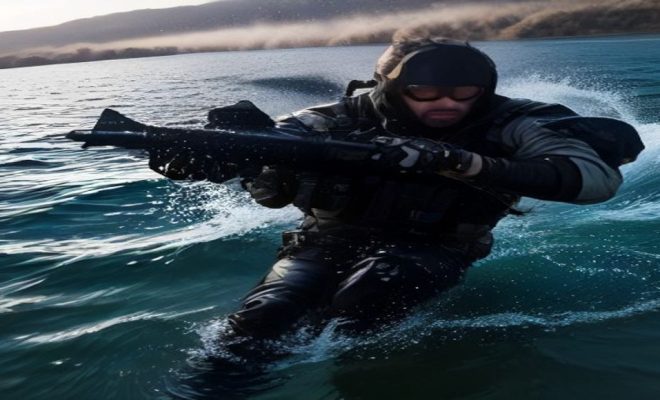
You might think that in the vast, ever-evolving landscape of video games, there wouldn’t be much left to genuinely surprise us. We’ve seen everything from hyper-realistic simulations to fantastical realms, from competitive esports to cozy life sims. But then, a tactical extraction shooter, Delta Force, decides to add fishing. Yes, you read that right. On September 8, 2026, as part of its second-anniversary update, Season Reorientation, Team Jade is dropping a fishing system into a game where the primary objective is, well, shooting and extracting. This unexpected move has thrown a digital Molotov cocktail into the gaming community, reigniting one of the most persistent and often heated debates: why do developers keep putting fishing mini-games into everything?
The announcement of Delta Force fishing isn’t just a quirky footnote; it’s a genuine talking point. It immediately went viral, particularly in Japan, where a post on X (formerly Twitter) expressing frustration with developers ‘shoving fishing into open world games just for the sake of it’ racked up an astonishing 28,000 agreements. This wasn’t just a localized grumble; it echoed sentiments from Western critics who’ve long argued that these angling diversions often feel like mechanical stagnation rather than innovation. So, what makes Delta Force, a game synonymous with precision combat and high-stakes extractions, think that a rod and reel belong alongside assault rifles and body armor? And more importantly, what does this tell us about the broader trends in game design and player expectations?
The Unexpected Hook: Why Delta Force Added Fishing
Let’s be honest, few people saw this coming. When you think of Delta Force, you picture intense firefights, strategic team play, and the heart-ppounding tension of trying to escape a hot zone with your loot. You don’t envision patiently waiting for a bite by a serene digital pond. Team Jade, the developers behind Delta Force, have framed this addition as part of their Season Reorientation update, marking the game’s second anniversary. It’s meant to be a significant expansion, introducing new watery zones that will presumably be teeming with digital aquatic life.
The official line is that this isn’t just a tacked-on mini-game. Team Jade is approaching fishing with the same depth they apply to their combat mechanics. Your fishing gear, for instance, will be treated much like weapon loadouts, complete with customization options. Imagine kitting out your fishing rod with different reels, lines, and lures, each offering unique statistical advantages for different types of fish or environments. This suggests a more integrated, thoughtful approach than the typical ‘press X to fish’ mechanic we often see. But even with this level of apparent commitment, the core question remains: why here? Why now? Is it an attempt to broaden the game’s appeal, offer a moment of zen amidst the chaos, or simply a developer’s quirky passion project finding its way into a high-profile title?
The Great Gaming Angling Debate: A History of Love and Loathing
The concept of fishing in video games is far from new. It’s a mechanic that has existed in various forms for decades, from the pixelated simplicity of early RPGs to the intricate simulations found in dedicated fishing titles. Think back to Ocarina of Time‘s tranquil fishing pond, a beloved side activity for many a Link. Or Stardew Valley, where fishing is a core pillar of its charming, pastoral gameplay loop. Even massive open-world epics like Red Dead Redemption 2 and Final Fantasy XV include it, often with surprising depth.
However, for every player who finds solace and enjoyment in these virtual waters, there’s another who sees them as an unnecessary distraction, a lazy inclusion, or even a cynical attempt to pad out content. The viral X post from Japan perfectly encapsulates this frustration: the feeling that developers are merely ticking a box, adding fishing ‘just for the sake of it’ without genuine integration or innovation. Critics often point to instances where the fishing mechanic feels clunky, repetitive, or completely disconnected from the game’s main themes and objectives. It becomes a chore, a grind for an achievement or a resource, rather than a genuinely engaging activity. This dichotomy of opinion makes the discussion around Delta Force fishing particularly potent; it’s not just about one game, but about a long-standing philosophical divide in game design.
More Than a Mini-Game: Delta Force’s Vision for Fishing
Team Jade seems to be aware of the skepticism, and their proposed implementation of Delta Force fishing suggests they’re aiming for something more substantial than a simple diversion. By framing fishing gear as customizable loadouts, they’re attempting to integrate it into the game’s existing progression and customization systems. This means your fishing prowess might not just be about timing button presses, but also about strategic gear selection, much like choosing the right weapon for a particular encounter.
The introduction of ‘new watery zones’ further implies that these aren’t just arbitrary spots on an existing map. These could be dedicated areas, perhaps less combat-intensive, offering a different pace and challenge. Imagine navigating treacherous rivers or exploring flooded ruins to find rare fish, all while still needing to be mindful of potential enemy patrols or environmental hazards. If done right, this could transform fishing from a mere mini-game into an alternate gameplay loop, offering different objectives and rewards that complement the core extraction shooter experience. It’s a bold gamble, suggesting a level of confidence in their vision that goes beyond simply adding a novelty feature.
Integration vs. Isolation: The Key to a Successful Fishing System
The success or failure of Delta Force fishing will hinge entirely on how well it integrates with the existing game. If it feels like an isolated, optional activity that offers no tangible benefits or connection to the core gameplay, it will likely be ignored by a large segment of the player base and reinforce the ‘padding’ criticism. However, if it provides meaningful rewards – perhaps unique crafting materials, rare cosmetic items, or even tactical advantages that can be used in combat – then it stands a chance of becoming a valued part of the Delta Force ecosystem.
Consider a scenario where catching certain rare fish provides components for advanced weapon attachments or specialized armor. Or perhaps mastering specific fishing techniques unlocks unique perks that subtly influence your combat abilities, like improved environmental awareness in watery areas. This kind of synergistic design is what separates a truly integrated feature from a superficial one. Developers like Rockstar Games, with the hunting and fishing systems in Red Dead Redemption 2, have shown how these activities can be interwoven with crafting, economy, and even character development, making them feel essential to the world rather than tacked on. Team Jade has a high bar to clear, but the potential for genuine innovation is there if they commit to deep integration. (See: gaming trends and player reactions.)
The Social Media Storm: Player Reactions and Community Dialogue
The announcement of Delta Force fishing immediately set social media alight. The X post in Japan, with its 28,000 agreements, is just one example of the strong feelings this topic evokes. On one side, you have players who are genuinely intrigued, perhaps even excited by the prospect of a more relaxed, strategic activity within a high-stress shooter. They might see it as a welcome change of pace, a way to unwind between intense firefights, or a new avenue for progression and community interaction.
On the other side are the skeptics, the eye-rollers, and the outright hostile. These players often argue that developers should focus on refining core mechanics, addressing bugs, and adding content that aligns with the game’s established identity, rather than introducing seemingly unrelated systems. ‘Who asked for this?’ is a common refrain. This friction highlights a broader challenge for game developers: balancing innovation and unexpected features with player expectations and the established identity of their game. Will Delta Force‘s community embrace this new direction, or will it be seen as a misstep that dilutes the game’s focus?
Beyond Mechanics: The Psychological Appeal of In-Game Fishing
Despite the criticisms, there’s an undeniable appeal to virtual fishing for many players. What is it about the simple act of casting a line and waiting that resonates so deeply? Part of it is undoubtedly the meditative quality. In games that are otherwise chaotic or demanding, fishing offers a moment of calm, a chance to slow down, observe the environment, and engage in a low-stakes activity. It can be a digital escape within an escape.
There’s also the element of collecting and mastery. Gamers love progression, and the idea of catching rare fish, completing a compendium, or upgrading gear to become a master angler taps into that fundamental desire for achievement. For some, it’s a way to engage with the game world on a different level, appreciating the art and sound design of tranquil environments that might otherwise be overlooked in the rush of combat. If Delta Force can capture this contemplative aspect while still making it feel relevant to its tactical roots, it might just win over some of its biggest detractors.
The Future of Genre Blending: Where Do We Draw the Line?
The inclusion of Delta Force fishing is a stark reminder of the ever-blurring lines between gaming genres. Once upon a time, an FPS was an FPS, and an RPG was an RPG. Now, we see elements of RPGs in shooters, survival mechanics in strategy games, and, apparently, fishing in tactical extraction titles. This genre blending can lead to incredibly rich and innovative experiences, but it can also result in Frankenstein’s monsters of mechanics, where disparate elements clash rather than coalesce.
Developers are constantly experimenting, trying to find new ways to engage players and keep their games fresh. Sometimes this means taking a beloved mechanic from one genre and porting it over to another. The risk, of course, is that in doing so, they might alienate their core audience or dilute the very essence of what made their game popular in the first place. Delta Force‘s decision is a bold experiment in this regard. It challenges our preconceived notions of what a tactical shooter can be and asks whether the pursuit of broader appeal outweighs the potential for mechanical dissonance.
Lessons from Other Games: What Delta Force Can Learn
Team Jade isn’t operating in a vacuum. There are countless examples of both successful and unsuccessful fishing implementations across the gaming spectrum. Games like Stardew Valley or Animal Crossing succeed because fishing is inherently tied to their core loop of resource gathering, crafting, and community building. The gentle rhythm and immediate rewards make it satisfying.
On the other hand, some large-scale RPGs or open-world titles have struggled. If the fishing system feels overly simplistic, lacks depth, or offers negligible rewards, players quickly grow bored. The key seems to be a balance between accessibility and depth, ensuring that the activity is easy to pick up but offers enough mastery and progression to keep players engaged over time. Crucially, it needs to feel like it belongs, not just a feature copied and pasted. If Delta Force can learn from these precedents, focusing on meaningful integration, rewarding progression, and a distinct identity for its fishing system, it might just avoid becoming another cautionary tale in the annals of gaming oddities.
Economic Impact and Player-Driven Markets
One fascinating aspect of highly integrated systems like the proposed Delta Force fishing is the potential for an in-game economy to develop around it. If fishing yields unique resources, rare fish, or crafting components, players who excel at angling might find themselves with valuable commodities. This could lead to a player-driven market where these specialized items are traded for combat gear, cosmetics, or other necessities. Imagine a skilled angler becoming a crucial supplier for a combat-focused squad, bartering their rare catches for high-tier weapon attachments they can’t acquire through traditional combat. This adds another layer of interdependence and strategic depth to the game.
Such an economic loop could incentivize players who typically shy away from direct combat to still contribute meaningfully to their team or the broader game community. It creates alternative pathways to progression and wealth, moving beyond the simple “kill and loot” cycle. The success of this would, of course, depend on careful balancing by Team Jade. The rewards from fishing would need to be significant enough to be desirable but not so overpowered that they disrupt the core combat economy or make traditional extraction runs feel less rewarding. It’s a delicate balance, but one that could greatly enhance the game’s longevity and player engagement.
The Competitive Angle: Leaderboards and Angling Tournaments
While Delta Force is primarily a competitive shooter, what if its fishing system also introduced a different kind of competition? We’re talking leaderboards for the biggest catch, rarest fish, or highest cumulative weight. This adds a new dimension for players who enjoy competing but prefer a less adrenaline-fueled environment. Team Jade could even introduce seasonal angling tournaments, complete with unique cosmetic rewards or in-game titles for the virtual fishing champions. This taps into the same psychological drive for mastery and recognition that fuels competitive gaming, but recontextualizes it within a more serene activity. (See: the evolution of video game design.)
A competitive fishing scene within Delta Force could foster a unique sub-community, bringing together players who might not typically interact. It provides bragging rights and a sense of accomplishment outside of the traditional kill-death ratio. This kind of diversified competition can keep a player base engaged longer, offering different types of challenges and goals for various player preferences. It’s about broadening the definition of “skill” within the game world.
Environmental Storytelling Through Aquatic Life
Beyond the mechanics and rewards, Delta Force fishing could also serve as a subtle but effective tool for environmental storytelling. The types of fish found in different watery zones could hint at the lore and history of the game world. Perhaps certain irradiated zones yield mutated, grotesque fish, while pristine, hidden springs hold ancient, almost mythical species. The health and variety of aquatic life could reflect the state of the game’s ecosystems, offering visual cues about the impact of the ongoing conflict or past events.
This allows players to engage with the narrative on a deeper, more observational level. Instead of just reading lore entries, they’re actively discovering it through the game’s systems. A rare catch might come with a codex entry that reveals a snippet of history or a scientific observation about the post-apocalyptic world. This kind of integration elevates fishing from a mere mini-game to a narrative device, adding richness and depth to the overall game experience without directly interrupting the action.
Expert Perspectives: What Game Designers Say
We’ve talked a lot about player reactions, but what do game designers themselves think about integrating seemingly disparate mechanics like fishing into core combat games? Industry veterans often discuss “design pillars” – the core concepts that define a game. For a tactical shooter, these usually revolve around combat, strategy, and extraction. Introducing fishing means either adding a new pillar or finding a way for fishing to reinforce existing ones. Some designers would argue that it’s a dangerous distraction, pulling resources away from refining the core experience. Others see it as an opportunity for innovative player engagement and expanding the game’s appeal without compromising its identity.
One perspective is that these “calm” activities provide essential pacing. Just like a good movie needs quiet moments between action sequences, a sprawling game can benefit from activities that offer a change of pace. If these activities are well-implemented and offer relevant rewards, they can prevent player burnout and increase overall playtime. The challenge, as always, is in execution. A poorly implemented system can indeed feel like bloat, but a thoughtfully designed one can become a beloved and integral part of the game.
A Look at Analytics: Why Developers Take These Risks
Behind every major game update, there’s usually a mountain of data. Developers constantly analyze player behavior, looking at everything from playtime metrics to completion rates of various activities. It’s highly probable that Team Jade’s decision to add Delta Force fishing wasn’t just a whim. They might have seen data suggesting a segment of their player base enjoys more relaxed activities in other games, or perhaps they’ve identified a drop-off in engagement during certain periods that a new, less stressful activity could mitigate. The goal is often to increase player retention and broaden the appeal to new demographics without alienating the core audience.
Adding fishing could be a strategic move to attract players who might be intimidated by the high-intensity nature of an extraction shooter but are drawn to games with robust crafting, collection, or relaxation mechanics. By offering these alternative gameplay loops, developers hope to cast a wider net, so to speak, and capture a larger market share. The risk is calculated, based on trends across the industry and specific player data from their own game. It’s a gamble, but one based on data-driven insights.
The Verdict Awaits: Will Delta Force Fishing Sink or Swim?
So, come September 8, 2026, the gaming world will get its answer. Will Delta Force fishing be a revolutionary new way to engage with a tactical shooter, offering a surprising depth and a welcome change of pace? Or will it be remembered as a curious, perhaps misguided, experiment that ultimately felt out of place? The stakes are surprisingly high, not just for Team Jade, but for the ongoing debate about what belongs in our games and how far developers can push the boundaries of genre.
One thing is certain: the conversation won’t die down anytime soon. Whether you’re a seasoned angler in virtual worlds or someone who rolls their eyes at the mere mention of a fishing mini-game, Delta Force has managed to hook our attention. It’s a testament to the enduring power of these seemingly simple mechanics to ignite passionate discussion and challenge our expectations of what a game can, or should, be. We’ll all be watching to see if this particular catch proves to be a trophy or just another fish in the sea.
Frequently Asked Questions About Delta Force Fishing
When is Delta Force fishing being released?
The fishing system for Delta Force is scheduled to be released on September 8, 2026. It’s part of the game’s second-anniversary update, titled “Season Reorientation,” which promises to be a significant expansion to the game. (See: impact of mini-games on player engagement.)
Is the Delta Force fishing system just a simple mini-game?
Team Jade, the developers, have stated that they are approaching fishing with the same depth as their combat mechanics. This means it’s intended to be more than a simple diversion. Players can expect customizable fishing gear, unique statistical advantages for different equipment, and dedicated new watery zones.
How will fishing integrate with the core Delta Force gameplay?
While specific details are still emerging, the developers aim for deep integration. Speculation suggests that rewards from fishing could include unique crafting materials for weapon attachments or armor, rare cosmetic items, or even tactical perks that subtly benefit players in combat, especially in aquatic environments. The idea is for it to complement, not just exist alongside, the extraction shooter experience.
Why did Team Jade decide to add fishing to a tactical shooter?
There are several theories. It could be an attempt to broaden the game’s appeal to a wider audience, offer a moment of zen and a change of pace from intense combat, or simply represent a developer’s passion project. It also aligns with a broader industry trend of genre blending and introducing diverse activities to increase player retention and engagement.
What are some of the potential benefits of Delta Force fishing for players?
Players might find a new avenue for progression and mastery through collecting rare fish and upgrading gear. It could offer a more relaxed way to interact with the game world, provide unique resources for crafting, or even open up new economic opportunities within the game’s player base. For some, it will be a welcome break from the high-stress combat, offering a meditative experience.
What are the main criticisms or concerns about Delta Force fishing?
Many players are skeptical, fearing that fishing will feel like unnecessary content padding, a distraction from core game development, or a clunky, uninspired mechanic. There’s concern that it might dilute the game’s identity as a tactical extraction shooter and that development resources could be better spent on refining existing combat systems or fixing bugs. The phrase “who asked for this?” is a common sentiment among critics.
Will there be competitive elements to Delta Force fishing?
While not explicitly confirmed, the potential is there. Given the game’s competitive nature, leaderboards for rare catches, biggest fish, or even angling tournaments could be implemented. This would offer a different kind of competition and a new way for players to earn recognition within the community.
How might fishing impact the in-game economy?
If fishing yields valuable resources or unique items, it could create a player-driven market. Anglers might specialize in catching certain fish to trade for combat gear or other necessities, creating an interdependent economy where different playstyles contribute to the overall game’s health and player wealth. Balancing this will be key to its success.
Trending Now
- Shocking Truth: 10 Stealthy Ways to…
- our breakdown of why millions are ditching traditional home insurance in 2023
- This Hidden Cost Is Quietly Crushing…
- our breakdown of 8 crucial bioethical quandaries gene editing investors must grasp
- this guide on the silent revolution: base editing’s secret edge over crispr for embryos
Frequently Asked Questions
Why did Delta Force add fishing to the game?
Delta Force introduced fishing as part of its second-anniversary update to expand gameplay diversity and engage players in a more relaxed activity. This unexpected addition aims to spark conversations about game design trends and player expectations, challenging the notion that tactical shooters should solely focus on combat.
What are the reactions to Delta Force's fishing update?
The fishing update has elicited mixed reactions, particularly in Japan, where many players expressed frustration over developers including fishing in games. Critics argue that these mini-games can feel like a mechanical stagnation, detracting from the core gameplay experience of a tactical shooter.
How has the gaming community responded to fishing in video games?
The gaming community's response to fishing mini-games has been polarized. While some players appreciate the variety, many criticize developers for including fishing as a gimmick, arguing it disrupts the flow of action-oriented gameplay and doesn't belong in competitive shooters like Delta Force.
What does the fishing feature in Delta Force signify for game design?
The inclusion of fishing in Delta Force reflects broader trends in game design where developers seek to diversify gameplay experiences. It raises questions about innovation versus tradition, as many players are divided on whether such features enhance or detract from the primary gaming experience.
Is Delta Force's fishing update a trend in gaming?
Yes, Delta Force's fishing update may signal a trend in gaming where developers incorporate diverse activities into action-oriented games. This trend aims to broaden player engagement but has sparked debates on whether these additions enhance gameplay or contribute to mechanical stagnation.
What did we miss? Let us know in the comments and join the conversation.