Why Banning AI in Education Is a Huge Mistake: The Truth About AI vs Traditional Learning Methods

“`html
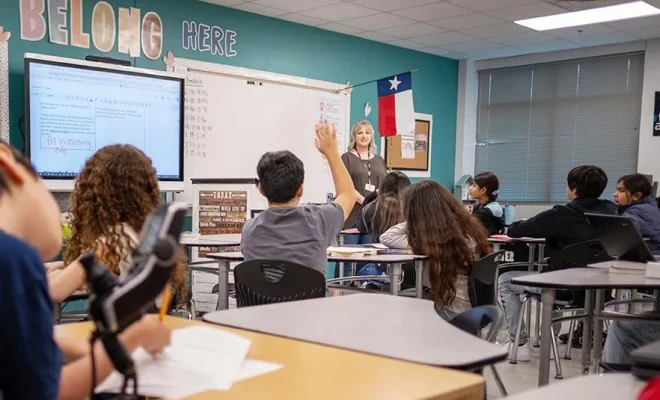
Walk into almost any university faculty lounge today, and you’ll hear it: the heated debate about AI. It’s no longer just about preventing students from cheating, which was the initial knee-jerk reaction when tools like ChatGPT burst onto the scene. No, the conversation has matured, or at least, deepened. Now, educators are grappling with a much more fundamental question: how do we ensure genuine student learning in an age where AI can draft essays, solve complex math problems, and even generate code with startling proficiency?
It’s a thorny issue, sparking strong emotions on all sides. Some professors are doubling down on traditional, analog assessment methods – think handwritten exams, in-class essays, and oral presentations – in a bid to circumvent AI’s influence. They worry, quite understandably, that students are “avoiding learning” by offloading cognitive tasks to algorithms. But is this really the answer? Or are we, as Georgia Institute of Technology Regents’ Professor Amy Bruckman puts it, simply “burying our head in the sand”? The truth is, the dynamic of AI vs traditional learning methods isn’t a zero-sum game. It’s a complex interplay, and understanding how to harness the strengths of both is crucial for the future of education.
1. The AI-Driven Learning Revolution: Redefining Engagement
Let’s face it: AI isn’t going anywhere. Its integration into daily life, and by extension, into education, is inevitable. The initial shock and fear among educators about AI being solely a cheating tool are slowly giving way to a more pragmatic realization: AI can be a powerful ally in the learning process. We’re talking about personalized learning experiences that were once the stuff of science fiction, tailored feedback, and instant access to information in ways that traditional methods simply can’t match.
Think about it. AI can adapt content to a student’s individual pace and style, providing extra practice where needed, or accelerating through concepts they’ve already mastered. This level of customization can keep students more engaged and motivated, reducing the frustration that often comes with a one-size-fits-all approach. It’s about moving from passive consumption of information to active, guided exploration, where AI acts as a personal tutor, always available and infinitely patient.
2. The Enduring Power of Traditional Pedagogy: Human Connection and Critical Thought
While AI offers incredible potential, it’s vital not to throw the baby out with the bathwater. Traditional learning methods, steeped in centuries of pedagogical wisdom, bring invaluable elements to the educational experience that AI, at least for now, cannot replicate. The human element – the dynamic interaction between a teacher and student, the spontaneous discussions in a classroom, the mentorship, and the development of empathy through shared learning experiences – these are cornerstones of holistic education.
Moreover, traditional methods often emphasize deep critical thinking, nuanced analysis, and the development of original ideas through sustained effort. When a student grapples with a complex problem without immediate AI assistance, they build resilience, problem-solving skills, and a deeper understanding of the underlying principles. This kind of cognitive struggle is essential for developing true intellectual muscle, something that simply accepting an AI-generated answer might bypass.
3. Personalized Learning Pathways: AI’s Strength
One of the most compelling arguments for integrating AI into education lies in its ability to truly personalize the learning journey. Traditional classrooms, by their very nature, often struggle to cater to the diverse needs of 20, 30, or even 100 students simultaneously. AI, however, thrives on data and individual interaction. It can analyze a student’s performance, identify their strengths and weaknesses, and then curate content, exercises, and explanations specifically for them.
Imagine a student struggling with algebra. An AI tutor could provide endless variations of problems, explain concepts in multiple ways, and even identify common misconceptions, all while a human teacher is busy with other students. This isn’t about replacing the teacher, but empowering them to focus on higher-level instruction and individual mentorship, knowing that foundational learning is being reinforced dynamically by AI. It democratizes access to tailored support, especially for those who might otherwise fall behind.
4. Fostering Collaboration and Social Skills: A Traditional Hallmark
While AI can offer individual personalization, it falls short when it comes to fostering the crucial social and collaborative skills essential for life and work. Group projects, classroom discussions, debates, and peer-to-peer learning are all vital components of traditional education that cultivate communication, teamwork, negotiation, and empathy. These are inherently human skills that develop through real-world interaction, not through solitary engagement with an algorithm. (See: AI's role in education today.)
When students work together, they learn to articulate their thoughts, defend their positions, listen to opposing viewpoints, and synthesize diverse ideas. This dynamic exchange builds social intelligence and prepares them for the complexities of professional environments. Relying too heavily on AI for individual learning could inadvertently diminish opportunities for these critical interpersonal developments, creating a generation of brilliant but socially isolated learners.
5. Feedback and Assessment Evolution: AI’s Role in Improvement
The traditional model of grading papers and providing feedback is incredibly labor-intensive for educators. AI promises to revolutionize this, offering immediate, consistent, and often highly detailed feedback on a wide range of assignments, from essays to coding projects. This isn’t just about speed; it’s about making feedback an integral, continuous part of the learning loop, rather than a delayed, summative judgment. For more context, see how to use power-ups on Trello iOS.
For instance, AI can highlight grammatical errors, suggest improvements in sentence structure, identify logical fallacies in arguments, or pinpoint inefficiencies in code, all in real-time. This allows students to iterate and refine their work much more quickly, learning from their mistakes on the fly. When we talk about AI vs traditional learning methods in assessment, it’s not about replacing human judgment entirely, but augmenting it, freeing up educators to focus on the deeper, more complex aspects of student learning and development.
6. Cultivating Creativity and Originality: The Human Edge in AI vs Traditional Learning Methods
Here’s where the debate around AI vs traditional learning methods gets particularly interesting, and often contentious. Many worry that over-reliance on AI for content generation could stifle creativity and originality. If an AI can write a passable essay or generate a decent piece of art, what incentive does a student have to truly grapple with a blank page and forge something uniquely their own?
However, the counter-argument, championed by educators like Amy Bruckman, is that we must teach students to learn *with* AI. This means using AI as a tool, much like a calculator or a word processor, to enhance the creative process, not replace it. AI can be a brainstorming partner, a research assistant, or a generator of initial concepts that a student then critically evaluates, refines, and imbues with their own unique perspective. The challenge isn’t to ban AI, but to design curricula that demand higher-order thinking, critical evaluation, and truly original contributions, even when AI is part of the toolkit. It’s about shifting the focus from output generation to critical curation and thoughtful synthesis.
7. Developing AI Literacy: A 21st-Century Imperative
Perhaps the most compelling reason to embrace, rather than resist, AI in education is the urgent need to develop AI literacy among students. The world they are entering will be permeated by artificial intelligence. Understanding how AI works, its capabilities, its limitations, and its ethical implications will be as crucial as digital literacy is today. Banning AI in the classroom doesn’t prepare students for this reality; it shields them from it.
Educators have a responsibility to teach students how to interact with AI responsibly and effectively. This includes understanding prompt engineering, critically evaluating AI-generated output, recognizing bias in algorithms, and discerning when and where AI is an appropriate tool. Integrating AI into coursework, rather than isolating it, provides a safe and structured environment for students to develop these essential skills, ensuring they are not just consumers of AI, but thoughtful, informed participants in an AI-driven future.
8. The Blended Approach: Finding the Sweet Spot
Given the strengths and weaknesses of both AI and traditional learning methods, the most effective path forward for educators isn’t an either/or proposition, but a thoughtful integration. It’s about creating a blended learning environment where technology enhances, rather than replaces, human instruction and interaction. This means leveraging AI for personalized practice, instant feedback, and access to vast information, while preserving and strengthening the human-centric aspects of education.
For example, an instructor might use AI tools to grade initial drafts of essays, providing students with immediate grammatical and structural suggestions. This frees up the instructor to focus on the more nuanced aspects of argumentation, originality, and critical thought in subsequent revisions. Similarly, AI could handle routine quizzes and drills, allowing classroom time to be dedicated to complex problem-solving, collaborative projects, and deep discussions. The goal is to maximize the unique advantages of each approach to create a richer, more effective learning experience.
9. Curriculum Redesign: The Path Forward for AI vs Traditional Learning Methods
Ultimately, making the most of the AI vs traditional learning methods dynamic requires a significant shift in how we design curricula and assess student learning. As Professor Bruckman suggests, simply trying to prevent AI use is a losing battle. Instead, universities and schools must actively redesign their educational frameworks to teach students how to learn *with* AI. This isn’t a small undertaking, but it’s an essential one. (See: The impact of AI on learning.)
This redesign might involve creating assignments that require students to use AI as a research tool but then critically analyze and synthesize its output, adding their own insights and ethical considerations. It could mean developing projects where students use AI to generate multiple solutions, then evaluate and justify the best one. It means moving beyond rote memorization and simple content generation to emphasize skills like critical thinking, complex problem-solving, ethical reasoning, and effective collaboration – skills that are amplified, not diminished, by the intelligent use of AI. The future of education isn’t about choosing sides; it’s about intelligently combining the best of both worlds to prepare students for a future that’s already here.
10. The Ethical Landscape: Navigating AI’s Impact
The conversation around AI vs traditional learning methods isn’t purely pedagogical; it’s deeply ethical. As AI becomes more sophisticated, questions around data privacy, algorithmic bias, and intellectual property become paramount. Students, and indeed educators, need to understand the ethical implications of using AI in academic settings and beyond. For instance, who owns the intellectual property of an essay co-created with AI? How do we ensure that AI-driven personalization doesn’t inadvertently create filter bubbles, limiting students’ exposure to diverse perspectives? For more context, see best Slack Android widgets.
Traditional education has always had an ethical dimension, teaching students about academic integrity and responsible scholarship. Now, this must expand to include AI ethics. We need to move beyond simply detecting AI cheating to teaching responsible AI usage. This means open discussions about the limitations of AI, the potential for misinformation, and the importance of human oversight. Integrating ethical case studies into the curriculum, where students analyze real-world scenarios involving AI, can foster this critical awareness. It’s about cultivating a generation that uses AI not just skillfully, but also conscientiously.
11. Measuring Impact: Quantifying the Benefits of AI in Education
While the theoretical benefits of AI in education are compelling, we also need to look at empirical evidence. What do the numbers say about the actual impact of AI vs traditional learning methods? Studies are starting to emerge that shed light on this. For example, research into intelligent tutoring systems, a form of AI, has shown that they can lead to significant gains in student performance, sometimes equivalent to receiving one-on-one human tutoring. This “effect size” is a powerful indicator of AI’s potential.
Specific examples include platforms that use AI to teach coding by identifying common errors and providing targeted hints, or language learning apps that adapt difficulty based on a user’s pronunciation and grammar. These tools often track engagement metrics, completion rates, and performance improvements, offering valuable data. However, it’s also important to measure the less tangible benefits, like increased student motivation and reduced teacher workload. Collecting and analyzing this data will be crucial for refining AI tools and demonstrating their value to skeptical stakeholders, making a strong case for integrating AI thoughtfully into educational frameworks.
12. The Role of the Educator: Evolving from Instructor to Facilitator
In the dynamic of AI vs traditional learning methods, the role of the educator is arguably undergoing the most profound transformation. If AI can deliver personalized content, provide instant feedback, and even answer factual questions, what does that leave for the human teacher? The answer is a shift from being primarily a dispenser of information to becoming a facilitator of learning, a mentor, and a guide.
This new role emphasizes higher-order cognitive skills: teaching students how to critically evaluate information (much of which might be AI-generated), how to ask the right questions, how to collaborate effectively, and how to apply knowledge in novel situations. Educators will spend less time on rote instruction and grading, and more time on designing engaging learning experiences, fostering critical discussions, providing nuanced feedback that AI can’t, and addressing the emotional and social needs of their students. This isn’t a deskilling of teachers, but rather an elevation of their role to focus on the uniquely human aspects of education.
13. Global Perspectives: AI in Education Across Borders
The discussion of AI vs traditional learning methods isn’t confined to a single country or educational system; it’s a global phenomenon. Different regions are approaching this integration with varying priorities and resources. In some developing nations, AI offers a transformative opportunity to bridge educational gaps, providing access to quality learning resources where trained teachers are scarce. AI-powered platforms can deliver basic literacy and numeracy instruction to remote areas, democratizing education on an unprecedented scale.
Conversely, highly developed countries might focus more on AI for advanced research, personalized STEM education, or for preparing students for high-tech industries. Understanding these diverse applications and challenges is crucial. For instance, ethical concerns around data privacy might be viewed differently in various cultural contexts. Sharing best practices and research findings across international borders will be vital for developing a globally informed and responsible approach to integrating AI into education. (See: AI in education research.)
Frequently Asked Questions about AI vs Traditional Learning Methods
Q1: Is AI going to replace teachers?
No, AI is highly unlikely to replace teachers. Instead, it’s a tool that can augment and enhance the teaching profession. AI can handle repetitive tasks like grading multiple-choice quizzes or providing basic grammar checks, freeing up teachers to focus on higher-level instruction, critical thinking development, mentorship, and addressing students’ individual emotional and social needs. The human connection and nuanced understanding a teacher provides are irreplaceable.
Q2: How can AI help with personalized learning?
AI excels at personalized learning by analyzing a student’s performance, learning style, and pace. It can then adapt the content, offer targeted exercises, provide explanations in different formats, and identify specific areas where a student needs more support or can be accelerated. This means each student gets a learning path tailored to their unique requirements, which is very difficult to achieve in a traditional classroom setting with one teacher for many students.
Q3: What are the main concerns about using AI in education?
Key concerns include the potential for students to rely too heavily on AI for answers, potentially hindering the development of critical thinking and problem-solving skills. Other worries involve data privacy and security, algorithmic bias that could perpetuate inequities, and the ethical implications of AI-generated content (e.g., plagiarism). Educators are also grappling with how to design assessments that genuinely measure student learning when AI tools are readily available.
Q4: How can traditional learning methods still be valuable in an AI-driven world?
Traditional methods remain invaluable for fostering uniquely human skills. Face-to-face discussions build communication and empathy. Group projects develop collaboration and negotiation skills. Struggling with complex problems without immediate AI assistance builds resilience and deeper conceptual understanding. The mentorship from a human teacher, the spontaneous intellectual debates, and the development of social intelligence are all cornerstones that AI can’t replicate, ensuring a holistic educational experience.
Q5: How can schools effectively integrate AI without losing traditional values?
The most effective approach is a blended model. Schools can use AI for personalized practice, instant feedback, and data analysis to inform teaching. At the same time, they should strengthen traditional methods for critical discussions, collaborative projects, ethical reasoning, and fostering creativity. The curriculum needs to be redesigned to teach students how to use AI responsibly and critically, emphasizing skills like prompt engineering, critical evaluation of AI output, and understanding AI’s limitations, rather than just banning it.
Q6: What is “AI literacy” and why is it important?
AI literacy means understanding how AI works, its capabilities and limitations, its ethical implications, and how to interact with it responsibly and effectively. It’s crucial because AI is increasingly integrated into daily life and future workplaces. Students need to be able to critically evaluate AI-generated information, recognize potential biases, and use AI as a productive tool rather than just a passive consumer. Developing AI literacy prepares them for an AI-driven future.
“`
Trending Now
Frequently Asked Questions
Why is banning AI in education considered a mistake?
Banning AI in education overlooks its potential as a powerful learning tool. Instead of merely being a means for cheating, AI can enhance personalized learning experiences, provide tailored feedback, and adapt to individual student needs, ultimately fostering genuine engagement and understanding.
How does AI improve student learning compared to traditional methods?
AI enhances student learning by offering personalized experiences that traditional methods often can't match. It adapts content to individual learning styles and paces, provides instant feedback, and allows for greater access to information, making learning more engaging and effective.
What are the main concerns educators have about AI in the classroom?
Educators are primarily concerned about the potential for students to misuse AI for cheating and avoiding genuine learning. There is also fear that reliance on AI could diminish critical thinking and problem-solving skills, leading to a decline in traditional educational values.
Can AI and traditional learning methods coexist in education?
Yes, AI and traditional learning methods can coexist and complement each other. By integrating AI tools, educators can enhance traditional teaching practices, creating a more dynamic and effective learning environment that leverages the strengths of both approaches.
What role does AI play in personalized learning experiences?
AI plays a crucial role in personalized learning by analyzing student performance and adapting content to meet individual needs. It can identify areas where students need more practice or allow them to progress faster, thereby enhancing the overall learning experience.
What's your take on this? Share your thoughts in the comments below — we read every one.