Why AI Customer Service Needs a Seamless Human Handoff — Or Else
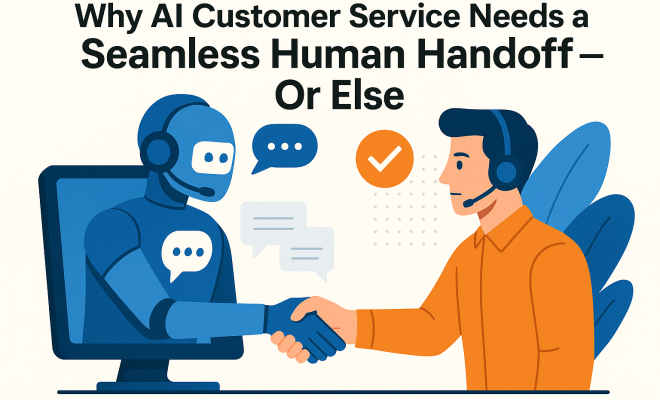
We’ve all been there, right? You’re trying to resolve an issue, you jump onto a company’s website or app, and you’re greeted by a chatbot. Initially, there’s a flicker of hope: maybe this time, AI customer service will actually work. You type in your query, feeling optimistic. Then, the inevitable happens. The bot misunderstands, offers irrelevant FAQs, or worse, loops you through the same unhelpful questions until your patience wears thinner than a well-loved t-shirt. This isn’t just a minor annoyance; it’s a widespread frustration that has become a hot topic, especially after a prominent discussion on October 20, 2026, brought the issue into sharp focus.
The core of the problem, and what that 2026 discussion really highlighted, is a simple, non-negotiable expectation: AI customer service systems must either fully resolve your problem, or they need to seamlessly and efficiently pass you over to a human agent. No more endless loops, no more digital dead ends. Consumers are fed up with current AI implementations that promise efficiency but deliver exasperation. This isn’t just about technological glitches; it’s about the fundamental balance between automation’s potential and the undeniable need for human empathy and problem-solving in customer interactions. And let’s be honest, it’s an emotionally charged subject because it taps into the daily struggles of millions of us just trying to get help.
The conversation around this topic isn’t confined to tech circles. It’s spilling over onto social media, generating significant sharing and engagement. People are sharing their horror stories, lamenting the wasted time, and demanding better. For businesses, this isn’t just a PR headache; it’s a critical challenge that impacts brand loyalty and customer retention. The good news for solution providers, though, is that this frustration also signals a massive market opportunity. High-CPC niches like B2B SaaS, software, and customer service solutions are seeing strong commercial search intent for terms like “best AI chatbot software,” “customer support platforms with human fallback,” and “AI customer experience improvement tools.” It’s clear: the market is ready for AI customer service that actually delivers.
1. The Escalating Frustration with Current AI: When Bots Just Don’t Get It
Think about the last time you interacted with a less-than-stellar AI customer service system. Chances are, it wasn’t a delightful experience. The primary driver behind the current outcry is a deep-seated frustration stemming from AI systems that consistently fail to understand complex queries or deviate from pre-programmed scripts. We’re talking about the bots that can handle a password reset with ease but crumble when faced with a nuanced billing dispute or a unique product malfunction. This inability to grasp context or handle exceptions is a critical flaw, turning what should be a helpful interaction into a prolonged and often infuriating ordeal.
This isn’t just an anecdotal observation; it’s a pervasive issue that the October 20, 2026 discussion specifically called out. Consumers aren’t against AI in principle; they’re against *bad* AI. They expect a level of intelligence and adaptability that many current systems simply don’t possess. When an AI can’t move beyond its script, it creates a bottleneck, leaving customers feeling unheard and undervalued. This emotional toll is significant, as people are often reaching out to customer service when they’re already stressed or facing a problem, and a frustrating AI interaction only compounds that negative feeling.
2. The Imperative for Seamless Handoffs: No More Digital Dead Ends
If an AI customer service system can’t fix the problem, the absolute next best thing it can do is get you to a human expert without any fuss. This isn’t just a nice-to-have; it’s rapidly becoming a non-negotiable expectation. The concept of a “seamless handoff” means more than just providing a phone number or a generic email address. It means intelligently transferring the *entire context* of the interaction—all the chat history, the customer’s identity, and the specifics of their query—directly to the human agent. Imagine having to explain your problem from scratch after spending 15 minutes trying to get a bot to understand; that’s the kind of friction customers are desperately trying to avoid.
A truly seamless handoff preserves the customer’s time and sanity. It ensures that when a human agent takes over, they are fully briefed and can pick up right where the AI left off, offering a truly efficient resolution. This saves the customer from repeating themselves, which is a common source of intense irritation. From a business perspective, it also makes the human agent more efficient, as they don’t have to spend precious minutes gathering information that the AI already collected. It’s about leveraging the strengths of both AI and humans, rather than treating them as isolated, disconnected entities.
3. The Emotional Toll of Poor AI Interactions: Beyond Mere Inconvenience
Let’s be real: customer service interactions are rarely joyous occasions. People typically reach out when something has gone wrong, when they’re confused, or when they’re feeling stressed. In these moments, encountering an unhelpful AI customer service bot isn’t just an inconvenience; it can actively amplify negative emotions. Imagine you’re dealing with a lost package that contains a critical item, or you’re trying to resolve a fraudulent charge on your account. Your emotional state is already elevated. When an AI system fails to provide a path to resolution, it can lead to feelings of helplessness, anger, and deep frustration.
The 2026 discussion underscored how this emotionally charged subject taps into the daily struggles of millions. It’s not just about a few disgruntled customers; it’s a widespread phenomenon. Companies that continue to deploy clunky, ineffective AI risk not only losing individual customers but also damaging their overall brand reputation. Word of mouth, amplified by social media, can quickly spread negative experiences, eroding trust and making it harder to attract new customers. Empathy, even in the context of technology, is crucial here; the AI should be designed to alleviate stress, not create more of it.
4. Balancing Efficiency with Empathy: The Human Element Remains Key
The promise of AI customer service has always been about unprecedented efficiency: faster response times, 24/7 availability, and reduced operational costs. And in many straightforward scenarios, it delivers on that promise. But what the recent widespread frustration has highlighted is that efficiency alone isn’t enough. There’s a critical need to balance this pursuit of speed with the irreplaceable element of human empathy. (See: AI customer service challenges.)
Complex or emotionally sensitive issues often require a human touch. A bot can’t truly understand the nuances of a customer’s distress, offer a genuinely apologetic tone, or think creatively outside of its programming to find an unconventional solution. These are the moments where human agents shine. The discussion on October 20, 2026, really drove home the point that while AI can handle the transactional, rote tasks, the transformational, relationship-building interactions still fundamentally depend on people. Smart businesses are realizing that AI should augment human capabilities, not replace them entirely, especially when it comes to demonstrating genuine care and understanding.
5. The Monetization Potential for Better Solutions: A Goldmine for Innovators
While consumer frustration is high, this widespread problem also represents a massive opportunity for businesses capable of delivering superior AI customer service solutions. We’re talking about a significant monetization potential, particularly within high-CPC (Cost Per Click) niches like B2B SaaS, software development, and specialized customer service solutions. Companies are actively searching for ways to fix their broken AI, and they’re willing to invest in tools that actually work. For more context, see Why Millions Are Finally Using AI to Master High-Demand Skills.
The commercial search intent is palpable. Businesses are actively looking for the “best AI chatbot software” that offers robust capabilities, not just basic scripting. They’re searching for “customer support platforms with human fallback” because they understand the critical need for that seamless transition. And they’re investing in “AI customer experience improvement tools” to repair damaged relationships and build brand loyalty. This creates a fertile ground for affiliate links to specific customer service software, consulting services that help implement these solutions, and innovative startups developing the next generation of truly intelligent AI. The market is ripe for solutions that bridge the gap between AI’s potential and its current shortcomings.
6. The Future of AI Customer Service: Intelligent Triage and Augmented Agents
So, what does the ideal future of AI customer service look like? It’s certainly not a world where every interaction is handled by a bot, nor is it one where AI is abandoned altogether. Instead, the path forward involves AI acting as an intelligent first line of defense, a sophisticated triage system that can accurately assess the nature and complexity of a customer’s query.
This means AI capable of not just understanding keywords but inferring intent, recognizing emotional cues, and accessing a vast knowledge base to solve common problems swiftly. For anything beyond its immediate capabilities, this future AI would be designed to identify the optimal human agent or department to handle the issue, then package all relevant information for a smooth handoff. Furthermore, AI could also play a crucial role in *assisting* human agents, providing real-time information, suggesting responses, or even automating routine follow-ups, thereby augmenting human capabilities rather than replacing them. This blended approach offers the best of both worlds: efficiency for simple tasks and empathetic, expert human intervention for complex ones.
7. Implementing Effective Human Handoffs: Practical Steps for Businesses
For businesses looking to improve their AI customer service, implementing effective human handoffs isn’t just about flipping a switch. It requires a thoughtful, multi-faceted approach. First, you need to clearly define the triggers for escalation. When should the AI definitely hand off to a human? Is it after a certain number of failed attempts, specific keywords indicating frustration, or when the query falls outside a defined scope?
Second, the technology stack needs to support this. This means integrating your AI chatbot platform with your CRM (Customer Relationship Management) system and your agent desktop tools. The goal is a unified view for the human agent, showing the entire conversation history, customer details, and any attempts the AI made to resolve the issue. Finally, don’t forget the training. Human agents need to be trained not just on how to use the new system, but also on how to effectively take over from an AI, empathize with potentially frustrated customers, and quickly get to a resolution. It’s about designing a coherent, customer-centric journey, not just patching up a broken bot.
8. The Competitive Edge of Superior Customer Experience: Beyond Just Fixing Problems
In today’s crowded marketplace, customer experience isn’t just a buzzword; it’s a critical differentiator. Companies that excel in this area often enjoy higher customer loyalty, stronger brand advocacy, and ultimately, greater profitability. The discussion that gained traction on October 20, 2026, highlighted that superior AI customer service, characterized by its ability to either resolve issues or provide a graceful human handoff, isn’t just about fixing problems—it’s about building relationships.
When customers have a positive interaction, even if it starts with an AI, they feel valued and understood. This translates into trust and a willingness to continue doing business with that company. Conversely, frustrating AI experiences can quickly erode trust, prompting customers to take their business elsewhere. Investing in AI customer service that prioritizes both resolution and seamless human intervention isn’t just an operational improvement; it’s a strategic move that can significantly enhance a company’s competitive standing and foster long-term customer relationships. It’s about recognizing that every interaction, whether with a bot or a person, is an opportunity to strengthen that bond.
9. The Data-Driven Evolution of AI Customer Service
The evolution of AI customer service isn’t just about better algorithms; it’s deeply rooted in data. Every interaction, every query, every successful resolution, and every frustrating dead end generates valuable data. Businesses should be meticulously analyzing these data points to continuously refine their AI systems. This means tracking metrics like chatbot deflection rates, handoff success rates, customer satisfaction scores post-AI interaction, and even the sentiment of customer input.
By understanding *why* certain interactions fail or succeed, companies can pinpoint areas for improvement. For instance, if a particular type of query consistently results in a human handoff, it indicates a gap in the AI’s knowledge base or a flaw in its natural language processing for that specific topic. This data-driven feedback loop is crucial for moving beyond generic, script-based bots to truly intelligent, adaptive AI. It also helps in identifying emerging customer needs and pain points, allowing companies to proactively update their AI models and ensure they remain relevant and effective. Think of it as a continuous learning process, where the AI gets smarter with every single customer conversation, guided by the insights derived from solid analytics. (See: impact of AI on customer service.)
10. The Role of Personalization in Next-Gen AI Customer Service
Generic responses and one-size-fits-all solutions are a major source of customer frustration. The next generation of AI customer service will lean heavily into personalization. This isn’t just about knowing a customer’s name; it’s about understanding their past interactions, purchase history, preferences, and even their current emotional state based on language cues.
Imagine an AI that remembers you recently bought a specific product and proactively offers troubleshooting tips relevant to that item when you initiate a chat. Or an AI that adjusts its tone and offers more direct support if it detects signs of frustration. This level of personalization makes customers feel seen and valued, transforming a transactional interaction into a more engaging and effective one. It allows the AI to anticipate needs, offer relevant information without being prompted, and guide the customer toward a solution that feels tailored just for them. This shift from reactive to proactive, personalized support is a game-changer for customer satisfaction and brand loyalty. For more context, see This Crucial Skill is Your Only Hope Against 2026 Tech Layoffs.
11. Overcoming Implementation Challenges: It’s Not Just About the Tech
Deploying effective AI customer service isn’t solely a technological hurdle; it involves significant organizational and cultural shifts. One major challenge is getting buy-in from all stakeholders, from IT to marketing to the customer service team itself. Often, human agents fear AI will take their jobs, leading to resistance. Companies need to clearly communicate that AI is meant to *augment* their work, handling repetitive tasks so agents can focus on more complex, rewarding interactions.
Another challenge is data integration. For seamless handoffs and personalized experiences, the AI needs access to various customer data sources, which can be complex to integrate across different systems. There’s also the ongoing maintenance and training of the AI model. It’s not a set-it-and-forget-it solution; AI models need continuous monitoring, updating, and retraining with new data to remain effective. Businesses that succeed recognize these multifaceted challenges and invest in comprehensive change management strategies, not just the software itself.
12. Ethical Considerations and Trust in AI Customer Service
As AI customer service becomes more sophisticated, ethical considerations and building customer trust become paramount. Questions around data privacy, algorithmic bias, and transparency are increasingly important. Customers need assurance that their personal data is protected and used responsibly. Companies should be transparent about when customers are interacting with AI versus a human, and provide clear options for escalation.
Algorithmic bias is another critical area. If the data used to train an AI is biased, the AI’s responses can inadvertently perpetuate unfair or discriminatory outcomes. Regular audits of AI systems for bias are essential. Building trust also means ensuring the AI is reliable and consistent. A system that frequently misinterprets or provides incorrect information will quickly erode customer confidence. Ethical AI customer service isn’t just a compliance issue; it’s a foundation for long-term customer relationships and brand reputation.
Frequently Asked Questions About AI Customer Service
Q1: What exactly is AI customer service?
AI customer service uses artificial intelligence technologies like chatbots, virtual assistants, and machine learning algorithms to automate and enhance customer interactions. It can answer questions, resolve issues, and provide support across various channels like websites, messaging apps, and phone systems.
Q2: Why are people so frustrated with current AI customer service?
The frustration primarily stems from AI systems that fail to understand complex queries, get stuck in repetitive loops, or can’t seamlessly hand off to a human agent when needed. This leads to wasted time, feelings of being unheard, and an overall poor customer experience.
Q3: What does a “seamless handoff” mean in AI customer service?
A seamless handoff means that if an AI can’t resolve an issue, it transfers the customer to a human agent without requiring the customer to repeat themselves. All previous chat history, customer details, and context of the problem are automatically transferred to the human agent, allowing them to pick up the conversation efficiently.
Q4: Can AI truly replace human customer service agents?
While AI can handle many routine and repetitive tasks, it’s unlikely to fully replace human agents, especially for complex, emotionally sensitive, or nuanced issues. The ideal scenario involves AI augmenting human agents, handling the simple queries and providing support tools, so humans can focus on higher-value, empathetic problem-solving. (See: AI and human interaction research.)
Q5: How can businesses improve their AI customer service?
Businesses can improve by focusing on robust AI training data, designing clear escalation paths for human handoffs, integrating AI with CRM systems for context, continuously analyzing performance data to identify weaknesses, and prioritizing personalization and ethical considerations in their AI deployment.
Q6: What are the benefits of effective AI customer service for businesses?
Effective AI customer service can lead to faster response times, 24/7 availability, reduced operational costs, improved customer satisfaction, and increased agent efficiency (by freeing them from repetitive tasks). Ultimately, it contributes to stronger brand loyalty and a competitive edge.
Q7: What is the role of data in improving AI customer service?
Data is crucial. Every interaction provides insights into what works and what doesn’t. By analyzing metrics like resolution rates, handoff frequency, and customer sentiment, businesses can identify areas where the AI needs improvement, refine its knowledge base, and continuously train the models to be more intelligent and effective.
Q8: How does personalization enhance AI customer service?
Personalization allows the AI to tailor interactions based on a customer’s history, preferences, and current context. This makes the customer feel valued, anticipates their needs, and provides more relevant and efficient solutions, moving beyond generic, script-based responses.
Q9: Are there ethical concerns with AI customer service?
Yes, ethical concerns include data privacy and security, algorithmic bias (where the AI’s training data might lead to unfair outcomes), and transparency about when a customer is interacting with an AI versus a human. Addressing these concerns is vital for building trust.
Q10: What does the future hold for AI customer service?
The future points towards more intelligent, adaptive AI that excels at complex triage, provides hyper-personalized experiences, and seamlessly augments human agents. It will involve a blended approach where AI handles efficiency, and humans provide empathy and creative problem-solving, leading to a truly integrated and superior customer experience.
It’s clear that the era of basic, unhelpful chatbots is, thankfully, drawing to a close. Consumers have spoken, loudly and clearly: AI customer service needs to evolve beyond simple automation to truly intelligent assistance. Whether it’s solving your problem outright or gracefully passing the baton to a human who can, the future demands a customer experience that’s less about technological novelty and more about genuine, effective support. Companies that embrace this challenge won’t just avoid consumer frustration; they’ll build stronger, more loyal customer bases in the process.
Trending Now
Frequently Asked Questions
Why is human interaction important in AI customer service?
Human interaction is crucial in AI customer service because it provides empathy and problem-solving that AI often lacks. Customers expect either their issues to be fully resolved by AI or a seamless transition to a human agent to avoid frustration and ensure satisfaction.
What are the common frustrations with AI customer service?
Common frustrations include misunderstandings, irrelevant responses, and repetitive questioning from chatbots. These issues can lead to customer exasperation, as many users feel trapped in unhelpful loops without a clear path to resolution.
How can businesses improve AI customer service?
Businesses can improve AI customer service by implementing better algorithms for understanding customer queries, ensuring seamless handoffs to human agents, and focusing on user experience to reduce frustration and enhance satisfaction.
What impact does poor AI customer service have on businesses?
Poor AI customer service can damage brand loyalty and customer retention, leading to negative reviews and diminished trust. As customers share their experiences on social media, companies face public relations challenges that can affect their reputation.
What opportunities exist for improving AI in customer service?
There are significant market opportunities for improving AI in customer service, especially in sectors like B2B SaaS and software solutions. Businesses can innovate by creating more effective AI systems that integrate human support, ultimately enhancing customer experiences.
What's your take on this? Share your thoughts in the comments below — we read every one.