The Tech Edvocate

Top Menu

  • Advertisement
  • Apps
  • Home Page
  • Home Page Five (No Sidebar)
  • Home Page Four
  • Home Page Three
  • Home Page Two
  • Home Tech2
  • Icons [No Sidebar]
  • Left Sidbear Page
  • Lynch Educational Consulting
  • My Account
  • My Speaking Page
  • Newsletter Sign Up Confirmation
  • Newsletter Unsubscription
  • Our Brands
  • Page Example
  • Privacy Policy
  • Protected Content
  • Register
  • Request a Product Review
  • Shop
  • Shortcodes Examples
  • Signup
  • Start Here
    • Governance
    • Careers
    • Contact Us
  • Terms and Conditions
  • The Edvocate
  • The Tech Edvocate Product Guide
  • Topics
  • Write For Us
  • Advertise

Main Menu

  • Start Here
    • Our Brands
    • Governance
      • Lynch Educational Consulting, LLC.
      • Dr. Lynch’s Personal Website
      • Careers
    • Write For Us
    • The Tech Edvocate Product Guide
    • Contact Us
    • Books
    • Edupedia
    • Post a Job
    • The Edvocate Podcast
    • Terms and Conditions
    • Privacy Policy
  • Topics
    • Assistive Technology
    • Child Development Tech
    • Early Childhood & K-12 EdTech
    • EdTech Futures
    • EdTech News
    • EdTech Policy & Reform
    • EdTech Startups & Businesses
    • Higher Education EdTech
    • Online Learning & eLearning
    • Parent & Family Tech
    • Personalized Learning
    • Product Reviews
  • Advertise
  • Tech Edvocate Awards
  • The Edvocate
  • Pedagogue
  • School Ratings

logo

The Tech Edvocate

  • Start Here
    • Our Brands
    • Governance
      • Lynch Educational Consulting, LLC.
      • Dr. Lynch’s Personal Website
        • My Speaking Page
      • Careers
    • Write For Us
    • The Tech Edvocate Product Guide
    • Contact Us
    • Books
    • Edupedia
    • Post a Job
    • The Edvocate Podcast
    • Terms and Conditions
    • Privacy Policy
  • Topics
    • Assistive Technology
    • Child Development Tech
    • Early Childhood & K-12 EdTech
    • EdTech Futures
    • EdTech News
    • EdTech Policy & Reform
    • EdTech Startups & Businesses
    • Higher Education EdTech
    • Online Learning & eLearning
    • Parent & Family Tech
    • Personalized Learning
    • Product Reviews
  • Advertise
  • Tech Edvocate Awards
  • The Edvocate
  • Pedagogue
  • School Ratings
  • Unbelievable: This One Ad Sparked Mass Fury — And It’s Not What You Think

  • Urgent: 25,000 Dressers Recalled on Amazon, Wayfair – A Fatal Flaw You Need to Know

  • This Wild AI Startup Feud Is Exposing the Dark Side of Viral Marketing

  • Unbelievable: Judges Just Upheld the Trump Blacklisting of a Major AI Startup

  • The Scandalous PapaSmithy Apology: Why Fans Are Still Furious About FlyQuest’s Controversial Video

  • Macau Gaming Dispute Escalates to Classroom Knife Attack: A Troubling Warning

  • School Surveys & Student Privacy: A Parent Guide for 2026

  • The Billion-Dollar Blunder: Why AI Detection Software Is Failing Our Students

  • China’s 5-Minute EV Charge: The Staggering Truth America Ignores

  • This Astonishing Nikon AI Controversy Exposes Science’s New Frontier

Digital & Mobile Technology
Home›Digital & Mobile Technology›What Is Windows Activation and How Does It Work?

What Is Windows Activation and How Does It Work?
By Matthew Lynch
June 9, 2023
0
Spread the love

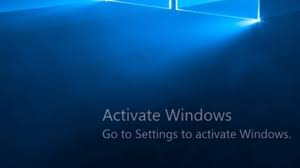
Windows activation is a process that verifies whether a copy of the Windows operating system on a computer is genuine or counterfeit. It is a crucial part of the licensing agreement between Microsoft, the company that produces Windows, and the user who purchases and utilizes the software.

Activation is necessary to ensure that the copy of Windows being used is, in fact, a licensed and genuine version that was purchased legally. Windows activation also helps prevent software piracy and theft, which is a significant problem for Microsoft and other software developers.

Activation usually occurs automatically when a user installs Windows on a new computer, but there are times where additional activation steps may be needed. For example, if a user changes the hardware on their computer significantly, such as replacing the motherboard, this can trigger a reactivation process.

So, how does Windows activation actually work?

When you install Windows on a computer, a unique installation ID is generated based on various hardware components and system information. This ID is then sent to Microsoft’s servers, where it is checked against a database of known valid installation IDs.

This process is known as online activation, and it requires an active internet connection. If the installation ID is determined to be valid, Windows is activated, and the user can continue using the operating system. If the installation ID is found to be invalid or already in use, Windows may not activate, and the user will need to contact Microsoft to resolve the issue.

Microsoft also offers a phone-based activation option for users who do not have an internet connection or encounter issues with online activation. In this case, the user will be prompted to call a toll-free number provided by Microsoft and follow a series of prompts to activate their copy of Windows.

If a user attempts to use an unlicensed or pirated copy of Windows, they may be prompted to activate the software, but it will not be successful. Users who attempt to use counterfeit software will experience limited functionality and potential security risks.

In conclusion, Windows activation is a critical component of Microsoft’s licensing agreement, and it ensures that users who purchase and use the operating system are doing so legally. Activation works by verifying a unique installation ID against a database of known valid IDs, and it is typically done automatically on installation. If issues arise, phone-based activation is also available to users. Microsoft takes software piracy and theft seriously, and failure to activate Windows correctly can result in limited functionality and potential security risks.


Previous Article

How to Install Fonts in Windows 10

Next Article

Places Where Secret Cameras Are Most Likely ...

Matthew Lynch

Related articles More from author

  • Digital & Mobile Technology

    How to Fix Overscan and Underscan Between a TV and Computer

    May 28, 2023
    By Matthew Lynch
  • Digital & Mobile Technology

    Awesome Uses for a Raspberry Pi

    June 26, 2023
    By Matthew Lynch
  • Digital & Mobile Technology

    What is Task Management?

    May 12, 2023
    By Matthew Lynch
  • Digital & Mobile Technology

    How to Unarchive an Email in Gmail

    May 29, 2023
    By Matthew Lynch
  • Digital & Mobile Technology

    Changing the Wallpaper and Theme on Your Google Chromebook

    June 3, 2023
    By Matthew Lynch
  • Digital & Mobile Technology

    The Best Smart Motorcycle Helmets for Safe Riding

    June 14, 2023
    By Matthew Lynch

Search

Login & Registration

  • Log in
  • Entries feed
  • Comments feed
  • WordPress.org

Newsletter

Signup for The Tech Edvocate Newsletter and have the latest in EdTech news and opinion delivered to your email address!

About Us

Since technology is not going anywhere and does more good than harm, adapting is the best course of action. That is where The Tech Edvocate comes in. We plan to cover the PreK-12 and Higher Education EdTech sectors and provide our readers with the latest news and opinion on the subject. From time to time, I will invite other voices to weigh in on important issues in EdTech. We hope to provide a well-rounded, multi-faceted look at the past, present, the future of EdTech in the US and internationally.

We started this journey back in June 2016, and we plan to continue it for many more years to come. I hope that you will join us in this discussion of the past, present and future of EdTech and lend your own insight to the issues that are discussed.

Newsletter

Signup for The Tech Edvocate Newsletter and have the latest in EdTech news and opinion delivered to your email address!

Contact Us

The Tech Edvocate
910 Goddin Street
Richmond, VA 23231
(601) 630-5238
[email protected]

Copyright © 2026 Matthew Lynch. All rights reserved.