The Tech Edvocate

Top Menu

  • Advertisement
  • Apps
  • Home Page
  • Home Page Five (No Sidebar)
  • Home Page Four
  • Home Page Three
  • Home Page Two
  • Home Tech2
  • Icons [No Sidebar]
  • Left Sidbear Page
  • Lynch Educational Consulting
  • My Account
  • My Speaking Page
  • Newsletter Sign Up Confirmation
  • Newsletter Unsubscription
  • Our Brands
  • Page Example
  • Privacy Policy
  • Protected Content
  • Register
  • Request a Product Review
  • Shop
  • Shortcodes Examples
  • Signup
  • Start Here
    • Governance
    • Careers
    • Contact Us
  • Terms and Conditions
  • The Edvocate
  • The Tech Edvocate Product Guide
  • Topics
  • Write For Us
  • Advertise

Main Menu

  • Start Here
    • Our Brands
    • Governance
      • Lynch Educational Consulting, LLC.
      • Dr. Lynch’s Personal Website
      • Careers
    • Write For Us
    • The Tech Edvocate Product Guide
    • Contact Us
    • Books
    • Edupedia
    • Post a Job
    • The Edvocate Podcast
    • Terms and Conditions
    • Privacy Policy
  • Topics
    • Assistive Technology
    • Child Development Tech
    • Early Childhood & K-12 EdTech
    • EdTech Futures
    • EdTech News
    • EdTech Policy & Reform
    • EdTech Startups & Businesses
    • Higher Education EdTech
    • Online Learning & eLearning
    • Parent & Family Tech
    • Personalized Learning
    • Product Reviews
  • Advertise
  • Tech Edvocate Awards
  • The Edvocate
  • Pedagogue
  • School Ratings

logo

The Tech Edvocate

  • Start Here
    • Our Brands
    • Governance
      • Lynch Educational Consulting, LLC.
      • Dr. Lynch’s Personal Website
        • My Speaking Page
      • Careers
    • Write For Us
    • The Tech Edvocate Product Guide
    • Contact Us
    • Books
    • Edupedia
    • Post a Job
    • The Edvocate Podcast
    • Terms and Conditions
    • Privacy Policy
  • Topics
    • Assistive Technology
    • Child Development Tech
    • Early Childhood & K-12 EdTech
    • EdTech Futures
    • EdTech News
    • EdTech Policy & Reform
    • EdTech Startups & Businesses
    • Higher Education EdTech
    • Online Learning & eLearning
    • Parent & Family Tech
    • Personalized Learning
    • Product Reviews
  • Advertise
  • Tech Edvocate Awards
  • The Edvocate
  • Pedagogue
  • School Ratings
  • Shocking: Mercury Skin Bleachers Still Flood Amazon, Temu, and TikTok Shop

  • Shocking: 195,000 Heated Blankets Recalled After Dozens Suffer Burns – Is Yours One of Them?

  • The $4 Billion Comeback: How Manus Defied Geopolitical Odds to Double Its Valuation

  • This Israeli Startup Accidentally Unleashed AI Cyberattacks on Real Companies

  • This PlayStation Exclusive Just Vanished Forever — And It’s a Warning to All Gamers

  • The Jaw-Dropping Truth Behind Marvel’s Wolverine AI Scare

  • The September 2026 AI Surge: Why Your Business Needs to Adapt Now

  • The Billion-Dollar AI Slowdown Lawsuit That Could Shatter Big Tech

  • The Brutal Truth: Why Your Student Loan Discharge Is Stuck in Limbo

  • 7 Critical Lessons From Russia’s Election Cyber Onslaught

Digital & Mobile Technology
Home›Digital & Mobile Technology›What Is Volumetric Capture and How Does It Work?

What Is Volumetric Capture and How Does It Work?
By Matthew Lynch
July 31, 2023
0
Spread the love

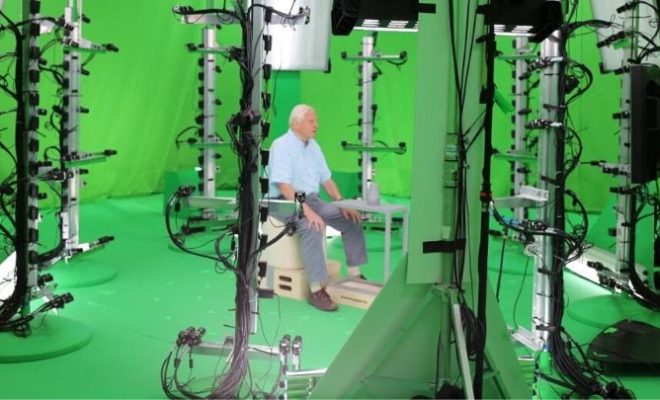
Volumetric capture refers to the process of creating a three-dimensional (3D) digital representation of a real-world object or space. Unlike traditional 3D modeling techniques that require manual modelling, volumetric capture automates the process by using advanced sensors and cameras to record and capture the physical space.

In simpler terms, volumetric capture is a technology that allows filmmakers, game developers, and other creatives to capture real-life objects and environments in 3D, which can then be used in movies, video games, virtual reality (VR), and augmented reality (AR) experiences.

To understand how volumetric capture works, let’s take a look at the three basic components of the process:

1. Sensors and cameras: Volumetric capture uses a combination of sensors and cameras to capture the real-world environment in 3D. These sensors can be laser scanners, depth-sensing cameras, or photogrammetry cameras that capture multiple images in a short period of time. These sensors and cameras are strategically placed around the target space to capture all angles.

2. Processing software: Once the sensors and cameras capture the physical space, the captured data is fed into powerful software that processes the information and creates a digital replica of the real-world object or space. The software uses intricate algorithms to determine the position, orientation, and distance of each sensor to accurately recreate the space.

3. Output: The final output of the volumetric capture process is a highly detailed 3D model that reflects the physical reality of the object or space. The model can be exported in various formats, such as computer-aided design (CAD) files, 3D models, or point clouds. This data can be used to create immersive experiences, such as VR, AR, and movies.

Now that we understand how volumetric capture works, let’s explore its applications.

Volumetric capture is used in a variety of industries, from gaming to film production. For example, game developers use this technology to create highly detailed 3D models of characters, environments, and objects that are used in video games. Movie producers use volumetric capture to create realistic special effects, such as explosions, fire, and other visual effects.

Volumetric capture is also used in medical imaging, architecture, and heritage preservation. For example, medical professionals use this technology to create 3D models of patient scans, allowing for precise surgical planning and diagnosis. Architects use this technology to create 3D representations of buildings and spaces, allowing them to see how constructions will look and function before they are built. Heritage sites use volumetric capture to preserve cultural sites and artifacts for future generations.

In conclusion, volumetric capture is a powerful technology that allows for the creation of highly detailed 3D models of real-world objects and environments. Its various applications make it a valuable tool for creatives, professionals, and researchers alike. As technology continues to evolve, volumetric capture is sure to become an even more critical tool for innovation and exploration.

Previous Article

How to Set Up Android’s Priority Mode ...

Next Article

The Different Types of Computer Memory & ...

Matthew Lynch

Related articles More from author

  • Digital & Mobile Technology

    How to Skype Multiple People

    June 26, 2023
    By Matthew Lynch
  • Digital & Mobile Technology

    The 7 Best Photo Scanners for Backing Up Old Photos

    August 3, 2023
    By Matthew Lynch
  • Digital & Mobile Technology

    9 Awesome After Effects Tutorials for Beginners

    August 3, 2023
    By Matthew Lynch
  • Digital & Mobile Technology

    What Is Excel Solver?

    June 9, 2023
    By Matthew Lynch
  • Digital & Mobile Technology

    How to Run Old Programs with Compatibility Mode in Windows

    May 26, 2023
    By Matthew Lynch
  • Digital & Mobile Technology

    How to Flush and Clear Windows DNS Cache

    June 12, 2023
    By Matthew Lynch

Search

Login & Registration

  • Log in
  • Entries feed
  • Comments feed
  • WordPress.org

Newsletter

Signup for The Tech Edvocate Newsletter and have the latest in EdTech news and opinion delivered to your email address!

About Us

Since technology is not going anywhere and does more good than harm, adapting is the best course of action. That is where The Tech Edvocate comes in. We plan to cover the PreK-12 and Higher Education EdTech sectors and provide our readers with the latest news and opinion on the subject. From time to time, I will invite other voices to weigh in on important issues in EdTech. We hope to provide a well-rounded, multi-faceted look at the past, present, the future of EdTech in the US and internationally.

We started this journey back in June 2016, and we plan to continue it for many more years to come. I hope that you will join us in this discussion of the past, present and future of EdTech and lend your own insight to the issues that are discussed.

Newsletter

Signup for The Tech Edvocate Newsletter and have the latest in EdTech news and opinion delivered to your email address!

Contact Us

The Tech Edvocate
910 Goddin Street
Richmond, VA 23231
(601) 630-5238
[email protected]

Copyright © 2026 Matthew Lynch. All rights reserved.