The Tech Edvocate

Top Menu

  • Advertisement
  • Apps
  • Home Page
  • Home Page Five (No Sidebar)
  • Home Page Four
  • Home Page Three
  • Home Page Two
  • Home Tech2
  • Icons [No Sidebar]
  • Left Sidbear Page
  • Lynch Educational Consulting
  • My Account
  • My Speaking Page
  • Newsletter Sign Up Confirmation
  • Newsletter Unsubscription
  • Our Brands
  • Page Example
  • Privacy Policy
  • Protected Content
  • Register
  • Request a Product Review
  • Shop
  • Shortcodes Examples
  • Signup
  • Start Here
    • Governance
    • Careers
    • Contact Us
  • Terms and Conditions
  • The Edvocate
  • The Tech Edvocate Product Guide
  • Topics
  • Write For Us
  • Advertise

Main Menu

  • Start Here
    • Our Brands
    • Governance
      • Lynch Educational Consulting, LLC.
      • Dr. Lynch’s Personal Website
      • Careers
    • Write For Us
    • The Tech Edvocate Product Guide
    • Contact Us
    • Books
    • Edupedia
    • Post a Job
    • The Edvocate Podcast
    • Terms and Conditions
    • Privacy Policy
  • Topics
    • Assistive Technology
    • Child Development Tech
    • Early Childhood & K-12 EdTech
    • EdTech Futures
    • EdTech News
    • EdTech Policy & Reform
    • EdTech Startups & Businesses
    • Higher Education EdTech
    • Online Learning & eLearning
    • Parent & Family Tech
    • Personalized Learning
    • Product Reviews
  • Advertise
  • Tech Edvocate Awards
  • The Edvocate
  • Pedagogue
  • School Ratings

logo

The Tech Edvocate

  • Start Here
    • Our Brands
    • Governance
      • Lynch Educational Consulting, LLC.
      • Dr. Lynch’s Personal Website
        • My Speaking Page
      • Careers
    • Write For Us
    • The Tech Edvocate Product Guide
    • Contact Us
    • Books
    • Edupedia
    • Post a Job
    • The Edvocate Podcast
    • Terms and Conditions
    • Privacy Policy
  • Topics
    • Assistive Technology
    • Child Development Tech
    • Early Childhood & K-12 EdTech
    • EdTech Futures
    • EdTech News
    • EdTech Policy & Reform
    • EdTech Startups & Businesses
    • Higher Education EdTech
    • Online Learning & eLearning
    • Parent & Family Tech
    • Personalized Learning
    • Product Reviews
  • Advertise
  • Tech Edvocate Awards
  • The Edvocate
  • Pedagogue
  • School Ratings
  • A Visitor’s Guide to Fresno (CA), United States

  • A Visitors Guide to New Orleans (LA), United States

  • A Visitors Guide to Sacramento (CA), United States

  • A Visitors Guide to Lyon, France

  • JisuLife Ultra2 Portable Fan: A Powerful Multi-Function Cooling Solution

  • A Visitors Guide to Viña del Mar, Chile

  • A Visitors Guide to Århus, Denmark

  • A Visitors Guide to Bakersfield (CA), United States

  • A Visitors Guide to Aurora (CO), United States

  • A Visitor’s Guide to Toledo (OH), United States

Online Learning & eLearning
Home›Online Learning & eLearning›What Is the Difference Between Series and Parallel Circuits?

What Is the Difference Between Series and Parallel Circuits?
By Matthew Lynch
June 21, 2023
0
Spread the love

When you start to explore the world of electronics, you may hear the terms “series circuit” and “parallel circuit” used frequently. While both types of circuits may sound similar, they operate quite differently and offer unique advantages and disadvantages when it comes to designing and building electronic devices.

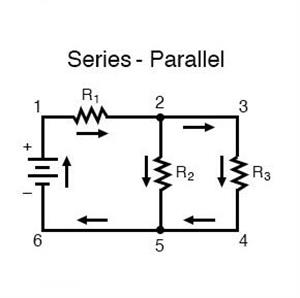
To understand the difference between series and parallel circuits, let’s start with some basic definitions. In a series circuit, the components are connected one after the other, forming a single pathway for the current to follow. Each component in the circuit is connected in sequence, with the current flowing through each one before moving on to the next. In contrast, a parallel circuit has multiple pathways for the current to flow through, with each component connected to the same two nodes.

The main benefit of a series circuit is that the total resistance of the circuit can be easily calculated by adding up the resistances of each component in the sequence. This allows for accurate predictions of the current and voltage throughout the circuit, which is useful when designing and troubleshooting electronic devices. Additionally, series circuits are easy to construct and can be used in a variety of applications, such as lighting circuits and voltage dividers.

However, series circuits can be problematic in certain situations. Since each component in the circuit must share the same current, the entire circuit can be affected if just one component fails or becomes damaged. As a result, devices powered by series circuits may be less reliable and more prone to failure.

In contrast, a parallel circuit offers several advantages over a series circuit. First and foremost, the fact that each component has its own pathway for the current to flow through means that if one component fails, the rest of the circuit can continue to operate as normal. Additionally, parallel circuits offer lower overall resistance and can provide more power to devices that require high current or voltage.

However, there are also some drawbacks to using a parallel circuit. Calculating the total resistance of a parallel circuit can be more complex than for a series circuit, since the components are not all connected in sequence. Additionally, parallel circuits may require additional components, such as diodes or fuses, to prevent current from flowing through individual components in unintended ways.

Previous Article

Best Free Audio Tools for Splitting Up ...

Next Article

What Is Auto Shazam and How Does ...

Matthew Lynch

Related articles More from author

  • Online Learning & eLearning

    Online Learning Tutoring Business: Legalities To Consider

    March 23, 2023
    By Matthew Lynch
  • Online Learning & eLearning

    List of Televisions That Are Made in America

    March 19, 2023
    By Matthew Lynch
  • Online Learning & eLearning

    Why Netflix Canceled 1899 After Just One Season

    June 23, 2023
    By Matthew Lynch
  • Online Learning & eLearning

    June 11, 2023
    By Matthew Lynch
  • Elementary EducationOnline Learning & eLearning

    The 15 Things to Do When Your WiFi Is Not Working

    March 30, 2023
    By Matthew Lynch
  • Online Learning & eLearning

    Top 6 Ways to Fix There Was a Problem Parsing the Package Error on Android

    April 3, 2023
    By Matthew Lynch

Search

Login & Registration

  • Register
  • Log in
  • Entries feed
  • Comments feed
  • WordPress.org

Newsletter

Signup for The Tech Edvocate Newsletter and have the latest in EdTech news and opinion delivered to your email address!

About Us

Since technology is not going anywhere and does more good than harm, adapting is the best course of action. That is where The Tech Edvocate comes in. We plan to cover the PreK-12 and Higher Education EdTech sectors and provide our readers with the latest news and opinion on the subject. From time to time, I will invite other voices to weigh in on important issues in EdTech. We hope to provide a well-rounded, multi-faceted look at the past, present, the future of EdTech in the US and internationally.

We started this journey back in June 2016, and we plan to continue it for many more years to come. I hope that you will join us in this discussion of the past, present and future of EdTech and lend your own insight to the issues that are discussed.

Newsletter

Signup for The Tech Edvocate Newsletter and have the latest in EdTech news and opinion delivered to your email address!

Contact Us

The Tech Edvocate
910 Goddin Street
Richmond, VA 23231
(601) 630-5238
[email protected]

Copyright © 2025 Matthew Lynch. All rights reserved.