The Tech Edvocate

Top Menu

  • Advertisement
  • Apps
  • Home Page
  • Home Page Five (No Sidebar)
  • Home Page Four
  • Home Page Three
  • Home Page Two
  • Home Tech2
  • Icons [No Sidebar]
  • Left Sidbear Page
  • Lynch Educational Consulting
  • My Account
  • My Speaking Page
  • Newsletter Sign Up Confirmation
  • Newsletter Unsubscription
  • Our Brands
  • Page Example
  • Privacy Policy
  • Protected Content
  • Register
  • Request a Product Review
  • Shop
  • Shortcodes Examples
  • Signup
  • Start Here
    • Governance
    • Careers
    • Contact Us
  • Terms and Conditions
  • The Edvocate
  • The Tech Edvocate Product Guide
  • Topics
  • Write For Us
  • Advertise

Main Menu

  • Start Here
    • Our Brands
    • Governance
      • Lynch Educational Consulting, LLC.
      • Dr. Lynch’s Personal Website
      • Careers
    • Write For Us
    • The Tech Edvocate Product Guide
    • Contact Us
    • Books
    • Edupedia
    • Post a Job
    • The Edvocate Podcast
    • Terms and Conditions
    • Privacy Policy
  • Topics
    • Assistive Technology
    • Child Development Tech
    • Early Childhood & K-12 EdTech
    • EdTech Futures
    • EdTech News
    • EdTech Policy & Reform
    • EdTech Startups & Businesses
    • Higher Education EdTech
    • Online Learning & eLearning
    • Parent & Family Tech
    • Personalized Learning
    • Product Reviews
  • Advertise
  • Tech Edvocate Awards
  • The Edvocate
  • Pedagogue
  • School Ratings

logo

The Tech Edvocate

  • Start Here
    • Our Brands
    • Governance
      • Lynch Educational Consulting, LLC.
      • Dr. Lynch’s Personal Website
        • My Speaking Page
      • Careers
    • Write For Us
    • The Tech Edvocate Product Guide
    • Contact Us
    • Books
    • Edupedia
    • Post a Job
    • The Edvocate Podcast
    • Terms and Conditions
    • Privacy Policy
  • Topics
    • Assistive Technology
    • Child Development Tech
    • Early Childhood & K-12 EdTech
    • EdTech Futures
    • EdTech News
    • EdTech Policy & Reform
    • EdTech Startups & Businesses
    • Higher Education EdTech
    • Online Learning & eLearning
    • Parent & Family Tech
    • Personalized Learning
    • Product Reviews
  • Advertise
  • Tech Edvocate Awards
  • The Edvocate
  • Pedagogue
  • School Ratings
  • The Shocking Truth: ESG Training Programs Are Quietly Reshaping Your Career Path

  • Why Millions of People Are Switching to These Green Energy Certifications Right Now

  • The green skills gap in 2026: How to address this growing problem

  • The Shocking Truth: Your Degree Won’t Land You the Best IT Jobs in 2026

  • The Brutal Truth About Degrees: Why Micro-Credentials Are Quietly Dominating Careers by 2026

  • Why 96% of Employers Now Prefer Skills Over Degrees: The Micro-Credential Revolution

  • This Crucial Mistake With AI Is Stunting Student Minds: Here’s How to Fix It

  • The AI ‘Cognitive Surrender’ Crisis: 7 Tools Every Educator Needs NOW

  • This Crucial Mistake Is Quietly Killing Students’ Brains, Says MIT

  • The Sneaky Truth About RTO: How to Negotiate Flexible Work Without Losing Your Job

Digital & Mobile Technology
Home›Digital & Mobile Technology›What Is the 802.11a Standard?

What Is the 802.11a Standard?
By Matthew Lynch
July 6, 2023
0
Spread the love

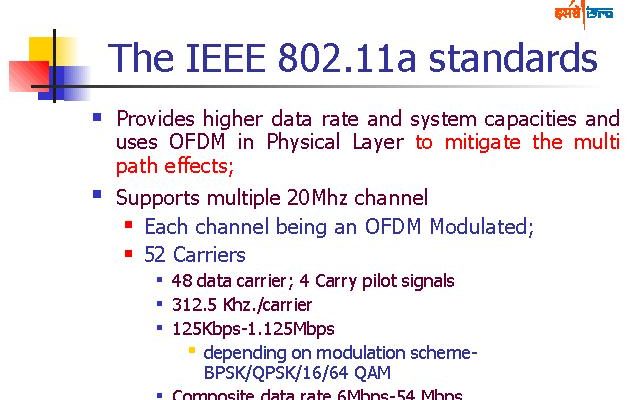
The 802.11a standard, also known as Wi-Fi 5, is a set of specifications for wireless local area networks (WLANs). It was first introduced by the Institute of Electrical and Electronics Engineers (IEEE) in 1999 and operates on the 5 GHz frequency band.

One of the main advantages of the 802.11a standard is its faster data transfer rates than previous Wi-Fi standards. Specifically, 802.11a has a maximum data transfer rate of 54 Mbps, which makes it ideal for streaming high-definition video and transferring large files such as photos and documents quickly. This speed is achieved through the use of more advanced coding techniques, which allow for greater amounts of data to be transmitted at once.
In addition to its faster data transfer rates, the 802.11a standard also uses a different modulation scheme for encoding data, called orthogonal frequency-division multiplexing (OFDM). This scheme helps to reduce interference and improve signal quality, which ultimately results in a more reliable wireless connection.

Another key feature of the 802.11a standard is its use of multiple channels, which helps to further reduce interference and improve performance. However, this also means that 802.11a networks may require more access points than networks using other Wi-Fi standards, as each access point can only support a limited number of channels.

Despite its advantages, the 802.11a standard has some limitations that have made it less popular than other Wi-Fi standards. One of the main drawbacks is its limited range, which is due to the fact that the 5 GHz frequency band is more easily absorbed by solid objects such as walls and furniture. As a result, 802.11a networks may require more access points to provide adequate coverage in larger spaces.

Furthermore, the 802.11a standard is not backwards compatible with older devices that use the 2.4 GHz frequency band, which can be problematic in mixed-use environments. This means that devices that only support the 802.11b or 802.11g standards will not be able to connect to an 802.11a network.

In summary, the 802.11a standard is a Wi-Fi standard that operates on the 5 GHz frequency band and provides faster data transfer rates and improved signal quality through the use of advanced coding techniques and multiple channels. However, its limited range and lack of backwards compatibility have made it less popular than other Wi-Fi standards such as 802.11n and 802.11ac.


Previous Article

How to Find Amethyst in Minecraft

Next Article

How Do Wi-Fi Extenders Work?

Matthew Lynch

Related articles More from author

  • Digital & Mobile Technology

    How to Watch Netflix Online Together With Friends: Methods

    June 8, 2023
    By Matthew Lynch
  • Digital & Mobile Technology

    How to Change Your Discord Profile Picture

    August 5, 2023
    By Matthew Lynch
  • Digital & Mobile Technology

    How to Do a T Test in Excel

    June 26, 2023
    By Matthew Lynch
  • Digital & Mobile Technology

    Why Microsoft Shouldn’t Follow the PS5 Price Hike

    June 26, 2023
    By Matthew Lynch
  • Digital & Mobile Technology

    Xbox One Controller Not Working? Tips on How to Fix It

    June 26, 2023
    By Matthew Lynch
  • Digital & Mobile Technology

    How to Fix Your iPhone Alarm Not Going Off

    June 23, 2023
    By Matthew Lynch

Search

Login & Registration

  • Log in
  • Entries feed
  • Comments feed
  • WordPress.org

Newsletter

Signup for The Tech Edvocate Newsletter and have the latest in EdTech news and opinion delivered to your email address!

About Us

Since technology is not going anywhere and does more good than harm, adapting is the best course of action. That is where The Tech Edvocate comes in. We plan to cover the PreK-12 and Higher Education EdTech sectors and provide our readers with the latest news and opinion on the subject. From time to time, I will invite other voices to weigh in on important issues in EdTech. We hope to provide a well-rounded, multi-faceted look at the past, present, the future of EdTech in the US and internationally.

We started this journey back in June 2016, and we plan to continue it for many more years to come. I hope that you will join us in this discussion of the past, present and future of EdTech and lend your own insight to the issues that are discussed.

Newsletter

Signup for The Tech Edvocate Newsletter and have the latest in EdTech news and opinion delivered to your email address!

Contact Us

The Tech Edvocate
910 Goddin Street
Richmond, VA 23231
(601) 630-5238
[email protected]

Copyright © 2026 Matthew Lynch. All rights reserved.