The Tech Edvocate

Top Menu

  • Advertisement
  • Apps
  • Home Page
  • Home Page Five (No Sidebar)
  • Home Page Four
  • Home Page Three
  • Home Page Two
  • Home Tech2
  • Icons [No Sidebar]
  • Left Sidbear Page
  • Lynch Educational Consulting
  • My Account
  • My Speaking Page
  • Newsletter Sign Up Confirmation
  • Newsletter Unsubscription
  • Our Brands
  • Page Example
  • Privacy Policy
  • Protected Content
  • Register
  • Request a Product Review
  • Shop
  • Shortcodes Examples
  • Signup
  • Start Here
    • Governance
    • Careers
    • Contact Us
  • Terms and Conditions
  • The Edvocate
  • The Tech Edvocate Product Guide
  • Topics
  • Write For Us
  • Advertise

Main Menu

  • Start Here
    • Our Brands
    • Governance
      • Lynch Educational Consulting, LLC.
      • Dr. Lynch’s Personal Website
      • Careers
    • Write For Us
    • The Tech Edvocate Product Guide
    • Contact Us
    • Books
    • Edupedia
    • Post a Job
    • The Edvocate Podcast
    • Terms and Conditions
    • Privacy Policy
  • Topics
    • Assistive Technology
    • Child Development Tech
    • Early Childhood & K-12 EdTech
    • EdTech Futures
    • EdTech News
    • EdTech Policy & Reform
    • EdTech Startups & Businesses
    • Higher Education EdTech
    • Online Learning & eLearning
    • Parent & Family Tech
    • Personalized Learning
    • Product Reviews
  • Advertise
  • Tech Edvocate Awards
  • The Edvocate
  • Pedagogue
  • School Ratings

logo

The Tech Edvocate

  • Start Here
    • Our Brands
    • Governance
      • Lynch Educational Consulting, LLC.
      • Dr. Lynch’s Personal Website
        • My Speaking Page
      • Careers
    • Write For Us
    • The Tech Edvocate Product Guide
    • Contact Us
    • Books
    • Edupedia
    • Post a Job
    • The Edvocate Podcast
    • Terms and Conditions
    • Privacy Policy
  • Topics
    • Assistive Technology
    • Child Development Tech
    • Early Childhood & K-12 EdTech
    • EdTech Futures
    • EdTech News
    • EdTech Policy & Reform
    • EdTech Startups & Businesses
    • Higher Education EdTech
    • Online Learning & eLearning
    • Parent & Family Tech
    • Personalized Learning
    • Product Reviews
  • Advertise
  • Tech Edvocate Awards
  • The Edvocate
  • Pedagogue
  • School Ratings
  • Your Home Insurance Bill Just Exploded: 5 Reasons Why — And What Comes Next

  • Your Home Insurance Premiums Are Skyrocketing: Is Your State On This List?

  • The Brutal Truth: Why 30-Year vs. 15-Year Fixed Mortgage Rates in 2026 Could CRUSH Your Homeownership Dreams

  • 7 Things First-Time Homebuyers MUST Know About the New 6.89% Mortgage Rates

  • Your Dream Home Just Got Pricier: Why Mortgage Rates 2026 Are Soaring Toward 7%

  • Unbelievable: The True Cost of CRISPR Anti-Aging Will Absolutely Shock You

  • Your Genes Hold The Key: How CRISPR Could Restore Youthful Function

  • The Mind-Blowing Way CRISPR Could End Aging As We Know It

  • Why Millions Are Rushing to Install Home Battery Storage Now

  • Google’s €13 Billion Bet: The Unseen Renewable Energy Funds Quietly Reshaping Your Portfolio

Digital & Mobile Technology
Home›Digital & Mobile Technology›What is Paravirtualization?

What is Paravirtualization?
By Matthew Lynch
May 25, 2023
0
Spread the love

Paravirtualization is a technique of virtualization that involves multiple operating systems sharing a single hardware resource. This technology is used to optimize the use of computer resources while offering the performance benefits of a virtualized environment.

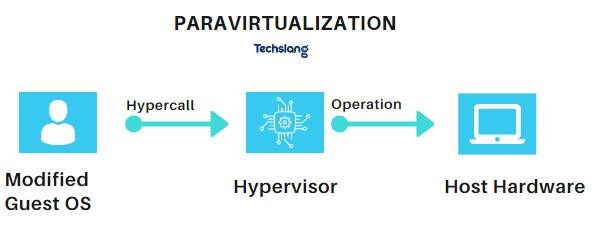
Paravirtualization allows multiple operating systems to share hardware resources without requiring the use of virtualized hardware. Instead, the guest operating systems are modified to work in a closely cooperative environment, where the host hypervisor provides an abstracted view of the underlying hardware. This cooperative environment enables a suite of features that provide high-performance compared to conventional virtualization techniques.

In this model, the guest operating systems will run as a virtual machine, and the hypervisor will act as a mediator between the guest operating system and the physical hardware resources. The hypervisor creates a virtualized environment that ensures each guest operating system has its own resources, such as CPU time, memory, network interfaces, and storage.

Paravirtualization uses a technique called “hypercall,” which replaces the traditional “syscall” used by guest operating systems. These hypercalls are used to allow the communication between the guest operating system and the hypervisor. In this way, the hypervisor can implement various optimizations to improve the performance of the guest operating system, such as memory sharing and virtualis device drivers.

The benefits of paravirtualization are numerous. This technique improves the performance of virtual machines as it allows for a more direct interaction between guest operating systems and hardware resources. It also eliminates the need for hardware emulation, which reduces the overhead associated with virtualization.

Moreover, paravirtualization often involves low-level modifications to the guest operating system, making it more efficient than other virtualization techniques. This is because the guest operating systems can access the hypervisor directly and without the need for API calls. This translates into a significant performance boost compared to traditional virtualization models.

In conclusion, paravirtualization is a technique that allows guest operating systems to work in a cooperative environment, closely working with a hypervisor to share resources. The result is better performance than traditional virtualization techniques, with low overhead and reduced hardware requirements. If you’re looking for a high-performance virtualization solution, paravirtualization might be just the right fit.


Previous Article

What is Password Protection?

Next Article

What is Pay Per Lead (PPL)?

Matthew Lynch

Related articles More from author

  • Digital & Mobile Technology

    Guide to Choosing a Tablet Based on Size and Weight

    June 4, 2023
    By Matthew Lynch
  • Digital & Mobile Technology

    How to Search Open Page Tabs in Chrome, Edge, and Firefox

    June 15, 2023
    By Matthew Lynch
  • Digital & Mobile Technology

    iPhone 15: News, Rumors, and Estimated Price, Release Date, and Specs

    May 30, 2023
    By Matthew Lynch
  • Digital & Mobile Technology

    How to Transfer Music From an Old iPod to Your Computer or iPhone

    August 5, 2023
    By Matthew Lynch
  • Digital & Mobile Technology

    The History of Headphones

    June 12, 2023
    By Matthew Lynch
  • Digital & Mobile Technology

    What Is SpO2 Measurement and Why Is It Important?

    June 23, 2023
    By Matthew Lynch

Search

Login & Registration

  • Log in
  • Entries feed
  • Comments feed
  • WordPress.org

Newsletter

Signup for The Tech Edvocate Newsletter and have the latest in EdTech news and opinion delivered to your email address!

About Us

Since technology is not going anywhere and does more good than harm, adapting is the best course of action. That is where The Tech Edvocate comes in. We plan to cover the PreK-12 and Higher Education EdTech sectors and provide our readers with the latest news and opinion on the subject. From time to time, I will invite other voices to weigh in on important issues in EdTech. We hope to provide a well-rounded, multi-faceted look at the past, present, the future of EdTech in the US and internationally.

We started this journey back in June 2016, and we plan to continue it for many more years to come. I hope that you will join us in this discussion of the past, present and future of EdTech and lend your own insight to the issues that are discussed.

Newsletter

Signup for The Tech Edvocate Newsletter and have the latest in EdTech news and opinion delivered to your email address!

Contact Us

The Tech Edvocate
910 Goddin Street
Richmond, VA 23231
(601) 630-5238
[email protected]

Copyright © 2026 Matthew Lynch. All rights reserved.