The Tech Edvocate

Top Menu

  • Advertisement
  • Apps
  • Home Page
  • Home Page Five (No Sidebar)
  • Home Page Four
  • Home Page Three
  • Home Page Two
  • Home Tech2
  • Icons [No Sidebar]
  • Left Sidbear Page
  • Lynch Educational Consulting
  • My Account
  • My Speaking Page
  • Newsletter Sign Up Confirmation
  • Newsletter Unsubscription
  • Our Brands
  • Page Example
  • Privacy Policy
  • Protected Content
  • Register
  • Request a Product Review
  • Shop
  • Shortcodes Examples
  • Signup
  • Start Here
    • Governance
    • Careers
    • Contact Us
  • Terms and Conditions
  • The Edvocate
  • The Tech Edvocate Product Guide
  • Topics
  • Write For Us
  • Advertise

Main Menu

  • Start Here
    • Our Brands
    • Governance
      • Lynch Educational Consulting, LLC.
      • Dr. Lynch’s Personal Website
      • Careers
    • Write For Us
    • The Tech Edvocate Product Guide
    • Contact Us
    • Books
    • Edupedia
    • Post a Job
    • The Edvocate Podcast
    • Terms and Conditions
    • Privacy Policy
  • Topics
    • Assistive Technology
    • Child Development Tech
    • Early Childhood & K-12 EdTech
    • EdTech Futures
    • EdTech News
    • EdTech Policy & Reform
    • EdTech Startups & Businesses
    • Higher Education EdTech
    • Online Learning & eLearning
    • Parent & Family Tech
    • Personalized Learning
    • Product Reviews
  • Advertise
  • Tech Edvocate Awards
  • The Edvocate
  • Pedagogue
  • School Ratings

logo

The Tech Edvocate

  • Start Here
    • Our Brands
    • Governance
      • Lynch Educational Consulting, LLC.
      • Dr. Lynch’s Personal Website
        • My Speaking Page
      • Careers
    • Write For Us
    • The Tech Edvocate Product Guide
    • Contact Us
    • Books
    • Edupedia
    • Post a Job
    • The Edvocate Podcast
    • Terms and Conditions
    • Privacy Policy
  • Topics
    • Assistive Technology
    • Child Development Tech
    • Early Childhood & K-12 EdTech
    • EdTech Futures
    • EdTech News
    • EdTech Policy & Reform
    • EdTech Startups & Businesses
    • Higher Education EdTech
    • Online Learning & eLearning
    • Parent & Family Tech
    • Personalized Learning
    • Product Reviews
  • Advertise
  • Tech Edvocate Awards
  • The Edvocate
  • Pedagogue
  • School Ratings
  • The Hidden Cost of EVs: Why Your Battery Could Cost More Than Your Car in 2026

  • Jensen Huang’s Shock Exit: This Unbelievable Scandal Just Rocked Nvidia and the AI World

  • Big Walk developer House House Confirms ‘Sparing’ Use of Gen AI – Press Start

  • Baffling: How a Cyber Breach at South Korea’s Top Security Watchdog Exposed Millions

  • Wenn Ordnung den Bildschirm beruhigt: Warum klare Abläufe Casino-Unterhaltung einladender machen

  • Reddit AI Reviews: The Quiet Reshaping of Online Opinion

  • The Chilling Truth: Iran Cyberattacks Europe’s Food and Blood Supplies

  • Anthropic’s $3.4 Billion Bet on Gas: The Unseen Cost of AI’s Future

  • Tribit FlyBuds C3 Earbuds: Premium Features at a Budget-Friendly Price

  • Is AuraCam Pro’s Emotional AI a Privacy Nightmare or Security Breakthrough?

Digital & Mobile Technology
Home›Digital & Mobile Technology›What is Non-Volatile Memory (NVM)?

What is Non-Volatile Memory (NVM)?
By Matthew Lynch
May 25, 2023
0
Spread the love

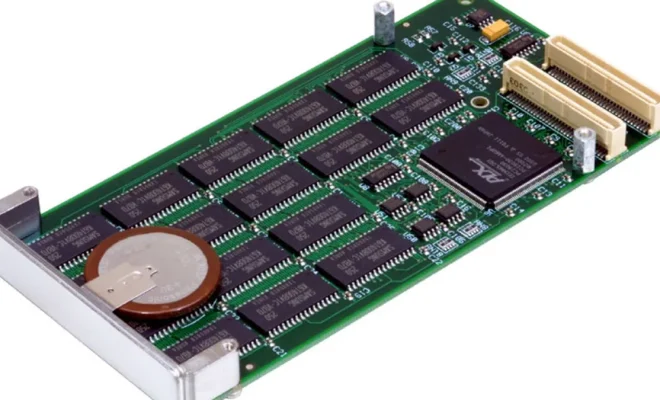
Non-volatile memory, or NVM, is a type of computer memory that retains its contents even when the power is turned off. Unlike volatile memory, such as random access memory (RAM), which needs a constant source of power to hold data, NVM retains data even when the power is removed. This makes it ideal for storing critical data that needs to be accessed quickly, such as boot files, system settings, and other essential information.

There are several types of non-volatile memory technologies available, including flash memory, read-only memory (ROM), and Electrically Erasable Programmable Read-Only Memory (EEPROM). Flash memory is commonly used in consumer electronics devices, such as USB flash drives and SD cards, while ROM is typically used to store firmware in embedded systems. EEPROM is used in applications where data needs to be stored but modified frequently, such as in computer BIOS settings.

One of the primary advantages of NVM is its durability and reliability. Since it does not rely on a constant source of power to hold data, it is not affected by power outages or other interruptions. This makes it ideal for use in applications that require high levels of reliability, including aviation, automotive, and medical devices.

Another benefit of NVM is its speed. Since it is physically accessed through electronic circuits rather than mechanical parts, NVM can be accessed much faster than traditional hard disk drives or other types of storage media. This makes it ideal for use in applications that require fast access to data, such as in financial trading or scientific research.

Despite its many advantages, there are some limitations to NVM. For example, it typically has a limited number of write cycles before it begins to degrade, which can impact its overall lifespan. Additionally, some types of NVM, such as EEPROM, can be relatively expensive compared to other types of memory.

In conclusion, non-volatile memory is an essential component of modern computing systems. It provides a reliable, fast, and efficient way to store and access data, making it ideal for use in a wide range of applications. As technology continues to evolve, new types of NVM are likely to emerge, enabling even more advanced and sophisticated computing systems in the future.


Previous Article

What is New Media?

Next Article

What is NIST (National Institute of Standards ...

Matthew Lynch

Related articles More from author

  • Digital & Mobile Technology

    Can You Play PS3 Games on a PS4?

    June 30, 2023
    By Matthew Lynch
  • Digital & Mobile Technology

    How to Check an AirTag’s Battery Life

    August 4, 2023
    By Matthew Lynch
  • Digital & Mobile Technology

    How to Use iPhone DFU Mode

    July 5, 2023
    By Matthew Lynch
  • Digital & Mobile Technology

    Who Owns WhatsApp? A History of the Most Popular Messaging App in the World

    June 6, 2023
    By Matthew Lynch
  • Digital & Mobile TechnologySocial Media & Education

    How to Change Your Phone Number on Instagram

    June 3, 2023
    By Matthew Lynch
  • Digital & Mobile Technology

    Why Does My Digital Cable Keep Pausing?

    May 29, 2023
    By Matthew Lynch

Search

Login & Registration

  • Log in
  • Entries feed
  • Comments feed
  • WordPress.org

Newsletter

Signup for The Tech Edvocate Newsletter and have the latest in EdTech news and opinion delivered to your email address!

About Us

Since technology is not going anywhere and does more good than harm, adapting is the best course of action. That is where The Tech Edvocate comes in. We plan to cover the PreK-12 and Higher Education EdTech sectors and provide our readers with the latest news and opinion on the subject. From time to time, I will invite other voices to weigh in on important issues in EdTech. We hope to provide a well-rounded, multi-faceted look at the past, present, the future of EdTech in the US and internationally.

We started this journey back in June 2016, and we plan to continue it for many more years to come. I hope that you will join us in this discussion of the past, present and future of EdTech and lend your own insight to the issues that are discussed.

Newsletter

Signup for The Tech Edvocate Newsletter and have the latest in EdTech news and opinion delivered to your email address!

Contact Us

The Tech Edvocate
910 Goddin Street
Richmond, VA 23231
(601) 630-5238
[email protected]

Copyright © 2026 Matthew Lynch. All rights reserved.