The Tech Edvocate

Top Menu

  • Advertisement
  • Apps
  • Home Page
  • Home Page Five (No Sidebar)
  • Home Page Four
  • Home Page Three
  • Home Page Two
  • Home Tech2
  • Icons [No Sidebar]
  • Left Sidbear Page
  • Lynch Educational Consulting
  • My Account
  • My Speaking Page
  • Newsletter Sign Up Confirmation
  • Newsletter Unsubscription
  • Our Brands
  • Page Example
  • Privacy Policy
  • Protected Content
  • Register
  • Request a Product Review
  • Shop
  • Shortcodes Examples
  • Signup
  • Start Here
    • Governance
    • Careers
    • Contact Us
  • Terms and Conditions
  • The Edvocate
  • The Tech Edvocate Product Guide
  • Topics
  • Write For Us
  • Advertise

Main Menu

  • Start Here
    • Our Brands
    • Governance
      • Lynch Educational Consulting, LLC.
      • Dr. Lynch’s Personal Website
      • Careers
    • Write For Us
    • The Tech Edvocate Product Guide
    • Contact Us
    • Books
    • Edupedia
    • Post a Job
    • The Edvocate Podcast
    • Terms and Conditions
    • Privacy Policy
  • Topics
    • Assistive Technology
    • Child Development Tech
    • Early Childhood & K-12 EdTech
    • EdTech Futures
    • EdTech News
    • EdTech Policy & Reform
    • EdTech Startups & Businesses
    • Higher Education EdTech
    • Online Learning & eLearning
    • Parent & Family Tech
    • Personalized Learning
    • Product Reviews
  • Advertise
  • Tech Edvocate Awards
  • The Edvocate
  • Pedagogue
  • School Ratings

logo

The Tech Edvocate

  • Start Here
    • Our Brands
    • Governance
      • Lynch Educational Consulting, LLC.
      • Dr. Lynch’s Personal Website
        • My Speaking Page
      • Careers
    • Write For Us
    • The Tech Edvocate Product Guide
    • Contact Us
    • Books
    • Edupedia
    • Post a Job
    • The Edvocate Podcast
    • Terms and Conditions
    • Privacy Policy
  • Topics
    • Assistive Technology
    • Child Development Tech
    • Early Childhood & K-12 EdTech
    • EdTech Futures
    • EdTech News
    • EdTech Policy & Reform
    • EdTech Startups & Businesses
    • Higher Education EdTech
    • Online Learning & eLearning
    • Parent & Family Tech
    • Personalized Learning
    • Product Reviews
  • Advertise
  • Tech Edvocate Awards
  • The Edvocate
  • Pedagogue
  • School Ratings
  • 10 Crucial AI Literacy Courses Every Parent Needs Now

  • The Unseen Force Quietly Reshaping Rural Life: 7 Satellite Internet Providers Battling for Supremacy

  • Best Buy’s Gamers Hub: The Unbelievable Truth About Its “Rewards” And Discounts

  • 8 Crucial Reasons Why MAI-DxO Just Obliterated Doctors in a Head-to-Head Diagnosis Battle

  • The Brutal Truth About Student Loan Refinancing for New Grads in 2024

  • The Brutal Truth: AI Just Blew Up PHP Security – Here’s How to Survive ‘Black October’

  • Sodium-ion storage maker Peak Energy raises $108 million in GM-led round – PV Magazine

  • Stunning: 93,000 Nursing School Applicants Rejected — Here’s Why It’s a Crisis

  • One Ancient PHP Bug Hid for 14 Years — Until AI Found It in 7 Days

  • The Brutal Truth: Why 12 Million Users Couldn’t Save Character.AI From Bankruptcy

Digital & Mobile Technology
Home›Digital & Mobile Technology›What is Hybrid Fiber-Coaxial Cable (HFC cable)?

What is Hybrid Fiber-Coaxial Cable (HFC cable)?
By Matthew Lynch
May 22, 2023
0
Spread the love

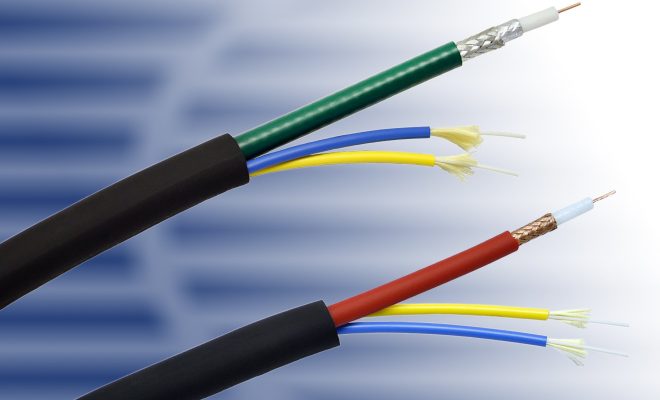
Hybrid Fiber-Coaxial Cable (HFC cable) is a type of telecommunications infrastructure that combines the advantages of optical fiber and copper coaxial cable for delivering high-speed internet, cable TV, and voice services. HFC networks are widely deployed by cable TV and internet service providers (ISPs) across the world, offering efficient and cost-effective connectivity to millions of users.

In HFC cable networks, the fiber-optic lines extend from the service provider’s central office (henceforth CO) to the neighborhood distribution point or “fiber node.” The fiber-optic lines can transmit data over long distances at high speeds with minimal signal loss or interference. From the fiber node, the data passes to the homes or businesses via a coaxial cable, which is the same kind of cable used in cable TV transmissions. The coaxial cable can carry data at lower speeds over shorter distances but is much less expensive to deploy than fiber-optic cables.

HFC cables are a form of broadband cabling, which means that they can carry multiple signals simultaneously. In an HFC network, multiple channels of TV, internet, and voice services can be transmitted over the same cable using different frequencies. To prevent interference, each channel occupies a unique frequency band, and the signals are modulated onto the carriers using a technique known as quadrature amplitude modulation (QAM).

HFC cable networks have several advantages over other networking technologies. They are much faster and more reliable than traditional dial-up modems and DSL connections. They are also more readily available in areas with limited access to fiber-optic networks. Additionally, cable TV providers often offer bundled internet and phone services to their customers at a lower cost than separate services from different providers.

However, HFC cable networks do have some drawbacks as well. The coaxial cable portion of the network can be susceptible to interference from electrical devices and other sources, which can affect the quality of service. The speed and quality of the internet connection can also be impacted by the number of users sharing the same network concurrently, referred to as oversubscription. Additionally, HFC cables are not typically well-suited for transmitting signals over long distances, which can result in signal degradation.

In conclusion, HFC cable is a networking technology that combines the benefits of fiber-optic and copper coaxial cables to deliver high-speed internet, cable TV, and voice services to homes and businesses. While it has its limitations, HFC cable networks remain a popular and cost-effective option for millions of users globally. It will be interesting to see how HFC networks evolve and adapt to meet the demands of an ever-increasing demand for faster and more reliable connectivity.

Previous Article

What is Imaging Software?

Next Article

What is immersive technology?

Matthew Lynch

Related articles More from author

  • Digital & Mobile Technology

    What is a Microsoft Certified Desktop Support Technician (MCDST)?

    April 18, 2023
    By Matthew Lynch
  • Digital & Mobile Technology

    Do You Need PlayStation Plus to Play Fortnite?

    June 30, 2023
    By Matthew Lynch
  • Digital & Mobile Technology

    Simple Design Rules for Professional Microsoft Word Documents

    August 5, 2023
    By Matthew Lynch
  • Digital & Mobile Technology

    MacBook Air Overheating? Tips and Tricks to Cool It Down

    September 7, 2023
    By Matthew Lynch
  • Digital & Mobile Technology

    How to Use Photo Cutout on an iPhone (iOS 16)

    June 2, 2023
    By Matthew Lynch
  • Digital & Mobile Technology

    Is iPhone or iPod Battery Replacement Worth It?

    June 2, 2023
    By Matthew Lynch

Search

Login & Registration

  • Log in
  • Entries feed
  • Comments feed
  • WordPress.org

Newsletter

Signup for The Tech Edvocate Newsletter and have the latest in EdTech news and opinion delivered to your email address!

About Us

Since technology is not going anywhere and does more good than harm, adapting is the best course of action. That is where The Tech Edvocate comes in. We plan to cover the PreK-12 and Higher Education EdTech sectors and provide our readers with the latest news and opinion on the subject. From time to time, I will invite other voices to weigh in on important issues in EdTech. We hope to provide a well-rounded, multi-faceted look at the past, present, the future of EdTech in the US and internationally.

We started this journey back in June 2016, and we plan to continue it for many more years to come. I hope that you will join us in this discussion of the past, present and future of EdTech and lend your own insight to the issues that are discussed.

Newsletter

Signup for The Tech Edvocate Newsletter and have the latest in EdTech news and opinion delivered to your email address!

Contact Us

The Tech Edvocate
910 Goddin Street
Richmond, VA 23231
(601) 630-5238
[email protected]

Copyright © 2026 Matthew Lynch. All rights reserved.