The Tech Edvocate

Top Menu

  • Advertisement
  • Apps
  • Home Page
  • Home Page Five (No Sidebar)
  • Home Page Four
  • Home Page Three
  • Home Page Two
  • Home Tech2
  • Icons [No Sidebar]
  • Left Sidbear Page
  • Lynch Educational Consulting
  • My Account
  • My Speaking Page
  • Newsletter Sign Up Confirmation
  • Newsletter Unsubscription
  • Our Brands
  • Page Example
  • Privacy Policy
  • Protected Content
  • Register
  • Request a Product Review
  • Shop
  • Shortcodes Examples
  • Signup
  • Start Here
    • Governance
    • Careers
    • Contact Us
  • Terms and Conditions
  • The Edvocate
  • The Tech Edvocate Product Guide
  • Topics
  • Write For Us
  • Advertise

Main Menu

  • Start Here
    • Our Brands
    • Governance
      • Lynch Educational Consulting, LLC.
      • Dr. Lynch’s Personal Website
      • Careers
    • Write For Us
    • The Tech Edvocate Product Guide
    • Contact Us
    • Books
    • Edupedia
    • Post a Job
    • The Edvocate Podcast
    • Terms and Conditions
    • Privacy Policy
  • Topics
    • Assistive Technology
    • Child Development Tech
    • Early Childhood & K-12 EdTech
    • EdTech Futures
    • EdTech News
    • EdTech Policy & Reform
    • EdTech Startups & Businesses
    • Higher Education EdTech
    • Online Learning & eLearning
    • Parent & Family Tech
    • Personalized Learning
    • Product Reviews
  • Advertise
  • Tech Edvocate Awards
  • The Edvocate
  • Pedagogue
  • School Ratings

logo

The Tech Edvocate

  • Start Here
    • Our Brands
    • Governance
      • Lynch Educational Consulting, LLC.
      • Dr. Lynch’s Personal Website
        • My Speaking Page
      • Careers
    • Write For Us
    • The Tech Edvocate Product Guide
    • Contact Us
    • Books
    • Edupedia
    • Post a Job
    • The Edvocate Podcast
    • Terms and Conditions
    • Privacy Policy
  • Topics
    • Assistive Technology
    • Child Development Tech
    • Early Childhood & K-12 EdTech
    • EdTech Futures
    • EdTech News
    • EdTech Policy & Reform
    • EdTech Startups & Businesses
    • Higher Education EdTech
    • Online Learning & eLearning
    • Parent & Family Tech
    • Personalized Learning
    • Product Reviews
  • Advertise
  • Tech Edvocate Awards
  • The Edvocate
  • Pedagogue
  • School Ratings
  • A Visitors Guide to Pittsburgh (PA), United States

  • A Visitors Guide to Colorado Springs (CO), United States

  • 5 Pairs of Shoes That Will Instantly Step Your Shoe Game Up

  • Radiant Youthful Skin is the Perfect Christmas Gift

  • Give Your Loved One the Gift of Youthful, Radiant Skin this Christmas

  • Give Your Loved One the Gift of a Restful Night Sleep this Christmas

  • Nex Playground’s Holiday Sales Bring Active Play Indoors This Seaso

  • A Visitors Guide to Louisville (KY), United States

  • A Visitor’s Guide to Nashville-Davidson (TN), United States

  • A Visitors Guide to Portland (OR), United States

Digital & Mobile Technology
Home›Digital & Mobile Technology›What Is Dual-Band Wireless Networking?

What Is Dual-Band Wireless Networking?
By Matthew Lynch
June 6, 2023
0
Spread the love

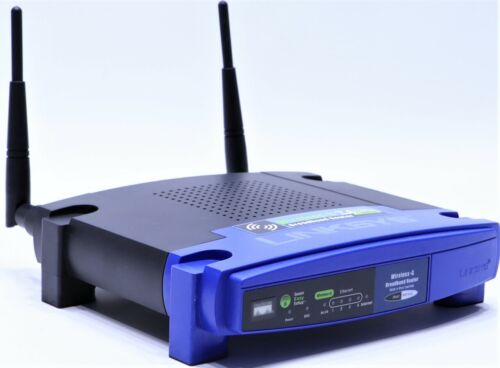
Dual-band wireless networking is a technology that allows internet-enabled devices to connect to a wireless network using two different frequencies or bands. It uses two different wireless access points, one operating on the 2.4 GHz frequency and the other one operating on the 5 GHz frequency. The purpose of dual-band networking is to provide a more stable and faster internet connection for devices that require high-speed connectivity.

The 2.4 GHz frequency is the most commonly used frequency for wireless networking as it is compatible with a wide range of devices, but this frequency is also susceptible to interference from other electronic devices such as microwaves, Bluetooth devices, and cordless phones. The 5 GHz frequency, on the other hand, is less crowded and offers a faster and more stable connection but has limited range as the signal can be obstructed easily by walls and other barriers.

Dual-band networking allows devices to switch between the 2.4 GHz and 5 GHz frequencies depending on their needs. For instance, smartphones and tablets that require a stable connection can automatically connect to the 5 GHz frequency while other devices such as printers and smart home devices can connect to the 2.4 GHz frequency.

For dual-band networking to work effectively, a router that supports this technology is required. The router creates two separate wireless networks with different names, and each one is assigned a specific frequency band. When a device connects to the network, it checks which band is available and connects to the network with the strongest signal.

There are several advantages of dual-band networking, including faster internet speeds and fewer interruptions. By using the 5 GHz frequency, devices can enjoy faster data transfer rates, which is particularly beneficial to users who engage in streaming, downloading, online gaming, or video conferencing. It also provides a stable connection even in areas with many wireless networks or devices.

In conclusion, dual-band wireless networking is a useful technology that provides a more stable and faster connection for high-speed internet needs. It allows devices to switch between the 2.4 GHz and 5 GHz frequencies, depending on their needs, and provides a stronger and more reliable connection, resulting in a smoother internet experience. As more and more devices become internet-enabled, this technology will continue to play an essential role in ensuring smooth connectivity.

Previous Article

Is It Still Worth Buying a PS4 ...

Next Article

How to Restart an iPhone (All Models)

Matthew Lynch

Related articles More from author

  • Digital & Mobile Technology

    How Does Uber Eats Work?

    June 10, 2023
    By Matthew Lynch
  • Digital & Mobile Technology

    What Is Windows Core OS?

    May 15, 2023
    By Matthew Lynch
  • Digital & Mobile Technology

    Why Doesn’t Apple Want the iPhone to Have a USB-C Port?

    July 31, 2023
    By Matthew Lynch
  • Digital & Mobile Technology

    Reasons the Crypto Market Will Recover in 2023

    June 8, 2023
    By Matthew Lynch
  • Digital & Mobile Technology

    Built-In Google Games to Play When Your Internet Goes Down

    June 5, 2023
    By Matthew Lynch
  • Digital & Mobile Technology

    How to Pay Someone With Apple Pay on Your iPhone

    August 5, 2023
    By Matthew Lynch

Search

Login & Registration

  • Register
  • Log in
  • Entries feed
  • Comments feed
  • WordPress.org

Newsletter

Signup for The Tech Edvocate Newsletter and have the latest in EdTech news and opinion delivered to your email address!

About Us

Since technology is not going anywhere and does more good than harm, adapting is the best course of action. That is where The Tech Edvocate comes in. We plan to cover the PreK-12 and Higher Education EdTech sectors and provide our readers with the latest news and opinion on the subject. From time to time, I will invite other voices to weigh in on important issues in EdTech. We hope to provide a well-rounded, multi-faceted look at the past, present, the future of EdTech in the US and internationally.

We started this journey back in June 2016, and we plan to continue it for many more years to come. I hope that you will join us in this discussion of the past, present and future of EdTech and lend your own insight to the issues that are discussed.

Newsletter

Signup for The Tech Edvocate Newsletter and have the latest in EdTech news and opinion delivered to your email address!

Contact Us

The Tech Edvocate
910 Goddin Street
Richmond, VA 23231
(601) 630-5238
[email protected]

Copyright © 2025 Matthew Lynch. All rights reserved.