The Tech Edvocate

Top Menu

  • Advertisement
  • Apps
  • Home Page
  • Home Page Five (No Sidebar)
  • Home Page Four
  • Home Page Three
  • Home Page Two
  • Home Tech2
  • Icons [No Sidebar]
  • Left Sidbear Page
  • Lynch Educational Consulting
  • My Account
  • My Speaking Page
  • Newsletter Sign Up Confirmation
  • Newsletter Unsubscription
  • Our Brands
  • Page Example
  • Privacy Policy
  • Protected Content
  • Register
  • Request a Product Review
  • Shop
  • Shortcodes Examples
  • Signup
  • Start Here
    • Governance
    • Careers
    • Contact Us
  • Terms and Conditions
  • The Edvocate
  • The Tech Edvocate Product Guide
  • Topics
  • Write For Us
  • Advertise

Main Menu

  • Start Here
    • Our Brands
    • Governance
      • Lynch Educational Consulting, LLC.
      • Dr. Lynch’s Personal Website
      • Careers
    • Write For Us
    • The Tech Edvocate Product Guide
    • Contact Us
    • Books
    • Edupedia
    • Post a Job
    • The Edvocate Podcast
    • Terms and Conditions
    • Privacy Policy
  • Topics
    • Assistive Technology
    • Child Development Tech
    • Early Childhood & K-12 EdTech
    • EdTech Futures
    • EdTech News
    • EdTech Policy & Reform
    • EdTech Startups & Businesses
    • Higher Education EdTech
    • Online Learning & eLearning
    • Parent & Family Tech
    • Personalized Learning
    • Product Reviews
  • Advertise
  • Tech Edvocate Awards
  • The Edvocate
  • Pedagogue
  • School Ratings

logo

The Tech Edvocate

  • Start Here
    • Our Brands
    • Governance
      • Lynch Educational Consulting, LLC.
      • Dr. Lynch’s Personal Website
        • My Speaking Page
      • Careers
    • Write For Us
    • The Tech Edvocate Product Guide
    • Contact Us
    • Books
    • Edupedia
    • Post a Job
    • The Edvocate Podcast
    • Terms and Conditions
    • Privacy Policy
  • Topics
    • Assistive Technology
    • Child Development Tech
    • Early Childhood & K-12 EdTech
    • EdTech Futures
    • EdTech News
    • EdTech Policy & Reform
    • EdTech Startups & Businesses
    • Higher Education EdTech
    • Online Learning & eLearning
    • Parent & Family Tech
    • Personalized Learning
    • Product Reviews
  • Advertise
  • Tech Edvocate Awards
  • The Edvocate
  • Pedagogue
  • School Ratings
  • A Visitors Guide to Long Beach (CA), United States

  • A Visitor’s Guide to Fresno (CA), United States

  • A Visitors Guide to New Orleans (LA), United States

  • A Visitors Guide to Sacramento (CA), United States

  • A Visitors Guide to Lyon, France

  • JisuLife Ultra2 Portable Fan: A Powerful Multi-Function Cooling Solution

  • A Visitors Guide to Viña del Mar, Chile

  • A Visitors Guide to Århus, Denmark

  • A Visitors Guide to Bakersfield (CA), United States

  • A Visitors Guide to Aurora (CO), United States

Digital & Mobile Technology
Home›Digital & Mobile Technology›What Is a Touchscreen and How Do They Work?

What Is a Touchscreen and How Do They Work?

By Matthew Lynch
June 10, 2023
0
Spread the love

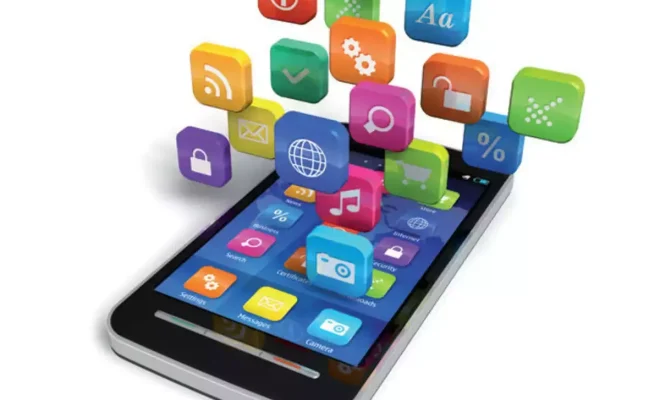
A touchscreen is a display that can detect and respond to touch input from the user. They are now ubiquitous in smartphones, tablets, laptops, and other modern devices. In this article, we will explain what exactly is a touchscreen, how it works, and the different types of screens that are available.

A touchscreen is essentially an input device that allows a user to interact with a display screen using their fingers or stylus. The screen consists of several layers that include a protective cover glass, a touch sensor layer, and an LCD panel. When a user touches the screen, the touch sensor layer detects the touch and sends a signal to the device’s processor to process the input and respond accordingly.

There are several types of touchscreens available, each with their unique characteristics and features. The four most common types of touchscreens are Resistive, Capacitive, Infrared, and Surface Acoustic Wave.

Resistive screens are made of two layers of electrically conductive materials separated by an insulating layer. A touch from a finger or stylus completes a circuit and causes a change in the electrical signal to the device, which then responds accordingly. These screens are relatively inexpensive and can be used with a stylus or any object that can depress the screen, but they can be less responsive than other screens.

Capacitive screens, on the other hand, use a layer of conducting material that covers the screen. This conducting layer registers changes in the electrical field when a user touches the screen, allowing the device to identify the location and input. Capacitive screens have a higher level of sensitivity than resistive screens, making them more suitable for multi-touch actions and are generally found on smartphones and tablets.

Infrared touchscreens work by projecting an invisible grid of light beams across the screen’s surface. When a user touches the display, the infrared beams are interrupted and the location of the touch is detected. These screens are very durable and can work with any input method, including gloved or dirty fingers.

Surface Acoustic Wave touchscreens are made of two transducers on the glass surface that send and receive ultrasonic waves. When a user touches the screen, the waves are disturbed, and the touch’s position is detected. Surface Acoustic Wave screens are known for their excellent image quality, but they can be expensive and not as durable as other screen types.

Touchscreens are a tremendous technological advancement that has revolutionized the world and the way we interact with our devices. Even though there are different types of touchscreens available, they all have one thing in common- the ability to recognize user input and respond accordingly. The future of touchscreens can only bring greater innovation and advancements, and it is exciting to see what new ways we will interact with our technologies.


Previous Article

How to Charge Your Nintendo Switch Joy-Cons

Next Article

Nintendo Switch Pro: News, Rumors, and Expected ...

Matthew Lynch

Related articles More from author

  • Digital & Mobile Technology

    How to Uninstall and Reinstall Google Play Store on Android

    May 30, 2023
    By Matthew Lynch
  • Digital & Mobile Technology

    5 Easy Fixes if Outlook Isn’t Loading in Google Chrome

    August 2, 2023
    By Matthew Lynch
  • Digital & Mobile Technology

    Pixel 7 Camera: 8 Features That Will Elevate Your Photography Game

    August 2, 2023
    By Matthew Lynch
  • Digital & Mobile Technology

    The Hottest Snapchat Streak Tips for Beginners

    June 9, 2023
    By Matthew Lynch
  • Digital & Mobile Technology

    Is Your Wi-Fi Network Name a Security Risk?

    July 14, 2023
    By Matthew Lynch
  • Digital & Mobile Technology

    What Is a Transcriptionist? How Do You Become One?

    July 31, 2023
    By Matthew Lynch

Search

Login & Registration

  • Register
  • Log in
  • Entries feed
  • Comments feed
  • WordPress.org

Newsletter

Signup for The Tech Edvocate Newsletter and have the latest in EdTech news and opinion delivered to your email address!

About Us

Since technology is not going anywhere and does more good than harm, adapting is the best course of action. That is where The Tech Edvocate comes in. We plan to cover the PreK-12 and Higher Education EdTech sectors and provide our readers with the latest news and opinion on the subject. From time to time, I will invite other voices to weigh in on important issues in EdTech. We hope to provide a well-rounded, multi-faceted look at the past, present, the future of EdTech in the US and internationally.

We started this journey back in June 2016, and we plan to continue it for many more years to come. I hope that you will join us in this discussion of the past, present and future of EdTech and lend your own insight to the issues that are discussed.

Newsletter

Signup for The Tech Edvocate Newsletter and have the latest in EdTech news and opinion delivered to your email address!

Contact Us

The Tech Edvocate
910 Goddin Street
Richmond, VA 23231
(601) 630-5238
[email protected]

Copyright © 2025 Matthew Lynch. All rights reserved.