The Tech Edvocate

Top Menu

  • Advertisement
  • Apps
  • Home Page
  • Home Page Five (No Sidebar)
  • Home Page Four
  • Home Page Three
  • Home Page Two
  • Home Tech2
  • Icons [No Sidebar]
  • Left Sidbear Page
  • Lynch Educational Consulting
  • My Account
  • My Speaking Page
  • Newsletter Sign Up Confirmation
  • Newsletter Unsubscription
  • Our Brands
  • Page Example
  • Privacy Policy
  • Protected Content
  • Register
  • Request a Product Review
  • Shop
  • Shortcodes Examples
  • Signup
  • Start Here
    • Governance
    • Careers
    • Contact Us
  • Terms and Conditions
  • The Edvocate
  • The Tech Edvocate Product Guide
  • Topics
  • Write For Us
  • Advertise

Main Menu

  • Start Here
    • Our Brands
    • Governance
      • Lynch Educational Consulting, LLC.
      • Dr. Lynch’s Personal Website
      • Careers
    • Write For Us
    • The Tech Edvocate Product Guide
    • Contact Us
    • Books
    • Edupedia
    • Post a Job
    • The Edvocate Podcast
    • Terms and Conditions
    • Privacy Policy
  • Topics
    • Assistive Technology
    • Child Development Tech
    • Early Childhood & K-12 EdTech
    • EdTech Futures
    • EdTech News
    • EdTech Policy & Reform
    • EdTech Startups & Businesses
    • Higher Education EdTech
    • Online Learning & eLearning
    • Parent & Family Tech
    • Personalized Learning
    • Product Reviews
  • Advertise
  • Tech Edvocate Awards
  • The Edvocate
  • Pedagogue
  • School Ratings

logo

The Tech Edvocate

  • Start Here
    • Our Brands
    • Governance
      • Lynch Educational Consulting, LLC.
      • Dr. Lynch’s Personal Website
        • My Speaking Page
      • Careers
    • Write For Us
    • The Tech Edvocate Product Guide
    • Contact Us
    • Books
    • Edupedia
    • Post a Job
    • The Edvocate Podcast
    • Terms and Conditions
    • Privacy Policy
  • Topics
    • Assistive Technology
    • Child Development Tech
    • Early Childhood & K-12 EdTech
    • EdTech Futures
    • EdTech News
    • EdTech Policy & Reform
    • EdTech Startups & Businesses
    • Higher Education EdTech
    • Online Learning & eLearning
    • Parent & Family Tech
    • Personalized Learning
    • Product Reviews
  • Advertise
  • Tech Edvocate Awards
  • The Edvocate
  • Pedagogue
  • School Ratings
  • Seniors Lose More Money to Investment Scams Than Any Other Fraud

  • Gemini Can Now Connect to Google Wallet to Offer Spending Insights, Budgeting Tips

  • Dramatic: Financial Giants Are Quietly Preparing for Mass AI Job Replacement

  • Malicious Cyberattack on Curaçao Gaming Regulator: Your Data Exposed?

  • Staggering: Lawyers Are Being Struck Off For This AI Blunder – What You Must Know Now

  • Dramatic Cuts: How The GOP Tuition Deflation Act Is Reshaping College Costs

  • This Professor’s Alarming AI Cheating Warning Reveals a Deeper Crisis in Education

  • This One Reckless Mistake Caused Zeabur’s Devastating Collapse

  • Terrifying: AI Cybercrime Just Got a Whole Lot Worse, Here’s How

  • The cost of your new car loan has hit a record high – Newswav

Digital & Mobile Technology
Home›Digital & Mobile Technology›What Is a Power Amplifier and How Is It Used?

What Is a Power Amplifier and How Is It Used?
By Matthew Lynch
June 10, 2023
0
Spread the love

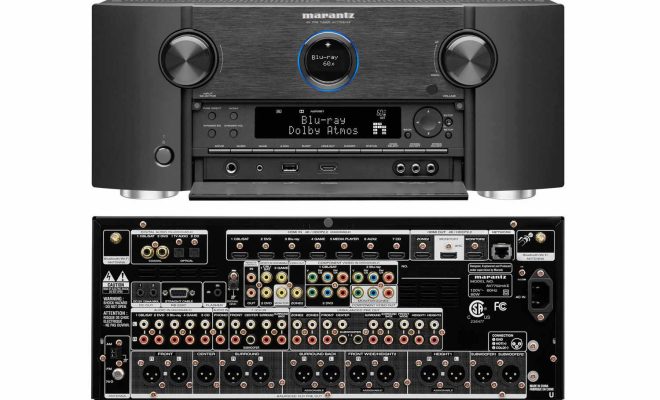
A power amplifier is a key component in any audio or electronic system that requires an amplified signal to be transmitted through a speaker or other output device. It is a device that amplifies the power of an electrical signal, increasing its amplitude and voltage, to drive a larger electrical load. Power amplifiers are commonly used in audio systems to boost the power of low-level audio signals produced by microphones and instruments, as well as in radio frequency or radar applications to amplify signals sent through the air.

How Does a Power Amplifier Work?

At its core, a power amplifier consists of a few key components: a gain stage, a bias stage, and an output stage. The gain stage is responsible for increasing the amplitude of the input signal, while the bias stage sets the operating point of the output transistors. The output stage is where the amplified signal is produced and sent to the load.

Power amplifiers typically use one of two kinds of output transistors: bipolar junction transistors (BJTs) or metal-oxide-semiconductor field-effect transistors (MOSFETs). The choice between the two depends on various factors including cost, frequency response, linearity, and thermal stability.

Several different amplifier topologies are available, with each providing specific benefits or drawbacks. Class A, for instance, has the best linearity but is inefficient, while Class B is more efficient but less linear. Many modern power amplifiers combine multiple classes of amplification in their designs to balance the trade-offs between efficiency and linearity.

Where Are Power Amplifiers Used?

Power amplifiers are used in many different applications that require high power outputs from relatively small input signals. For instance, audio amplifiers take a small electrical signal input from a microphone or other audio source and increase the power output to drive speakers or headphones. In audio systems, power amplifiers are usually connected to a pre-amplifier or sound mixer which controls the signal sent to the amplifier.

Power amplifiers are also widely used in radio frequency (RF) applications, such as in radio transmitters, satellite communication systems, and radar equipment. In these applications, the power amplifier is used to increase the signal strength before it is transmitted over long distances. The high power output helps to overcome any signal loss that occurs as the signal travels through space.

Overall, power amplifiers are an essential component in many different electronic systems, particularly in audio systems where they play a vital role in shaping the overall sound quality. By amplifying signals to drive large electrical loads, power amplifiers help to ensure that audio signals are heard loud and clear or transmitted over long distances, and provide high-quality service.


Previous Article

How Do You Get Bluetooth for a ...

Next Article

An Explanation of Read and Write Speeds

Matthew Lynch

Related articles More from author

  • Digital & Mobile Technology

    How to Send Silent Messages on Instagram

    June 23, 2023
    By Matthew Lynch
  • Digital & Mobile Technology

    What is Data Manipulation Language (DML)?

    May 6, 2023
    By Matthew Lynch
  • Digital & Mobile Technology

    Best Video Game Emulators to Install on Your iPhone or iPad

    June 6, 2023
    By Matthew Lynch
  • Digital & Mobile Technology

    How to Fix Windows 10 Ethernet Driver Problems

    June 6, 2023
    By Matthew Lynch
  • Digital & Mobile Technology

    Learn to Quickly and Easily Connect Your iPod to a PC

    June 4, 2023
    By Matthew Lynch
  • Digital & Mobile Technology

    How to Take a Screenshot on the Samsung Galaxy

    May 29, 2023
    By Matthew Lynch

Search

Login & Registration

  • Log in
  • Entries feed
  • Comments feed
  • WordPress.org

Newsletter

Signup for The Tech Edvocate Newsletter and have the latest in EdTech news and opinion delivered to your email address!

About Us

Since technology is not going anywhere and does more good than harm, adapting is the best course of action. That is where The Tech Edvocate comes in. We plan to cover the PreK-12 and Higher Education EdTech sectors and provide our readers with the latest news and opinion on the subject. From time to time, I will invite other voices to weigh in on important issues in EdTech. We hope to provide a well-rounded, multi-faceted look at the past, present, the future of EdTech in the US and internationally.

We started this journey back in June 2016, and we plan to continue it for many more years to come. I hope that you will join us in this discussion of the past, present and future of EdTech and lend your own insight to the issues that are discussed.

Newsletter

Signup for The Tech Edvocate Newsletter and have the latest in EdTech news and opinion delivered to your email address!

Contact Us

The Tech Edvocate
910 Goddin Street
Richmond, VA 23231
(601) 630-5238
[email protected]

Copyright © 2026 Matthew Lynch. All rights reserved.