The Tech Edvocate

Top Menu

  • Advertisement
  • Apps
  • Home Page
  • Home Page Five (No Sidebar)
  • Home Page Four
  • Home Page Three
  • Home Page Two
  • Home Tech2
  • Icons [No Sidebar]
  • Left Sidbear Page
  • Lynch Educational Consulting
  • My Account
  • My Speaking Page
  • Newsletter Sign Up Confirmation
  • Newsletter Unsubscription
  • Our Brands
  • Page Example
  • Privacy Policy
  • Protected Content
  • Register
  • Request a Product Review
  • Shop
  • Shortcodes Examples
  • Signup
  • Start Here
    • Governance
    • Careers
    • Contact Us
  • Terms and Conditions
  • The Edvocate
  • The Tech Edvocate Product Guide
  • Topics
  • Write For Us
  • Advertise

Main Menu

  • Start Here
    • Our Brands
    • Governance
      • Lynch Educational Consulting, LLC.
      • Dr. Lynch’s Personal Website
      • Careers
    • Write For Us
    • The Tech Edvocate Product Guide
    • Contact Us
    • Books
    • Edupedia
    • Post a Job
    • The Edvocate Podcast
    • Terms and Conditions
    • Privacy Policy
  • Topics
    • Assistive Technology
    • Child Development Tech
    • Early Childhood & K-12 EdTech
    • EdTech Futures
    • EdTech News
    • EdTech Policy & Reform
    • EdTech Startups & Businesses
    • Higher Education EdTech
    • Online Learning & eLearning
    • Parent & Family Tech
    • Personalized Learning
    • Product Reviews
  • Advertise
  • Tech Edvocate Awards
  • The Edvocate
  • Pedagogue
  • School Ratings

logo

The Tech Edvocate

  • Start Here
    • Our Brands
    • Governance
      • Lynch Educational Consulting, LLC.
      • Dr. Lynch’s Personal Website
        • My Speaking Page
      • Careers
    • Write For Us
    • The Tech Edvocate Product Guide
    • Contact Us
    • Books
    • Edupedia
    • Post a Job
    • The Edvocate Podcast
    • Terms and Conditions
    • Privacy Policy
  • Topics
    • Assistive Technology
    • Child Development Tech
    • Early Childhood & K-12 EdTech
    • EdTech Futures
    • EdTech News
    • EdTech Policy & Reform
    • EdTech Startups & Businesses
    • Higher Education EdTech
    • Online Learning & eLearning
    • Parent & Family Tech
    • Personalized Learning
    • Product Reviews
  • Advertise
  • Tech Edvocate Awards
  • The Edvocate
  • Pedagogue
  • School Ratings
  • This One Flaw Just Blew Up the Guardian Smart Baby Monitor

  • The AI Race: Why Doomsday Warnings Can’t Stop the Train

  • XBOX: Activision takes over Halo, Obsidian joins Bethesda, and Ninja Theory is going

  • White House Arcade: 2nd Japan Protest, Nintendo Feud [2026]

  • One-Fifth of White-Collar Jobs Could Vanish by 2030, New Report Claims

  • Is a ‘Pacing’ AI Slowdown Really Possible? This Week’s AI News Roundup Reveals the Truth

  • California’s Bold Move: AB 1709 Social Media Restrictions Could Banish Teen Addiction

  • This One AI in Education Concern Is Completely Missing the Point

  • ShinyHunters Claims FBI Data Breach: Hacker Group Says It Stole Records of All Employees and Applicants

  • One Hacker, 100 Companies: The AI Cybersecurity Attack That Changed Everything

Neuroscience
Home›Neuroscience›What Doesn’t Kill You Can Make You Stronger – Harnessing Adversity for a Better Brain

What Doesn’t Kill You Can Make You Stronger – Harnessing Adversity for a Better Brain
By Matthew Lynch
March 12, 2024
0
Spread the love

The old adage “What doesn’t kill you makes you stronger” rings with an intuitive truth that resonates through many people’s experiences. But is there actual evidence behind the sentiment? And if so, how can we harness adversity to enhance our brain’s potential – making us not only stronger but also cultivating the best brain possible?

Adversity comes in many forms: physical illness, emotional trauma, financial hardship, or even the daily pressures of life. Each of these challenges has the potential to tear us down or build us up, depending on how we respond to them. Research in neuroplasticity and psychology suggests that our responses to these situations can lead to significant personal growth and brain strengthening.

When faced with difficult situations, the stress response in our brain is activated. While chronic stress can be harmful, acute stress – short-term and not prolonged – can actually improve brain function. It does so by releasing certain neurotransmitters like noradrenaline, which enhances attention and vigilance, and by inducing neurogenesis (the birth of new neurons) particularly in the hippocampus, an area of the brain associated with memory and learning.

Resilience, the ability to bounce back from adversity, is a key component of this process. Developing resilience involves several factors including optimism, cognitive flexibility, social support, and finding meaning in the face of challenges. By consciously working on these factors, we can train our brains to handle stress more efficiently and turn adversity into a catalyst for growth.

Additionally, facing challenges often requires innovative thinking and problem-solving skills. These mental activities stimulate brain plasticity by forging new neural connections and enhancing existing ones. This cognitive exercise doesn’t just help us manage immediate issues; it also contributes to long-term brain health and cognitive reserve.

Moreover, overcoming difficulties provides a sense of accomplishment which builds self-efficacy – the belief in our own ability to succeed. This confidence can prompt us to take on new challenges, creating a positive cycle that continues to foster personal development and brain strengthening.

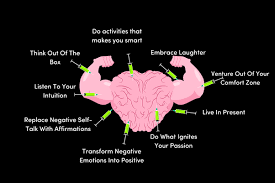
But how do we translate this understanding into action? Here are few strategies:

1.Mindfulness Practice: Mindfulness helps in regulating emotions and reducing stress responses.

2.Cognitive Reframing: Changing your perception of a challenging situation can transform it into an opportunity for growth.

3.Social Support: Building strong relationships offers emotional resources during tough times.

4.Learning New Skills: Embrace learning as it forces your brain to adapt and develop.

5.Healthy Lifestyle Choices: Regular exercise, sufficient sleep, and good nutrition support overall brain health.

In summary, while adversity is an unavoidable aspect of life, it doesn’t have to be detrimental. Studies have shown that our brains are capable of using stressful situations as stepping stones towards greater psychological resilience and cognitive capacity. By implementing strategies designed to bolster resilience and provoke positive neural adaptations, we not only survive challenges but emerge from them with a stronger, better-performing brain – truly embodying the idea that what doesn’t kill us can make us stronger.


 

Previous Article

2024’s Top 10 First Aid Kits for ...

Next Article

7 Best Plastic Nativity Scenes for 2024

Matthew Lynch

Related articles More from author

  • Neuroscience

    Living, Learning and Leading in a 5G World

    November 28, 2019
    By Matthew Lynch
  • Neuroscience

    Neuroscience Research and Academic Interventions

    October 25, 2023
    By Matthew Lynch
  • Child DevelopmentNeurosciencePsychology and Education

    How Brain Development Blossoms From Ages 2-7

    October 17, 2022
    By Matthew Lynch
  • Neuroscience

    This Is How to Use 100% of Your Brain – The Best Brain Possible

    March 10, 2024
    By Matthew Lynch
  • Neuroscience

    Unlock Your Brain’s Potential: The Science of Meditation

    July 31, 2025
    By Matthew Lynch
  • Neuroscience

    5 Microlearning Myths You Need to Stop Believing

    October 25, 2019
    By Matthew Lynch

Search

Login & Registration

  • Log in
  • Entries feed
  • Comments feed
  • WordPress.org

Newsletter

Signup for The Tech Edvocate Newsletter and have the latest in EdTech news and opinion delivered to your email address!

About Us

Since technology is not going anywhere and does more good than harm, adapting is the best course of action. That is where The Tech Edvocate comes in. We plan to cover the PreK-12 and Higher Education EdTech sectors and provide our readers with the latest news and opinion on the subject. From time to time, I will invite other voices to weigh in on important issues in EdTech. We hope to provide a well-rounded, multi-faceted look at the past, present, the future of EdTech in the US and internationally.

We started this journey back in June 2016, and we plan to continue it for many more years to come. I hope that you will join us in this discussion of the past, present and future of EdTech and lend your own insight to the issues that are discussed.

Newsletter

Signup for The Tech Edvocate Newsletter and have the latest in EdTech news and opinion delivered to your email address!

Contact Us

The Tech Edvocate
910 Goddin Street
Richmond, VA 23231
(601) 630-5238
[email protected]

Copyright © 2026 Matthew Lynch. All rights reserved.